
Bruges city guide
A romantic Bruges stay: canals, art and evenings after the crowds
Plan Bruges for two around blue-hour canals, a well-timed boat trip, the Begijnhof and Minnewater, one museum choice and quieter historic quarters.
Plan your visit
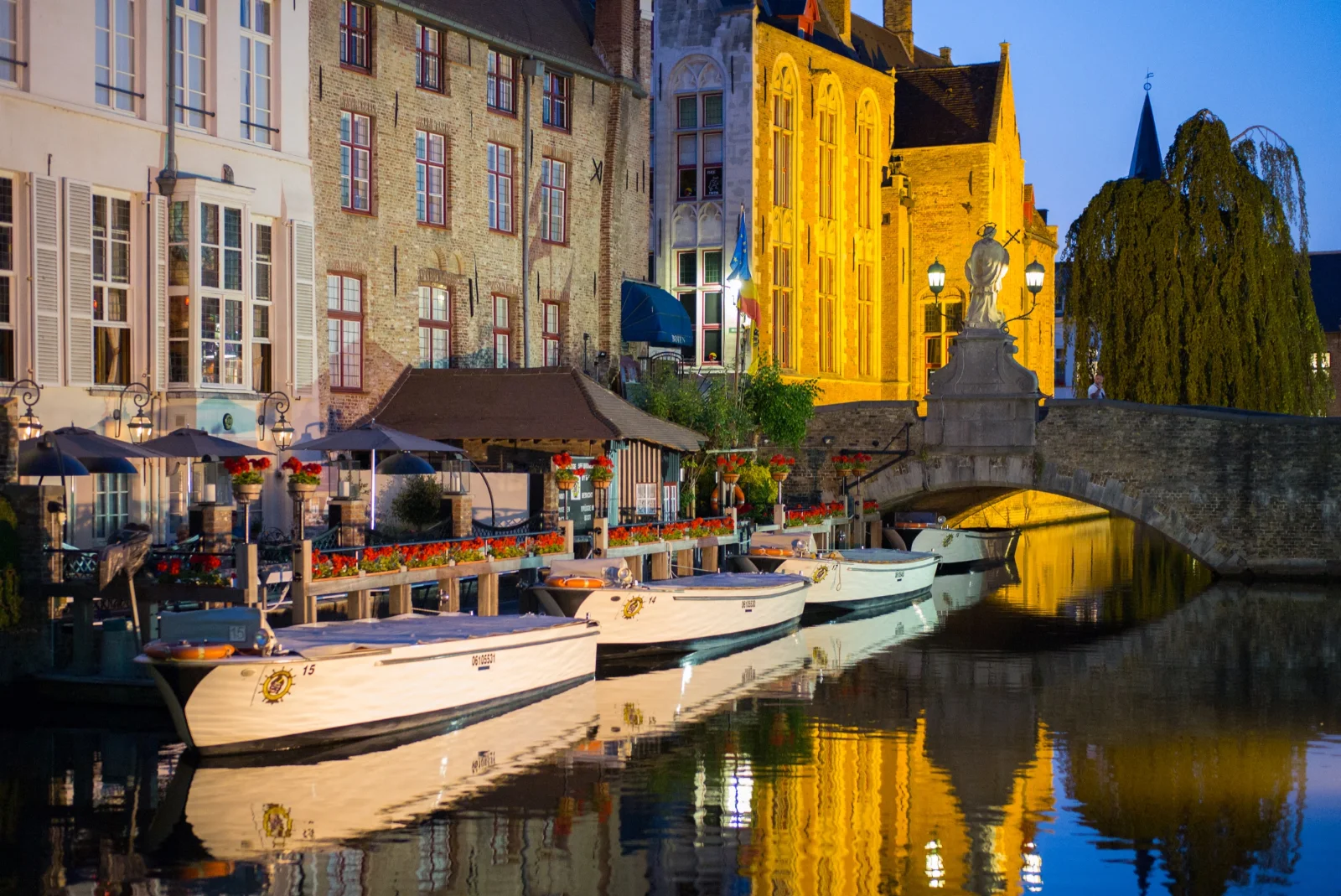
Bruges is compact enough to see quickly, but its romance appears when the day-trip rhythm fades. Canals, brick façades and church towers change character at blue hour, while the Begijnhof, museums and quieter quarters reward a slower route. This guide treats Bruges as a lived historic city rather than a backdrop. It combines the famous centre with good timing, cultural depth and practical ways to avoid turning every canal corner into the same photograph.
Let the waterways organise the historic centre
Bruges works best as a series of connected water and street scenes. Use Markt and Burg early, then follow canals towards the quieter southern or eastern quarters instead of looping through the same shopping streets. Give one half-day to the centre and museums, another to the Begijnhof, Minnewater and neighbourhood edges. Distances are short, but cobbles, bridge steps and visitor groups slow the route. Keeping dinner and the evening walk close to the final district allows you to experience the city after day visitors leave.
Plan it well: Start with one central landmark, then move outward by canal. Constantly returning to Markt creates more crowd exposure without adding much context.
Visit Bruges: official visitor informationWalk the canals through blue hour
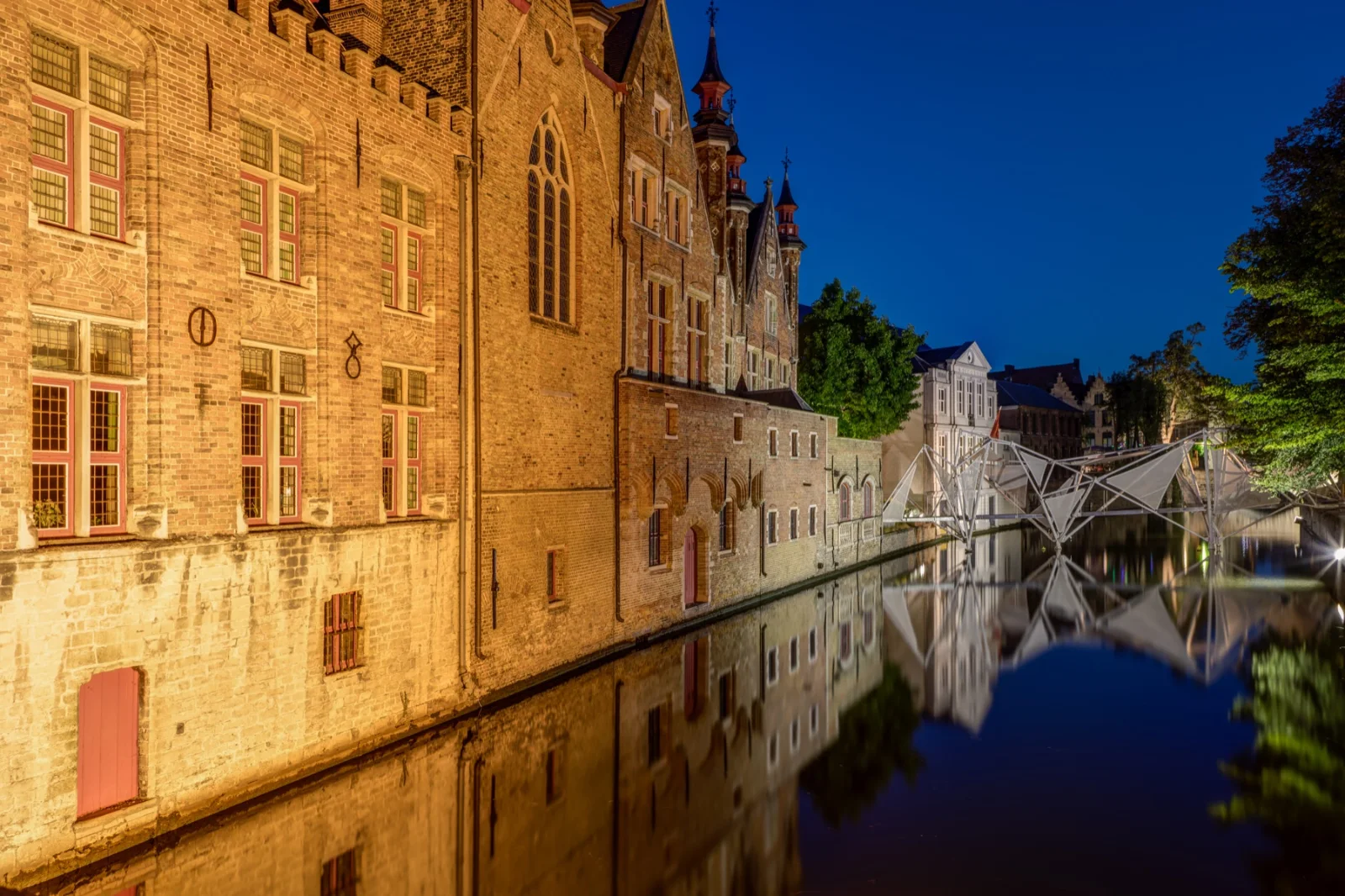
Bruges becomes visually richer when brick, water and street lighting overlap. Start around Dijver or the Rozenhoedkaai area while architectural details remain visible, then continue along quieter canals rather than waiting at one famous corner. The most satisfying route includes broad reflections, narrow bridges and one open square, finishing near a restaurant or hotel. In winter, blue hour may arrive before dinner; in summer, take the walk later. Wet cobbles can be slippery, so choose secure footwear and avoid walking backwards into traffic while framing photographs.
Plan it well: Begin before sunset and finish after the lights appear. Stay on public paths and keep bridge crossings clear for residents, cyclists and other visitors.
Visit Bruges: romantic placesUse a boat trip for orientation, not the whole story
A canal boat reveals bridges, rear façades and the historic relationship between trade and water that street-level walks cannot fully show. Take the trip earlier in the stay so it helps you recognise areas to revisit on foot. Boats follow regulated routes and usually offer a concise overview rather than a private experience; compare departure points and current schedules instead of choosing only the first queue. Pair the cruise with one museum or neighbourhood walk, and avoid expecting every photographed canal to be included.
Plan it well: Check seasonal operation, departure point and accessibility. Boats may pause in poor weather or high water, and queues vary greatly through the day.
Visit Bruges: boat tripsApproach the Begijnhof and Minnewater quietly
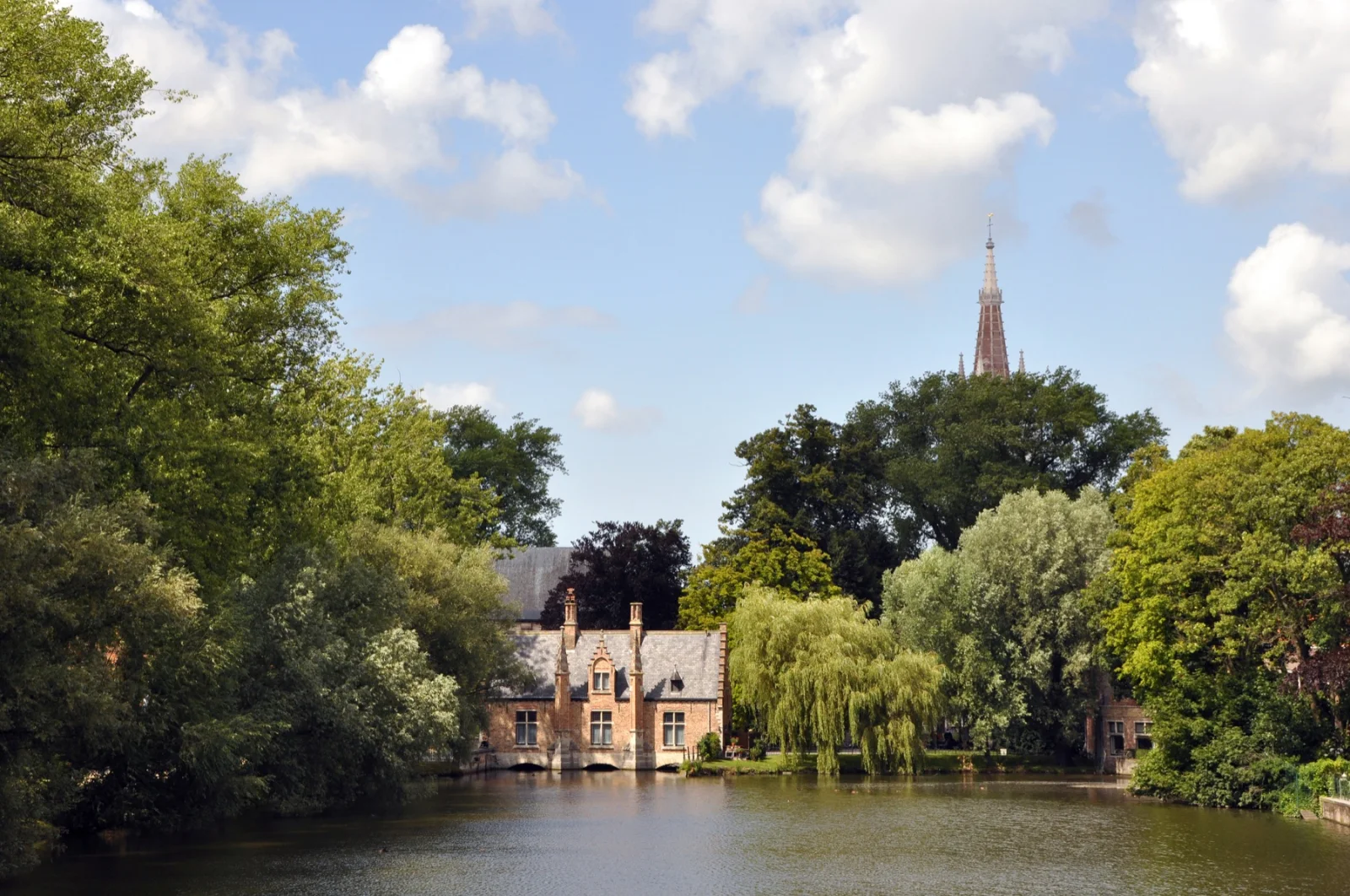
The Begijnhof and Minnewater provide a calmer southern counterpoint to Markt. Enter the Begijnhof with attention to its religious and residential character, then continue through the green spaces and water around Minnewater. Early morning is especially quiet, but opening hours and access rules must be respected. The area combines naturally with the station side of the city or a route back along the canals. Avoid attaching invented legends to the Lake of Love; the historical atmosphere and landscape are strong enough without turning folklore into fact.
Plan it well: The Begijnhof remains a place of residence and reflection. Keep voices low, respect closing times and do not treat doorways or courtyards as photo sets.
Visit Bruges: BegijnhofChoose one museum and one quieter quarter
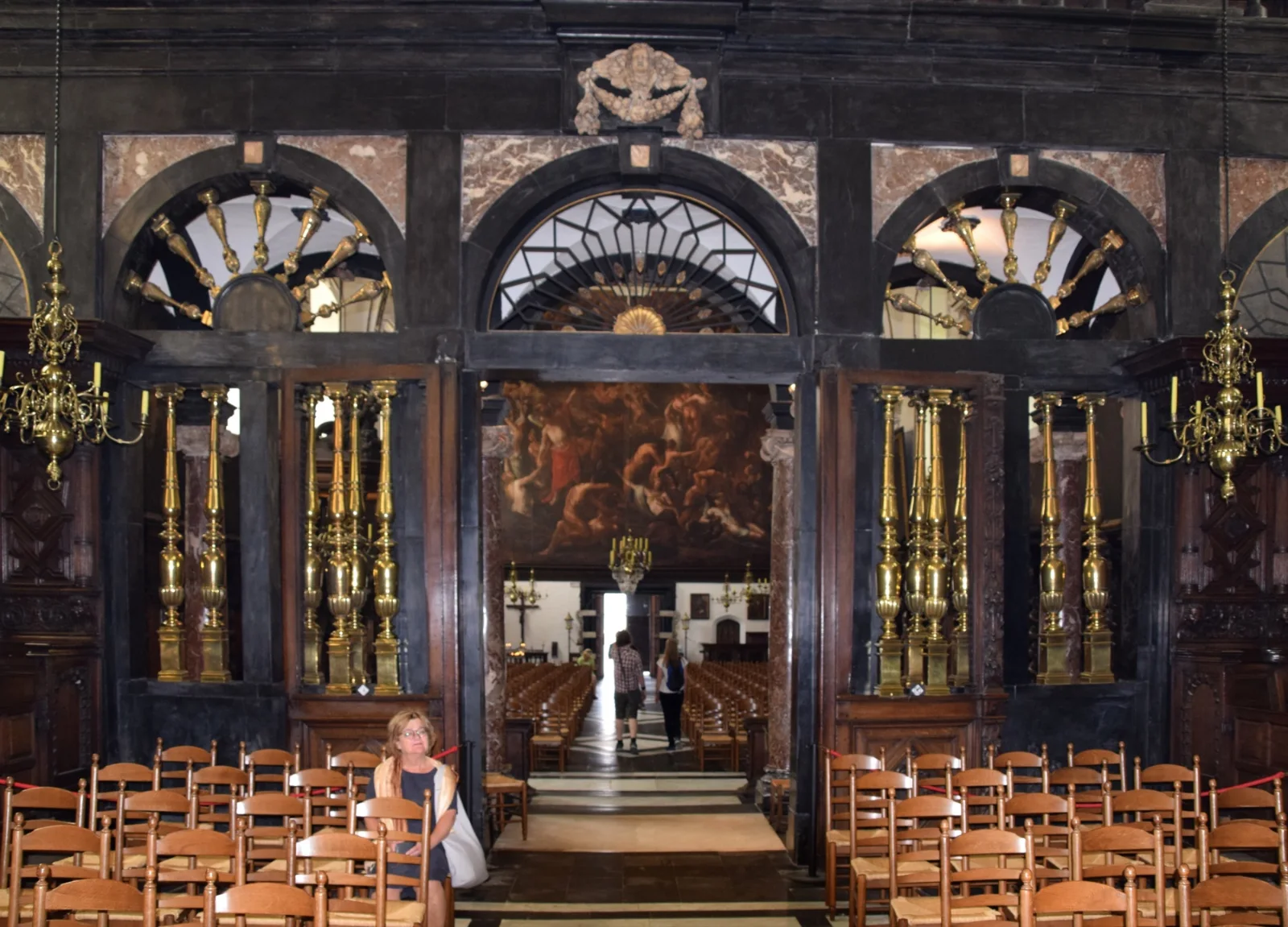
The Groeningemuseum is the principal choice for Flemish art, while the Gruuthusemuseum adds decorative arts and the history of an urban palace. Select one according to shared interest, then give the streets beyond the centre equal time. The Sint-Anna quarter offers windmills, churches, lace and residential lanes that reveal a less compressed city. Combine the museum and neighbourhood within one side of Bruges rather than crossing back to Markt between every stop. This makes the cultural visit part of the city rather than an isolated indoor task.
Plan it well: Check museum closing days and final admission. Small historic museums often have stairs and limited capacity.
Musea Brugge: visitor informationTurn the ideas into a balanced 36-hour stay
On the first afternoon, orient yourself by boat, visit one museum and walk the canals through blue hour. On the next morning, see Markt and Burg before crowds, continue to the Begijnhof and Minnewater, then use the afternoon for Sint-Anna or a second cultural stop. Keep dinner in the neighbourhood where the day ends and add one short illuminated canal circuit afterwards. Check official event listings, museum notices and seasonal boat operations before travel. Travellers with limited mobility should plan around cobbles, bridge gradients and hotel access rather than relying on distance alone.
Plan it well: Book one important dinner, but leave the final evening walk flexible. Bruges is quiet at night; store the hotel route offline and check the last train if staying elsewhere.
Visit Bruges: practical information