
Geneva city guide
Where to stay in Geneva
Compare six Geneva bases for hilltop history, lake walks, art, train departures and international institutions, with practical airport and neighbourhood tradeoffs.
Plan your visit
Geneva's small centre does not make all central hotels interchangeable. The Old Town sits uphill, Paquis opens onto the right-bank lakefront, and Eaux-Vives stretches between parks and its railway station on the other bank. Cornavin is the luggage-first choice; Plainpalais puts markets and art ahead of the water; Nations suits a trip with a clear institutional focus. Choose the setting you want outside the hotel, then test the transport route to your actual address.
Choose your base
For a first cultural weekend, choose the Old Town; for straightforward airport and rail connections, Cornavin/Saint-Gervais. Paquis combines water with varied dining, while Eaux-Vives is stronger for parks and longer waterfront walks. Plainpalais suits art and evening activity; Nations suits appointments and institution visits.
A lakefront address, a tram-stop address and an Old Town address solve different problems. Compare the last walk with luggage and the journeys you will make repeatedly, not only the distance from the Jet d'Eau.
Old Town: history-led weekends and cafe squares
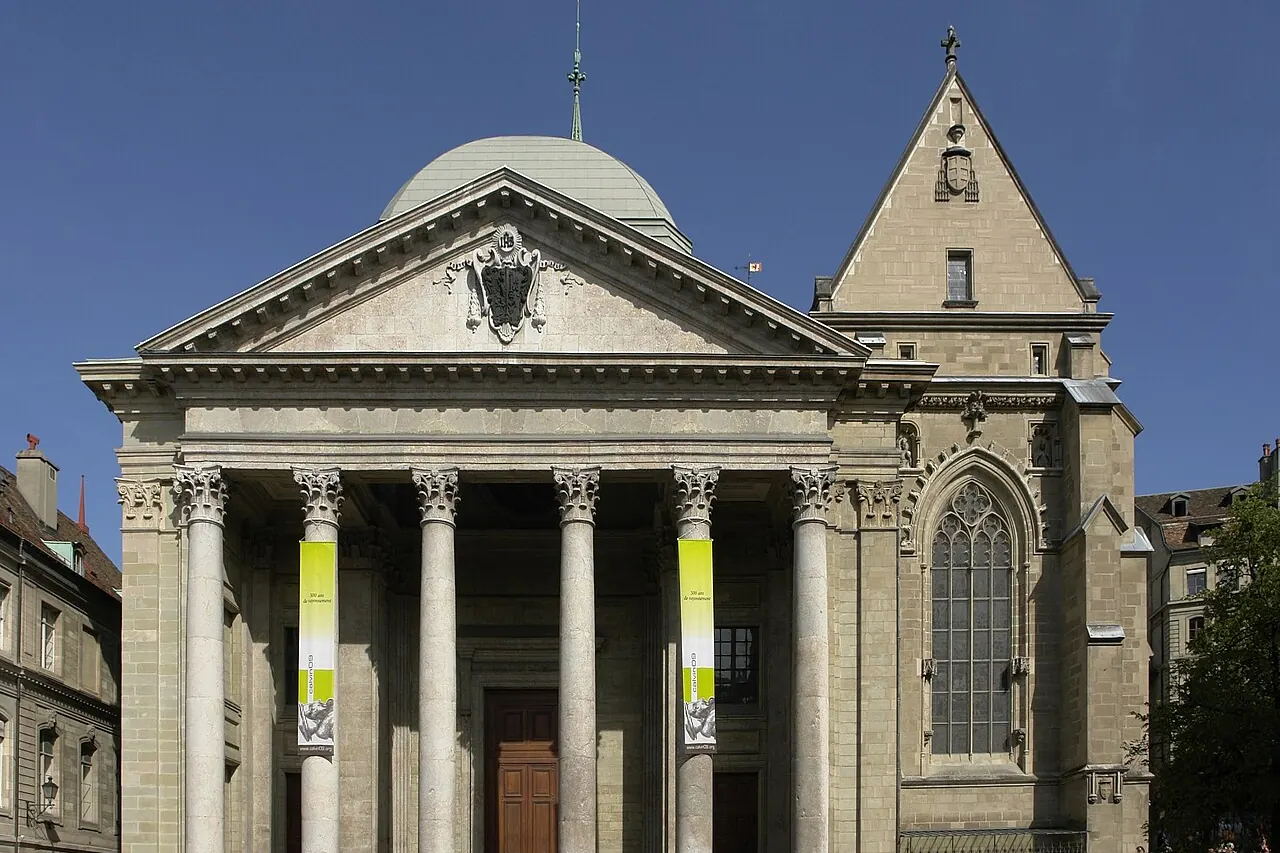
The Old Town works best when Saint-Pierre Cathedral, Maison Tavel and the Reformation story are the centre of your plans. Around Place du Bourg-de-Four, small streets and cafe terraces make an appealing setting for an unhurried breakfast before museums. You can descend towards the lakeside shopping streets or the Parc des Bastions, then return to a noticeably different, elevated historic setting. This is a stronger choice for a compact cultural weekend than for a stay built around conferences or daily departures from Cornavin.
The hill is the practical tradeoff. TPG connections around Bel-Air, Rive and the lower streets are useful, but the last approach to your hotel may involve cobbles and a climb; a central postcode is not evidence of level luggage access. Airport rail arrivals come through Cornavin, followed by an onward journey and that final approach. Check the building's lift as well as its location. Choose Cornavin/Saint-Gervais for simpler transfers, or Eaux-Vives when a long level waterfront walk matters more than the cathedral doorstep.
Plan it well: Saint-Pierre Cathedral is the landmark pin and photo subject. It does not mark the whole Old Town or a hotel entrance.
Geneva tourism: Old Town districtsCornavin and Saint-Gervais: rail arrivals and easy changes of plan
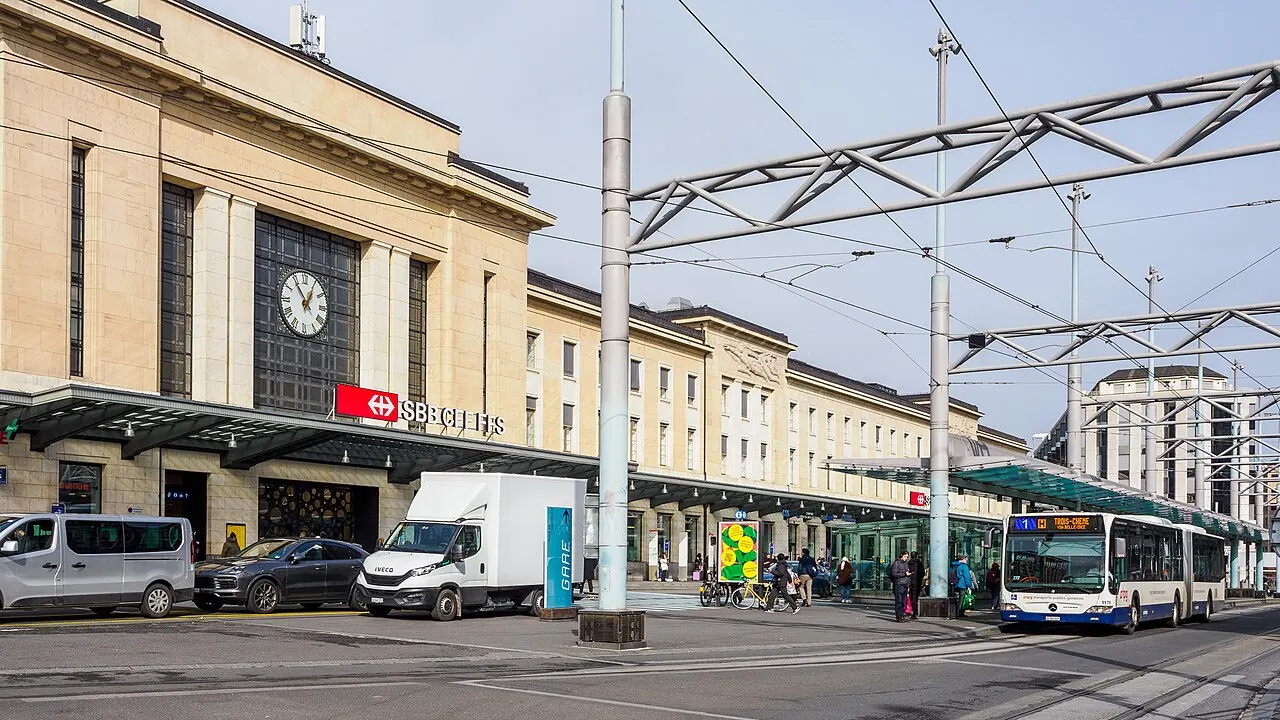
Choose the streets between Cornavin and Saint-Gervais for a city break that needs to stay flexible. The station handles arrivals and excursions, while Rue de Chantepoulet, Rue Rousseau and the lanes around the Saint-Gervais temple give the neighbourhood more interest than a transport interchange alone. Small shops and cafes along the historic watchmakers' quarter provide a different doorstep from the waterfront hotels. An address towards the river balances station access with walks across to the central shopping streets.
All trains serving Geneva Airport stop at Cornavin, according to the airport's own rail information, making this the clearest luggage-first option. TPG also publishes a Cornavin connection map for finding the correct stop and platform for the next journey. The compromise is a busy urban setting: road traffic, buses and station activity are part of the appeal and the nuisance. A room facing the main approaches can feel quite different from one on a smaller Saint-Gervais street. Pick the Old Town for historic immersion, or Paquis if lakeside evenings are the more important daily habit.
Plan it well: The map and photograph identify Cornavin station; the comparison also covers Saint-Gervais's streets to the south.
Geneva tourism: Saint-Gervais walking and shopping routePaquis: lake access and varied evening dining
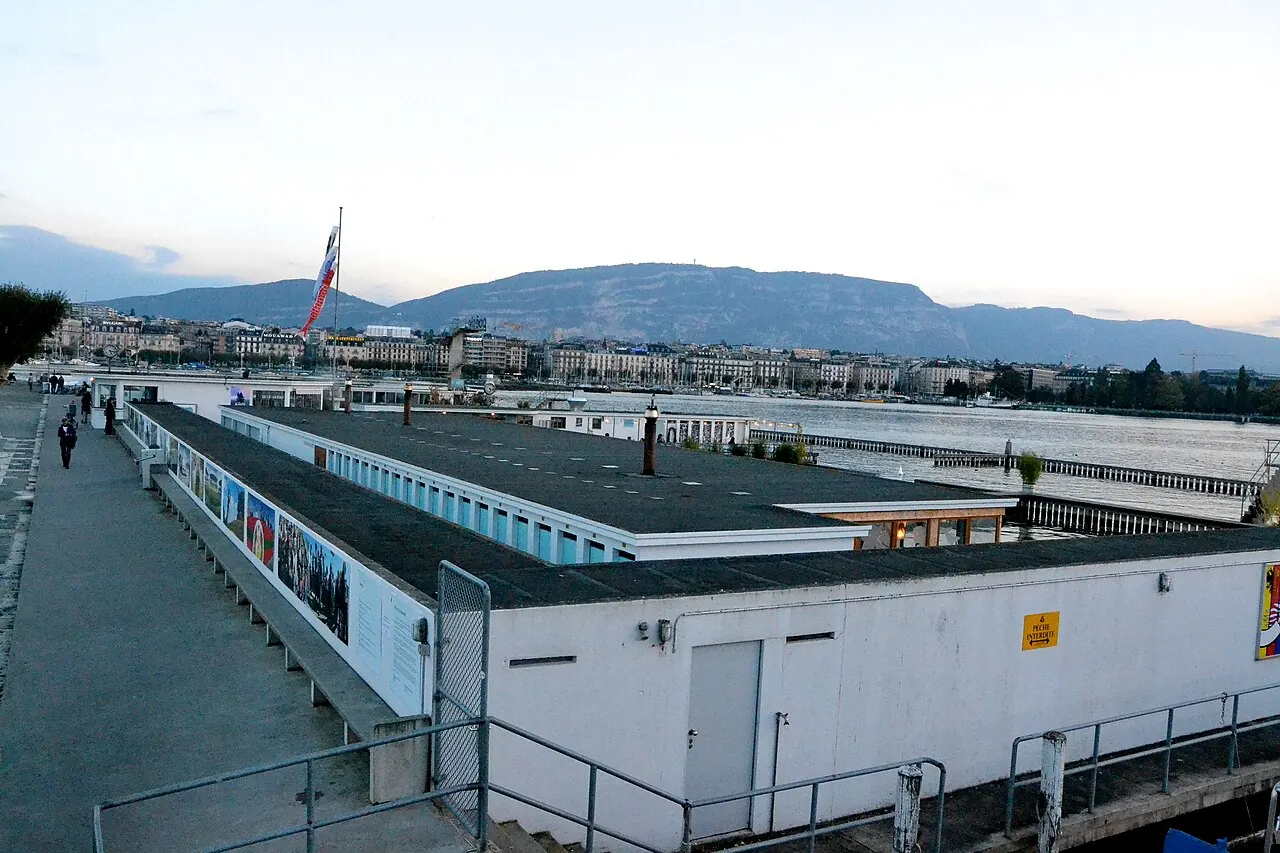
Paquis combines the right-bank lakefront with a dense, lived-in set of streets between the water and Cornavin. Bains des Paquis is the natural neighbourhood outing, with bathing facilities and a place to eat over the water; the surrounding streets offer a much broader range of cuisines than a row of grand lakeside hotels suggests. Rue de Lausanne and the lanes towards the waterfront are useful address references. Choose this base when you want to alternate central sightseeing with lake walks and dinners without treating every meal as a formal occasion.
The station remains a useful airport-arrival anchor, but verify the actual walk from Cornavin rather than assuming a lake-facing hotel is beside the platforms. TPG buses and the nearby boat network offer further options once you know your address. Geneva tourism describes Paquis as a nightlife area: streets near bars and restaurants can remain active after dinner, making room orientation worth checking. For a softer park-led stay, consider Eaux-Vives; for the least complicated rail departure, stay closer to Cornavin itself.
Plan it well: The pin marks Bains des Paquis on the waterfront, not the inland restaurant streets or neighbourhood limits.
Geneva tourism: Paquis districtEaux-Vives: waterfront walks, parks and longer stays
Eaux-Vives suits visitors who want the lake to be a daily activity, not just a photograph between museums. Quai Gustave-Ador leads towards the Jet d'Eau, while Parc La Grange, Parc des Eaux-Vives and the beach give this side more outdoor variety. The inland streets add neighbourhood food stops, so you can spend part of a day locally rather than cross back to the Old Town for every pause. It is a useful choice for a longer visit or a group mixing cultural sightseeing with time outside.
Do not confuse a waterfront address with one beside Geneve-Eaux-Vives railway station: they are different parts of the district. The Leman Express station is useful for regional travel, and TPG maps show the local connections towards Rive and the centre. Airport access still needs a planned onward leg from the airport or Cornavin rather than an assumed direct train to every Eaux-Vives hotel. Staying farther along the parks increases the walk back to central sights. Cornavin is better for repeated departures; the Old Town is better for concentrating several historic interiors into a short stay.
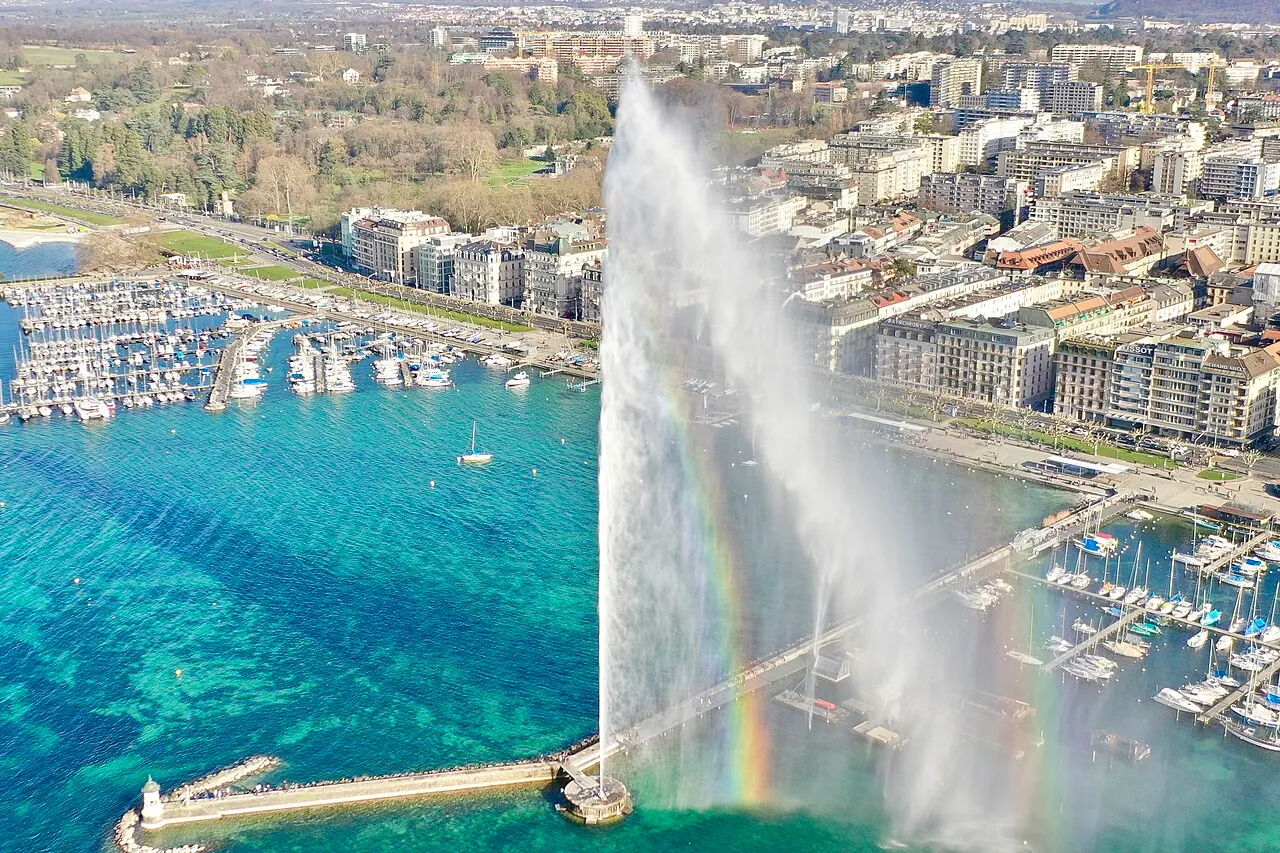
Plan it well: The pin and photograph identify the Jet d'Eau at the district's waterfront edge, not Geneve-Eaux-Vives station.
Geneva tourism: Eaux-Vives Park and districtPlainpalais and Quartier des Bains: markets, art and student-bar evenings
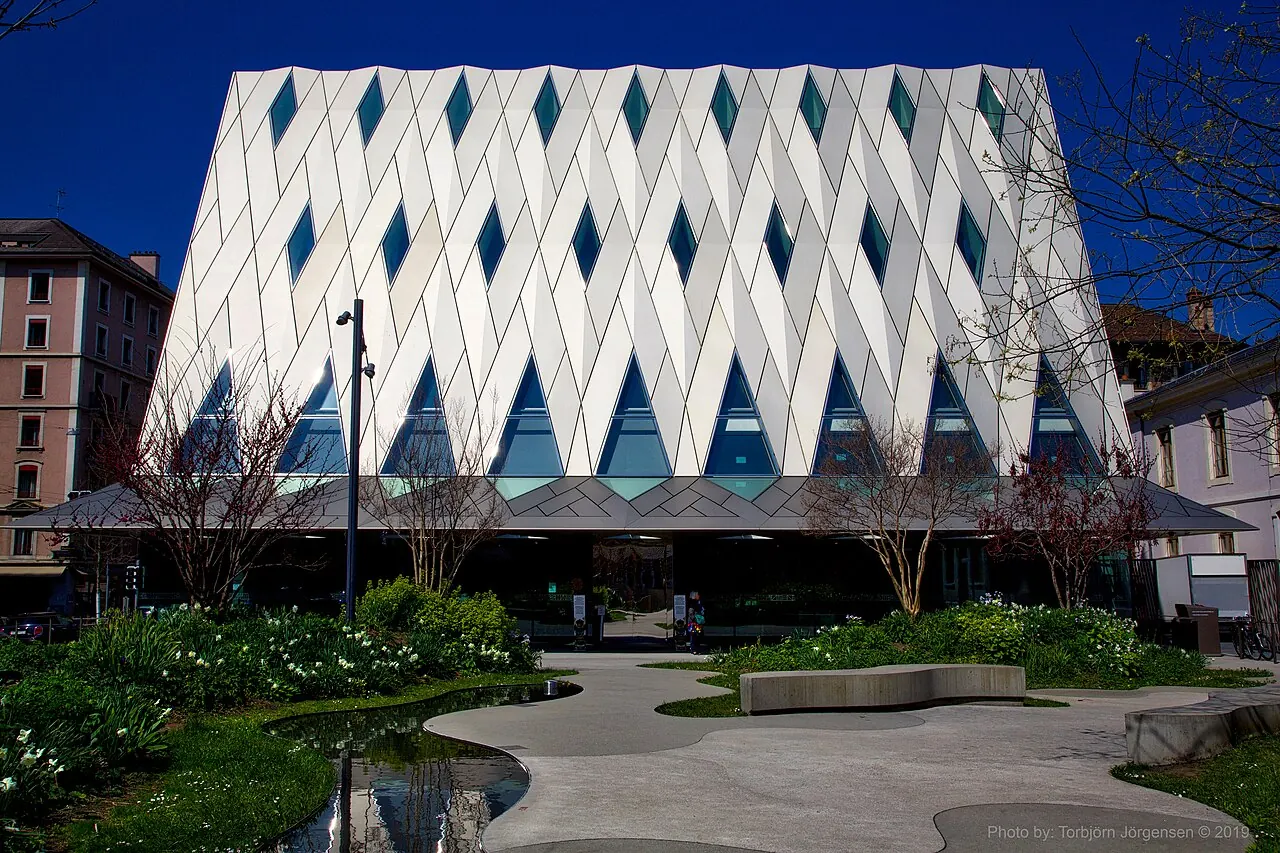
Plainpalais gives Geneva a different rhythm from its lakeside promenades. The open Plaine de Plainpalais hosts markets and a skatepark, while Rue de l'Ecole-de-Medecine and the neighbouring streets bring cafes and student-bar evenings. Towards Quartier des Bains, the MEG ethnography museum and galleries reward a culture-focused stay without making the cathedral your daily starting point. This base is especially useful when contemporary culture, watchmaking collections and neighbourhood meals are a bigger part of the itinerary than views across the lake.
TPG's Plainpalais stop is the key name to check, with tram 15 connecting this part of the city towards Cornavin and Nations. Airport rail arrivals can therefore continue through Cornavin, but your hotel's distance from the tram stop remains important. The tradeoff is the lack of a lakeside doorstep and activity around bars, events and the open square. Market days are not the same as a permanent food hall, so keep meals flexible. Choose Eaux-Vives for parks and water, or Nations for a visit dominated by international institutions.
Plan it well: MEG is the photographed and mapped museum anchor on the Quartier des Bains side, not the centre of the market square.
Geneva tourism: Plaine de PlainpalaisNations and the international district: institution visits and work-focused trips
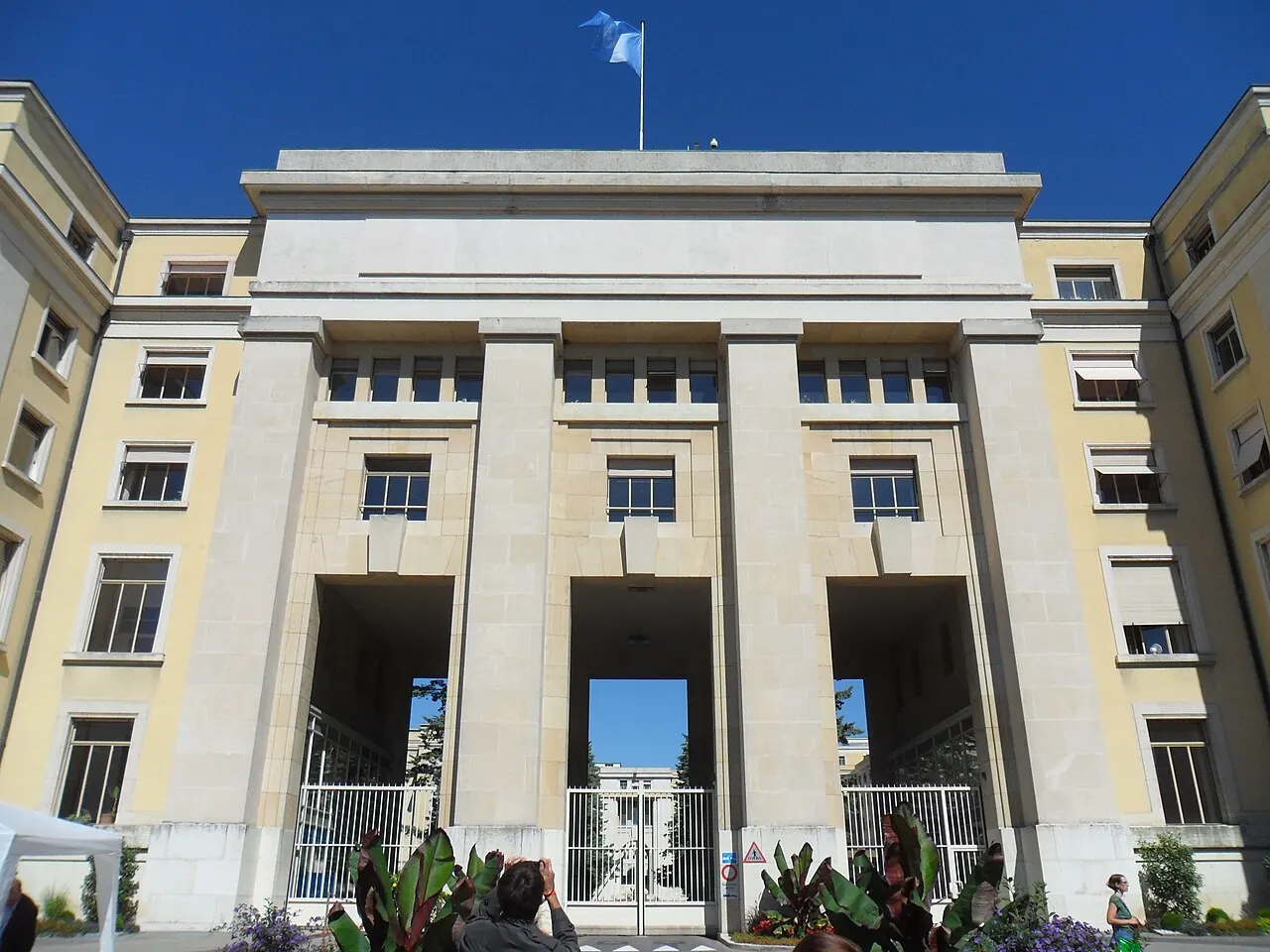
Nations is the purposeful choice for meetings, organised United Nations visits or a stay centred on Geneva's humanitarian institutions. The Palais des Nations, Broken Chair, Ariana Museum and International Red Cross and Red Crescent Museum make this more than a business-hotel district. Nearby parks and the botanical garden provide outdoor alternatives between appointments. Dining is less concentrated into one old-city lane, so check the streets immediately around your hotel rather than expecting the range of Paquis simply because both lie on the right bank.
TPG tram 15 serves Nations and links it with Cornavin and Plainpalais; use the operator's planner for the airport connection and the exact institution entrance. A hotel near the square is not automatically beside the visitor gate used for a booked tour. The compromise for a leisure weekend is repeated travel back to the Old Town, central shopping and waterfront restaurants. Stay here when that institutional access has a clear purpose. Choose Cornavin for a more balanced transport base, or Paquis when your evenings matter as much as your daytime appointments.
Plan it well: The Palace of Nations pin identifies the institution, not its currently designated visitor entrance or nearby hotels.
Geneva tourism: international districtArriving and getting around
Use Cornavin as the rail-arrival reference
Geneva Airport confirms that all trains to and from its station stop at Geneve-Cornavin. For Old Town, Eaux-Vives, Plainpalais and Nations stays, plan the next leg and the final walk separately.
Geneva Airport: train accessLocate the correct TPG stop
TPG publishes geographic maps and connection maps for Cornavin, Bel-Air, Rive and the airport. These are useful when a hotel description names a hub but not the actual boarding point.
TPG: network and connection mapsCheck tram 15 for Plainpalais and Nations
The operator lists Plainpalais, Cornavin and Nations on line 15. Consult the current line page for the travel date rather than carrying over an old timetable or assuming overnight service.
TPG: line 15 stops and timetableAsk about the Geneva Transport Card
Approved accommodation can provide the Geneva Transport Card for local public transport. Confirm eligibility with the property and obtain the card for the arrival journey; do not assume every privately rented address qualifies.
Geneva tourism: transport card conditionsTreat Eaux-Vives station and the lakefront separately
The Leman Express operator identifies the Cornavin-Eaux-Vives-Annemasse rail connection. An Eaux-Vives hotel still needs an address-level route to the station or a suitable TPG stop.
Leman Express: CEVA connectionCompare hotels in Geneva
Compare Geneva hotels in the area that matches your days. Check whether the address is on the hill, beside a busy approach road, near the tram stop or farther along the lake; these details change the stay more than a broad central-location label.
Explore Geneva hotels