
Baden-Baden city guide
10 things to do in Baden-Baden
Balance historic bathing with the Oos-side gardens, art and spa architecture, then choose a mountain panorama or castle climb according to the weather.
Plan your visit
Baden-Baden works best when the bath visit and the walking day leave room for one another. The historic quarter concentrates the thermal facilities, while the Oos leads south through gardens to Lichtental. Merkur and Hohenbaden add elevation and need their own weather and transport decisions. Choose one bathing experience first, then use the parks and cultural stops to shape the rest of the stay rather than treating both spas as compulsory appointments.
Choose the historic bathing ritual at Friedrichsbad
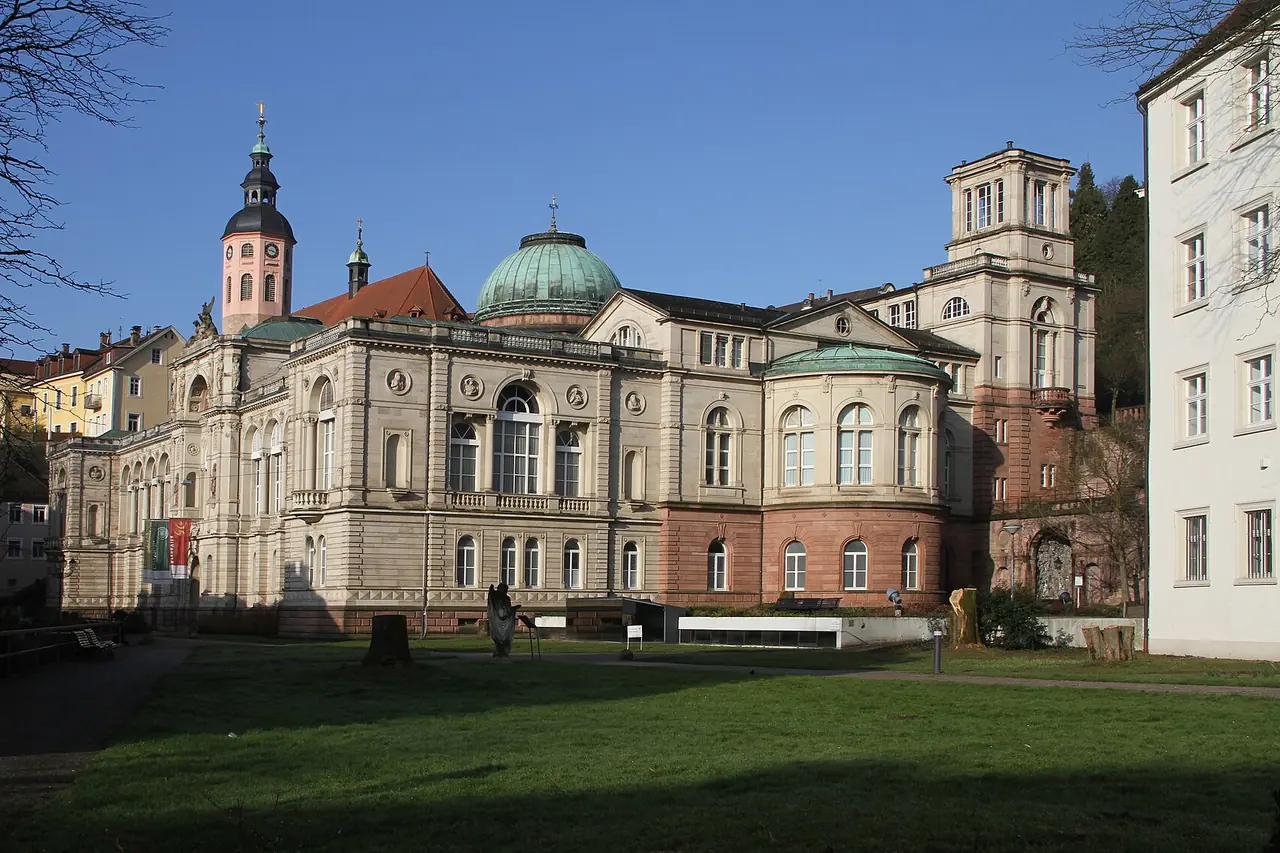
Friedrichsbad is the historic alternative to Baden-Baden’s modern thermal-pool experience. The building is itself a landmark, and its bathing sequence combines Roman-style water bathing with Irish hot-air traditions. Choose it because the ritual and the nineteenth-century setting interest you, not because it is simply the closest pool on the map. Looking at the exterior is worthwhile even when a bath session is not part of your trip.
Read the operator’s current rules for your date, including swimwear arrangements, age restrictions and any optional treatments. Do not rely on older descriptions that present one bathing convention as permanent. Leave a generous gap afterwards rather than scheduling a steep hike immediately after the session. Keep phones and photography out of the bathing experience wherever prohibited, and ask staff about accessibility before assuming a historic building suits every mobility requirement.
Plan it well: Friedrichsbad and Caracalla have different bathing conventions; confirm the one you are booking.
Friedrichsbad: official visitor informationMake Caracalla a dedicated thermal-pool stop
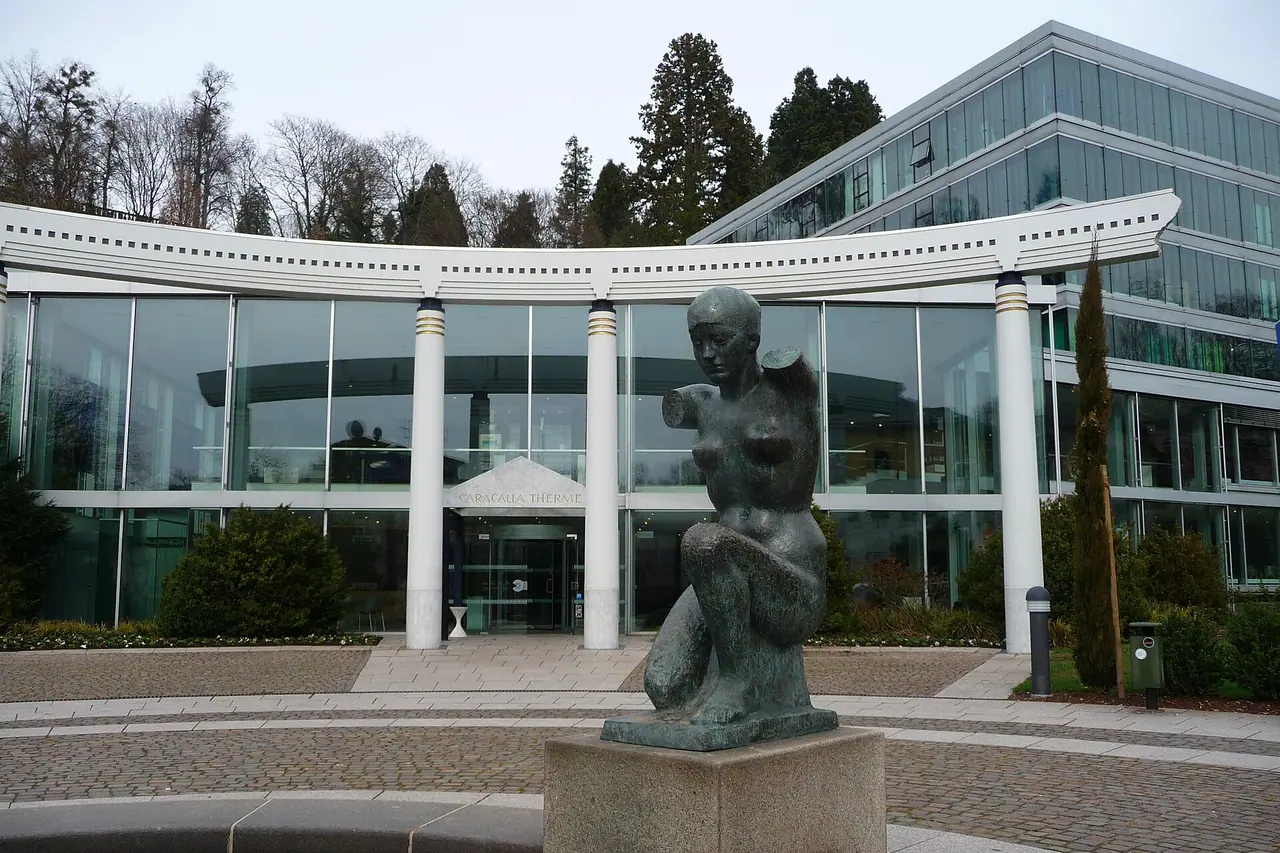
Caracalla provides the contemporary thermal-bathing option in the historic spa district. Its pool landscape is a different experience from the structured ritual at Friedrichsbad, so compare what you actually want from the session before choosing. Indoor and outdoor water areas make this a substantial activity rather than a quick stop between monuments. The public spa is not the same thing as a private hotel pool advertised in a room package.
Check the operator’s ticket categories and the rules for the sauna separately from the bathing area. Clothing conventions and access restrictions can differ within the complex. Leave time for changing and a meal afterwards, and keep the rest of the day flexible rather than trying to see both thermal establishments in one rushed circuit. If you have particular access needs, ask about the facilities you will use, not just whether the building has an accessible entrance.
Plan it well: Verify the specific pool and sauna access included in your chosen admission.
Stadtwerke Baden-Baden: local transportFollow the Oos along Lichtentaler Allee
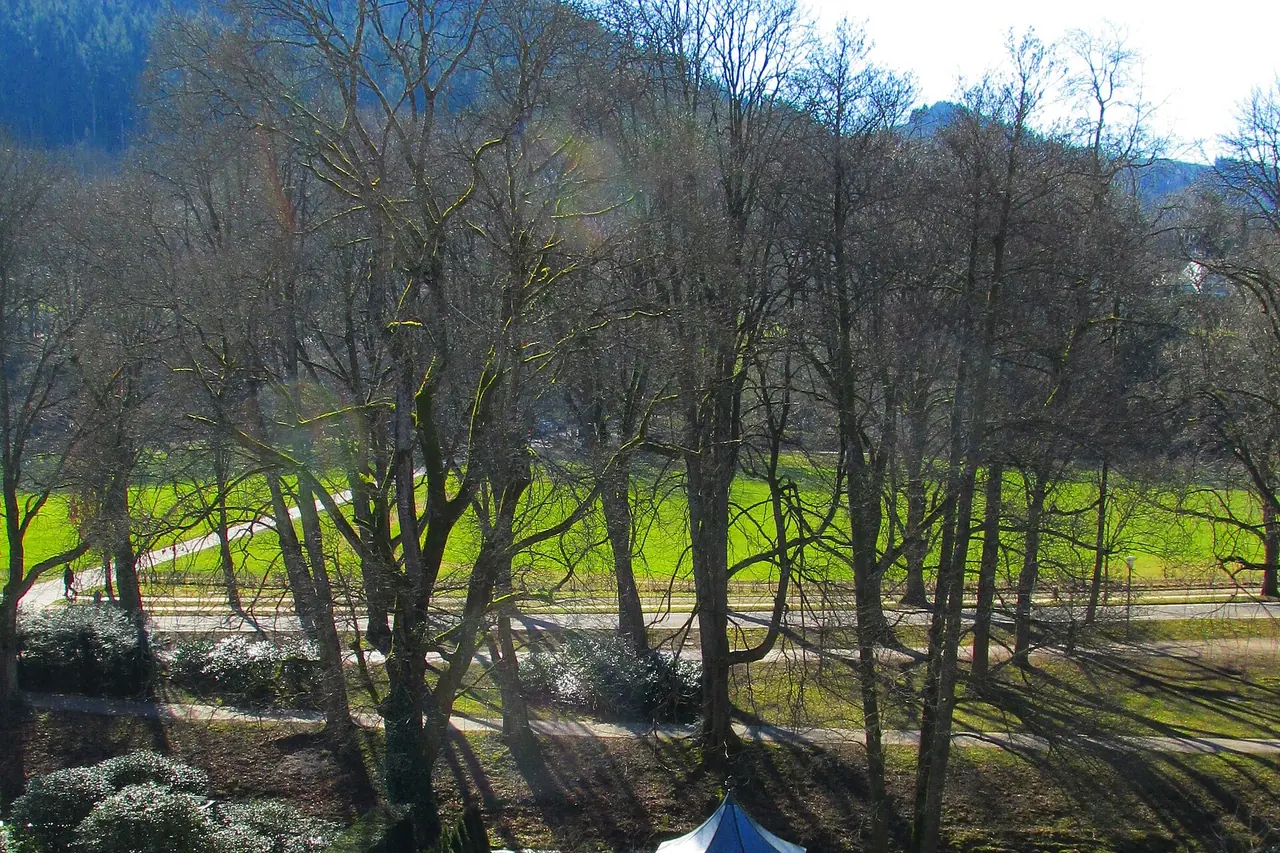
Lichtentaler Allee is the walk that links Baden-Baden’s spa architecture with its garden landscape. The route follows the Oos past mature trees, open lawns and cultural buildings towards Lichtenthal Abbey. It is more rewarding as a gradual change of scenery than as a checklist of named trees or statues. Start near the Kurhaus, notice the transitions between water, planting and buildings, and choose the length that fits the day.
The avenue is also useful for joining the Museum Frieder Burda or the Gonneranlage without another transfer. A full out-and-back walk is a different commitment from a short central stroll, particularly after a bath session. Check your return route if you continue to Lichtental, and remember that a hotel described as beside the avenue can sit at either end of the corridor. Wet leaves, seasonal maintenance and shorter daylight hours can change the easiest walking plan.
Plan it well: Allow the walk to end where your energy does; Lichtental has a separate return-transport decision.
Lichtentaler Allee: official visitor informationRead the murals along the Trinkhalle
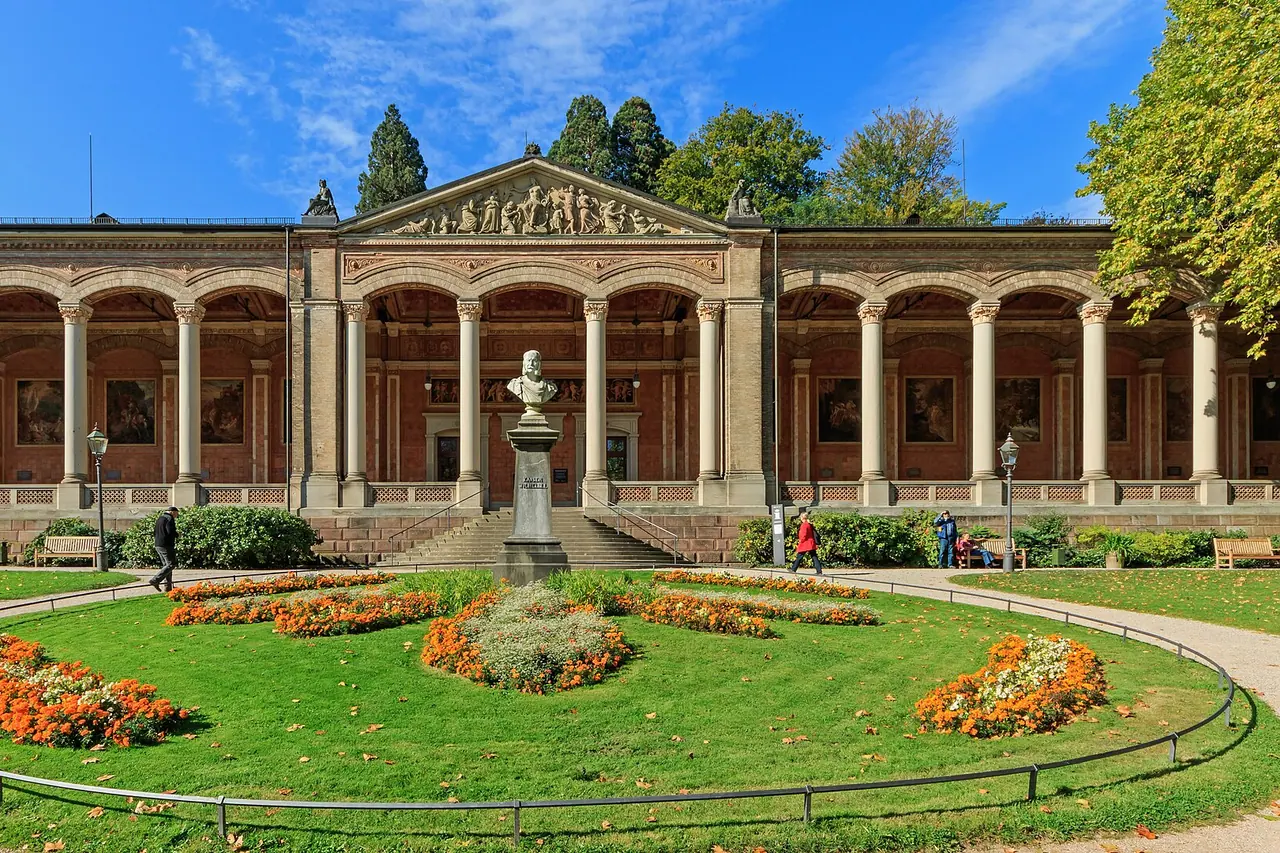
The Trinkhalle brings the old drinking-cure promenade into focus. Its long columned walkway and painted scenes make it one of the central spa quarter’s most legible buildings. Look along the whole frontage before moving closer to the murals, where regional stories become part of the architecture. The value of the stop is in understanding how a spa town provided sociable walking spaces, not just in photographing another row of columns.
Combine it with the Kurhaus grounds and a short walk along the Oos. Public access to a walkway does not mean every room or event inside is open, so follow the arrangements on arrival. Avoid treating the historical name as an instruction to drink from any available water outlet. The covered frontage can provide a useful pause in changeable weather, but keep passages clear when groups gather and choose your next indoor stop independently.
Plan it well: The historic drinking hall is an architectural visit, not a prescription for a water cure.
Trinkhalle: official visitor informationUnderstand the social side of the spa at the Kurhaus
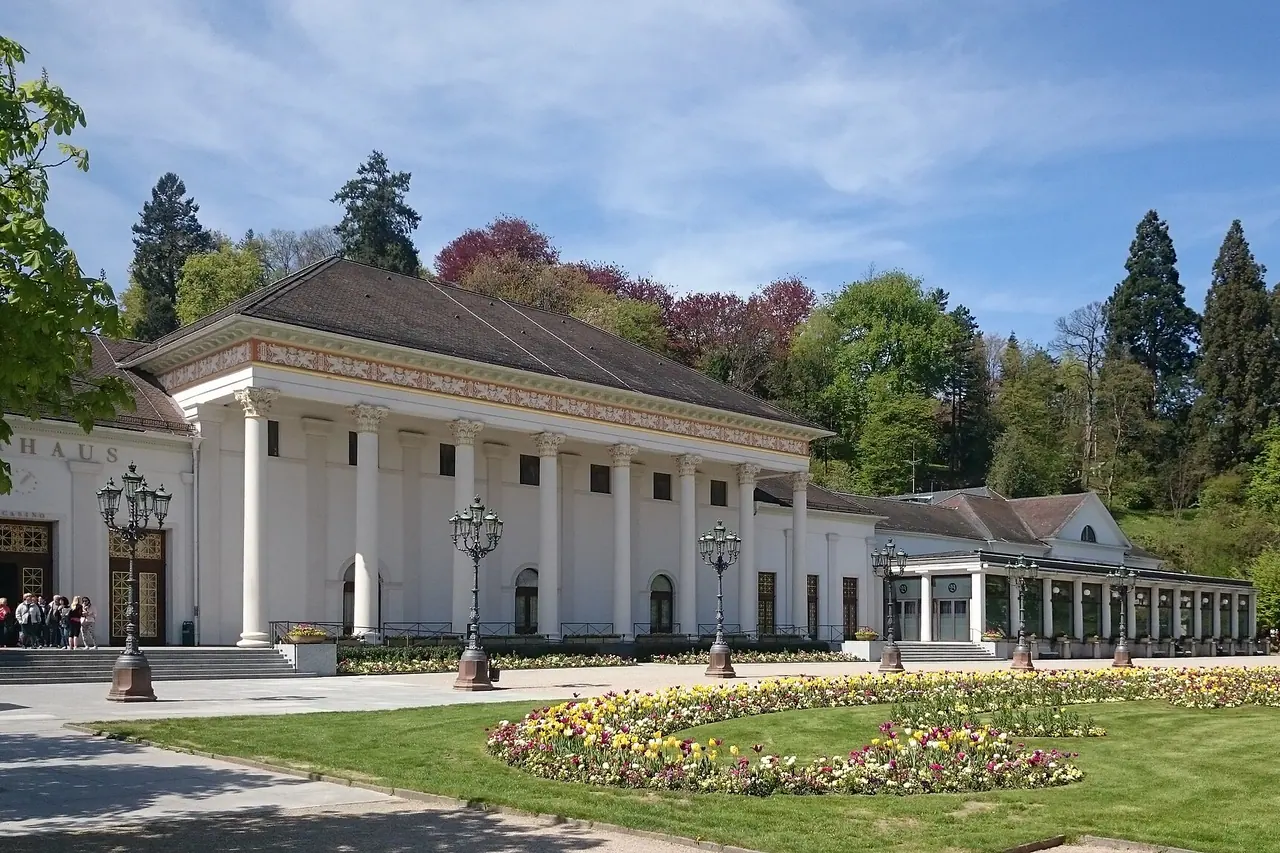
The Kurhaus explains the social life that accompanied the bathing cure. Its classical frontage, grounds and neighbouring colonnades form a setting for gathering and entertainment rather than a place concerned only with treatment. Take time to see the complex from outside and notice how it opens towards the gardens. This is a useful architectural stop even if neither gaming nor a scheduled performance is part of your visit.
Interior events, casino access and any guided tours have their own conditions. A general Kurhaus visit does not guarantee admission to all of them, and evening entry may involve dress or identification requirements. Check the programme that corresponds to your dates instead of assuming a famous historic room is always available. Link the grounds with the Trinkhalle and Lichtentaler Allee, then leave yourself a clear choice between a cultural appointment and an unhurried park walk.
Plan it well: Book a specific tour or event if an interior is essential to your visit.
Kurhaus: official visitor informationChoose an exhibition at Museum Frieder Burda
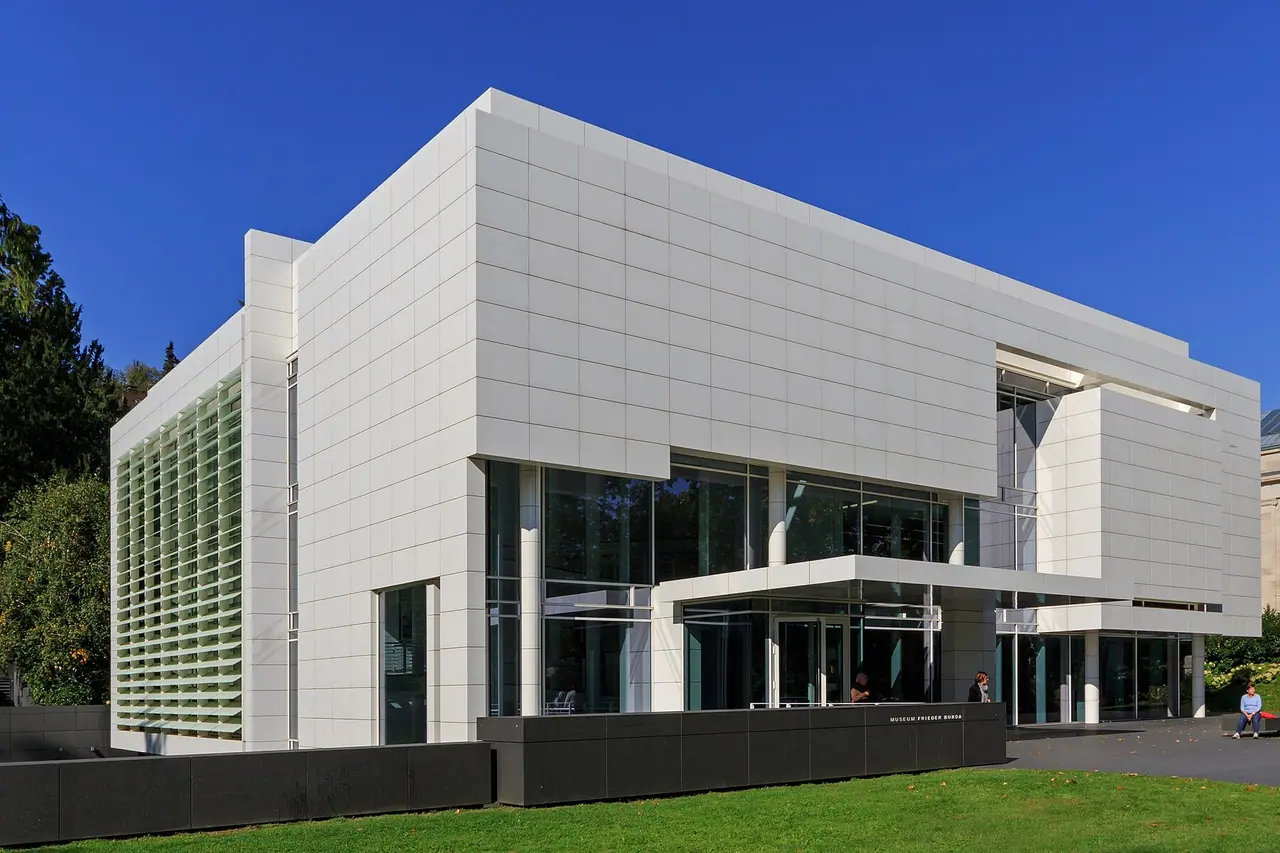
Museum Frieder Burda adds a contemporary architectural and artistic stop to the spa promenade. Richard Meier’s light-coloured building sits beside the avenue, making the approach through the gardens part of the experience. Choose a visit for the exhibition currently on view, rather than expecting every work associated with the collection to be displayed. A focused gallery session can be a useful counterweight to the outdoor walking route.
Consult the museum’s own visitor page for admission and current arrangements, and check whether a combined ticket fits the exhibitions you actually want to see. The adjacent Kunsthalle is a separate institution, even though the buildings have a close physical relationship. Leave enough time to look rather than using the museum only as a rain shelter between other bookings. If access requirements matter, use the museum’s published facilities information before deciding on a wider museum circuit.
Plan it well: An advertised collection and the works in a temporary exhibition are not the same promise.
Museum Frieder Burda: official visitor informationChoose a clear-weather ascent to Merkur
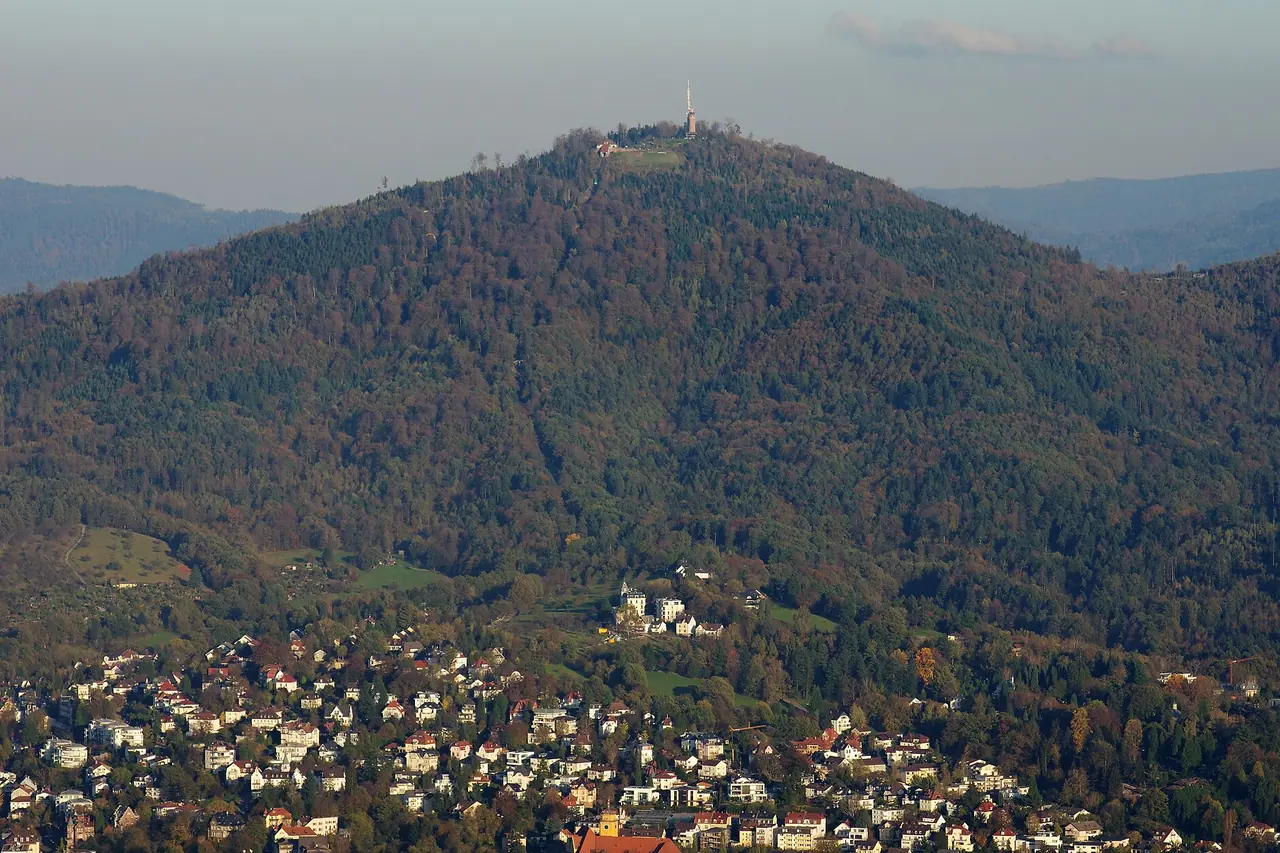
Merkur offers the mountain-scale view that the riverfront cannot provide. The summit looks across Baden-Baden and the surrounding landscape, while the funicular makes an ascent possible without committing to a full uphill hike. Choose a day with suitable visibility and examine the operator’s access information before setting out. The mountain is a change of setting from the spa centre, not another monument on the flat town walk.
The guide pin marks the mountain, not the lower funicular station. Plan the city connection to that station separately and check operation before relying on a return ride. An uphill trail is an alternative with its own terrain and weather considerations, not an automatic backup for every traveller. Leave room for a shorter summit walk instead of extending into the forest without a route plan, and return before the last usable connection.
Plan it well: Use the Stadtwerke directions to reach the lower station; do not navigate to the summit pin by road.
Merkur: official visitor informationClimb into the ruins of Hohenbaden
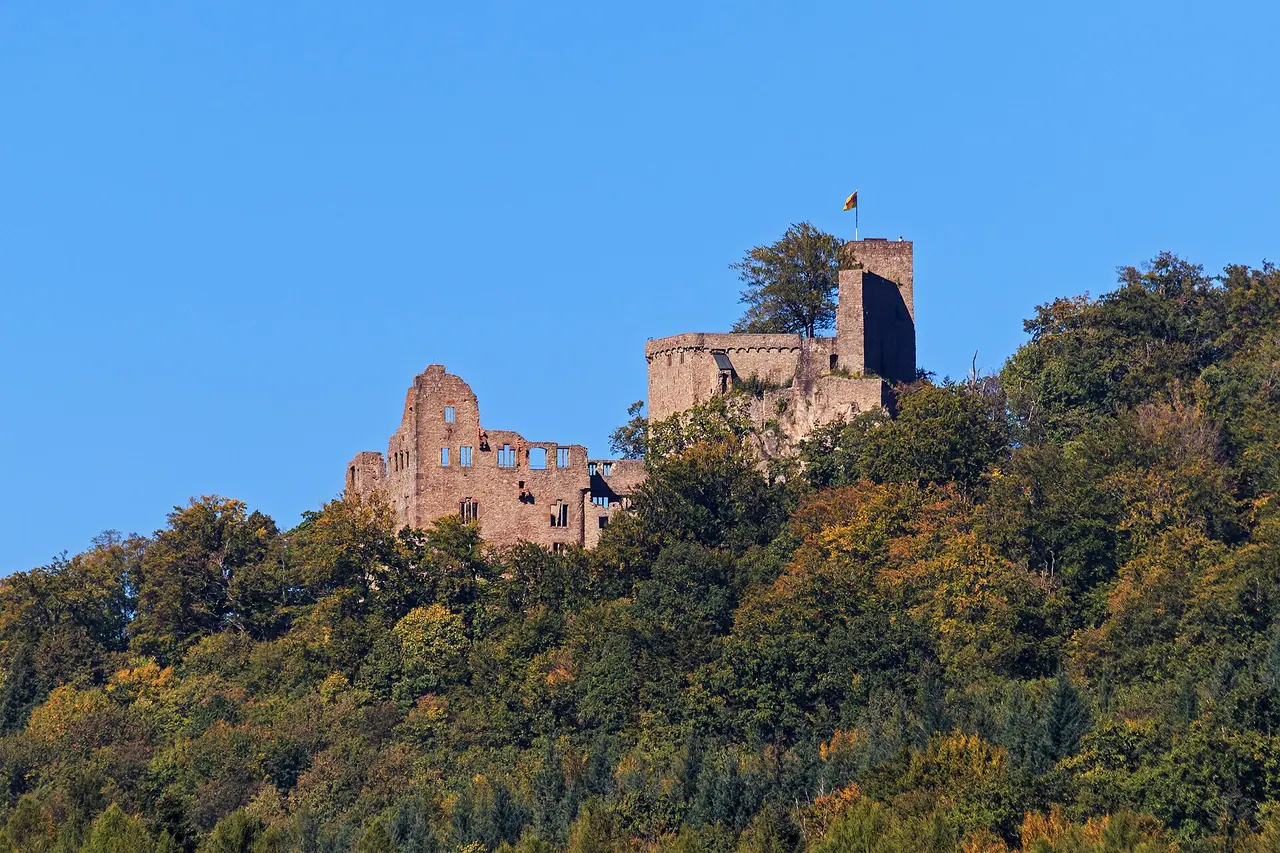
Hohenbaden changes the story from a spa resort to the older fortified landscape above it. The ruined walls and remaining rooms make sense in relation to the hillside, so look outward as well as into the stonework. This is a good option when you want a castle walk and a view without another urban interior. It requires a separate approach from the central promenade, however convenient it may appear on a small map.
Check current site access and choose transport or a marked walking route that matches your group. Ruined stairways, exposed viewpoints and uneven ground can be unsuitable for some visitors, especially in wet conditions. Do not assume every photographed tower or passage is currently accessible. Make the castle the main uphill outing of the day rather than adding it after Merkur simply to complete both viewpoints. Leave energy and daylight for the return.
Plan it well: Wear shoes suited to uneven stone and follow current barriers in the ruins.
Hohenbaden Castle: official visitor informationEnd the avenue walk at Lichtenthal Abbey
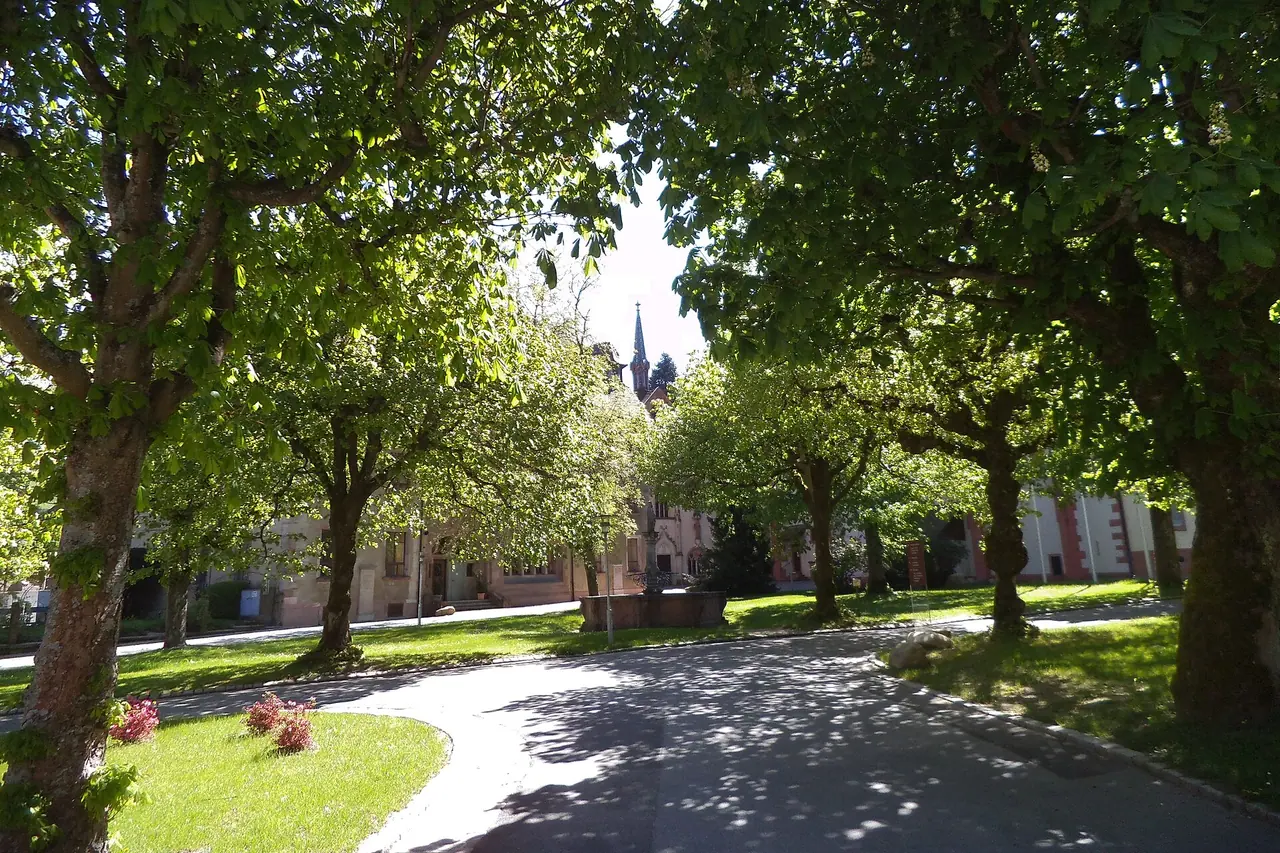
Lichtenthal Abbey gives the southern end of the Oos walk a distinct destination. The monastic buildings and church provide a quieter architectural setting than the central entertainment quarter, and the approach through Lichtental helps show that Baden-Baden extends beyond its famous baths. Come to understand the abbey as a religious community and historic place, not as a freely accessible collection of every room within the complex.
Check visitor arrangements before expecting an interior or guided visit. Worship and the life of the community take precedence, and an open courtyard does not permit wandering into private buildings. The walk from the centre is a longer commitment than a short garden loop, so decide whether to return on foot or use local transport. A pause nearby can complete the outing without adding another attraction merely because the rest of the afternoon is unbooked.
Plan it well: Plan the return from Lichtental before starting a full out-and-back avenue walk.
Lichtenthal Abbey: official visitor informationLook for formal garden structure in the Gonneranlage
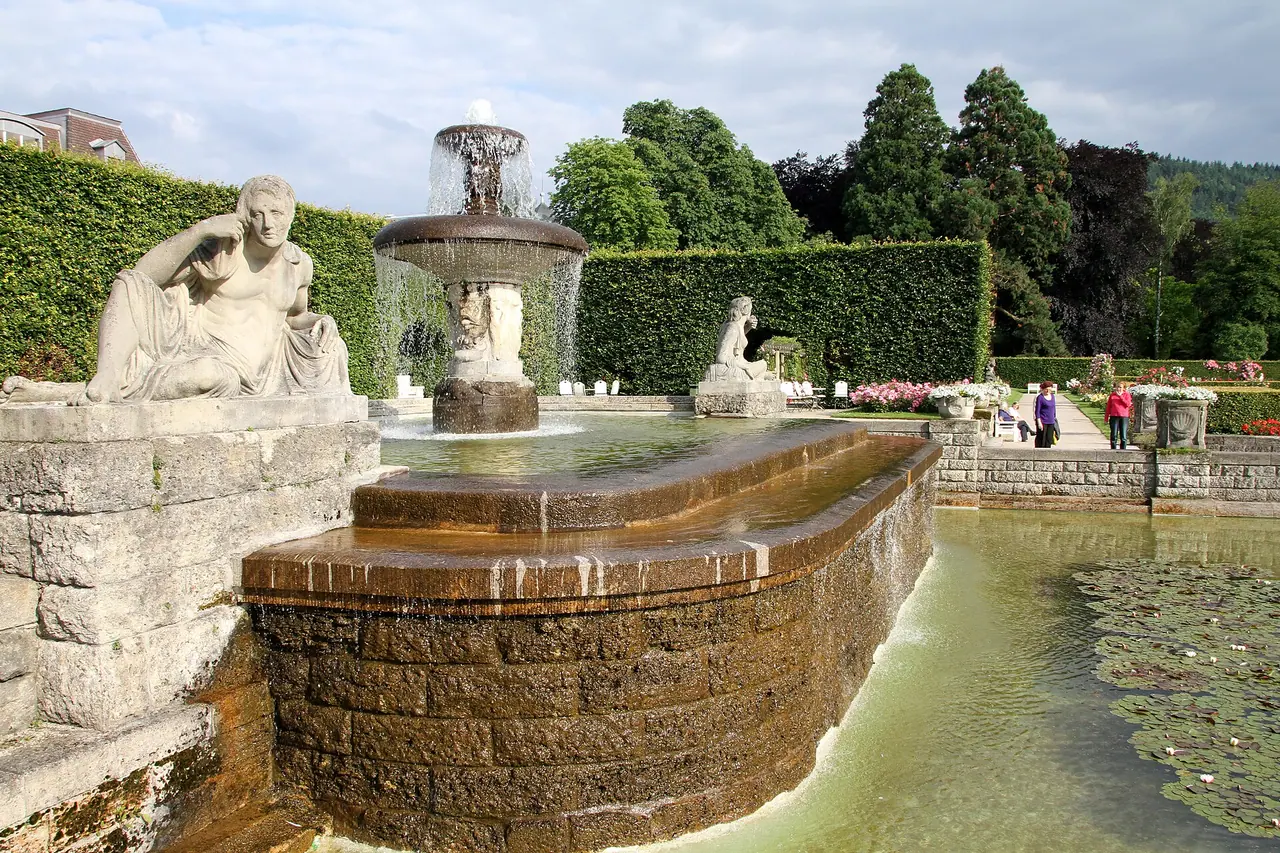
The Gonneranlage is worth visiting for its formal design as much as its roses. Hedges, paths, sculpture and the Josefinenbrunnen organise a contained garden quite differently from the looser parkland along the avenue. Look at the symmetry and the relationship between the fountain and surrounding beds before concentrating on individual flowers. Even outside the strongest flowering period, the layout explains why this small detour belongs in an Oos-side walk.
The city’s visitor rules matter here: the garden is not an unrestricted picnic or cycling space, and listed steps affect parts of the accessible route. Check current gates and any maintenance closures, then leave yourself time to sit without occupying a path. A photograph in full bloom is not evidence of what you will find in October. Combine the garden with the nearby avenue rather than making it compete with a pre-booked bath session.
Plan it well: Follow the garden rules and check seasonal conditions instead of expecting summer flowers year-round.
Gonneranlage: official visitor informationA balanced two-day plan
Use the first day for the local cluster and give the second day one clear theme. The regional alternatives are choices, not a checklist to finish together. Match any booked visit to current access and the journey back to your accommodation.
Hohenbaden Castle: official visitor informationDay one: historic bathing and the central gardens
Choose Friedrichsbad or Caracalla under its current visitor rules. Afterwards, see the Trinkhalle and Kurhaus grounds and walk a manageable part of Lichtentaler Allee.
Day two: one uphill outing or a cultural walk
Choose Merkur in suitable weather or Hohenbaden with an appropriate walking plan. Alternatively, visit Museum Frieder Burda, the Gonneranlage and Lichtenthal Abbey, using local transport for the return if needed.
Practical details to check before travelling
Recheck the operator and transport information for your actual dates. Seasonal notices, facility inclusions and the final approach matter more than a broad distance on a map. Keep an indoor or lower-effort alternative when conditions make the original outing unsuitable.
Stadtwerke Baden-Baden: local transportBathing conventions
Read the operator rules for your date. Historic descriptions of textile-free bathing are not a substitute for the current arrangements.
Friedrichsbad: official visitor informationRail arrival
Baden-Baden station is in Oos. Match the onward city connection to your actual accommodation and evening plans.
Caracalla Spa: official visitor informationWeather and gradients
Keep Merkur or Hohenbaden flexible. Wet stone, reduced visibility and shorter daylight can justify choosing an indoor exhibition instead.
Stadtwerke Baden-Baden: local transportChoose a hotel around your daily routine
Compare the historic bath quarter and Kurhaus surroundings for a short first visit, or a particular park-side address along Lichtentaler Allee for a slower stay. Oos is a station base rather than the main spa centre. Lichtental works best when the residential setting and current city connection suit the daily plan.
Public spa admission, hotel pools and treatments need separate confirmation. Ask about room orientation, the actual parking or drop-off and the return after an evening meal. A casino or concert outing does not imply included admission, and a hotel beside the park does not eliminate the station transfer.
Baden-Baden tourism: town districts Explore Baden-Baden hotels