
Dusseldorf city guide
Where to stay in Düsseldorf: seven different bases
Choose between Old Town evenings, a food-focused central stay, harbour architecture and neighbourhood shopping. Start with the part of Düsseldorf you will use repeatedly, then judge the actual hotel address.
Plan your visit
Choose your Düsseldorf base around arrival, daytime plans and evening return. Altstadt, Carlstadt, Stadtmitte, Unterbilk or MedienHafen, Flingern, Pempelfort and Oberkassel offer different settings. Compare the exact address and room afterwards: a neighbourhood name cannot describe your arrival, dinner route or view.
Altstadt around Burgplatz
Choose the Old Town for brewery restaurants, historic streets and riverfront evenings. The tradeoff is a lively hospitality district. Ask about the room’s position and compare its surroundings rather than assuming a central address is quiet.
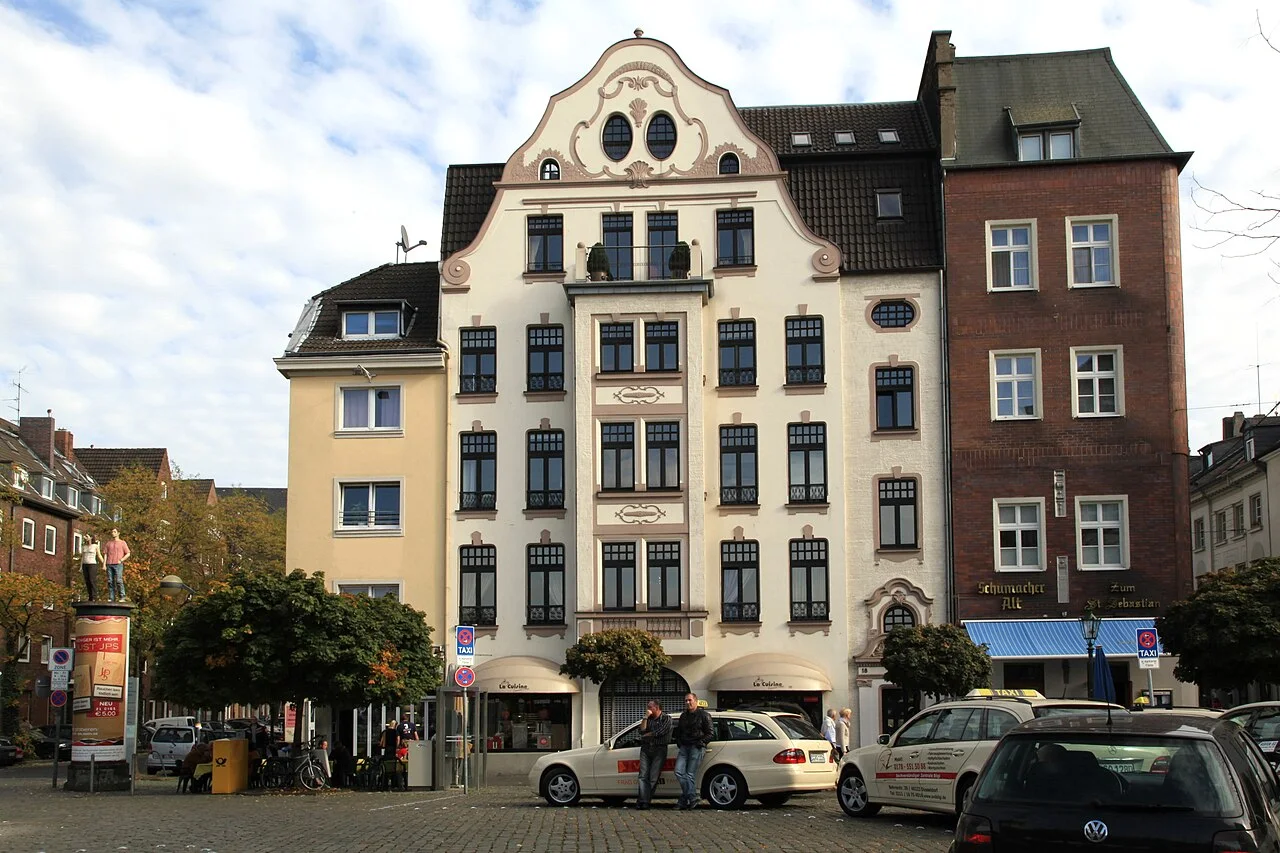
Place a hotel address beside the places where you want to spend the evening: a brewery restaurant, a Burgplatz street or the riverfront. This makes the neighbourhood a deliberate choice rather than only the shortest route to a landmark. Check the room category, window orientation and arrival with luggage. The historic square photograph provides neighbourhood context; it represents neither a hotel nor a guaranteed view.
Official sourceCarlstadt around Carlsplatz
Consider Carlstadt for galleries, antique shops, the food market and older streets. It suits a browsing-and-culture weekend. Compare the market-day atmosphere and the route from your arrival point; the area label alone does not describe the room or entrance.
Choose this area if small shops, galleries and a market lunch are a meaningful part of your stay. Put Carlsplatz’s actual trading days beside your travel dates, then compare the hotel entrance and return from dinner. An address facing the market may feel different from the next street. The area name alone says nothing about room size, sound insulation or the precise entrance.
Official sourceStadtmitte and Little Tokyo
The area between the main station and centre works well when rail arrival and Japanese food shape the trip. You gain an urban base rather than a riverfront setting. Check the precise street, luggage approach and evening return.
First check the station used by your actual train and the final approach with luggage. Then choose a few Little Tokyo food or shopping addresses that you want during the stay. The urban base will work for a specific trip rather than merely as a general central choice. Compare the route to the Rhine and the return after dinner separately from the convenience of arriving by rail.
Official sourceUnterbilk or MedienHafen
Choose deliberately: the Lorettostraße side of Unterbilk offers neighbourhood boutiques and cafés, while MedienHafen focuses on harbour architecture and restaurants. Compare the specific address with your daily plans; these are not interchangeable doorstep settings.
Distinguish an address near the shops and cafés around Lorettostraße from one among the harbour buildings. The former suggests neighbourhood wandering; the latter puts architecture and harbour restaurants first. Compare both with your daily museum or Old Town route. A hotel name containing harbour does not automatically refer to the exact setting you have in mind.
Official sourceFlingern around Ackerstraße
Consider this quarter for independent browsing and street art. It suits travellers who want the neighbourhood itself as part of the visit. Allow for a planned connection to the Old Town and check your hotel’s actual stop.
Pick a few streets or independent businesses that you genuinely want to browse, and consider whether you will spend time here outside the main city sights. That gives Flingern a clear role in the trip. Check the stop actually serving your accommodation and the evening journey back. A creative quarter does not guarantee a gallery in your hotel building or shops that are always open.
Official Visit Düsseldorf neighbourhood informationPempelfort
The tourism board highlights this quarter’s green spaces. Consider it when a neighbourhood base matters more than staying on the busiest Old Town streets. Compare the chosen address with your museum or river plans rather than assuming the whole district is equally close.
Decide which green break or neighbourhood street you want nearby, then compare individual addresses. Use your chosen museum or river visit as a reference instead of treating the whole quarter as equally close. Look at the last walk from the stop and access with luggage. A greener neighbourhood description is not a guarantee that every room is quiet or overlooks a park.
Official sourceOberkassel across the Rhine
Choose the west bank for a different river perspective and Art Nouveau streets. The tradeoff for a centre-focused itinerary is crossing the Rhine for repeated visits. Check the bridge or transit route and the last part to the hotel.
Choose this bank when Oberkassel’s streets and the river itself form part of your visit. If most plans revolve around the Kö or Old Town, account for each crossing. Check the current bridge or transit connection and the return at your actual evening time. A west-bank address promises neither a river view nor a short walk to every separate Christmas-market location.
Official sourcePractical information
Compare your actual arrival, evening route, room layout and property access after choosing the area. These are editorial base suggestions, not guarantees of hotel quietness, child capacity, parking, step-free routes or room availability. Attraction and transport tickets are separate from the hotel booking.
Compare the base first, then the property and actual room. Enter your nights, all adults and children and the correct room arrangement before comparing prices. Check cancellation, breakfast, access and any parking with each accommodation. Let your market, museum and meal appointments define which address is convenient. Hotel, transport and attraction bookings have separate conditions.