
Alicante city guide
Where to stay in Alicante
Find your Alicante base in the old town, Ensanche, Postiguet, Albufereta or San Juan beach, comparing atmosphere, airport access and everyday travel trade-offs.
Plan your visit
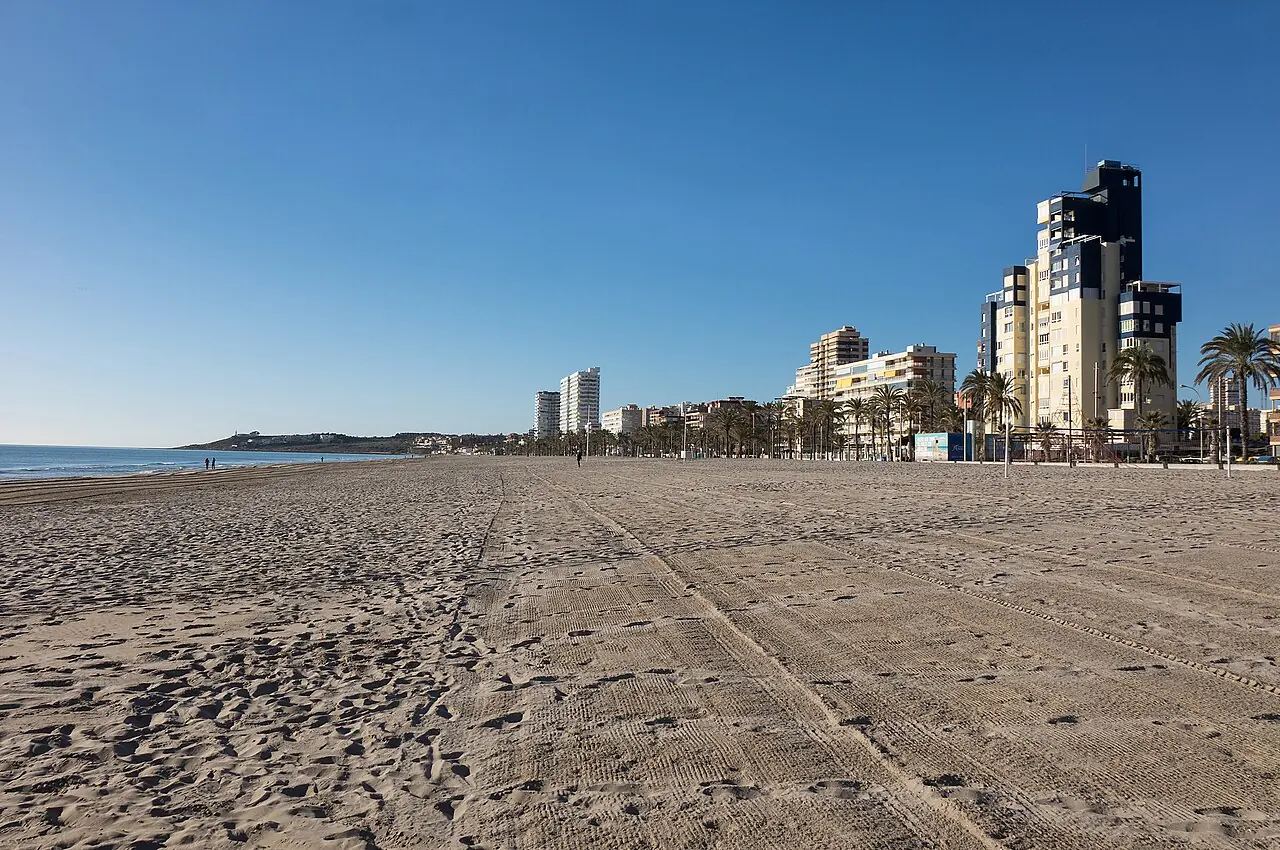
Alicante's old town and Postiguet make a compact city-and-beach base, while Albufereta and Playa de San Juan give the coast more weight. Ensanche suits travellers who value arrival connections and everyday streets. These are accommodation areas rather than five lists of attractions. Inspect the hotel's actual location and final walking route, especially where a neighbourhood rises away from the beach or where a place name also refers to a separate municipality.
Old town: walking, dining and historic streets
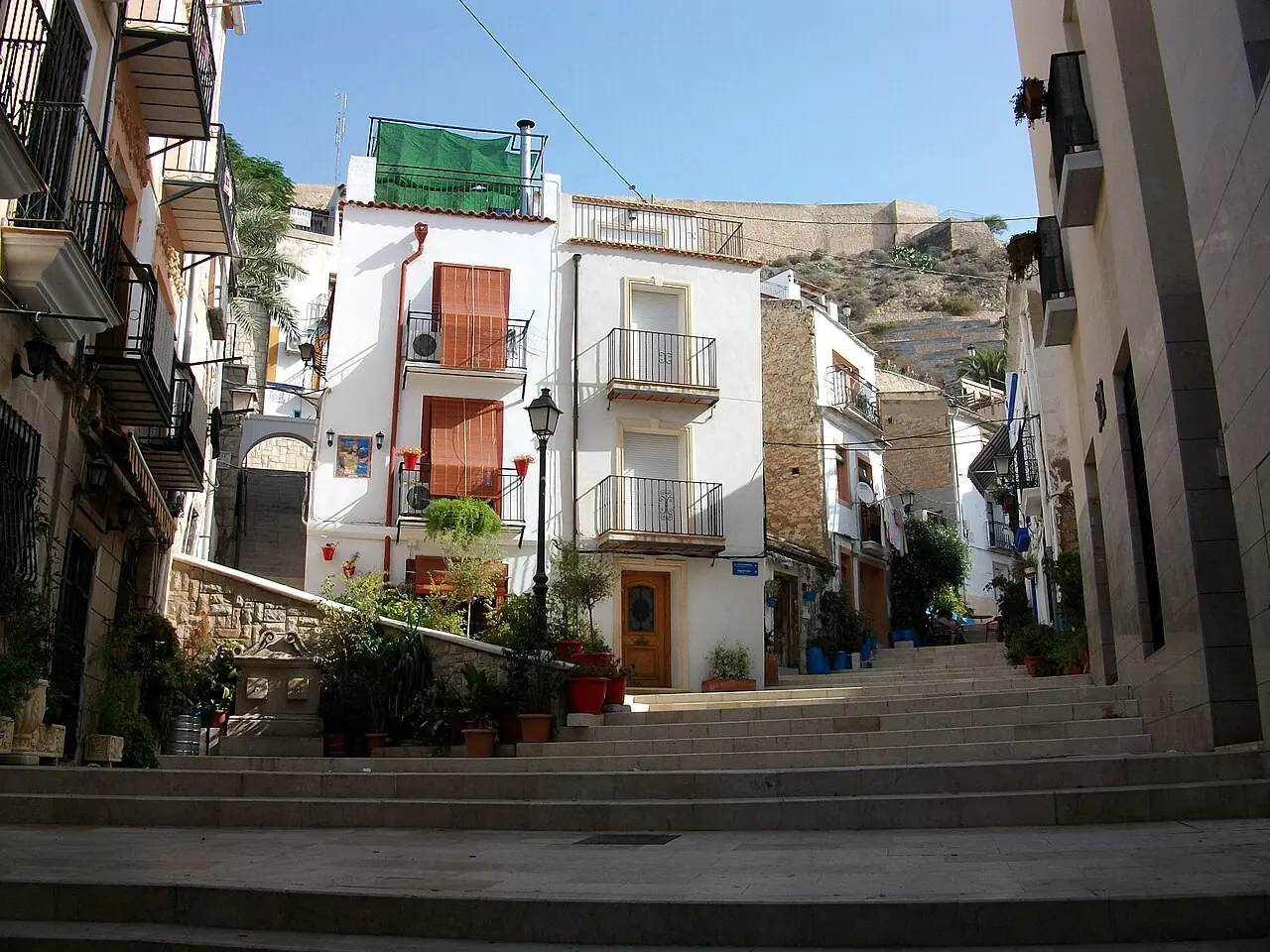
The old town suits a short Alicante visit where you want dinner and central walks close to your room. Lower streets around the co-cathedral offer a different arrival from the stepped lanes of Santa Cruz, so examine the exact address before selecting accommodation. Historic buildings can have uneven access, small lifts or no lift at all. Ask about the route from reception to your room as well as the route from a taxi drop-off.
The trade-off is late activity in streets with bars and terraces, plus potential climbing if you choose a hillside property. Check bedroom position and sound insulation rather than assuming that a pretty lane is quiet after dark. The airport bus serves central stops, but it does not establish access to every doorway. Plan the final walk with luggage, and choose a lower-street base when easy arrival matters more than a view from above the neighbourhood.
Plan it well: Confirm steps, room location and the legal vehicle drop-off before booking.
Alicante: Old town area informationEnsanche and Luceros: practical arrival connections

Ensanche and the streets towards Luceros are useful when rail, airport arrival and day-to-day transport matter as much as the waterfront. The regular street layout makes a different kind of base from the historic lanes, and accommodation can suit travellers who want shops and meals in ordinary city blocks. Choose a property against the station or transport stop you will actually use; a broad central label is less informative than its entrance address.
The compromise is road traffic and a walk to the sand rather than a beachfront setting. Room orientation, crossings and lift access may be more important than the style of the facade. Alicante's tourism board describes the C6 airport connection and the urban TRAM network, but consult current operator information for your day. This base works especially well for mixed plans and onward rail journeys, provided you are comfortable walking or taking transit for beach time.
Plan it well: Compare the hotel entrance with your actual arrival stop, not just Luceros on a map.
Alicante: Ensanche and Luceros area informationPostiguet and the eastern waterfront: city meets sand
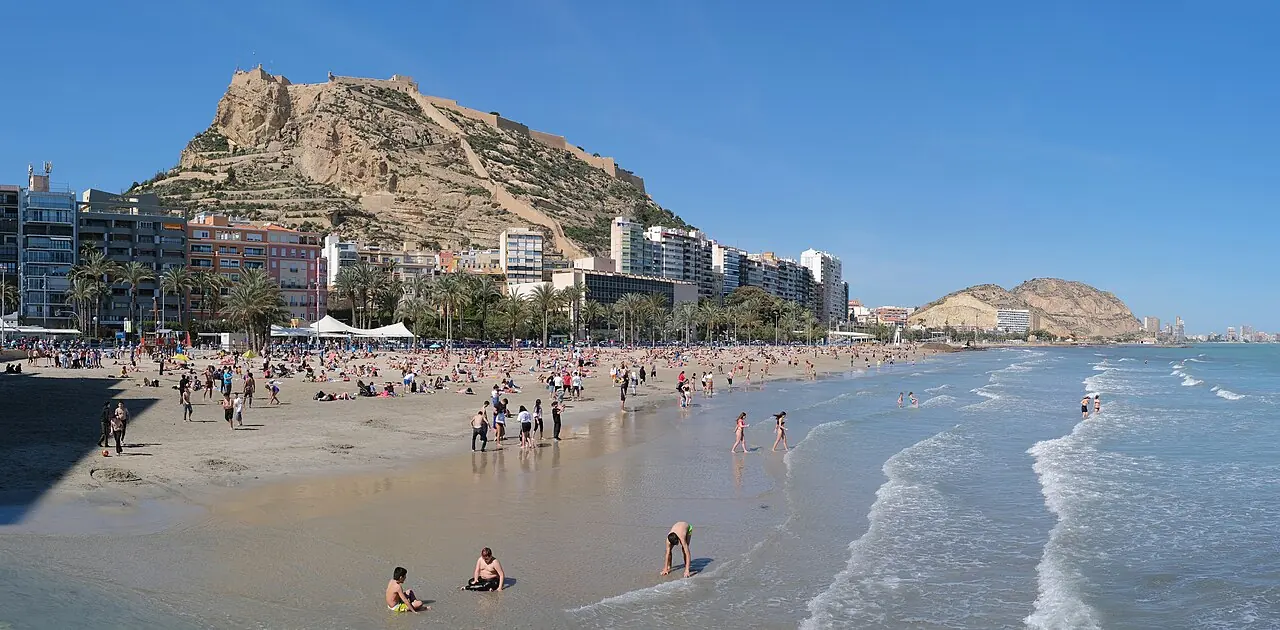
The Postiguet side of central Alicante suits travellers who want a beach break without losing access to the old town. It is convenient for a short stay with different interests in the group: some can spend an afternoon on the sand while others return to museums or cafes. A waterfront address still needs checking, however, because roads, crossings and changes of level can separate a room from the beach access shown in photographs.
The trade-off is a busy urban setting rather than a secluded resort. Ask about traffic-facing rooms, sound insulation and the precise view attached to your booking. Use the central airport bus stops as a starting point for arrival planning, then inspect the final walk. A property near Postiguet is a stronger choice for mixed city-and-sea days than for someone seeking a long uninterrupted beach landscape; for that, compare the Playa de San Juan district.
Plan it well: A sea-view room and easy pedestrian beach access are separate features.
Alicante: Postiguet and the eastern waterfront area informationAlbufereta: a smaller coastal base
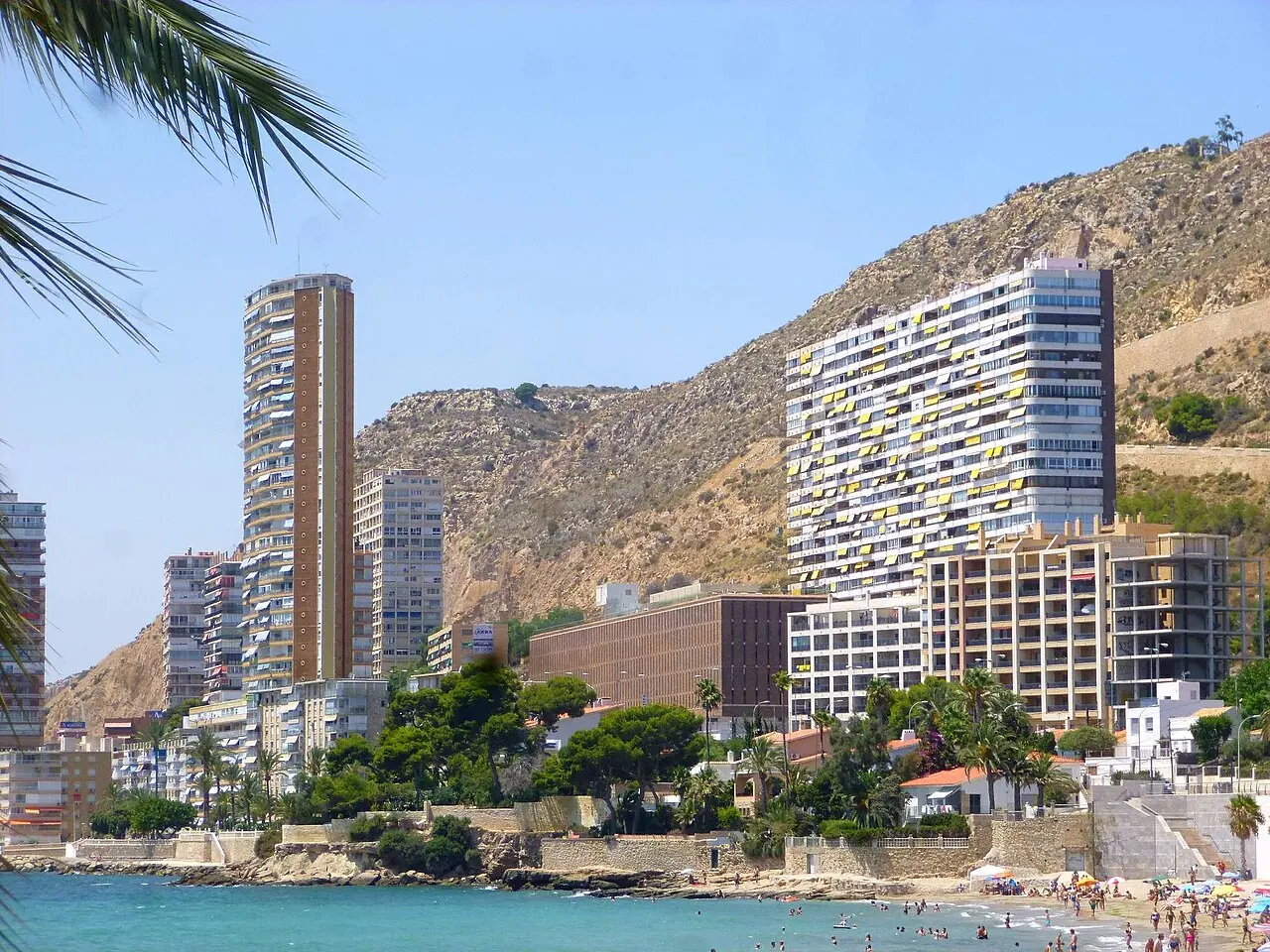
Albufereta is a useful middle option for travellers who want a coastal neighbourhood outside the compact centre without moving to the long San Juan shoreline. Apartments and hotels sit in varied positions around the bay and surrounding streets. Check whether your chosen property is beside the lower beach area or higher up, since a short distance on a map can still involve a less comfortable luggage walk. This setting suits a slower stay with repeated local beach time.
The compromise is the journey to central museums, evening meals and mainline rail departures. Consult the current TRAM and bus maps for the nearest usable stop, not merely the closest track. A bay-view apartment does not guarantee a simple route to sand, and residential accommodation may have different reception arrangements from a hotel. Ask about arrival instructions, cooling and parking if relevant. Choose Albufereta because the daily coastal routine appeals, not only because it looks near the centre.
Plan it well: Inspect gradients and crossings on both the beach route and the route from transit.
Alicante: Albufereta area informationPlaya de San Juan: make the beach the priority
Playa de San Juan suits a stay in which the long beach and promenade are daily priorities. It can work well for families and longer visits that do not require returning to the old town several times each day. Hotels and apartments are spread across the district, so decide which part of the shore you prefer and compare the actual walking route. Being marketed as San Juan is not enough to establish that the accommodation is close to the beach.
You trade central spontaneity for more deliberate journeys into Alicante. Use current TRAM and bus information to judge those trips and their return options, especially after dinner. Confirm the address belongs to the beach district rather than the separate municipality of Sant Joan d'Alacant. Ask about room orientation, pool conditions if advertised and the airport arrival plan. This base makes sense when several relaxed beach days outweigh the convenience of having central cultural sights around the corner.
Plan it well: Distinguish the beach district from the separate inland municipality when comparing addresses.
Alicante: Playa de San Juan area informationBefore choosing accommodation
Check the complete arrival
The tourism board identifies C6 as the airport-to-city bus. Check current stops and operating information, then plan the final leg to your hotel.
Airport arrival: official informationCompare the actual room and address
Compare Old town with Playa de San Juan against the journeys you will repeat. Check the room category, lift access, cooling, cancellation terms and any advertised parking or shuttle before reserving; area photographs and map pins do not identify the hotel entrance.
Find your base in Alicante
Choose the old town for walking and evening meals, Ensanche for practical connections or Postiguet for a compact city-and-beach break. Albufereta and Playa de San Juan favour a coastal routine with more deliberate central journeys. Compare the exact address and room details before booking.
Explore Alicante hotels