
Seville city guide
A romantic Seville stay: palaces, gardens and evenings by the Guadalquivir
Plan Seville for two around the Real Alcazar, Santa Cruz, Maria Luisa Park, Triana, flamenco and cooler evenings beside the Guadalquivir.
Plan your visit
Seville rewards couples who plan around light and temperature rather than a checklist. Orange-tree courtyards, tiled palaces and shaded gardens carry the daytime, while the Guadalquivir, Triana and flamenco give the evening its own character. This guide pairs the city's major monuments with quieter transitions, sensible reservation choices and a two-day route that leaves room for conversation, rest and an unhurried dinner.
Let temperature and light set the pace
Seville can feel intimate and spacious when the day is divided deliberately. Use the first morning for a timed monument, pause for a long lunch or hotel rest, and return outside when courtyards and riverside paths become comfortable again. Keep adjacent places together: the cathedral, Alcazar and Santa Cruz form one cluster, while Maria Luisa Park and Plaza de Espana form another. This prevents repeated crossings in heat and leaves the evening free for Triana, flamenco or a quiet walk beside the Guadalquivir.
Plan it well: In warm months, reserve monuments early, rest through the hottest hours and carry water. Evening plans should begin after the streets cool.
Visit Seville: official visitor informationReserve the Real Alcazar for the calmest part of the day
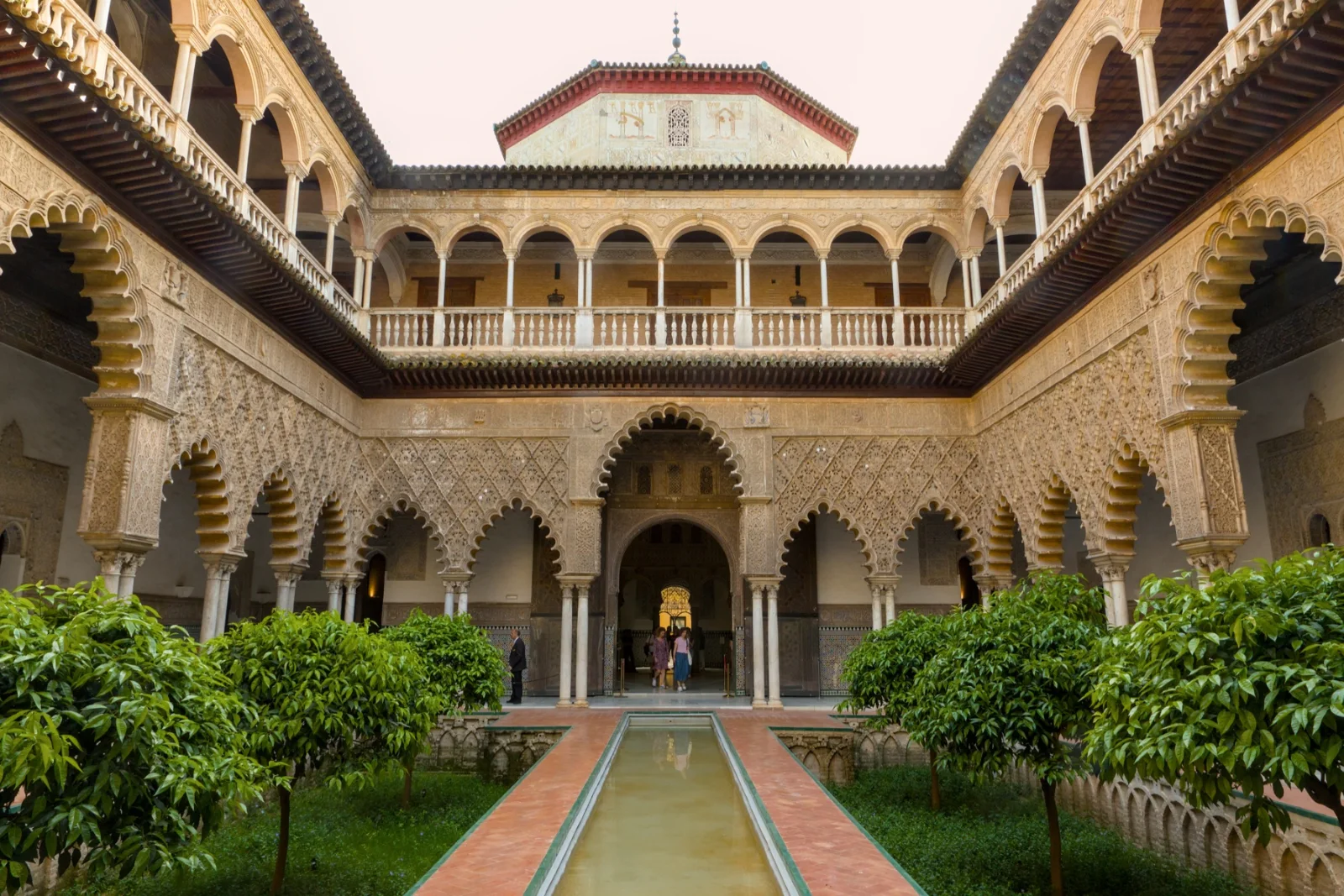
The Real Alcazar combines Islamic, Gothic, Renaissance and later royal layers, and its gardens deserve as much time as the celebrated interiors. An early slot gives both travellers room to notice carved plaster, tilework, water and the changing sequence from enclosed rooms to open garden paths. Decide in advance whether the upper royal apartments are important, because access conditions can differ. Move slowly through one coherent route rather than rushing between photo locations; the architecture is most memorable when its light, sound and garden transitions can be absorbed together.
Plan it well: Buy timed tickets only through the official site and bring the required identification. Entry queues may still form, so do not schedule another reservation immediately afterwards.
Real Alcazar of Seville: official tickets and visitor informationConnect the cathedral with Santa Cruz instead of treating them separately
Seville Cathedral provides the city's monumental scale, while Santa Cruz changes the mood immediately through small squares, orange trees and shaded passages. Visit the cathedral with enough time for the Giralda only if both travellers are comfortable with the ascent, then leave the busiest streets and choose one or two quieter plazas for a pause. Santa Cruz is a living neighbourhood rather than a maze to conquer. Avoid blocking narrow lanes, keep voices low at night and choose a restaurant from a planned shortlist rather than the first menu beside the main visitor route.
Plan it well: The Giralda climb uses ramps and can be demanding. Check current access, dress requirements and service closures before booking.
Seville Cathedral: official visitor informationGive Plaza de Espana and Maria Luisa Park their own chapter
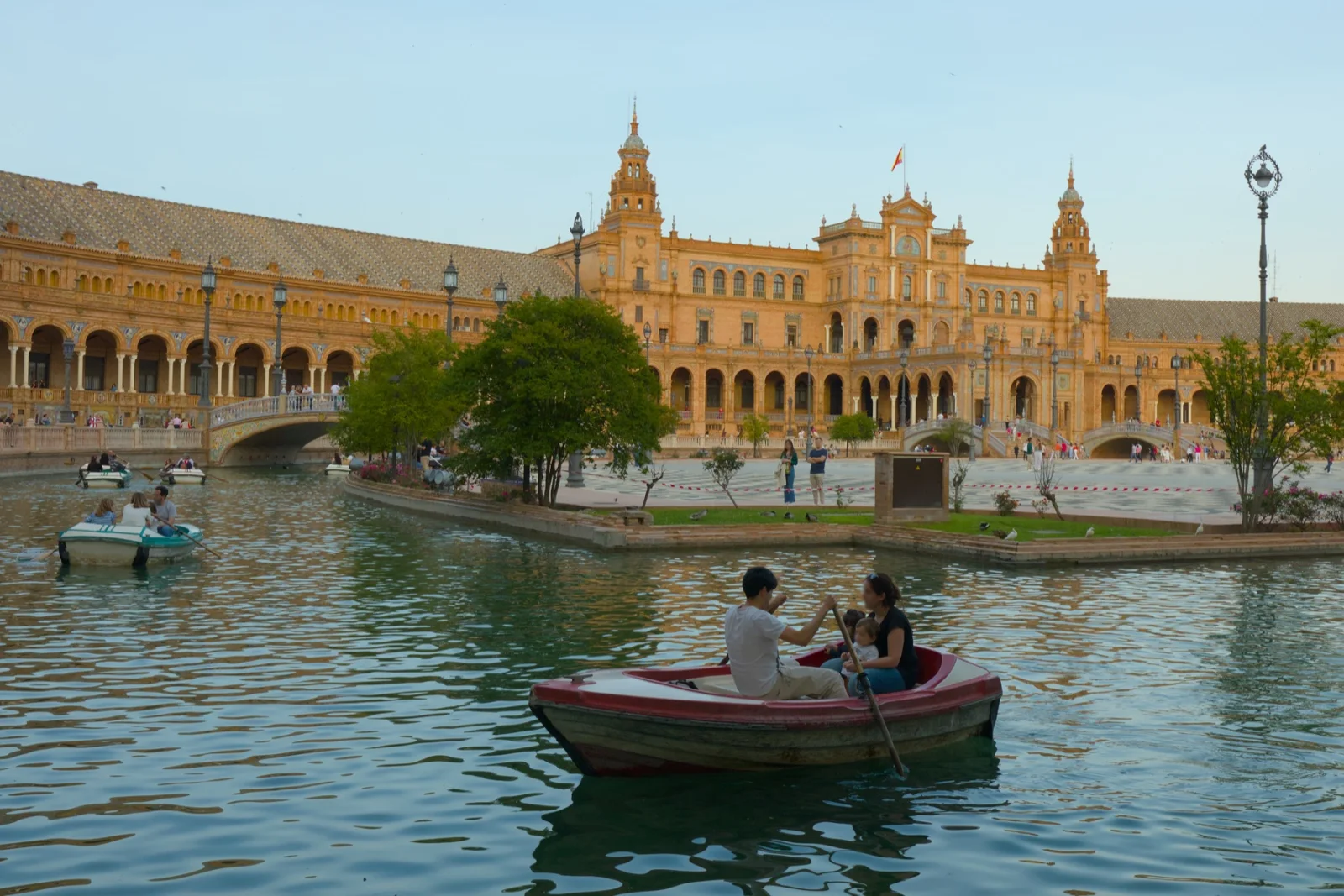
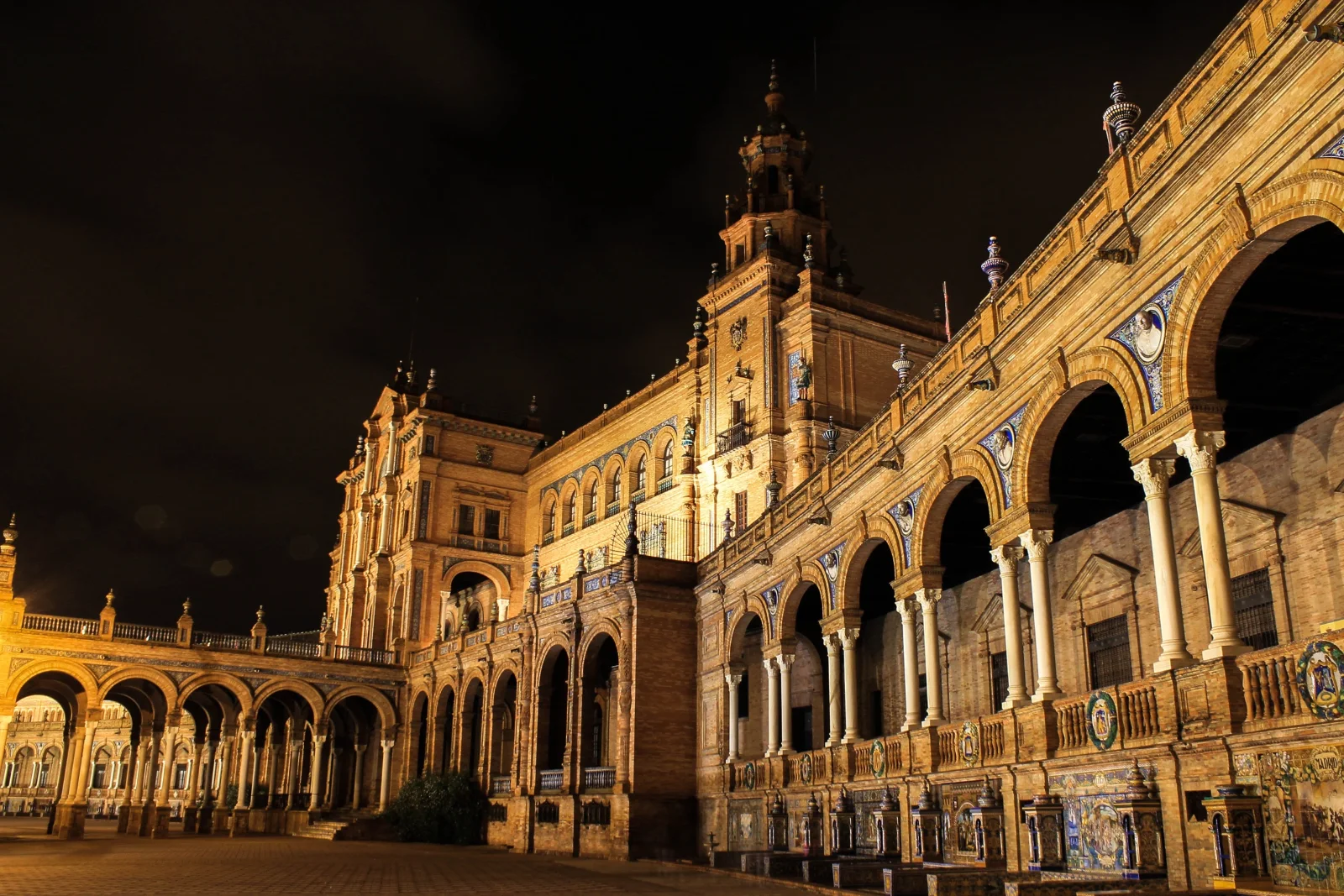
Plaza de Espana is more than a quick photograph: its bridges, tiled provincial benches and curved galleries reveal how the building frames movement and water. Walk the full arc before choosing a quiet place to sit, then continue into Maria Luisa Park for shade, fountains and a slower pace. Late afternoon brings warmer colour to the brick and ceramics, while early morning offers clearer views. Pair the area with one nearby museum or pavilion, not several, so the garden remains a genuine pause between the historic centre and the evening.
Plan it well: Visit in the cooler morning or late afternoon. The plaza is open public space; check for temporary event barriers and keep valuables secure in crowds.
Visit Seville: Plaza de Espana and Maria Luisa ParkCross the river for Triana's craft and neighbourhood character
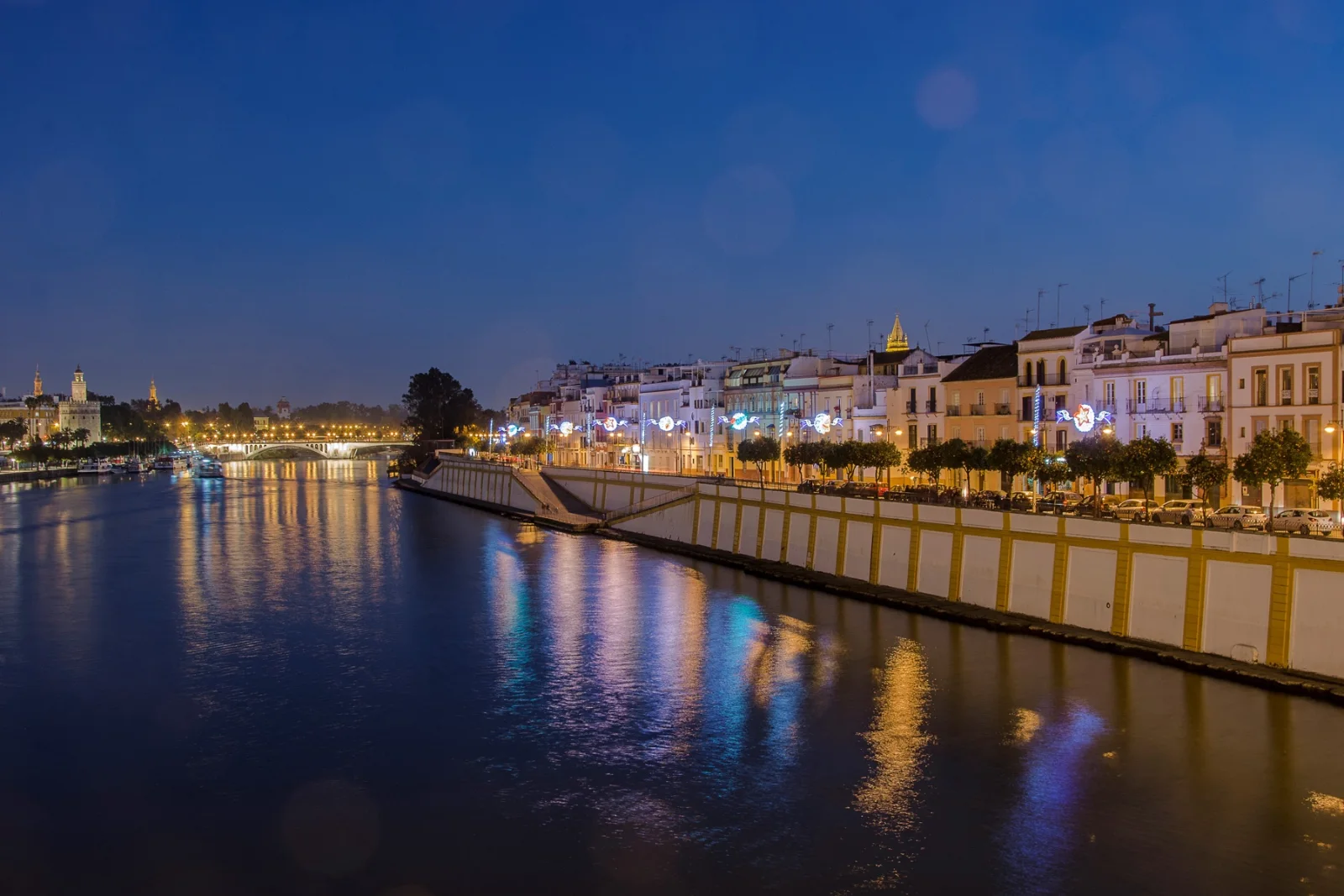
A riverside walk towards the Triana Bridge lets the cathedral skyline recede and introduces the working river that shaped Seville's trade. Across the bridge, the Triana Ceramics Centre gives useful context to the tilework seen throughout the city, including workshops and production traditions. Continue through the market area and along Calle Betis, but leave residential doorways and local routines undisturbed. Sunset by the water can be beautiful; choose the bank and dinner location according to the easiest route back to the hotel rather than adding unnecessary late-night walking.
Plan it well: Use a well-lit bridge for the return and check museum hours before crossing. Ceramics are fragile; ask shops about secure packing before buying.
Triana Ceramics Centre: Museums of AndalusiaChoose flamenco with care and build a balanced two-day stay
A focused flamenco performance can anchor one evening when the venue presents the artists, duration and seating conditions clearly. Choose a tablao, theatre or cultural centre for the music and dance rather than for an oversized package, then place dinner before or after according to the performance time. On day one, combine the Alcazar, cathedral and Santa Cruz with an unhurried evening. On day two, explore Plaza de Espana and Maria Luisa Park, rest, then cross to Triana for ceramics, the river and flamenco. This sequence balances major heritage with neighbourhood texture and avoids turning romance into a race.
Plan it well: Book through the venue, check whether drinks or dinner are included and arrive before the stated time. Do not film unless the venue explicitly allows it.
Visit Seville: flamenco