
Santorini city guide
10 things to do in Santorini
See Santorini beyond one sunset: connect caldera villages with two very different ancient settlements, volcanic-island walks, black-sand beaches and a museum that brings the archaeology into focus.
Plan your visit
Santorini rewards a plan that treats the island as several places, not one continuous viewpoint. The northern caldera villages, southern archaeological sites, eastern beaches and offshore volcano require different journeys. Choose one main outing each day and keep time for transport, shade and an unhurried meal. These ten stops offer a useful spread without suggesting that every beach and village belongs in a single day.
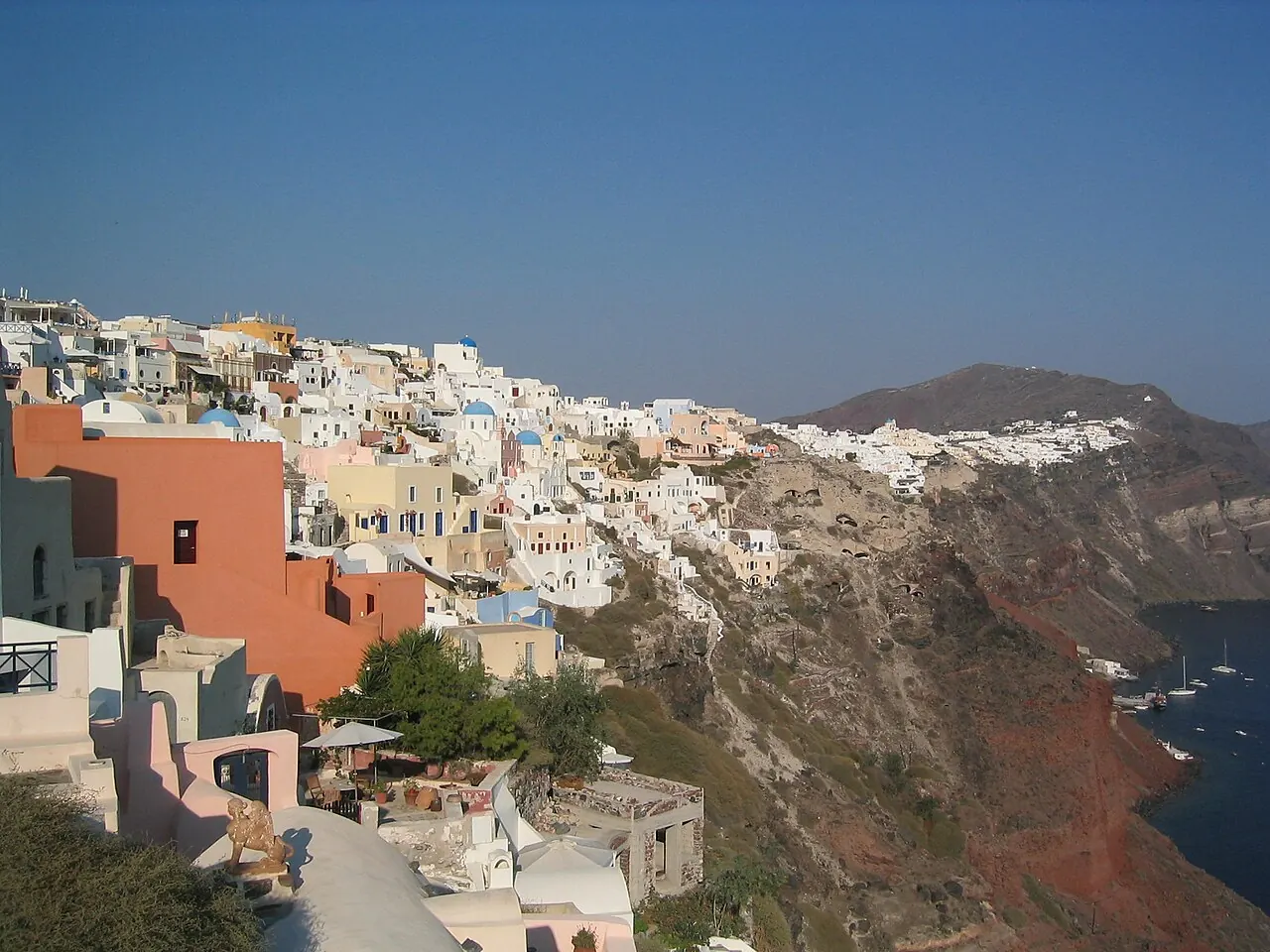
See Oia in daylight as well as at sunset
Oia is worth approaching as a village rather than as a queue for a single photograph. In daylight, its buildings and paths reveal how settlement follows the caldera edge; the remains around the castle of Agios Nikolaos add another layer to that story. Walk a short section of the public lanes, look across the volcanic basin and leave space for the everyday movement of residents. The view does not require entering a hotel terrace or climbing onto a church roof.
If sunset is your priority, decide beforehand how you will return to your accommodation and how long you are comfortable standing in a busy place. Narrow paths can become crowded, and a late arrival is not a reason to push past barriers or block doorways. A daytime visit is a sensible alternative for anyone who prefers more room to look around. Steps and slopes are part of the setting, so confirm a suitable route rather than assuming the village is uniformly accessible.
Plan it well: Public paths are not permission to enter private terraces; keep entrances and stairs clear while stopping for photographs.
Ephorate of Antiquities: Oia and the castle of Agios NikolaosUse Fira to understand the caldera and the island
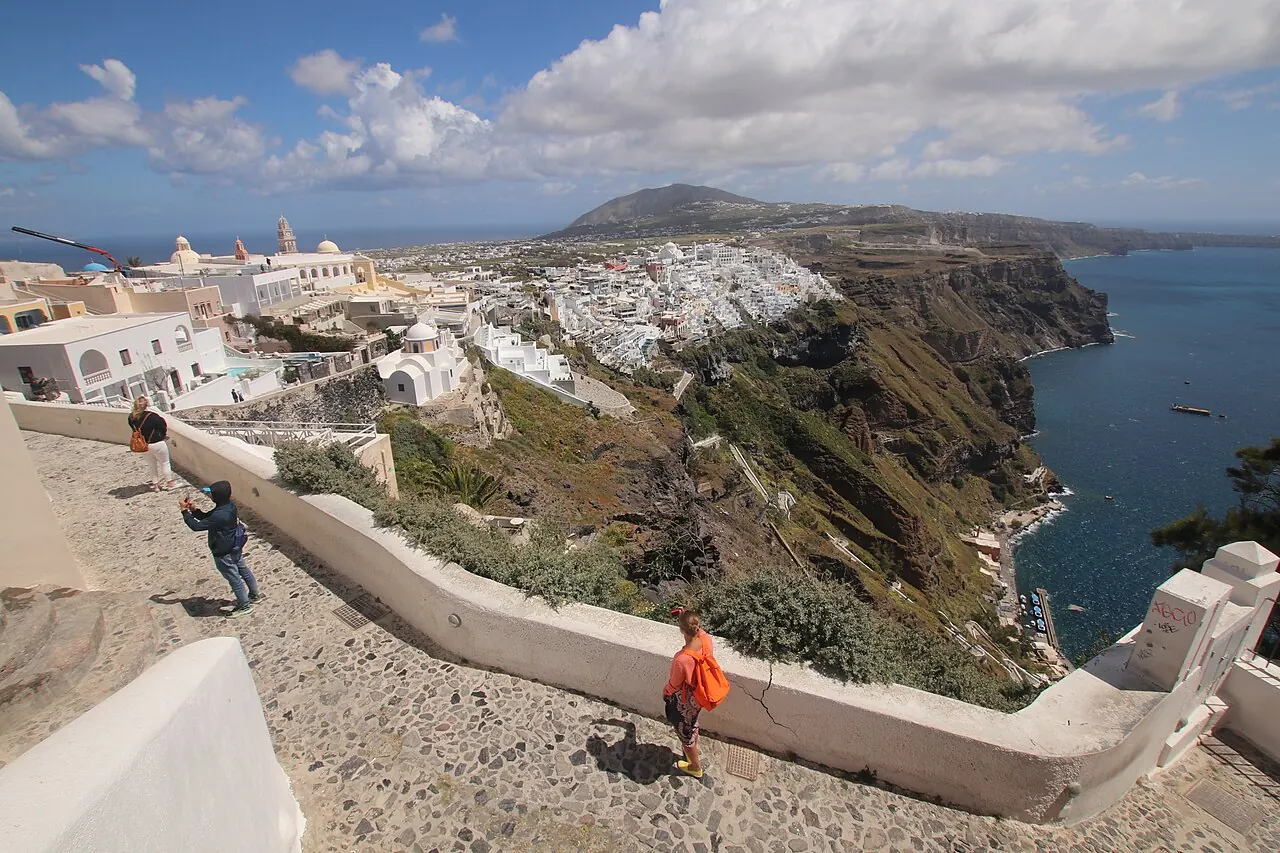
Fira provides a useful introduction to Santorini because a caldera-side walk and an indoor archaeological visit can sit within the same outing. Begin with the town itself: follow public streets, notice the buildings stepping down the slope and look toward the volcanic islands across the water. Then move away from the busiest viewpoint for a meal or a museum. Treat this as a working island capital with transport connections and services, not only a balcony overlooking the sea.
Be precise when arranging a meeting or boat departure. The town above, the old port below and the main ferry port at Athinios are different locations; reaching one does not mean you have reached the others. Check the operator's exact embarkation instructions and allow time for the relevant transfer. For an ordinary town visit, there is no need to descend every staircase simply because it exists. Choose a manageable rim walk and save energy for the museum or journey that matters most to you.
Plan it well: Confirm whether a booking means Fira town, the old port or Athinios; do not substitute one departure point for another.
Greek National Tourism Organisation: SantoriniPause on the caldera rim at Imerovigli
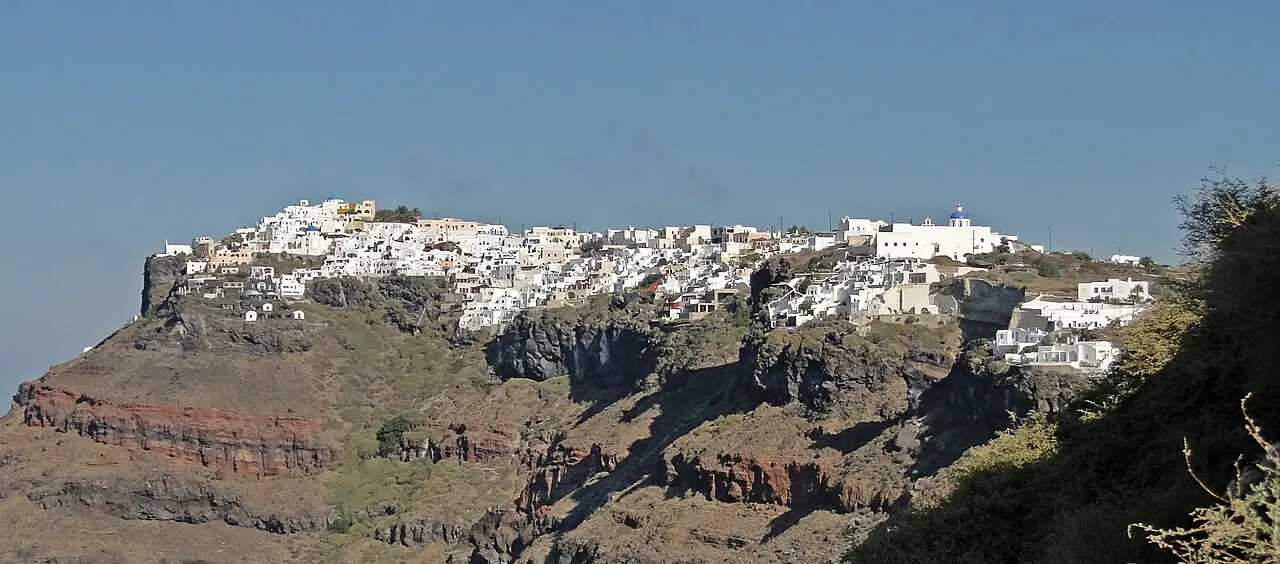
Imerovigli offers a different angle on the caldera and the prominent rock of Skaros. The ruined medieval settlement associated with Skaros reminds you that this landscape has been inhabited and defended, not just photographed. A walk through the village's public lanes can provide that perspective without becoming a strenuous excursion. Stop where there is room to stand safely, and look at the relationship between the rock, the cliffs and the modern buildings above them.
Decide on the length of your outing before setting off. The complete Fira-to-Oia route is not equivalent to a short village stroll, and the exposed terrain demands attention to heat, wind, footwear and the return journey. Going onto the Skaros paths is a separate decision, not a required part of seeing Imerovigli; do not scramble past an unsafe section for a better view. If conditions or mobility needs rule out the paths, keep to a suitable public viewpoint in the village and arrange transport back.
Plan it well: A modest caldera-rim walk is a valid visit; the full inter-village hike and Skaros paths are optional, more demanding outings.
Ephorate of Antiquities: the medieval castle-city of SkarosLook for everyday life in prehistoric Akrotiri
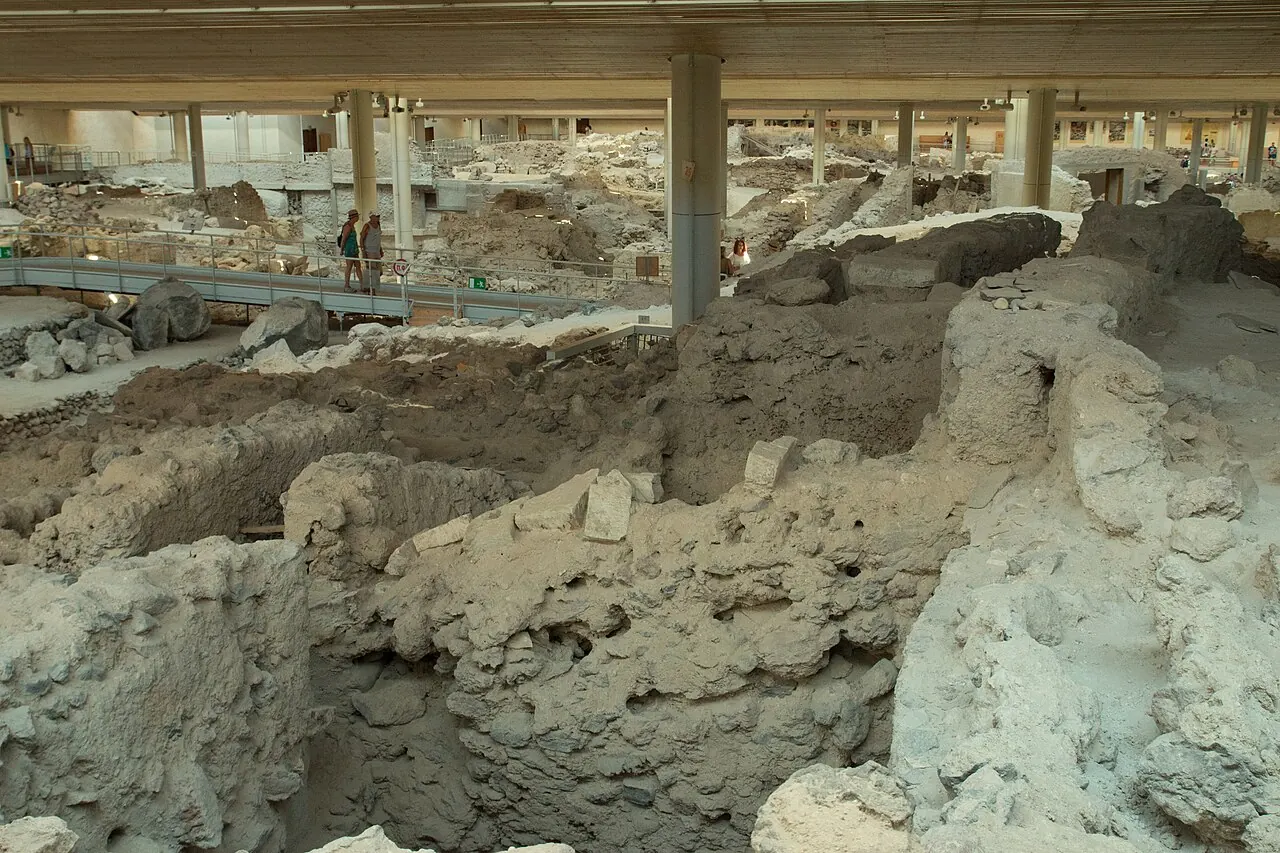
Akrotiri is the strongest place to connect Santorini's volcanic landscape with a prehistoric town. Under its protective shelter, the excavated buildings and streets let you think about domestic space, construction and movement before the settlement was buried. Follow the designated viewing route slowly rather than searching only for a famous image. Reading the site interpretation makes the difference between seeing a collection of walls and recognising the outline of an organised Bronze Age community.
Make the archaeological site the principal visit of a southwestern-island outing and check its current operating calendar before booking transport. The shelter is useful, but it does not remove the need to plan for the outdoor journey, drinking water or particular access requirements. Many objects and frescoes connected with Akrotiri are displayed in museums, so do not expect every well-known image to remain at the excavation. Pairing this visit with the Museum of Prehistoric Thera on another day helps connect the built setting with the objects recovered from it.
Plan it well: Choose the prehistoric archaeological site explicitly when arranging transport; the modern village of Akrotiri is a different stop.
Ephorate of Antiquities: archaeological site of Akrotiri of TheraExplore a later ancient city above the east coast
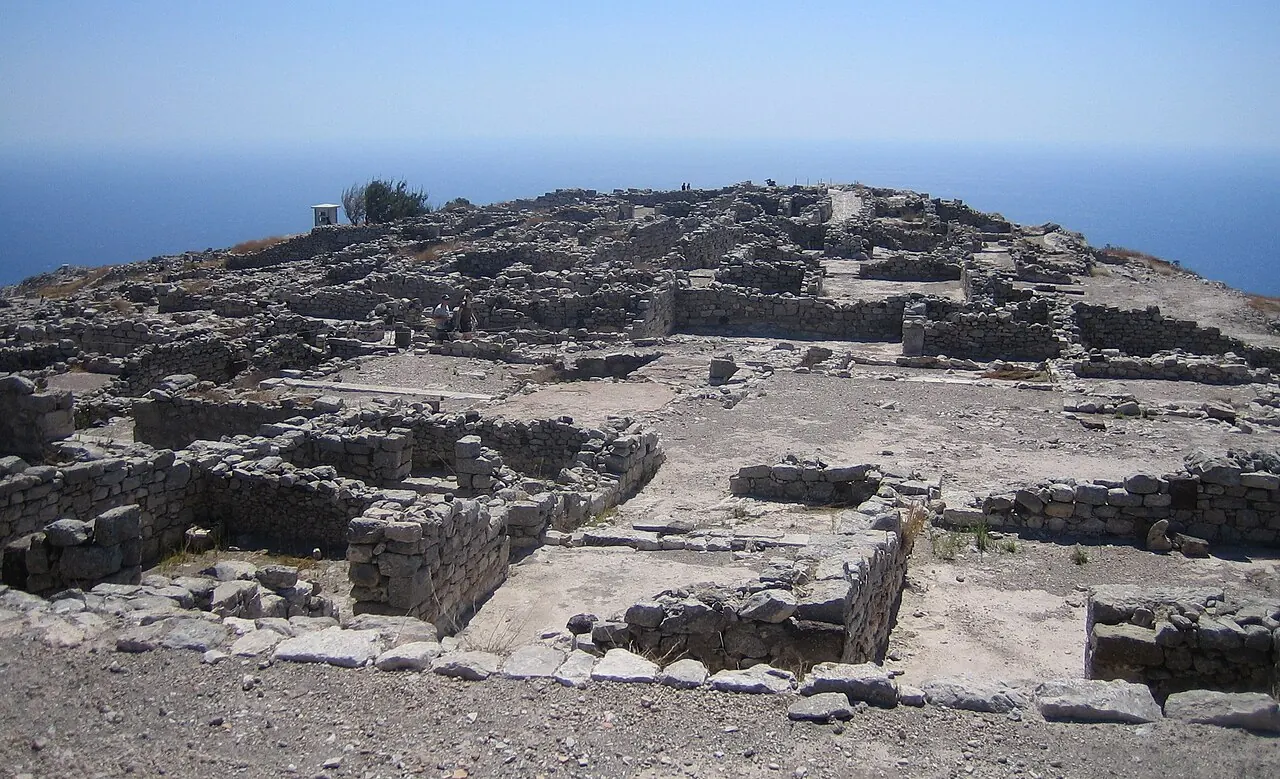
Ancient Thera is not another name for Akrotiri. It represents a later chapter of settlement, high on Mesa Vouno above the eastern beaches. Walking among its remains changes the island's story from a buried prehistoric town to a city set on a strategic ridge. Use the site labels to distinguish civic, religious and domestic spaces, and pause to consider why people chose this elevated setting rather than approaching it only as a panoramic viewpoint.
The exposed location makes practical planning important. Confirm the current site opening days, approach arrangements and suitability of the terrain for your party; a map distance from Kamari or Perissa does not describe the effort of an uphill route. Wear shoes with grip, carry water and avoid an outing in unsafe heat or wind. A beach stop afterwards can make a sensible contrast, but keep enough time for the descent or arranged transfer. Do not assume that access remains available late in the afternoon simply because the surrounding coastline is still busy.
Plan it well: Plan the ascent and return as well as the admission; the beaches below and the ridge are not interchangeable access points.
Ephorate of Antiquities: archaeological site of Ancient TheraFollow the uphill lanes of Pyrgos
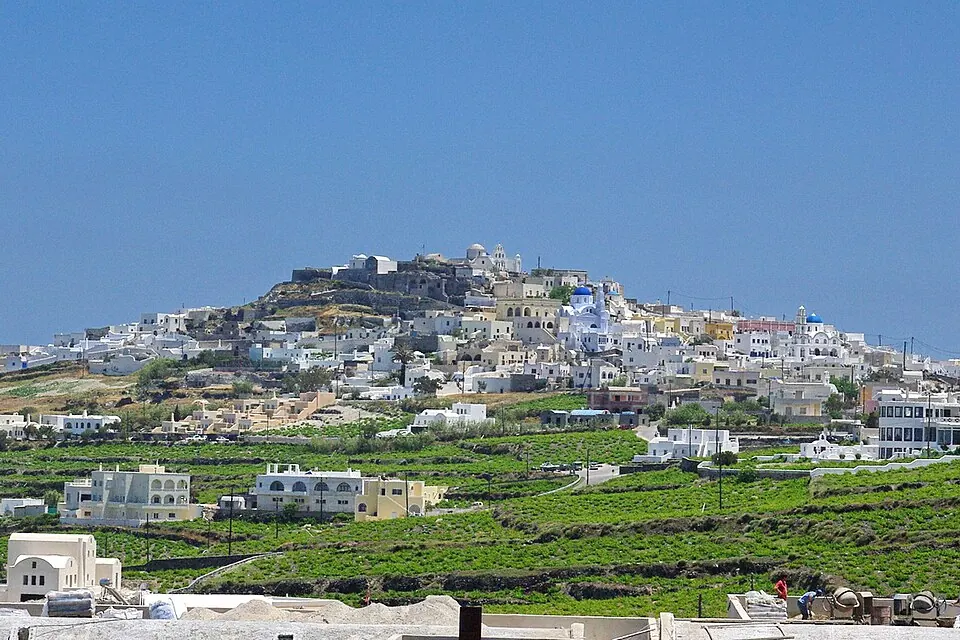
Pyrgos is a useful counterpoint to the villages strung along the caldera. Its lanes lead uphill around a fortified core, encouraging a closer look at how buildings, passages and churches fit together. Start at a comfortable pace and choose a public route toward the upper village rather than following the shortest-looking line on a phone. You do not have to reach every high point to appreciate the settlement's shape and its inland setting.
Bring the same respect to the church surroundings that you would bring to an active religious building elsewhere. If the collection of icons and ecclesiastical relics interests you, check its own visitor arrangements; an open village does not mean the collection is open. The stepped streets also deserve attention when choosing shoes or making plans for anyone with limited mobility. Use Pyrgos for an unhurried village visit and meal, not as an assumed flat detour between two timed attractions at opposite ends of the island.
Plan it well: Ask about the route to your chosen restaurant or viewpoint; an address in Pyrgos may still involve several flights of steps.
Ephorate of Antiquities: Pyrgos and its ecclesiastical collectionSpend a beach afternoon at Perissa
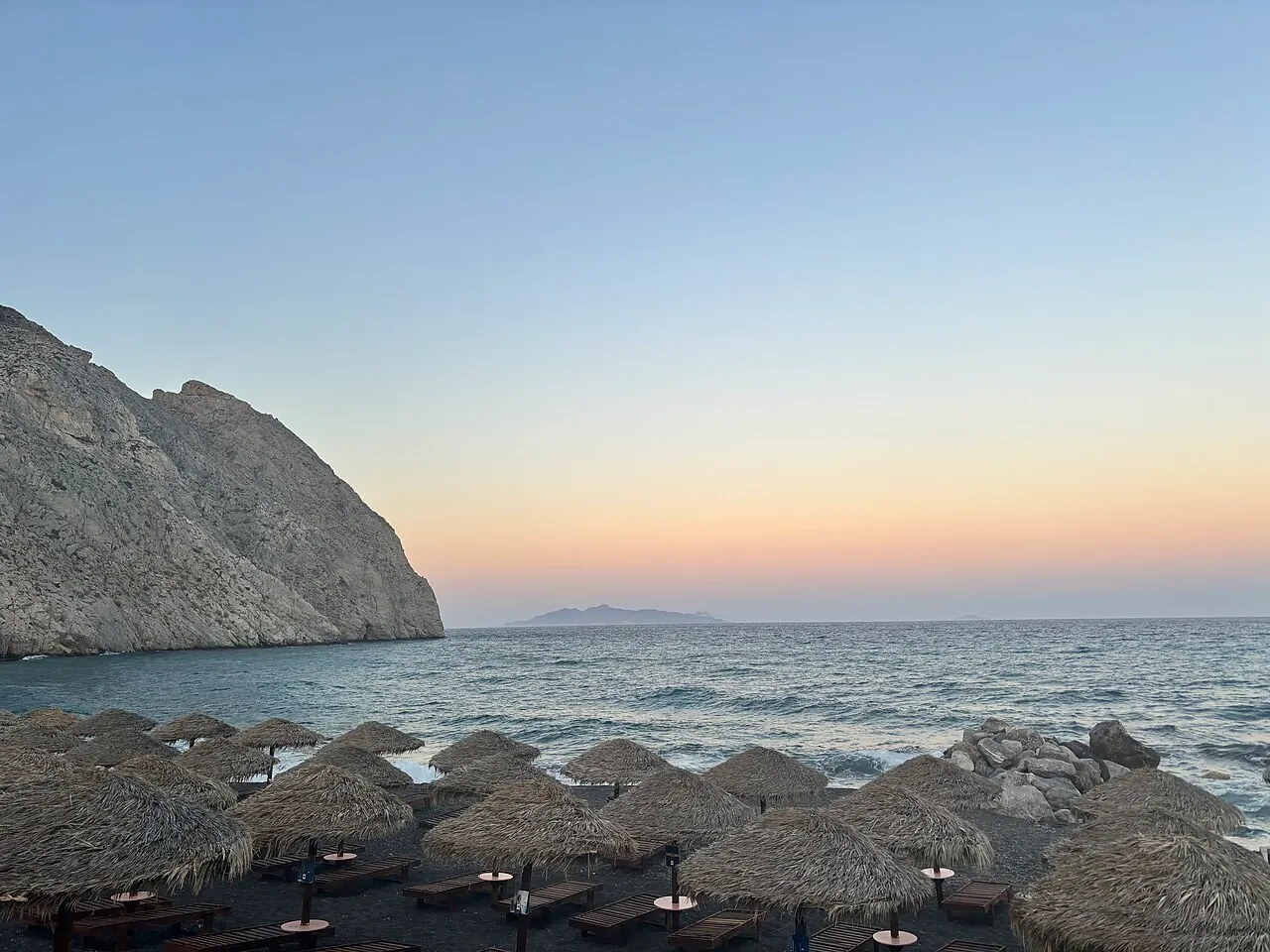
Perissa shifts the focus from cliff-edge views to the island's volcanic shoreline. The dark beach and the mass of Mesa Vouno give the setting a clear character, while the coast continues south toward Perivolos. Choose a manageable stretch instead of feeling obliged to walk the entire shoreline. This is a good place for a slower afternoon after an archaeological morning, provided you have allowed for the journey rather than assumed every southern attraction is next door.
Decide whether you want a serviced beach setup or simply time beside the water, and confirm any lounger or activity charges before using them. Dark sand can become uncomfortable under strong sun, so keep footwear, shade and drinking water in the plan. Assess the actual sea conditions and follow local warnings; a beach recommendation is not a guarantee that swimming is suitable that day. Check your return bus or transfer before settling in, especially when services change outside the busiest travel period.
Plan it well: Check conditions before entering the sea and agree any beach-service charge first; leave room in the day for the return journey.
Greek National Tourism Organisation: Santorini beachesWalk the seafront at Kamari
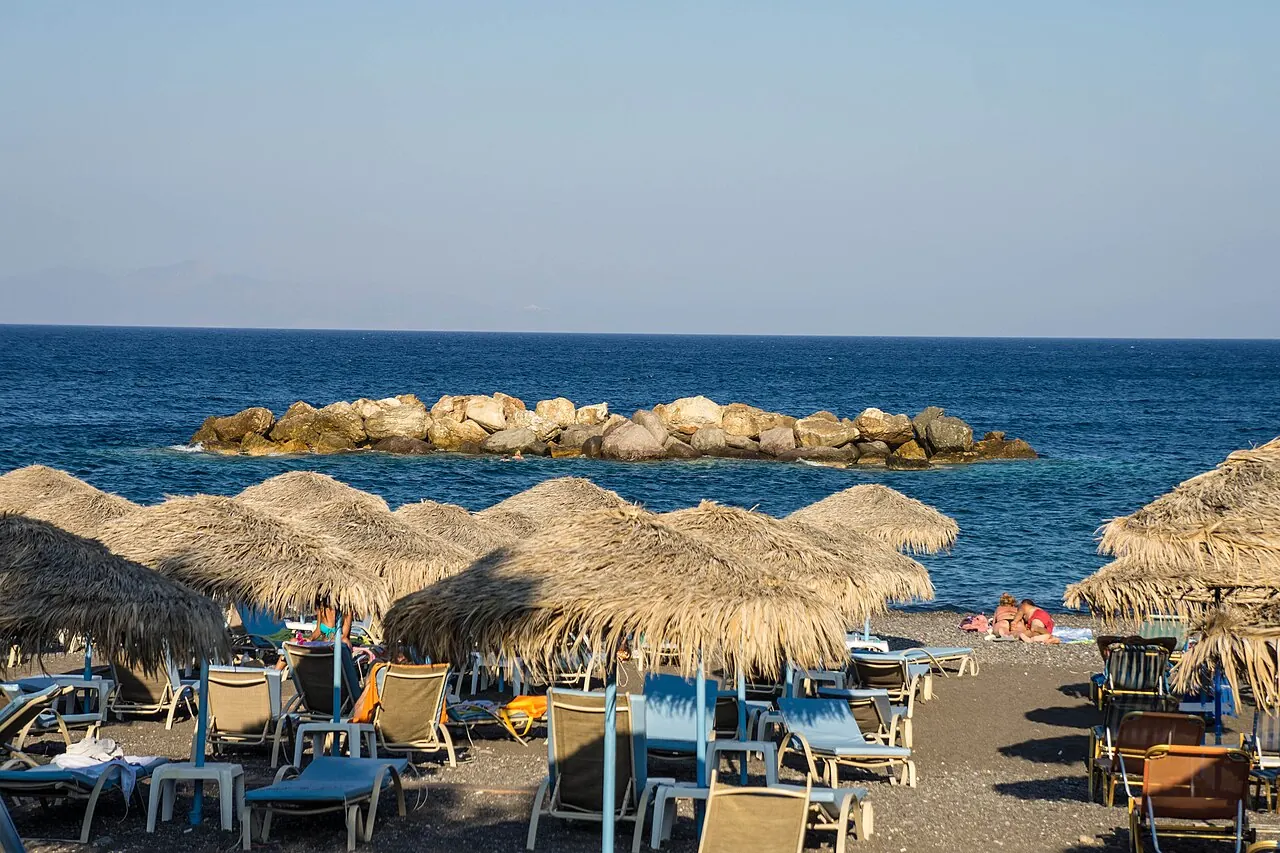
Kamari provides an eastern-coast base for a beach walk, a meal and a change from caldera-side sightseeing. The resort's shoreline is useful when you want an outing that can expand or contract according to the weather and your energy. Look at the beach from several points rather than judging it from the first busy terrace. Its relationship with Mesa Vouno also helps explain the position of Ancient Thera high above the modern seaside settlement.
Do not treat Kamari and Perissa as adjacent sections of one straightforward seafront promenade: the headland and ridge separate their settings, so check the actual road or seasonal boat connection before attempting to combine them. A swim, a seafront meal and a short walk can be enough for one visit. Confirm the conditions, any hired equipment terms and the journey back to your hotel. If Ancient Thera is part of the day, plan that exposed uphill visit deliberately rather than adding it after a long beach lunch.
Plan it well: Choose Kamari or Perissa for a relaxed beach outing; combining both requires a transport plan, not just a longer shoreline walk.
Greek National Tourism Organisation: eastern Santorini beachesStep onto the volcanic landscape of Nea Kameni
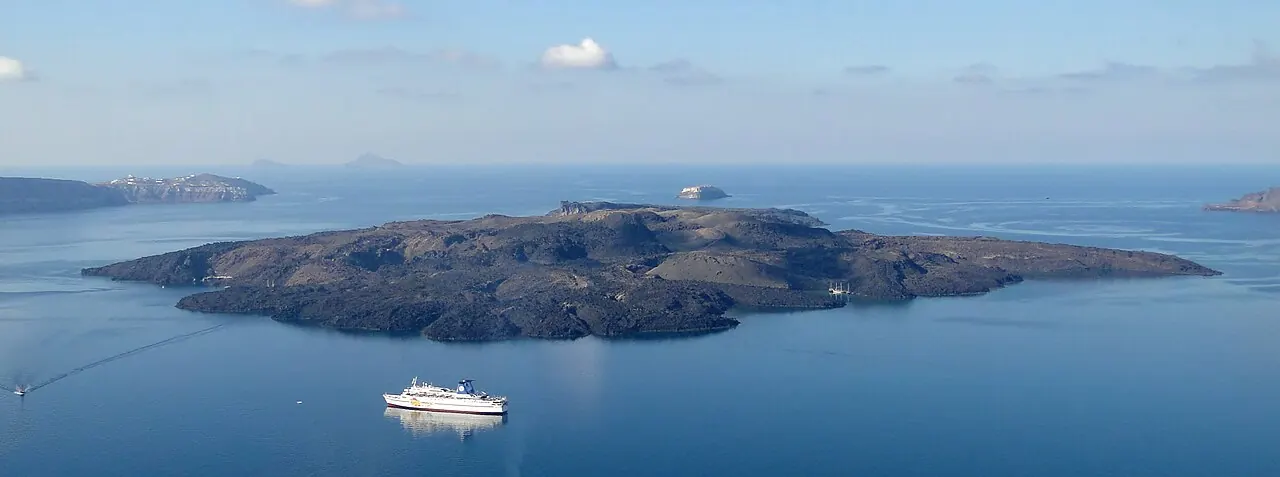
A landing on Nea Kameni turns the volcano from a distant shape into a landscape you can examine at ground level. The rocky surfaces and crater setting give a different sense of scale from the white villages around the caldera. Choose a trip that actually includes the island landing if walking there is your priority; a scenic cruise passing the volcano is a different product. Read the itinerary carefully instead of relying on a photograph used to advertise the boat.
Ask the operator about the embarkation port, walking demands, time ashore, current access restrictions and whether any site charge is included. Wear closed shoes and carry water and sun protection; the exposed volcanic paths are not a sandal-only beach excursion. A trip may also advertise hot-spring swimming near another island, which is separate from the walk and can involve entering the sea from a boat. Follow the crew's advice and omit any activity that does not suit your swimming ability, mobility or the day's conditions.
Plan it well: Confirm an actual Nea Kameni landing and its conditions; not every caldera cruise includes a volcano walk.
Santorini Volcano geological parkConnect the finds at the Museum of Prehistoric Thera
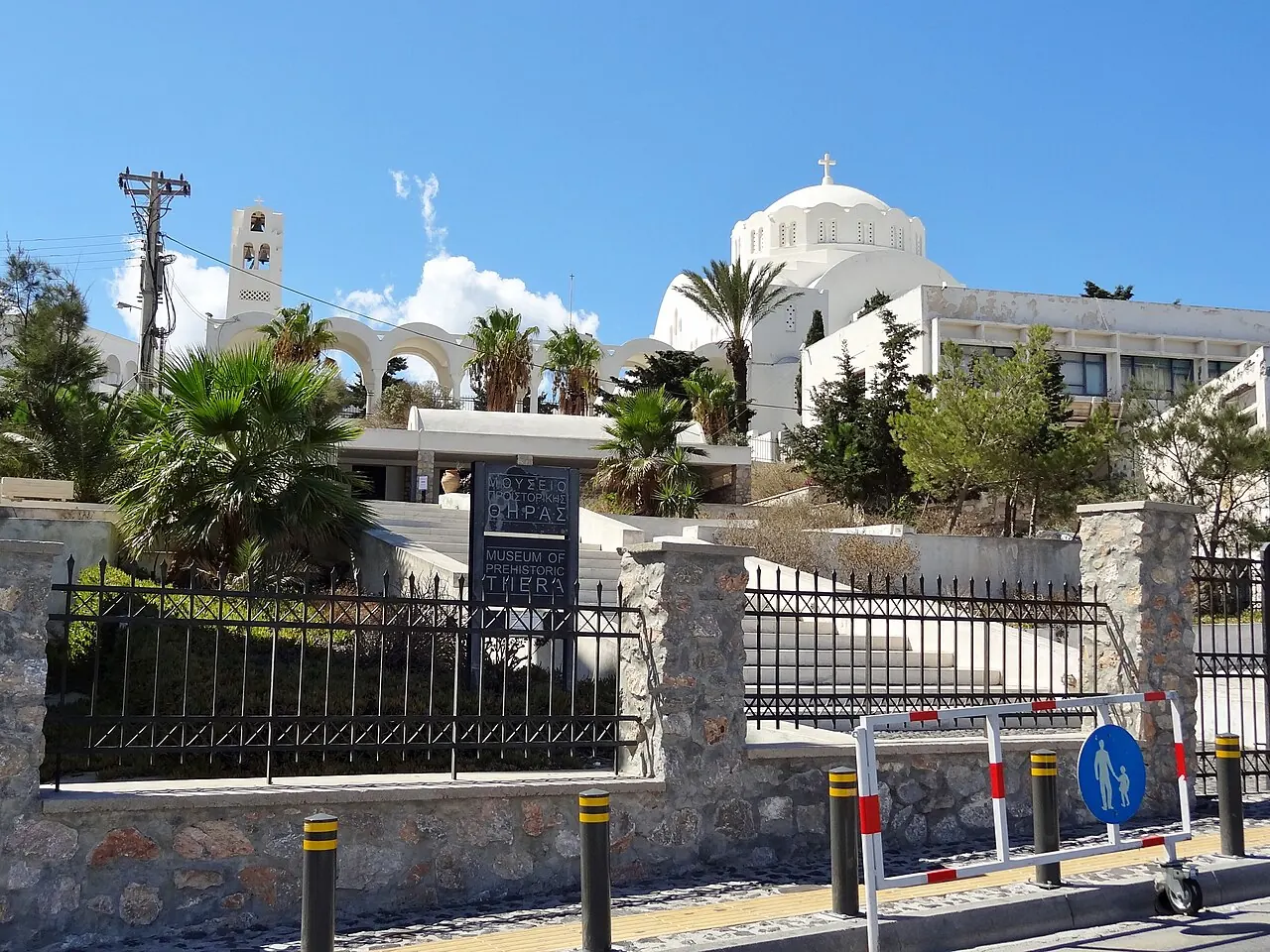
The Museum of Prehistoric Thera is the natural companion to Akrotiri, but it also works as an introduction before visiting the excavation. Objects and wall paintings give the prehistoric settlement a human scale: think about how a container, a painted room or a tool belonged to ordinary activity as well as to a remarkable archaeological discovery. Select a few displays to study closely rather than rushing through in search of one famous fresco.
Confirm the museum's name and current visitor information when planning; Fira's Archaeological Museum is a different institution. Check which displays are available and how admission works on your dates, since an excavation ticket should not be assumed to include a museum visit. This is a useful indoor anchor for a Fira day, with a caldera walk before or afterwards as conditions suit. Leave enough time to read the interpretation: the value is in connecting the objects to the island's history, not simply adding another building to the list.
Plan it well: Ask specifically for the Museum of Prehistoric Thera and verify its admission separately from Akrotiri and the Archaeological Museum.
Ephorate of Antiquities: Museum of Prehistoric TheraHow to spend two days in Santorini
Day one: the caldera and prehistoric finds
Start in Fira with the Museum of Prehistoric Thera if open, then choose a short public rim walk around Imerovigli. Travel separately to Oia for a daylight visit or sunset, with your return arranged. A Nea Kameni landing is an alternative main outing, not an extra to squeeze between all three villages.
Day two: choose an archaeological coast
Make Akrotiri the main visit, then use Pyrgos and one eastern beach as flexible stops if transport and energy allow. Alternatively, plan Ancient Thera followed by Kamari. Do not force both excavations, both beaches and a volcano boat trip into this day.
Before you go
Plan routes through Fira
Consult KTEL's current destination schedules and last returns rather than assuming a direct bus connects every village. Ferry arrivals at Athinios and boat departures from the old port need their own transfer arrangements.
KTEL Santorini official routesCheck current access and weather guidance
Earthquakes, severe heat, fires and weather can affect plans in Greece. Follow official travel advice, local notices and operator decisions. Do not cross a closed path or assume an older guide confirms current access.
UK government: Greece safety and securityBook the actual activity
Check excavation calendars and the exact landing, swimming and transfer arrangements of boat tours. Caldera hotels and village lanes can have many steps; ask about the route to your room, not just whether the property has a lift.
Stay near the kind of day you want
Fira suits travellers prioritising transport connections and museums; Oia and Imerovigli put caldera scenery close at hand, but the exact room approach matters. Compare steps, luggage handling, road access and transfer arrangements as carefully as the view.
Kamari or Perissa can make sense for beach-focused days, while an inland base changes the balance again. Compare the hotel's precise location with your planned outings, then check room details and seasonal transport before booking. A caldera photograph alone does not establish convenient access or a beach outside the door.
Explore Santorini hotels