
Milan city guide
Where to stay in Milan
Compare seven Milan bases for cathedral walks, Brera galleries, canal evenings, the Last Supper, park time, shopping and rail departures, with airport-specific connections.
Plan your visit
Milan's best stay area is not automatically the cathedral square. Brera makes gallery visits and dinners belong to the same streets; Navigli puts evenings first; Magenta and Cadorna can make an airport-and-Leonardo itinerary work better. These seven bases compare nearby sights, the dining setting and the transport compromises, without treating the city's airports as interchangeable.
Choose your base
Choose Duomo for a short first visit to the central landmarks, Brera for gallery days and smaller dining streets, or Navigli and Ticinese for canal-side evenings. Magenta and Cadorna suit the Last Supper and Malpensa rail arrivals; Sempione adds park time. Porta Venezia combines shopping with gardens and nightlife, while Centrale earns its place when trains determine the itinerary.
Airport choice can change the recommendation. Linate has ATM's M4 Metro connection; Malpensa Express trains use distinct Centrale and Cadorna routes. A Cadorna-facing Magenta address and a Centrale station hotel solve different arrivals, while a canal-side hotel still needs its own final connection.
Duomo and the historic centre: the most direct first-visit walking base
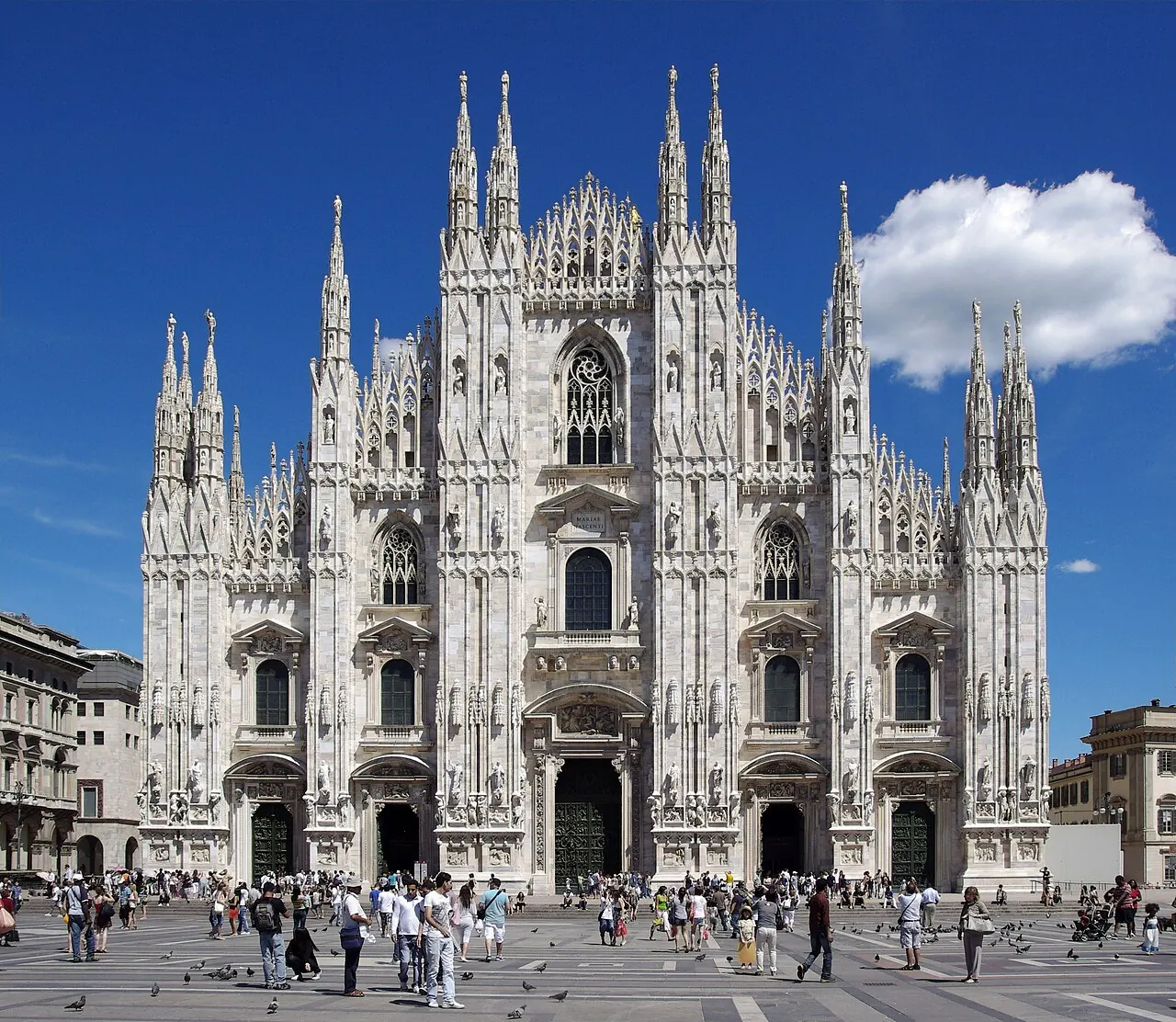
Staying around Duomo puts the cathedral, Galleria Vittorio Emanuele II and the streets towards La Scala into a natural first-visit walking circuit. The appeal is how easily a short trip can return to its main sights, not a promise that every central hotel has a cathedral view. Restaurants and cafes around the squares sit in a heavily visited shopping setting; moving a few streets away can change the dining and street atmosphere without giving up the central location.
ATM's Duomo station has M1 and M3. For Linate, M4 reaches San Babila, where M1 provides an onward connection; an arrival at Centrale can continue on M3. The compromise is a busy commercial environment and less neighbourhood character than Brera or the canal streets. Choose Brera if smaller lanes and gallery-and-dinner days matter more, or Magenta and Cadorna if Malpensa rail access and the Last Supper are the stronger reasons for the stay.
Plan it well: The photograph and pin identify Milan Cathedral in Piazza del Duomo, not the whole central district.
Milan area information: Duomo and the historic centreBrera: gallery days and small-lane dinners
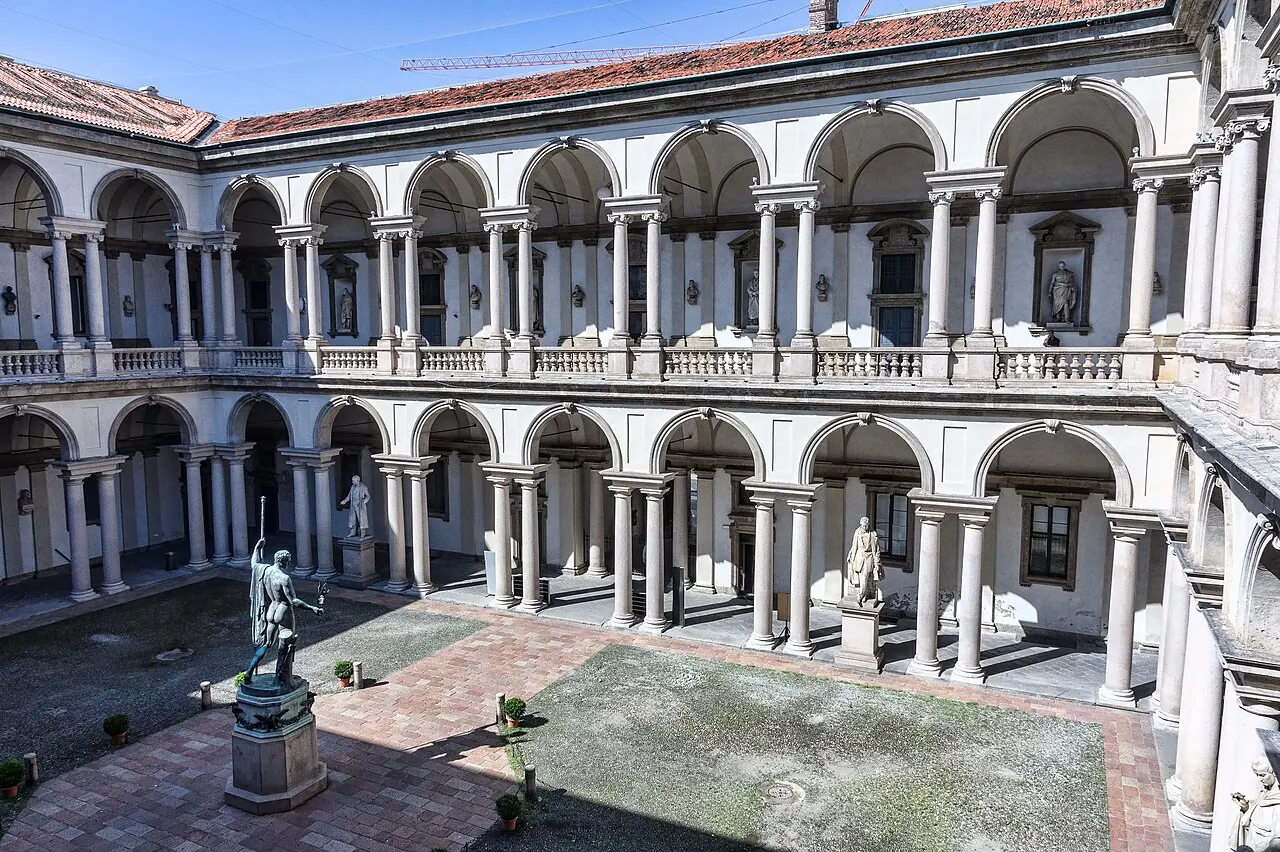
Brera offers a more lane-and-courtyard version of central Milan than the grand shopping corridor around Duomo. The Pinacoteca, art academy, Braidense library and botanical garden create a substantial cultural cluster; the surrounding streets add boutiques, restaurants and cafe stops. This is useful when you want art visits and evening meals to belong to the same part of town, rather than returning to a railway hub after every outing.
Lanza on ATM's M2 serves the western side, while Montenapoleone on M3 is useful for eastern addresses. A Malpensa arrival at Cadorna can connect to M2; arriving at Centrale offers a different choice of connections. The trade-off is that a picturesque lane can also be busy with restaurant activity, and some addresses require a longer luggage walk than a hotel beside a station. Choose Centrale for a rail-heavy itinerary, or Sempione if park access is more important than being among the dinner streets.
Plan it well: The photograph and pin identify the Pinacoteca di Brera complex and its courtyard, within Brera.
Milan area information: BreraNavigli and Ticinese: canal-side evenings and an aperitivo base
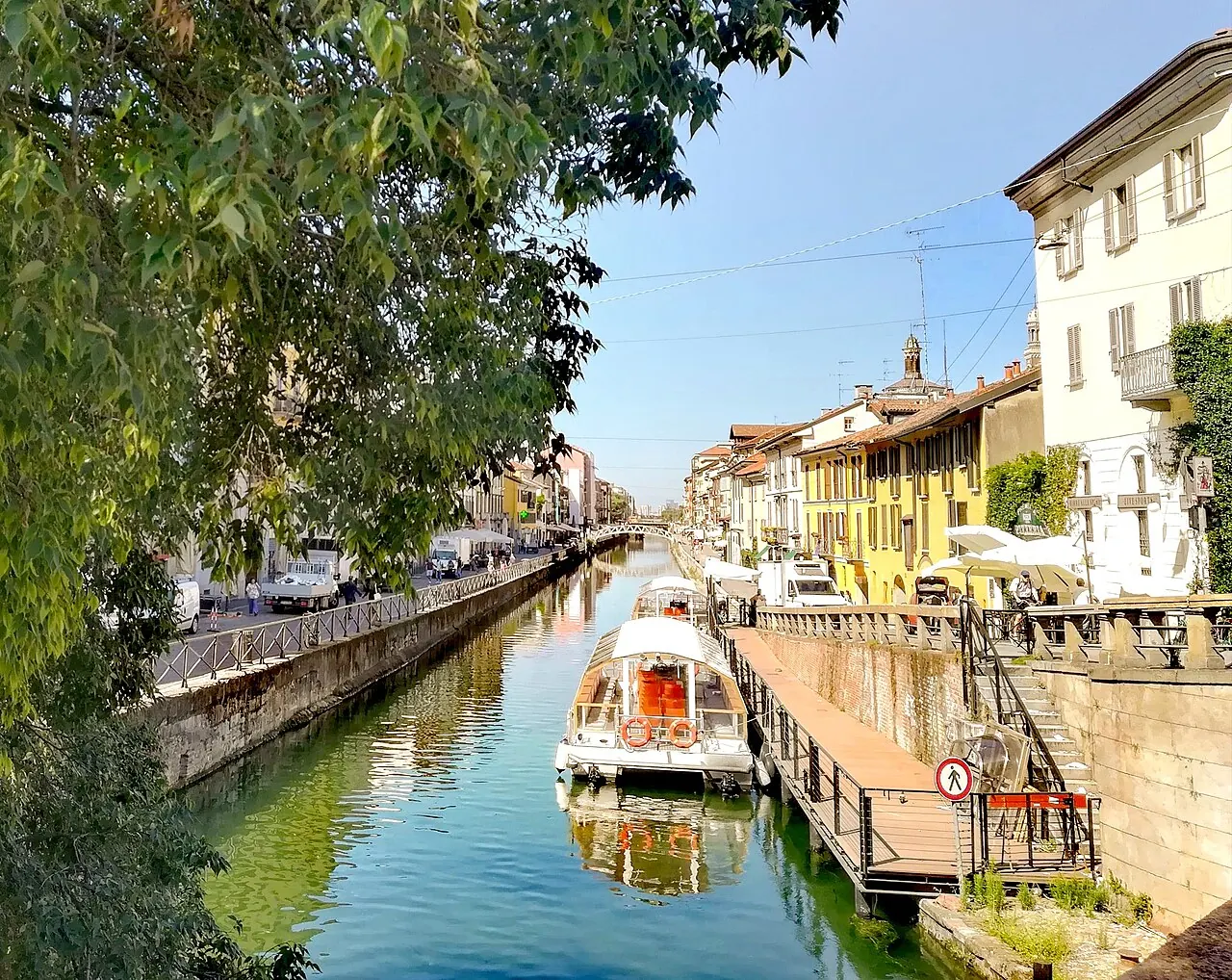
Navigli makes the evening setting the reason for the stay: canal-side restaurants and bars around Naviglio Grande, with Darsena and the Ticinese streets offering a related but distinct urban pocket. A hotel beside the canal puts the waterfront routine first; an address farther towards Ticinese changes the balance towards shops and the centre. It suits travellers who want to finish sightseeing with a neighbourhood meal rather than treating the canals as a single excursion.
Porta Genova on ATM's M2 is useful for the Naviglio Grande side; Vetra on M4 serves the more eastern Ticinese approach. The latter can be relevant for a Linate arrival, but it is not a substitute for checking a canal-side hotel's final leg. The meaningful downside is evening noise and foot traffic along the bar-lined stretches, plus more travel to some central sights. Choose Brera for gallery-led central days, or Magenta for an itinerary anchored by Cadorna and the Last Supper.
Plan it well: The photograph depicts the Milan stretch of Naviglio Grande. Its verified pin uses the canal's Milan-end coordinate, not the distant canal origin.
Milan area information: Navigli and TicineseMagenta and Cadorna: the Last Supper with a useful airport rail hub
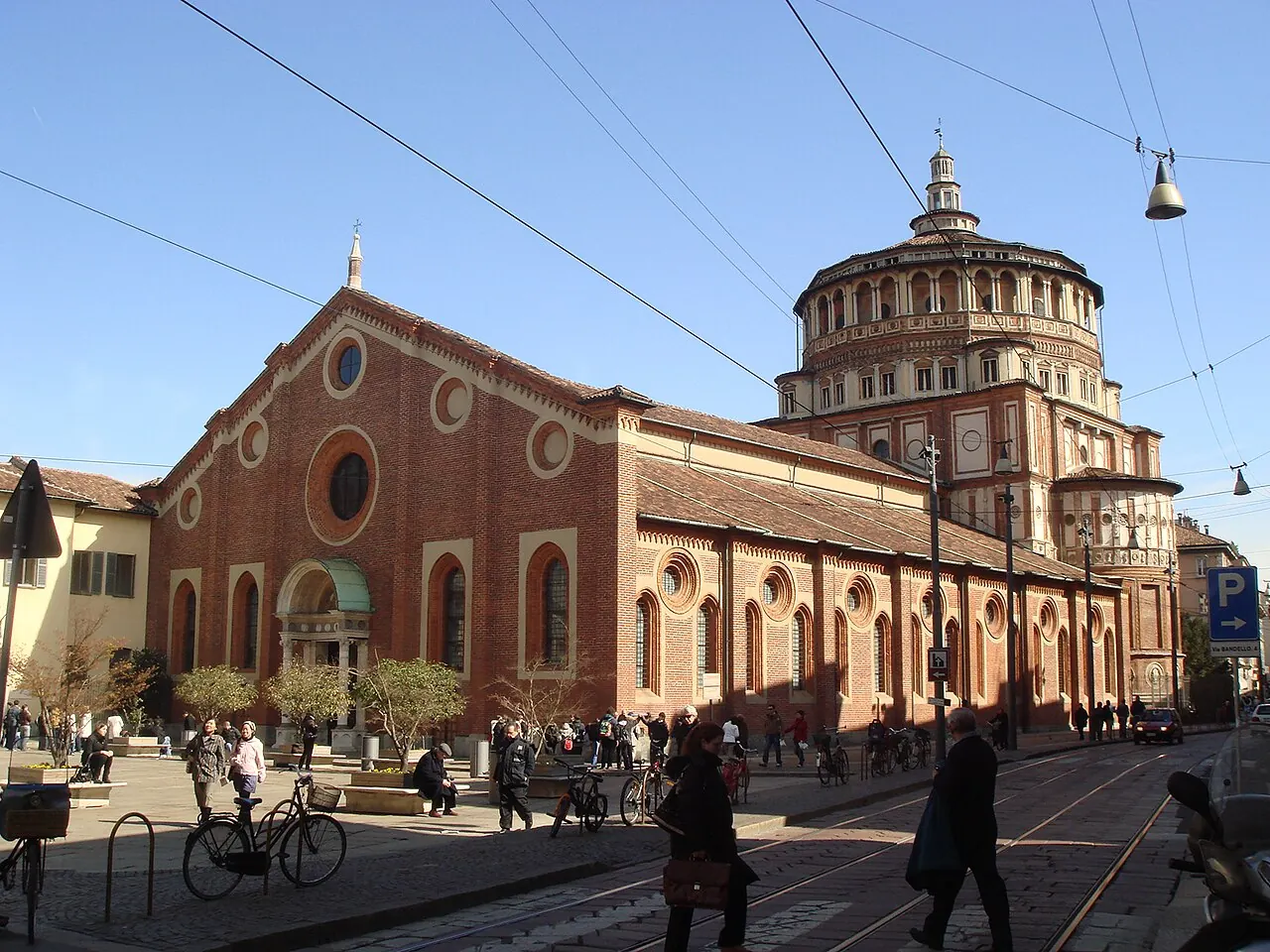
Magenta is a strong alternative to the cathedral centre when Santa Maria delle Grazie and the Last Supper shape the visit. Corso Magenta provides the main street reference, with the Museum of Science and Technology farther towards the Sant'Ambrogio side. The streets around Matteo Bandello and Tommasseo add a residential counterpoint to the cultural sights. Choose the actual pocket carefully: the Cadorna end favours train arrivals, while the southern side favours the museum-and-basilica circuit.
Cadorna combines ATM M1 and M2 with a Malpensa Express terminus; Conciliazione on M1 and Sant'Ambrogio on M2/M4 serve different edges. The M4 connection is relevant for Linate, not every Magenta hotel automatically. Staying near the Last Supper does not secure admission, so arrange that separately through its official booking channel. The trade-off is fewer concentrated late-evening canal bars and less immediate access to the eastern shopping streets. Choose Navigli for nightlife, or Duomo when the main central landmarks dominate a short stay.
Plan it well: The photograph and pin show Santa Maria delle Grazie in the Magenta area, not the Last Supper interior or Cadorna station.
Milan area information: Magenta and CadornaSempione and Arco della Pace: park breaks and western neighbourhood dinners
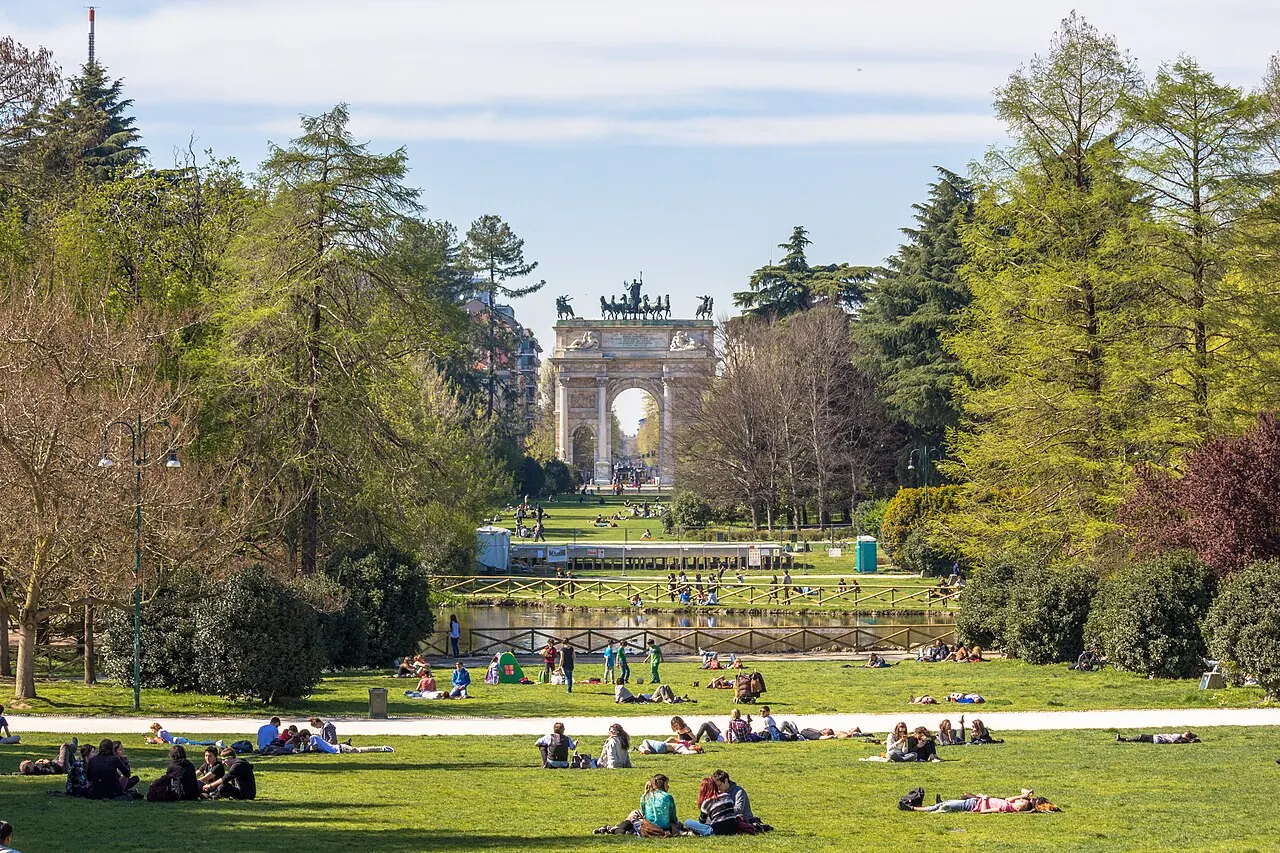
Sempione works when a city stay needs a substantial park between museum and shopping outings. The castle sits at one end, Arco della Pace at the other, and Triennale adds a design-and-exhibition reason to choose the western side. Restaurants and evening activity around the arch supply a neighbourhood counterweight to the park. A hotel labelled Sempione may sit on either side of this large green space, so decide whether the castle-and-centre approach or the arch-side streets better fit the plan.
ATM's Cadorna M1/M2 and Cairoli M1 serve the southeastern approaches; Domodossola on M5 is another reference towards the wider northwest area. Cadorna can suit a Malpensa arrival only if the hotel is genuinely convenient to that end of the park. The trade-off is longer walks between entrances and stations, with possible evening activity around the arch. Choose Brera for a denser art-and-dining base, or Centrale when onward trains outweigh the appeal of green space.
Plan it well: The photograph and pin identify Parco Sempione. Arco della Pace is at its northwest end, while the castle and Cadorna approaches are farther southeast.
Milan area information: Sempione and Arco della PacePorta Venezia: shopping, gardens and a lively evening district
Porta Venezia combines a substantial shopping axis with enough green and cultural space to avoid making the stay solely about retail. Corso Buenos Aires is the main shopping reference; the Indro Montanelli gardens, Natural History Museum and planetarium offer a different daytime circuit. Via Lecco and nearby streets add LGBTQ bars and a varied restaurant scene. Choose the street according to whether the priority is garden access, shopfronts or being close to the evening activity.
Porta Venezia has ATM M1 and suburban rail connections, while Lima on M1 serves addresses farther along Corso Buenos Aires. A Linate arrival can change from M4 to M1 at San Babila; Malpensa requires the appropriate rail-and-city connection rather than a direct service to every local station. The downside is traffic on the shopping corridor and late activity on some bar streets. Choose Sempione for more park-led days, or Magenta when airport rail access and Leonardo sights are the main priorities.
Plan it well: The pin marks the historic Porta Venezia gate, not every hotel on Corso Buenos Aires or the district boundary.
Milan area information: Porta VeneziaCentrale: rail departures before a picture-postcard setting
Centrale is a practical stay choice when the itinerary has an early train, several rail day trips or a short city stop between journeys. The station itself is a substantial architectural presence, while the surrounding district includes the Pirelli tower and, farther west, the contemporary streets towards Palazzo Lombardia. Restaurants around the station are convenient for arrival evenings, but this is a working transport district rather than the small-lane dining atmosphere of Brera.
ATM's M2 and M3 serve Centrale, and the Malpensa Express has a dedicated route to this terminus. For Linate, M4 requires an onward connection: the airport does not share Malpensa's station-arrival pattern. The compromise is repeated transport for the cathedral, canal evenings and some museum visits, alongside a busy road-and-station environment. Check the actual entrance and luggage walk rather than accepting a broad Centrale label. Choose Brera for a longer, neighbourhood-led city break, or Cadorna-side Magenta if your plans centre on the western cultural sights.
Plan it well: The pin identifies Milano Centrale railway station. It is a transport anchor, not a statement that every hotel in the wider area is beside the platforms.
Milan area information: CentraleChoose the airport connection for your base
Match the airport and rail terminus to the hotel's actual station. The best arrival for western Magenta may not be the best arrival for Centrale or the eastern shopping district.
Linate uses M4
ATM's M4 links Linate with the city. Connections include M1 at San Babila and M2 at Sant'Ambrogio; use the operator's interchange guidance for the remaining leg, rather than assuming the airport train reaches Centrale directly.
ATM: M4 passenger service and interchangesMalpensa has two city routes
The Malpensa Express service has distinct routes to Milano Centrale and Milano Cadorna. Choose the destination that fits the hotel and any onward train, then check the current departure and any replacement-service notice with the operator.
Malpensa Express: lines, maps and timetablesUse ATM for the final city connection
The current Metro-and-rail map distinguishes Duomo, Lanza, Porta Genova, Cadorna, Porta Venezia and Centrale. Check the nearest station and the actual walk for a hotel described broadly as Brera, Navigli or Sempione.
ATM: getting around Milan and network mapsFind a hotel in your Milan base
Compare Milan hotels around the sights or arrival hub that matters most. Separate canal-front rooms from quieter inland streets, and distinguish Cadorna access from a general Magenta or Sempione address.
Explore Milan hotels