
Vilnius city guide
10 things to do in Vilnius
Castle views, red-brick churches and a riverside artists’ quarter: a Vilnius first visit with space for Lithuania’s history and unhurried Old Town walks.
Plan your visit
Vilnius is most rewarding when you notice the changes in scale: a broad cathedral square gives way to enclosed university courtyards, a red-brick church to a riverside neighbourhood. Use one museum as the centre of each day, then connect the nearby streets and gardens. The hills are genuine climbs, and the city’s difficult twentieth-century history deserves more attention than a hurried stop between photographs.
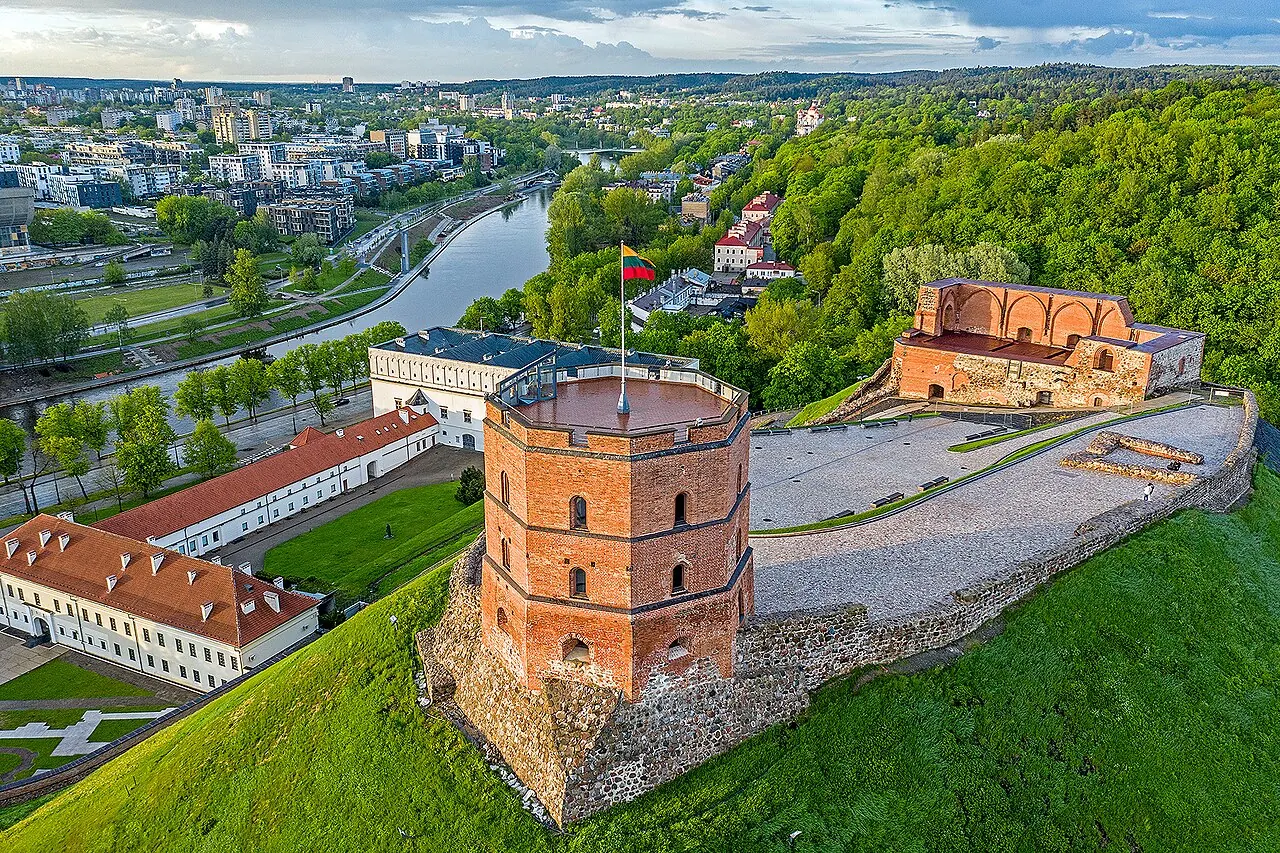
Read the city from Gediminas’ Tower
Gediminas’ Tower is the compact red-brick landmark above Cathedral Square, a surviving part of the Upper Castle rather than an intact medieval palace. Climbing towards it changes your understanding of Vilnius: the old roofs sit below the hill, while the newer city stretches beyond the river. Start here when visibility is good, and use the view to identify the cathedral, church towers and streets you want to explore at ground level.
The tower museum also gives the hill a purpose beyond its panorama, with exhibitions connecting the landmark to Lithuania’s history. Treat the climb and the indoor visit as separate decisions if the weather deteriorates. The National Museum has published an indefinite suspension of the hill lift following a technical failure; check its latest notice before travelling and do not rely on powered access. Leave enough time for the descent rather than scheduling a timed palace visit immediately afterwards.
Plan it well: The hill lift has an official suspension notice. Verify current access with the National Museum; the walking approach includes steep surfaces and steps.
The Gediminas Tower visitor informationPause inside Vilnius Cathedral
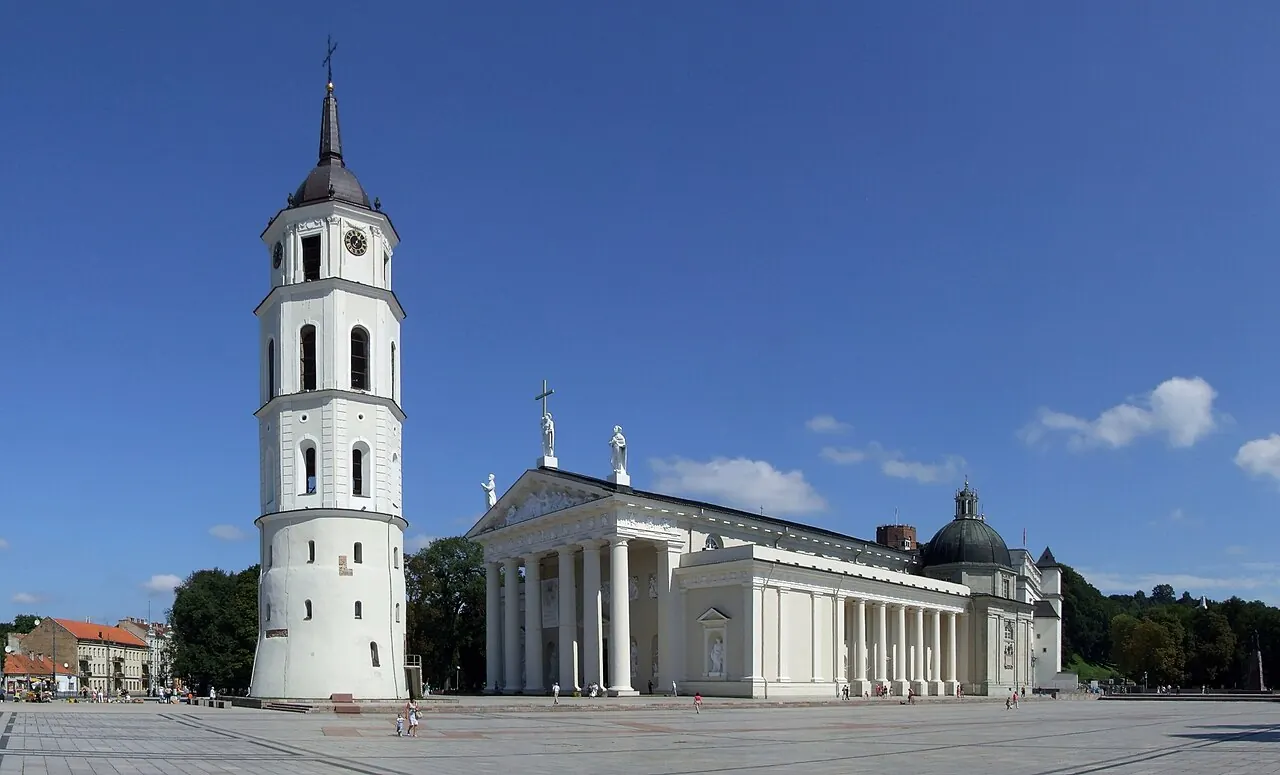
The cathedral’s pale columns and broad square make an effective starting point before the Old Town streets become narrower. Walk around the building before going inside: the detached bell tower and the castle hill help explain how religious and defensive buildings once occupied the same small area. The cathedral is a working Catholic church, not simply an architectural backdrop, and the chapel associated with St Casimir adds a specifically Lithuanian focus to a visit.
Keep the main church, bell tower and underground visits distinct when planning. Entering the cathedral does not mean that a tower climb or a guided catacomb visit is included; the tourism office directs catacomb enquiries to the Church Heritage Museum. Choose one extra experience if it interests you, instead of assuming that all three fit into a brief stop. Afterwards, continue towards the Palace of the Grand Dukes or Pilies Street, with a proper break before another indoor attraction.
Plan it well: For catacombs, use the Church Heritage Museum’s arrangements rather than treating ordinary cathedral entry as a tour booking.
Go Vilnius cathedral informationApproach the Gate of Dawn from both sides
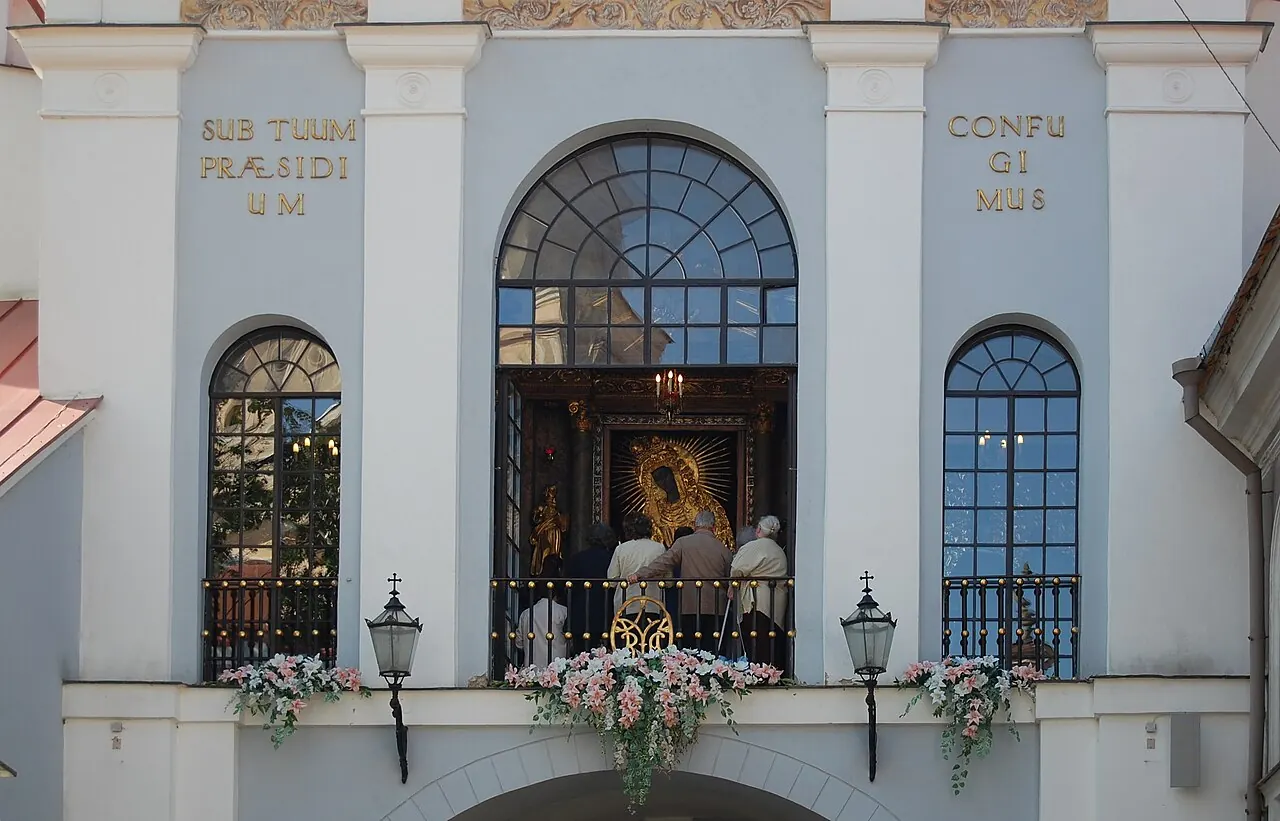
The Gate of Dawn gives the southern Old Town a clear destination for a walk without turning the whole neighbourhood into a route to tick off. Look at both faces of the gate: one recalls its role in the city’s defences, while the inward-facing chapel makes its continuing religious significance visible. This is the surviving gate of the former defensive wall, and the revered image of the Mother of Mercy draws pilgrims as well as travellers.
Approach along Ausros Vartu Street and allow space for people who are here to pray. A chapel visit needs a different pace from photographing the street below it, particularly if a service is taking place. The neighbouring churches can extend the outing, but you do not need to enter every building to understand the setting. Continue towards the Town Hall area afterwards and compare the enclosing street with the openness of Cathedral Square at the other end of the Old Town.
Plan it well: Keep the chapel quiet and follow posted photography instructions; a public passage beneath it is not permission to interrupt worship.
Go Vilnius Gates of DawnLook closely at St Anne’s brickwork
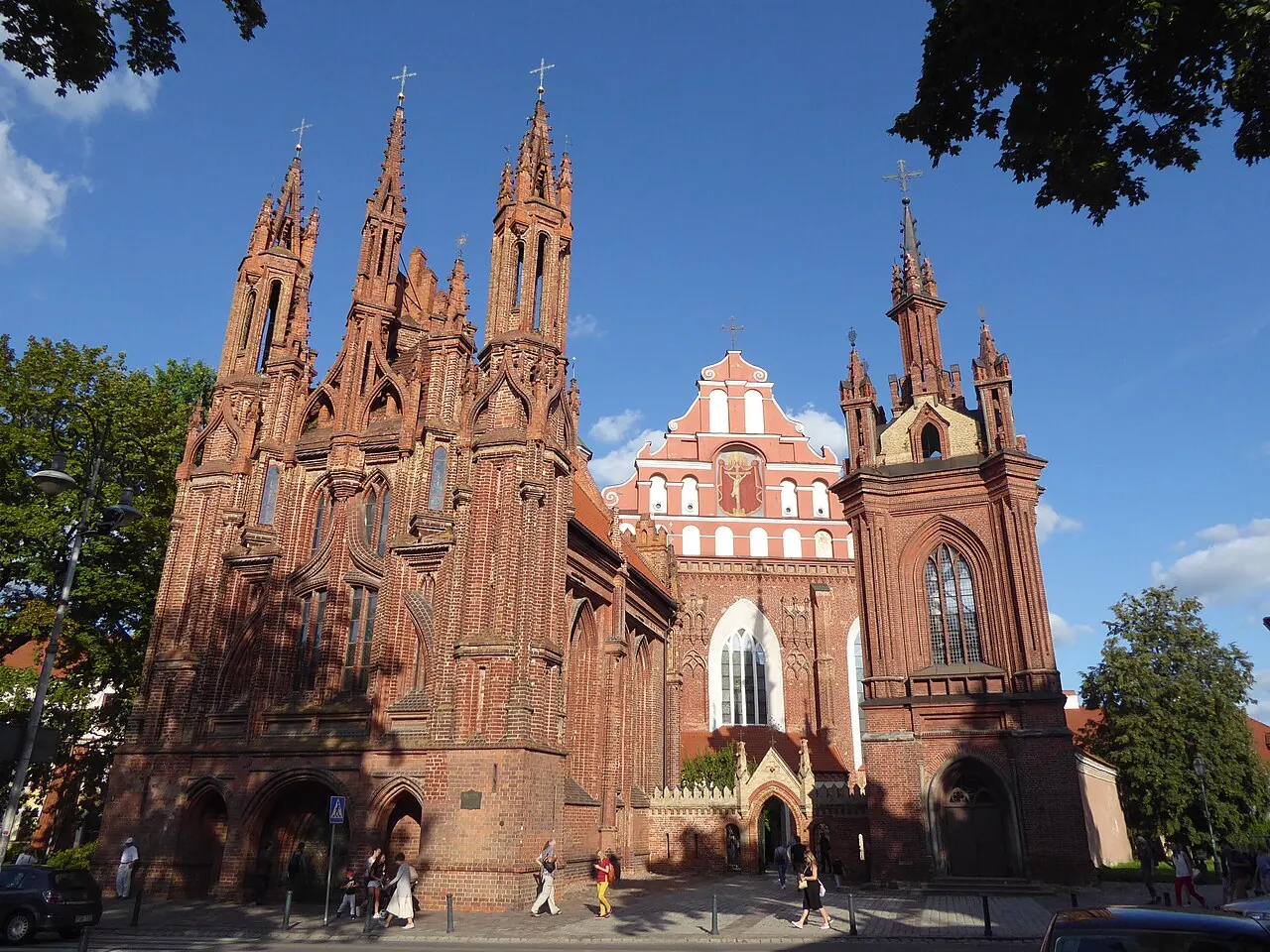
St Anne’s Church is a useful antidote to the idea that Vilnius is only a city of white Baroque facades. Its late-Gothic brickwork rewards close attention: change your position to see how the pointed openings, narrow towers and ornamental surfaces fit together. The larger Bernardine church behind it makes the contrast even clearer. Start with the exterior rather than racing inside, and leave enough pavement space for other pedestrians passing along Maironio Street.
The two churches belong to a wider religious complex but have their own visitor and worship arrangements. Check access if an interior visit matters to you; an exterior stop remains worthwhile when a door is closed. This is an especially sensible place to combine with Bernardine Garden, because the garden provides a quieter pause after studying the buildings. From there, you can choose either a hill walk or the river crossing to Uzupis instead of adding another church automatically.
Plan it well: St Anne’s and the Bernardine church are separate buildings. Check each entrance and respect services rather than assuming one schedule covers both.
Go Vilnius St Anne and Bernardine complexSpend an unhurried hour in Uzupis
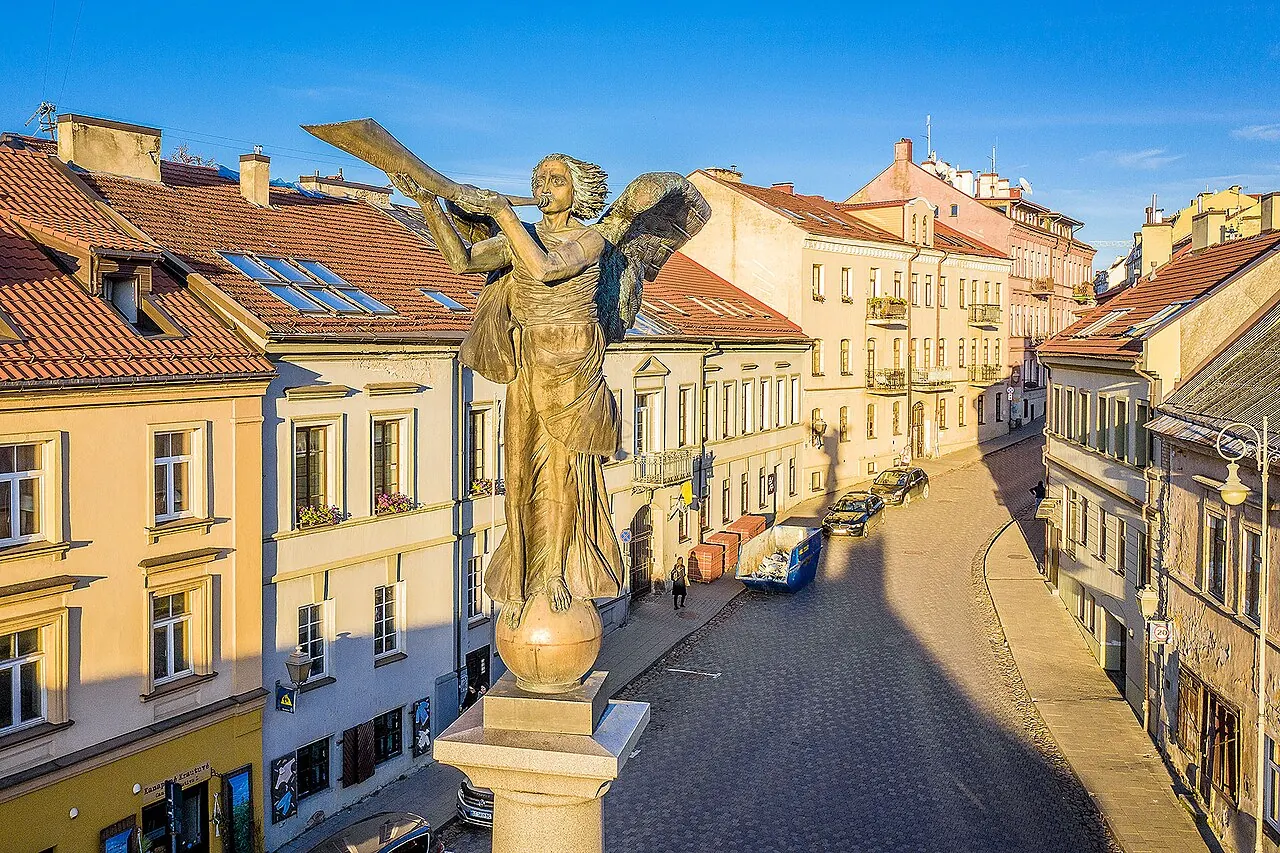
Crossing the Vilnele into Uzupis is a small journey with a noticeable change of atmosphere. The neighbourhood’s tongue-in-cheek republic, declared by residents in 1997, is part of an artistic identity rather than an international border. Read the constitution displays, look for small galleries and notice the river as well as the better-known symbols. A walk here works best when you stop for details, not when you hurry between the bridge and a single photograph.
Use Uzupio Street as a starting thread, then decide how much farther you want to explore. The art incubator’s outdoor installations can change, so the pleasure is in seeing what is present rather than expecting a fixed collection from an old guide. It is also a residential neighbourhood, with ordinary doorways and private courtyards mixed into the visitor circuit. Give it a lunch or coffee break, and avoid making the riverbank dependent on an ambitious hill climb later in the afternoon.
Plan it well: Uzupis is a neighbourhood of Vilnius, not a separate country; keep private entrances and changing riverside conditions in mind.
Go Vilnius Uzupis districtChoose a route through the Grand Dukes’ Palace
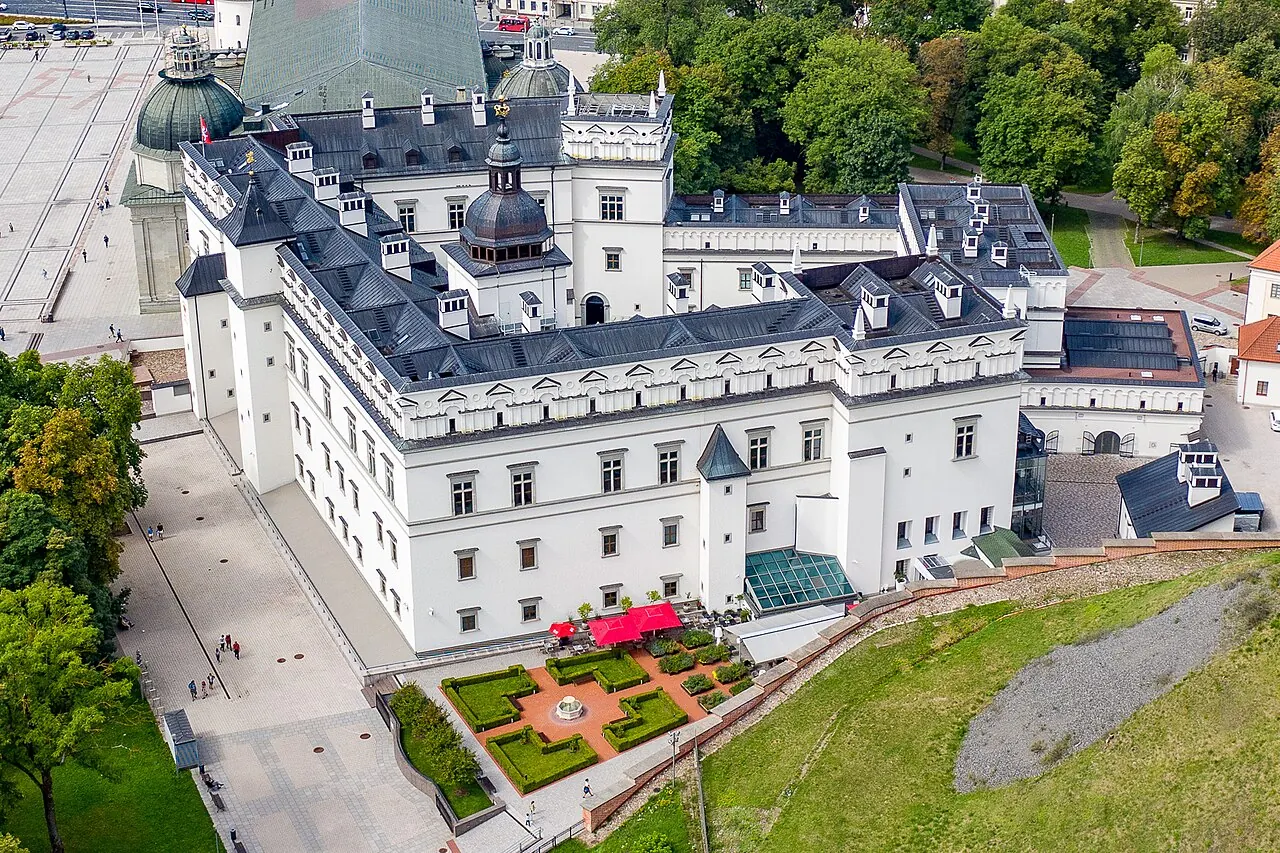
The Palace of the Grand Dukes is the place to ask what stood beneath and behind the present-day capital. The restored palace contains museum routes that separate archaeological and architectural development from reconstructed ceremonial interiors and other collections. That distinction matters: the building is a modern restoration of a residence destroyed in the nineteenth century, not a completely untouched palace. Look for the relationship between excavated remains, models and the rooms recreated above them.
Read the current route descriptions before choosing admission, especially if your time or interest is concentrated on archaeology rather than grand halls. One well-chosen route is more useful than moving quickly through every gallery. Its location beside the cathedral makes it a natural wet-weather anchor for the northern Old Town, but leave the garden and hill as optional additions afterwards. Check temporary exhibitions and access arrangements separately, since a palace museum visit can involve more walking indoors than the compact exterior suggests.
Plan it well: Compare the museum’s routes and current ticket combinations before buying; reconstructed interiors and archaeological displays answer different questions.
Go Vilnius palace museum informationMake room for the Museum of Occupations and Freedom Fights
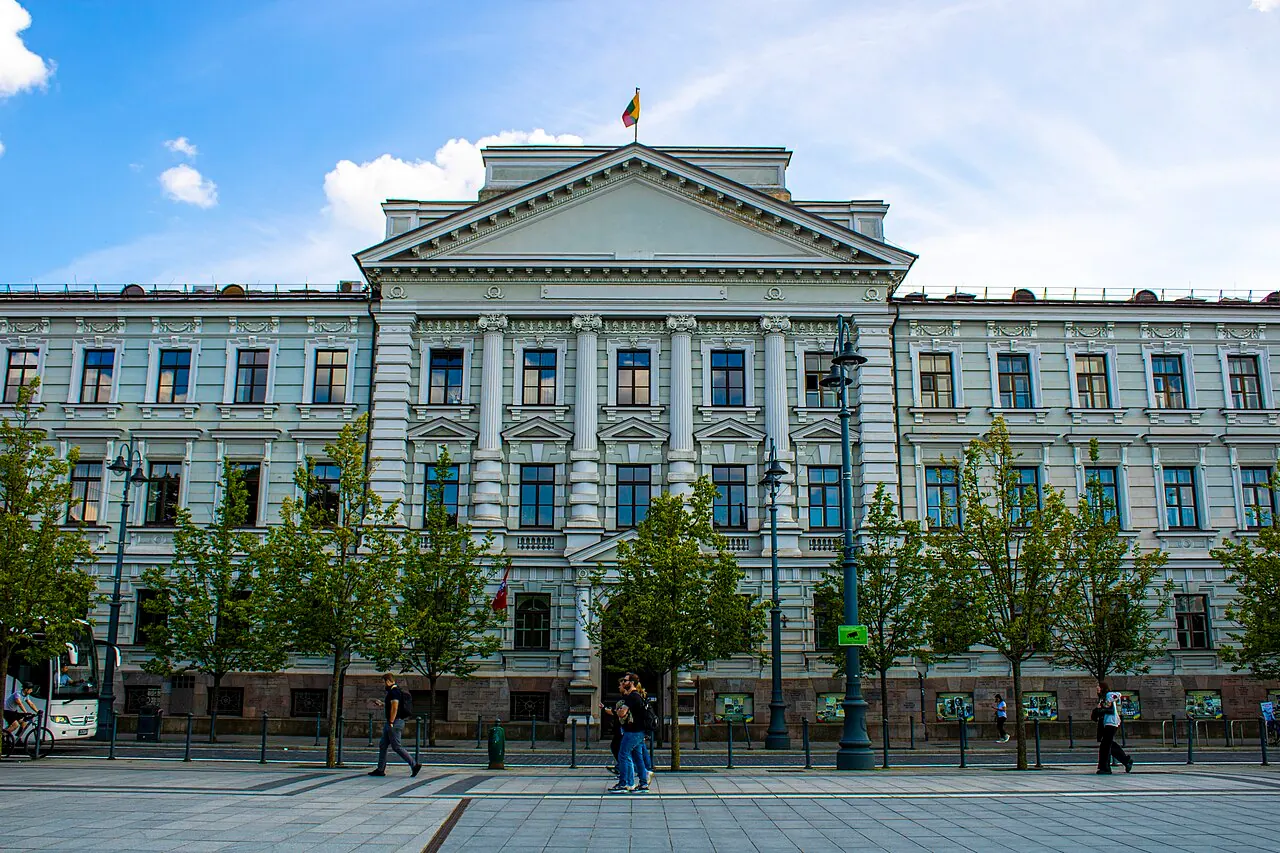
This museum is a deliberate change of tone from the churches and palace. Housed in a building used by Soviet security institutions, it addresses occupation, repression and resistance through documents, personal material and the former prison spaces. The setting is central to the experience: these are not neutral galleries built long afterwards. Read enough of the interpretation to understand whose experiences are being presented, rather than treating the cells as an unusual architectural attraction.
The basement and material about imprisonment and executions can be distressing, so consider the needs of children and everyone travelling with you. Give the visit its own part of the day, followed by a quieter walk along Gediminas Avenue or a break elsewhere. It is west of the densest Old Town sightseeing area, making it a better separate outing than an impulsive addition before closing. Consult the museum’s current calendar; a city museum plan should not assume every institution opens on the same days.
Plan it well: Choose this visit intentionally and allow a pause afterwards. Check the museum’s own calendar before setting your second-day route.
Go Vilnius museum visitor informationTake the hill walk to the Three Crosses
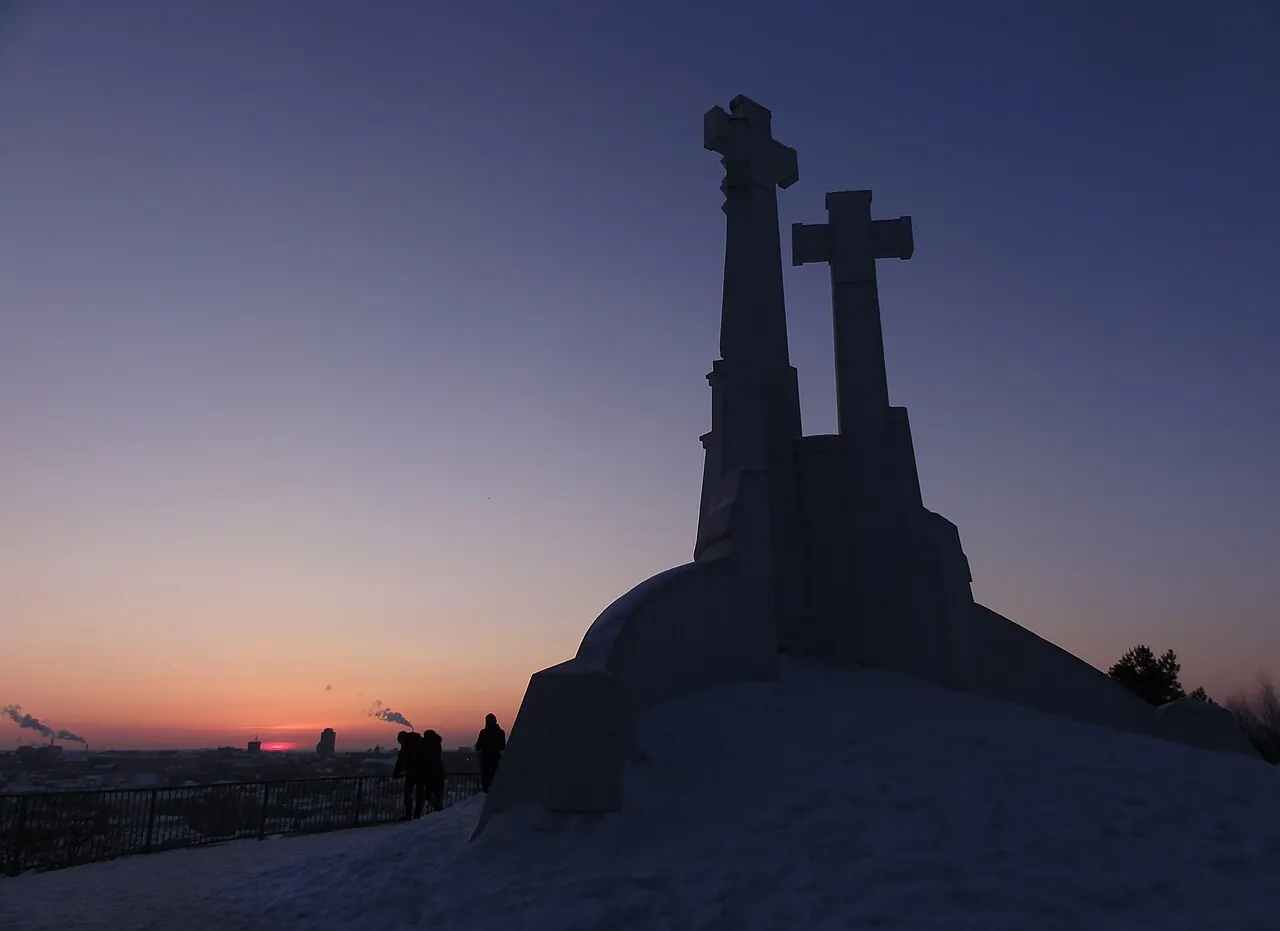
The Three Crosses are both a memorial and a reason to see Vilnius from the wooded eastern side of its centre. The white forms stand above the river and contrast with Gediminas’ brick tower across the valley. Walk up for the wider setting, not simply to collect a second skyline photograph. The monument was destroyed during Soviet rule and later rebuilt, giving the viewpoint a historical meaning beyond the panorama of roofs and church towers.
This is a hill outing through Kalnu Park, with climbing and uneven outdoor surfaces rather than the conditions of a level city square. Choose daylight and suitable footwear, and shorten the plan when paths are wet or icy. On a first visit, it makes sense to choose this hill or Gediminas’ Tower if your group does not want two climbs. Bernardine Garden offers a gentler alternative nearby. Keep the return journey in mind when enjoying evening light, particularly outside the longer summer days.
Plan it well: Use daylight for an unfamiliar hill route. In poor conditions, choose the garden instead of treating the climb as essential.
Go Vilnius Hill of Three CrossesFind the smaller spaces of Vilnius University
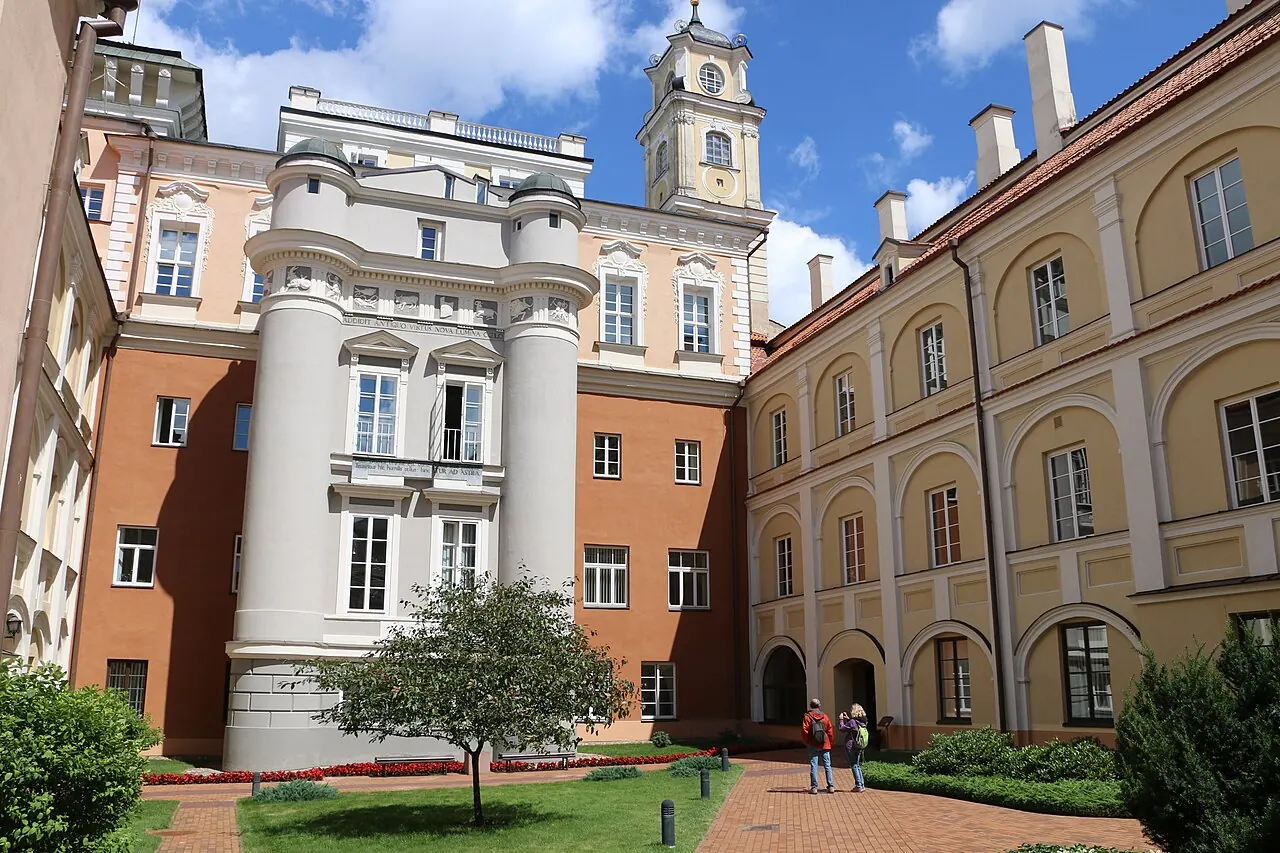
The old university campus changes the scale of an Old Town walk. Instead of another large square, look for courtyards, arcades and the relationship between buildings accumulated over several centuries. Vilnius University was founded in 1579, and its architectural mixture is part of the appeal: it does not read as one uniform monument. The campus remains a place of study and administration, which is worth remembering when a visitor entrance leads close to working spaces.
Go to the historic campus on Universiteto Street, rather than assuming every university building in the city belongs to the sightseeing complex. Check the current visitor access and any separate church or tower arrangements before deciding how far to explore. Library collections are not automatically available because a courtyard is open. Pair the campus with Pilies Street and the surrounding lanes, giving yourself time to notice doorways and small changes of level. This is a good architectural stop between more demanding museums.
Plan it well: Use the historic Universiteto Street campus for this stop; open courtyards do not imply unrestricted access to libraries or teaching rooms.
Go Vilnius old university campusLeave a proper break for Bernardine Garden
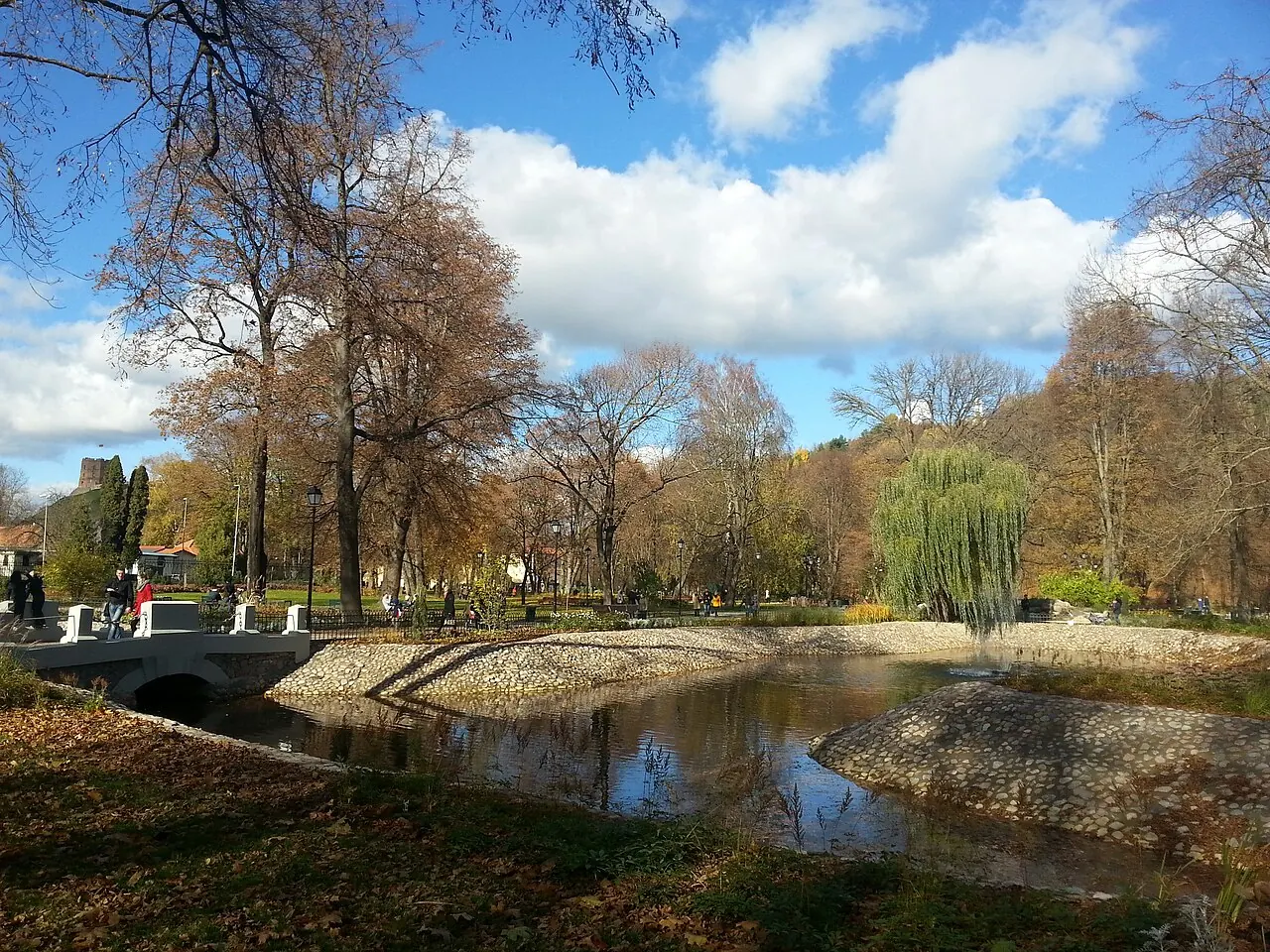
Bernardine Garden sits between the river, the churches and Gediminas Hill, so it is useful without needing to become another major undertaking. The planted areas and paths let you switch from looking up at facades to noticing trees, water and seasonal detail. Its botanical displays recall the university garden once established in this area. Give the park a real pause in your day, rather than using it only as the fastest route between two attractions.
After St Anne’s, choose a short riverside stroll or a longer wander according to the weather and the energy of your group. A bench stop is a perfectly adequate plan after a museum; families may also appreciate time away from enclosed galleries. Garden features and fountains are seasonal experiences, not guaranteed performances at an advertised moment in this guide. If you are considering the Three Crosses afterwards, decide at the garden whether another climb feels sensible, leaving the flatter paths as a worthwhile visit in their own right.
Plan it well: Combine the garden with St Anne’s; decide on a hill climb afterwards, when you know the weather and your group’s energy.
Go Vilnius Bernardine GardenHow to spend two days in Vilnius
Day one: castle and eastern Old Town
Start at Cathedral Square, then choose Gediminas’ Tower or a route through the Grand Dukes’ Palace as your main visit. Continue to St Anne’s and Bernardine Garden, finishing with a riverside walk and a break in Uzupis. Add the Three Crosses only if daylight, weather and energy allow.
Day two: courtyards and recent history
Explore the historic university area and walk south to the Gate of Dawn. Give the Museum of Occupations and Freedom Fights a separate, unhurried afternoon west of the Old Town, checking its opening calendar first. These are editorial groupings, not timed or field-tested walking routes.
Before you go
Do not depend on the hill lift
The National Museum has published an indefinite suspension of the Gediminas Hill lift. Check the latest notice and consider a ground-level alternative if the steep walking approach does not suit your group.
National Museum lift suspension noticeSeparate church entry from extra visits
Catacombs, bell towers and museum routes can have separate booking and access arrangements. Check the specific experience you want, and leave working churches quiet during services.
Plan museums before the walking gaps
Check the museum calendar for your actual dates, then use the garden, courtyards and neighbourhood streets between indoor visits. Wet cobbles and hill paths can make a compact map feel more demanding.
Choose a base for your Vilnius days
The Old Town suits a visit centred on churches, the university and the lower castle, while the Gediminas Avenue side works well for the Occupations Museum and a less concentrated sightseeing setting. Compare the exact entrance, luggage access and noise outlook, not just distance from Cathedral Square. Hills and cobbled streets matter when carrying bags.
Explore Vilnius hotels