
Luxembourg City city guide
10 things to do in Luxembourg City
Explore a capital built across cliffs and valleys, with fortress galleries, a riverside abbey and contemporary art balanced by the upper town’s lively squares.
Plan your visit
Luxembourg City looks small on a map, but the height differences shape every outing. The upper town offers squares and civic buildings; the Grund sits down beside the Alzette; Kirchberg adds a different museum landscape. Group your visits by level and neighbourhood instead of repeatedly crossing the valleys. One fortress experience and one museum can give a two-day visit enough depth without making every walk a climb between appointments.
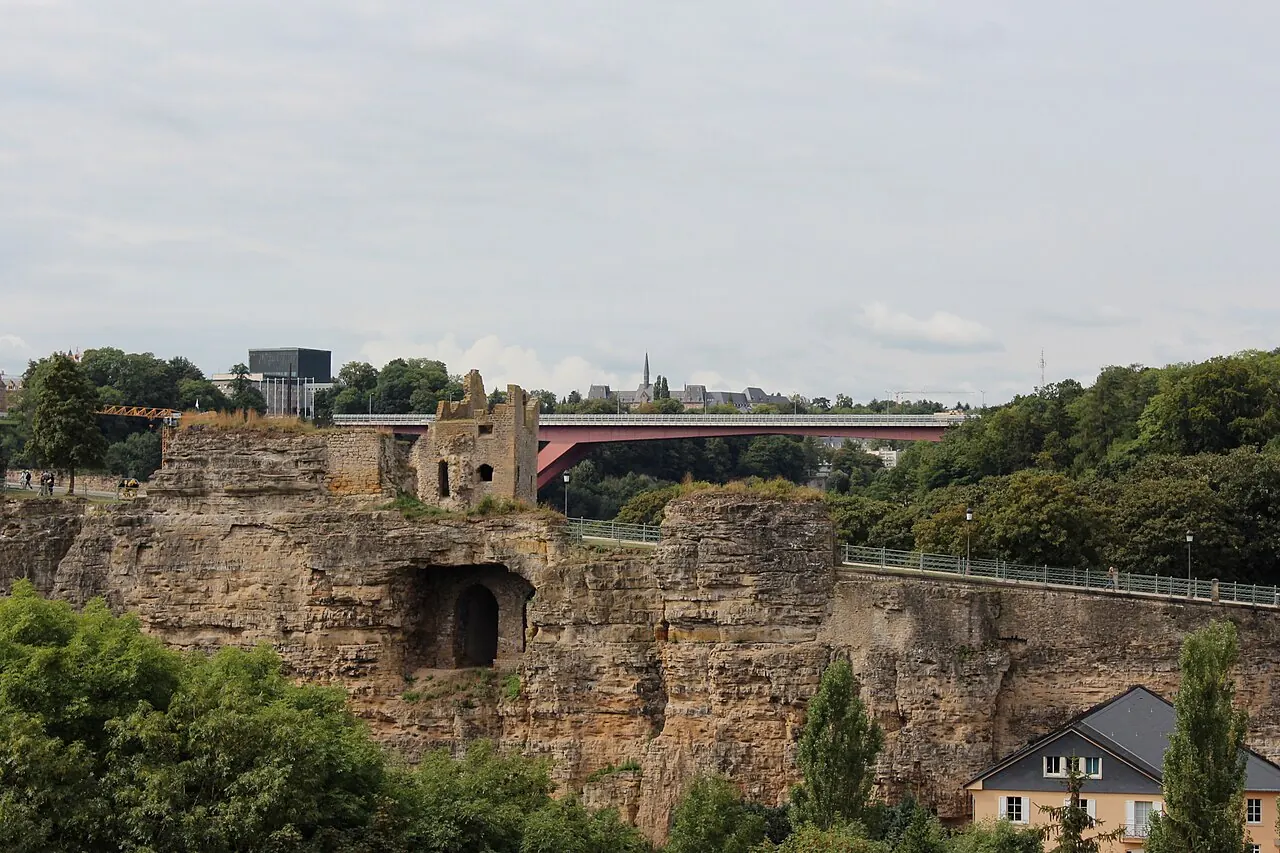
Explore the Bock from the outside and within
The Bock is the place where Luxembourg’s unusual geography starts making sense. Look at the promontory from the surrounding viewpoints before entering the casemates, because the cliffs are part of the story rather than a backdrop to it. The underground defence galleries reveal how the fortress used the rock, while openings towards the lower town reconnect the enclosed spaces with the valley outside. Give both perspectives time instead of choosing between a photograph and a tunnel visit.
Read the current entry instructions and safety guidance before buying, particularly if narrow passages or steps are difficult for your group. The tourism office asks visitors with specific access needs to contact it before purchase. Bock and Petrusse casemates are separate attractions, not two names for one entrance. After the visit, choose an upper-town walk or a descent towards the Grund, leaving room for the change of level rather than treating the valley as a flat extension of the same square.
Plan it well: Confirm the Bock entrance and access requirements; a ticket or meeting point for the Petrusse casemates is not interchangeable.
Luxembourg City tourism Bock CasematesStudy the facade of the Grand Ducal Palace
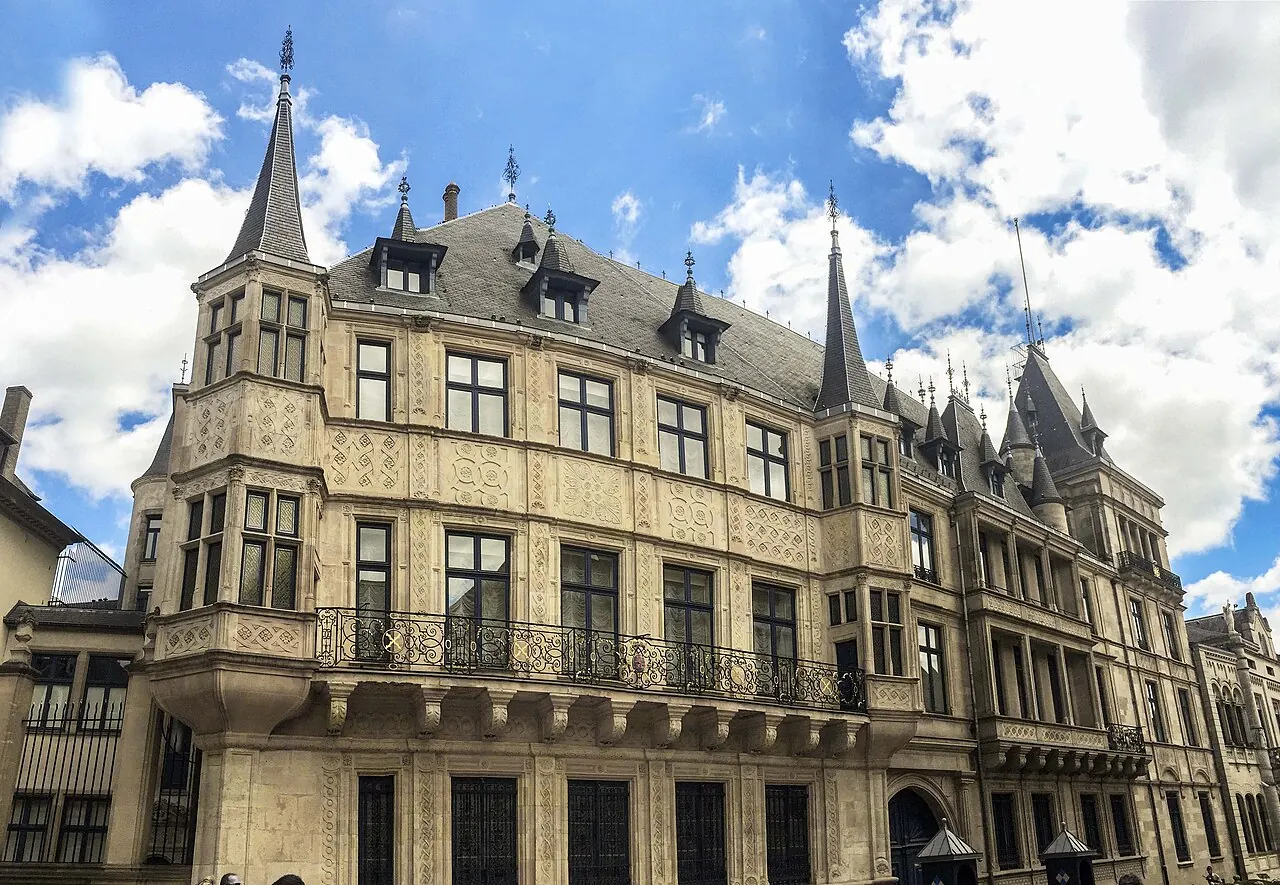
The palace is embedded in the upper town’s street network rather than set apart behind a long ceremonial avenue. That makes its decorated facade and neighbouring civic buildings especially worth studying on foot. Stand back where space allows, then notice the detail at closer range without obstructing entrances or security arrangements. An exterior visit fits naturally between the squares and the museum district, and does not depend on securing an interior tour.
Interior visits are a different proposition: the tourism office organises guided tours during a limited summer period, with current dates and ticket availability published separately. A general city walking tour should not be assumed to include them. If a palace tour is important, build the day around its confirmed booking and meeting point; outside the season, enjoy the exterior and choose another indoor attraction. Avoid planning a particular guard ceremony from an old timetable, since ceremonial events can be date-specific.
Plan it well: The interior is offered through seasonal guided tours. Check the exact dates and meeting point rather than expecting walk-in palace admission.
Luxembourg City tourism palace informationLook for the layers inside Notre-Dame
Notre-Dame began as a Jesuit church and combines late-Gothic forms with Renaissance details, a useful reminder that the upper town was shaped by more than fortification alone. Look at the building from the streets around it before entering, because its towers and adjoining urban fabric create a different impression from each side. Inside, allow the architecture and devotional objects to set a slower pace than the surrounding shopping streets.
The cathedral remains a working religious building, so ordinary sightseeing needs to fit around worship and posted restrictions. An audio-guided visit is an option if you want more interpretation, but it is not a reason to assume all areas are open at every moment. Pair the church with Place Guillaume II or a valley viewpoint, keeping the visit modest if you already have a large museum planned. This is a good central stop without requiring a lengthy detour or a second descent into the Grund.
Plan it well: Keep worship access separate from sightseeing, and verify any audio-guide arrangements or restricted areas before entering.
Luxembourg City tourism cathedral informationSee the valley framed by Adolphe Bridge
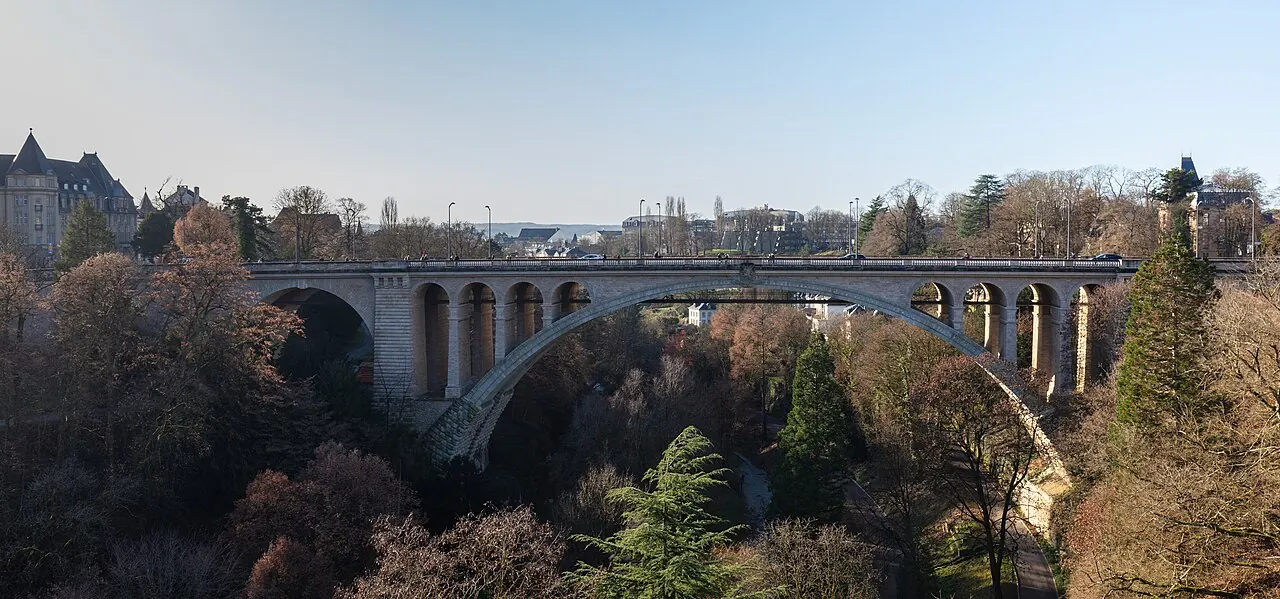
Adolphe Bridge gives a clear view of the depth that lies between Luxembourg’s upper town and the station-side neighbourhoods. Its stone arches are best understood from a viewpoint as well as from the crossing itself. Rather than treating the bridge as a quick connector, pause to see how the wooded valley, road level and neighbouring buildings fit together. It is one of the places where the city’s engineering becomes immediately visible.
Choose the walk according to your next destination: a crossing towards the station district is different from committing to a descent into the Petrusse valley. Do not add a lower-level park walk without considering how you will regain height afterwards. Use designated pedestrian routes and avoid stepping into traffic for a photograph. On a first visit, the bridge and upper-town viewpoints can provide enough of the setting, leaving a more extensive valley outing for a day with suitable weather and energy.
Plan it well: Decide whether you are crossing towards the station district or descending into the valley; they are different walking commitments.
Luxembourg City tourism Adolphe BridgeGive Neimenster a valley-level visit
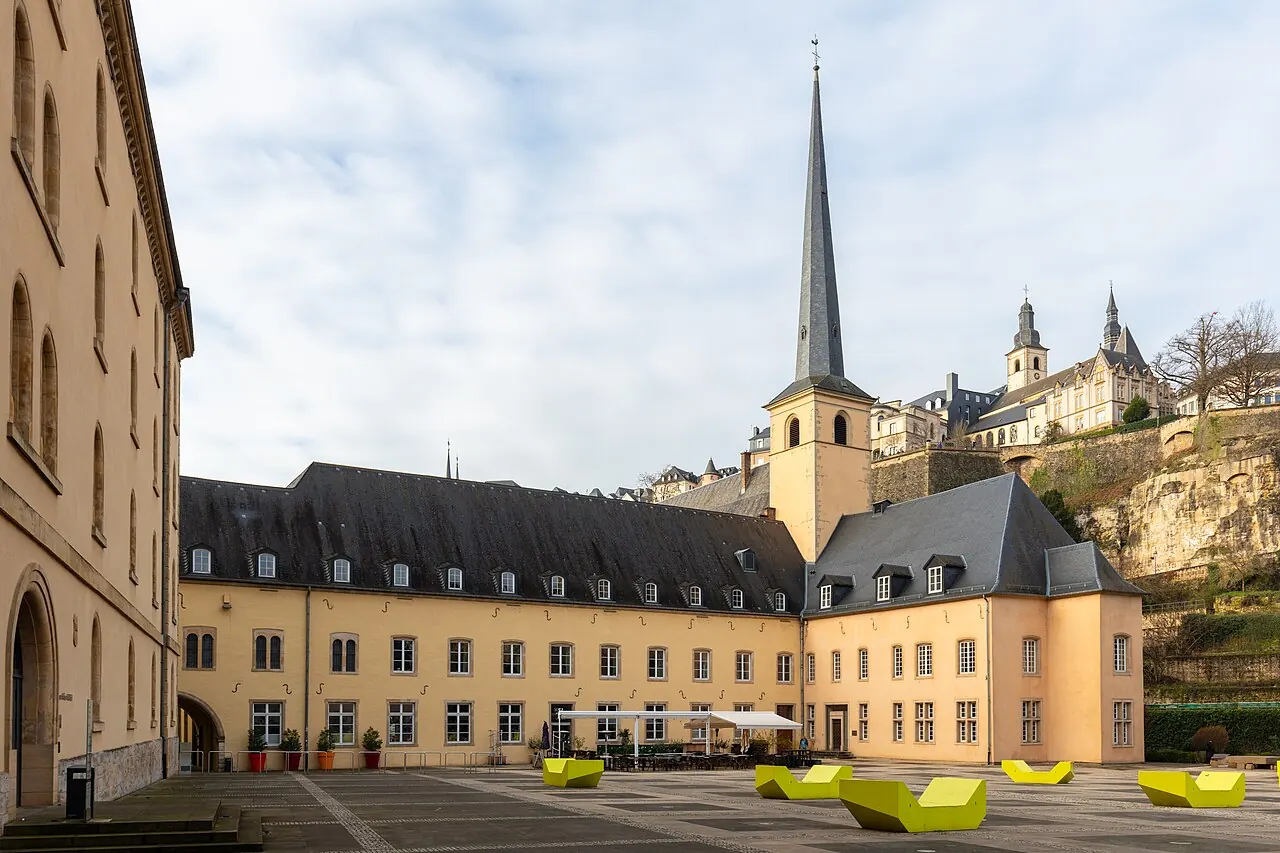
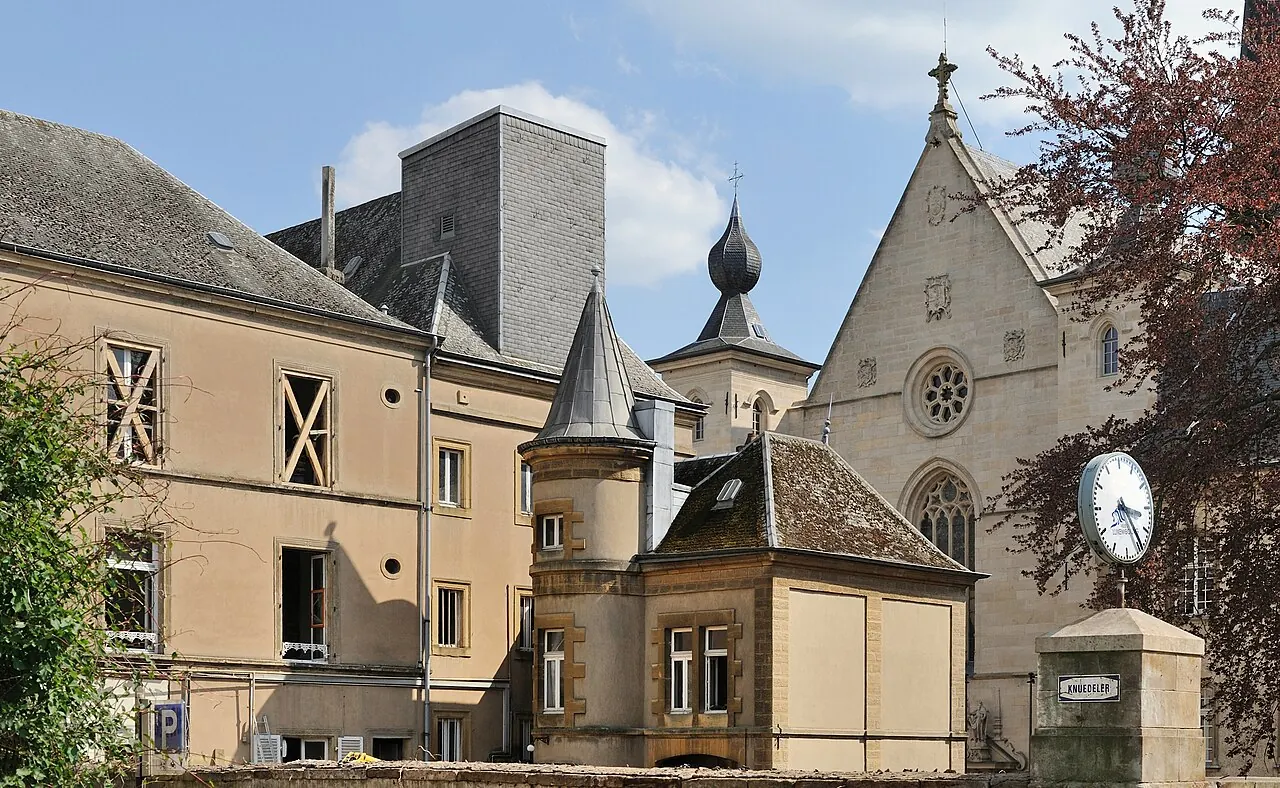
The former Neumunster Abbey is much more than the building seen from the upper town’s viewpoints. Down in the Grund, its courtyards and riverside setting reveal the scale of the cliffs above and make the city feel entirely different. The complex now works as a cultural centre, with a history that also includes use as a prison and hospital. Walking around it turns a familiar panorama into a place you can understand at close range.
Consult the current exhibitions and event programme if you want to go beyond the outdoor setting. Guided heritage visits have their own arrangements, and events can affect which spaces are accessible. Leave time for the journey down and the return to the upper town; a short distance on the map can conceal a substantial change of level. The abbey pairs naturally with a Grund walk and a break beside the river, rather than an immediate dash to the Kirchberg museums across another part of the city.
Plan it well: Check event-related access and the return route from the Grund before descending; an exterior walk is not an unrestricted tour of the complex.
Neimenster official heritage informationLet Mudam change the pace of the trip
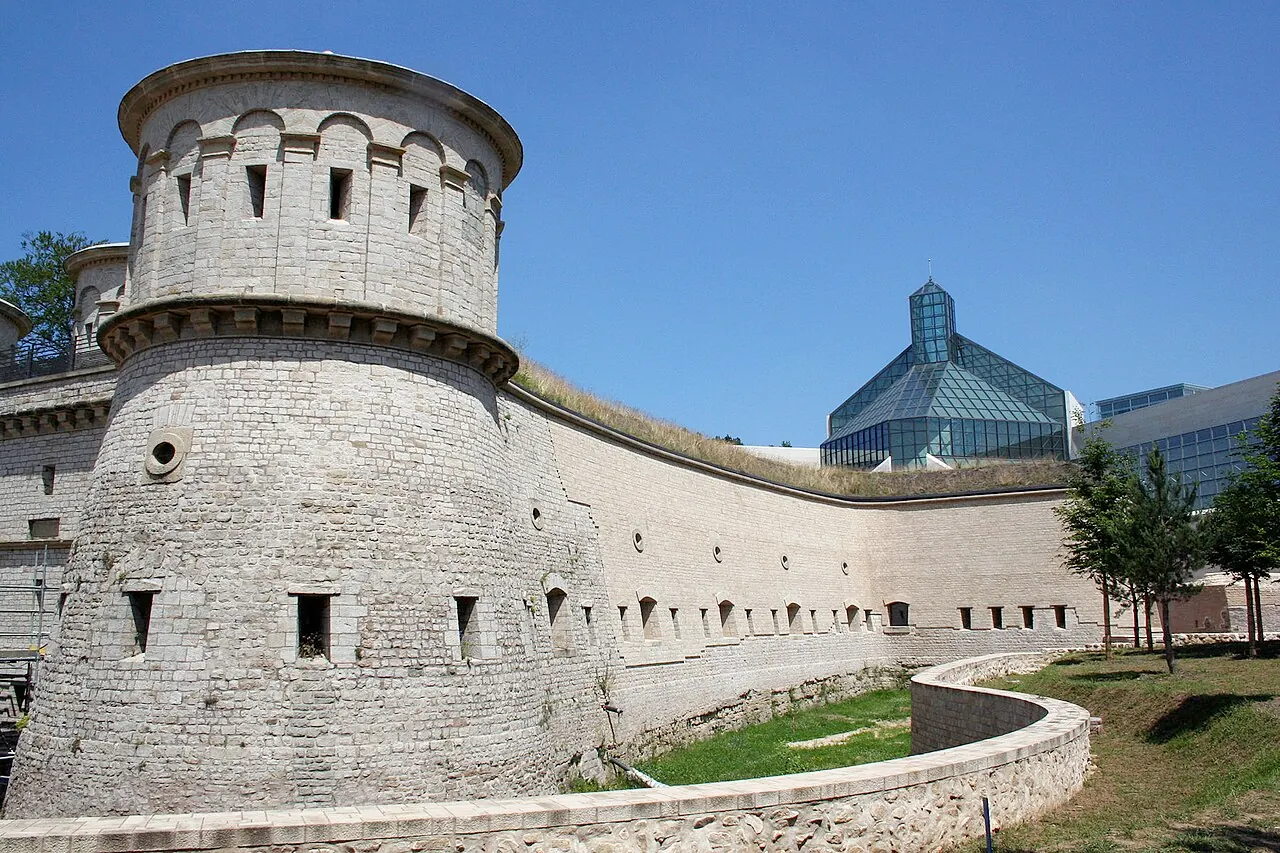
Mudam provides a contemporary counterpoint to Luxembourg’s fortified landscape. The museum’s glass and stone architecture sits beside historic defences, making the contrast part of the experience before you enter a gallery. Choose it because the current exhibitions interest you, not because you expect a fixed sequence of famous works. Contemporary installations can use whole rooms and unfamiliar materials, so allow time to look, read and decide what you make of them.
Check the exhibition calendar and visitor information for your actual dates, including any gallery changes between shows. The nearby Fort Thungen makes an efficient companion if you want both art and fortress history, but two museums need a proper lunch or outdoor break between them. Getting to Kirchberg is a separate part of the plan from wandering the upper town. Treat the surrounding paths as a bonus in good weather, not as a substitute for checking the museum’s specific entrance and access guidance.
Plan it well: Read the current programme before choosing Mudam; proximity to Fort Thungen makes a pairing possible, not compulsory.
Mudam official visit informationPut the fortress story together at Fort Thungen
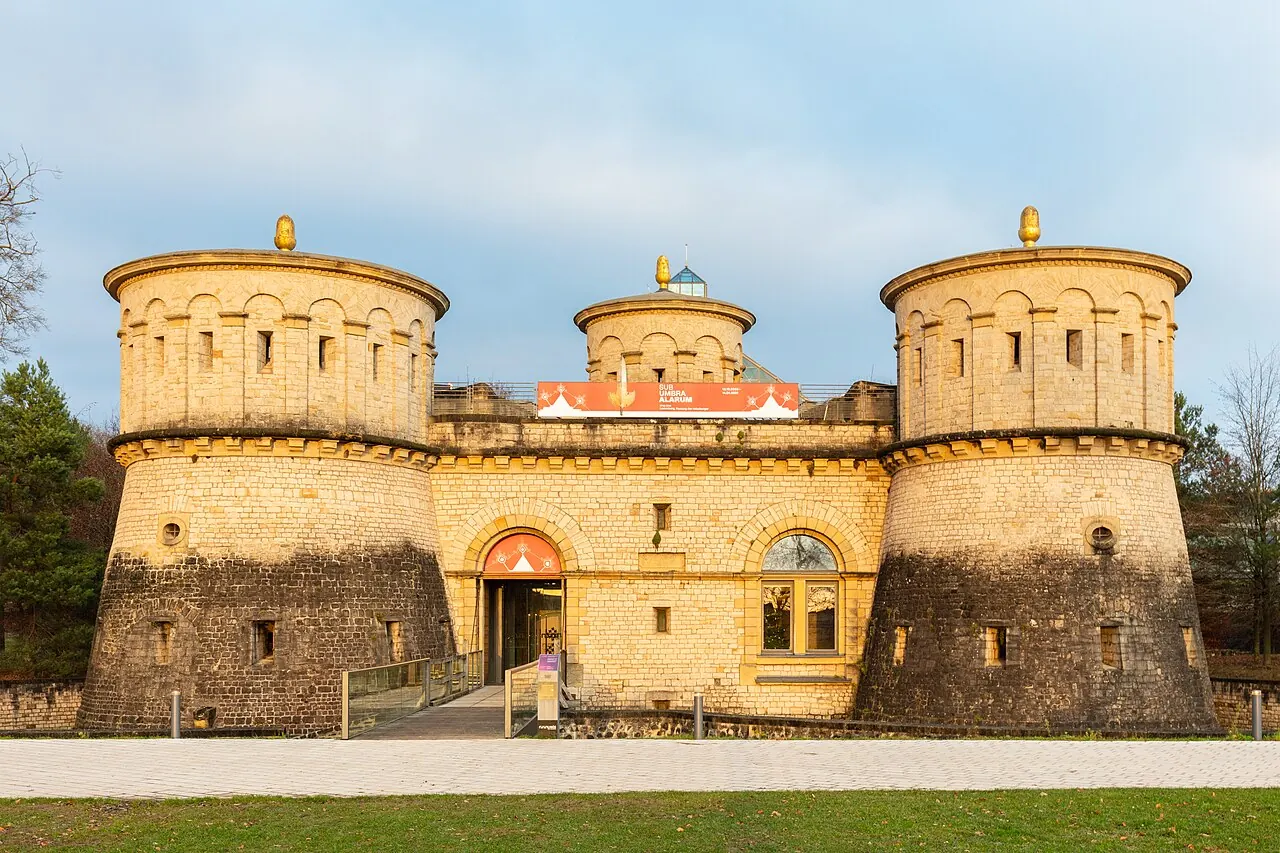
Fort Thungen’s three distinctive towers give the Kirchberg museum area a strong historical anchor. The restored fort contains the Musee Drai Eechelen, where the development of Luxembourg’s defences and the country can be followed through objects and interpretation. This is a useful companion to the Bock galleries: one visit shows the physical spaces in the rock, while the other gives the broader chronology more room to unfold.
Decide whether you want the exterior and park or the museum as well, checking the current exhibition and admission arrangements. Do not infer underground access from a general picture of the fort; specific galleries and guided activities can have their own conditions. Mudam is close enough to combine geographically, but choose the second museum according to your interests and remaining attention. An outdoor pause between them helps make the difference between contemporary art and fortress history clearer, rather than merging both into one long indoor circuit.
Plan it well: Fort Thungen is the site; Musee Drai Eechelen is the museum within it. Check any special underground or guided activity separately.
Musee Drai Eechelen permanent exhibitionStart with the everyday city at Place Guillaume II
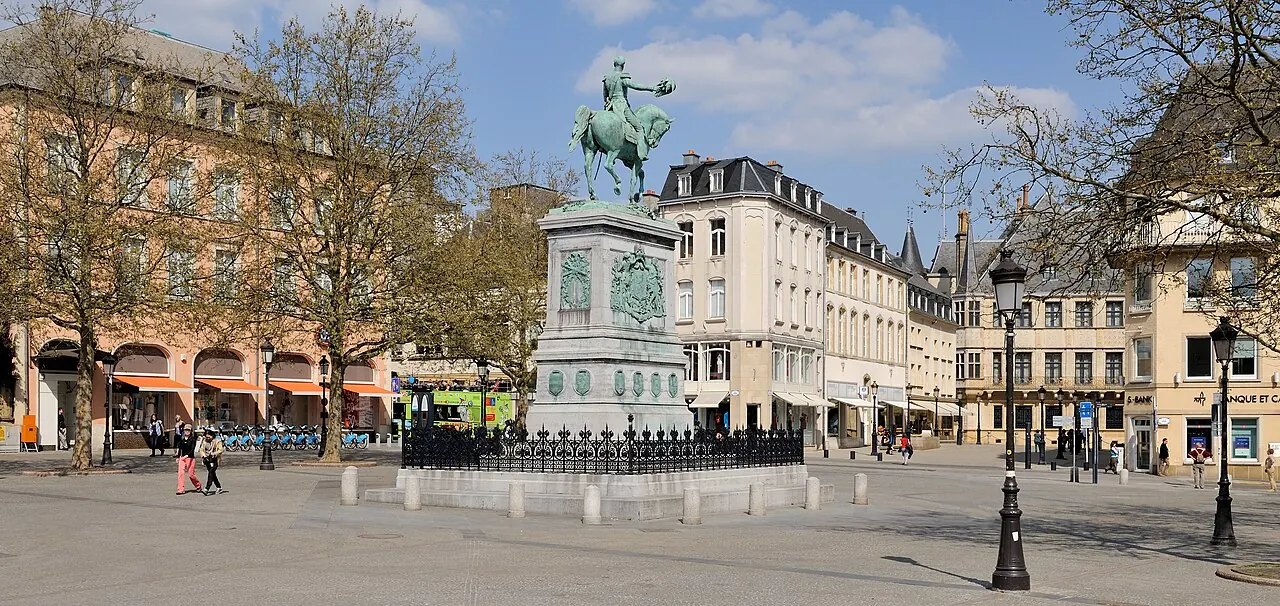
Place Guillaume II gives the upper town a useful civic centre, with the Town Hall, tourist office and equestrian monument providing bearings before you head into narrower streets. It is a place to notice everyday movement as well as architecture: a square can feel different when a market or event occupies it. Take a few minutes to orient yourself instead of treating it only as the location where a guided tour begins.
Check the city calendar if you want a market, concert or celebration, since those are scheduled uses of the square rather than permanent attractions. The tourist office is a sensible place to confirm current casemate or palace arrangements, particularly when access questions need a specific answer. From here, the cathedral and palace exterior are manageable upper-town companions. Keep some time for a cafe or a side street, and avoid adding a valley descent merely because the nearby viewpoint makes it look close.
Plan it well: Use the square’s tourist office to confirm special tour and access questions; markets and events depend on the calendar.
Luxembourg City tourism William SquareMake Place d’Armes a genuine stopping point
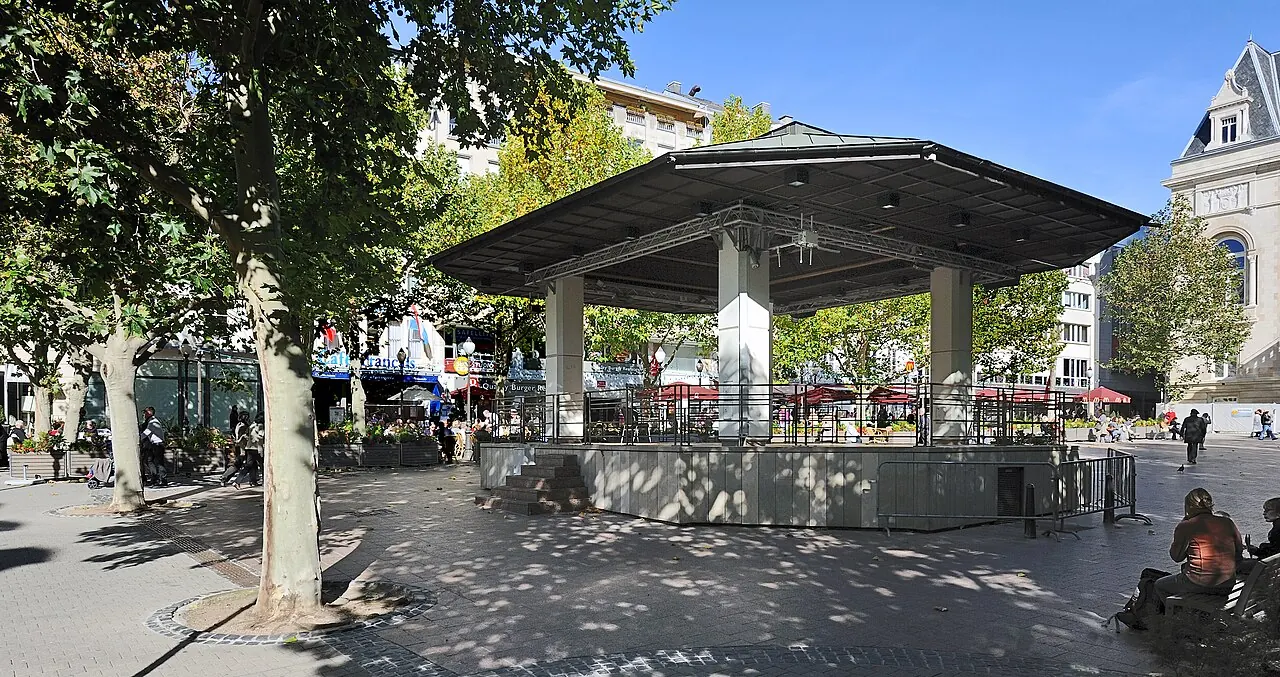
Place d’Armes offers a social counterpoint to the fortified edges of the city. Its trees, terraces and surrounding pedestrian streets make it a useful place for a meal or a pause after the more concentrated attention of a museum. Look at the buildings framing the space and the Cercle Cite rather than assuming the interest is only in restaurant tables. This is a central square that works best when you stay for a while.
Choose food by the menu and atmosphere you actually want, with no need to turn lunch into another landmark stop. If an antique market or public event interests you, check its dates rather than expecting stalls every day. Place Guillaume II is a distinct nearby square, so use the two to understand how the upper town’s spaces connect instead of treating their names as interchangeable. In poor weather, keep the square as a short orientation stop and give the saved time to an indoor collection.
Plan it well: Place d’Armes and Place Guillaume II are different squares. Check market dates before building a shopping plan around stalls.
Luxembourg City tourism Place d’ArmesChoose your own thread at the Nationalmusee
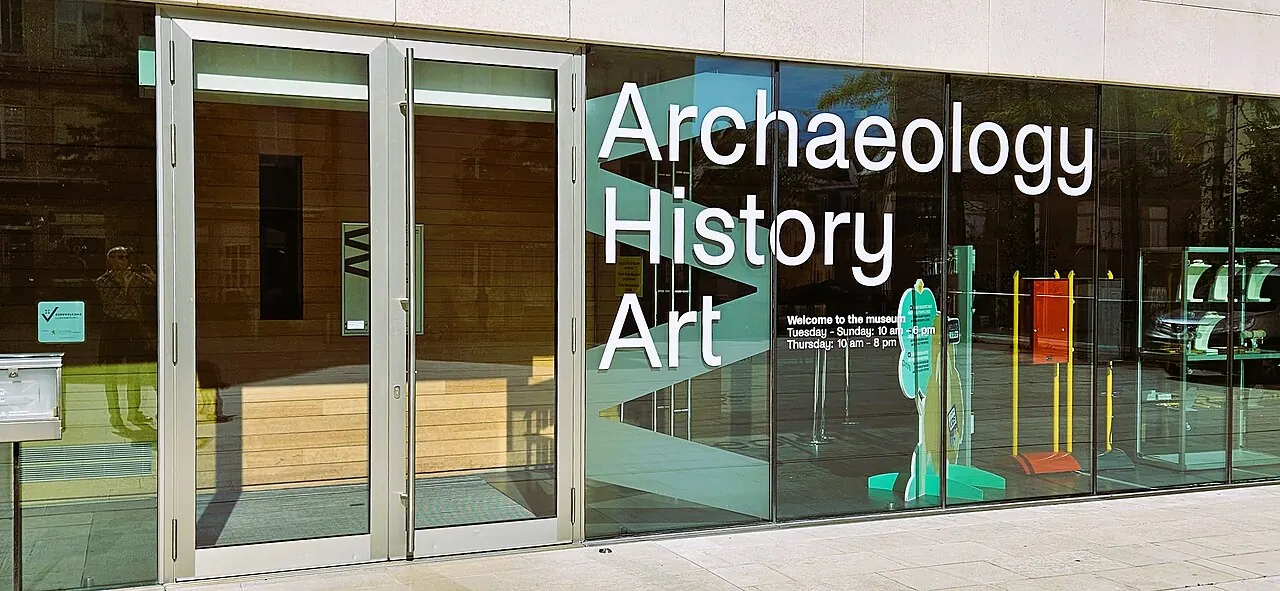
The Nationalmusee um Feschmaart offers a broader story than one palace or one fort. Its archaeology, history and art collections make it a useful place to choose a theme: begin with the period or medium that most interests you, rather than trying to absorb everything in a single sweep. The museum’s contemporary entrance within an older district is itself a reminder that the city’s historic fabric contains modern interventions.
Use the current visitor page for admission and the exhibition calendar for what is on view. Older descriptions under the former MNHA name can point to the same institution, but their prices or gallery details may be out of date. If mobility matters, consult the access guidance: the museum identifies exceptions in part of the Wiltheim wing rather than promising universal access. This is an effective wet-weather anchor near the palace streets, with an upper-town meal afterwards instead of another demanding descent.
Plan it well: Look for the current Nationalmusee visitor information, not an old MNHA price list; check the Wiltheim-wing access exceptions if relevant.
Nationalmusee visitor informationHow to spend two days in Luxembourg City
Day one: upper town and Grund
Start at Place Guillaume II, the cathedral and palace exterior. Use a Bock Casemates visit as the main attraction, then choose a descent to Neimenster and the Grund if your group is comfortable with the return journey. Finish with a meal around the upper town’s pedestrian streets.
Day two: choose a museum district
Choose Mudam or Musee Drai Eechelen on Kirchberg, adding the neighbouring museum only if you want a longer cultural day. Alternatively, keep the Nationalmusee as your main visit in the upper town and walk towards Adolphe Bridge. These are editorial combinations, not timed or tested walking routes.
Before you go
Plan by height, not only distance
The upper town, Grund and Kirchberg sit at different levels. Check the entire route, including lifts or transport you plan to use, before committing to a descent that may be tiring on the return.
Book the specific underground experience
Bock and Petrusse casemates have separate entrances and arrangements. Contact the tourism office before purchase for particular mobility needs, rather than assuming all fortress galleries are accessible.
Casemate safety and access guidanceKeep seasonal tours separate from street visits
The palace facade is part of an ordinary upper-town walk, while interior tours operate in a limited summer period. Confirm dates and ticket availability before making a tour the centre of your stay.
Choose a base for your Luxembourg City days
The upper town is convenient for the cathedral, palace streets and Nationalmusee; the station district can simplify rail arrivals; Kirchberg suits a visit centred on its museums or other commitments there. Compare the actual pedestrian route to your first stop, including changes of level. A hotel that looks close across a valley may require a longer walk than one farther away on the same plateau.
Explore Luxembourg City hotels