
Marrakech city guide
Where to stay in Marrakech
Choose between the square-side medina, Mouassine's riad lanes, the Kasbah, the Mellah and Bahia, Gueliz's cafe streets and Hivernage's larger-hotel setting.
Plan your visit
Marrakech is not a simple choice between 'the medina' and 'outside the walls'. A square-side room, a Mouassine riad and a southern Kasbah address lead to different daily walks, while Gueliz and Hivernage support a more road-connected stay. Decide whether stepping straight into souk lanes is part of the pleasure or an obstacle to your arrival. Then compare the actual door, vehicle meeting point and evening setting, rather than assuming that all riads or modern hotels behave alike.
Choose your base
Choose the Jemaa el-Fnaa area for a first visit built around the square and souks. Mouassine and the northern medina suit a riad-and-artisan stay near Le Jardin Secret. The Kasbah favours Saadian heritage; the Mellah and Bahia area emphasise palaces, spice shopping and Jewish history. Gueliz is the modern-city choice for cafes, galleries and railway access. Hivernage makes sense for a larger hotel or convention-centre trip when returning by road is acceptable.
Jemaa el-Fnaa and the central medina: a first visit centred on the square
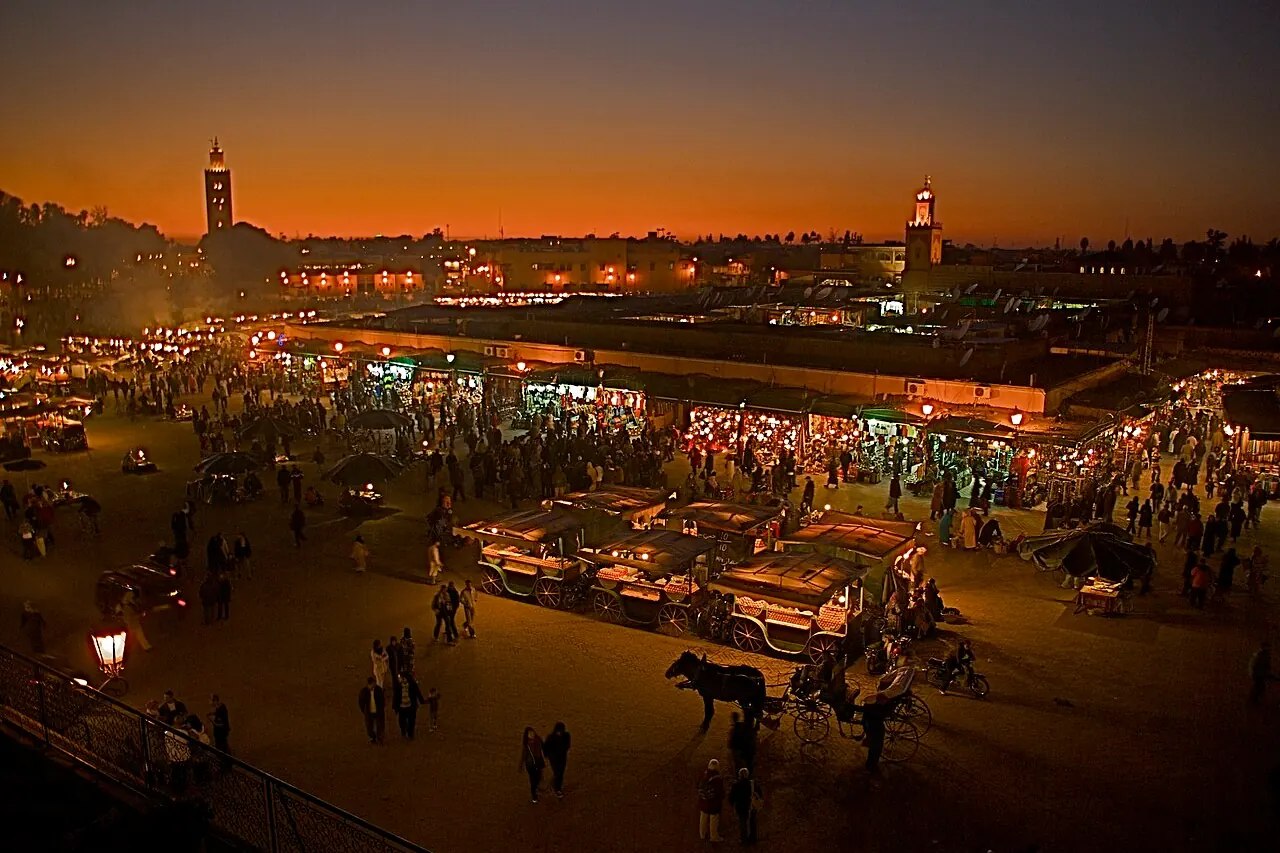
The streets around Jemaa el-Fnaa suit a first visit when the evening square and the souks are central to the experience. You can move between food stalls, terrace cafes and the shopping lanes leading north, with the Koutoubia gardens forming a different outdoor setting on the western side. Choose whether you want an address facing the square or a room deeper along a side lane: proximity to the same landmark does not create the same soundscape. Returning between a souk walk and dinner is the principal advantage.
For an airport arrival, arrange the actual vehicle drop-off and any final walk with the accommodation; a riad's street address does not establish door-to-door taxi access. ONDA lists airport taxis and a city shuttle, but an old tourism bus timetable should not determine a late arrival plan. The compromise is concentrated visitor activity, evening sound around the square and luggage navigation in the lanes. Choose Mouassine for a northern-medina focus, or Gueliz when a more straightforward road arrival and modern cafe setting are more important than being beside the square.
Plan it well: The pin identifies Jemaa el-Fnaa, not your riad entrance. Confirm the vehicle meeting point and final lane separately.
Moroccan National Tourist Office: medina and Jemaa el-FnaaMouassine and the northern medina: riads, artisan shopping and garden pauses
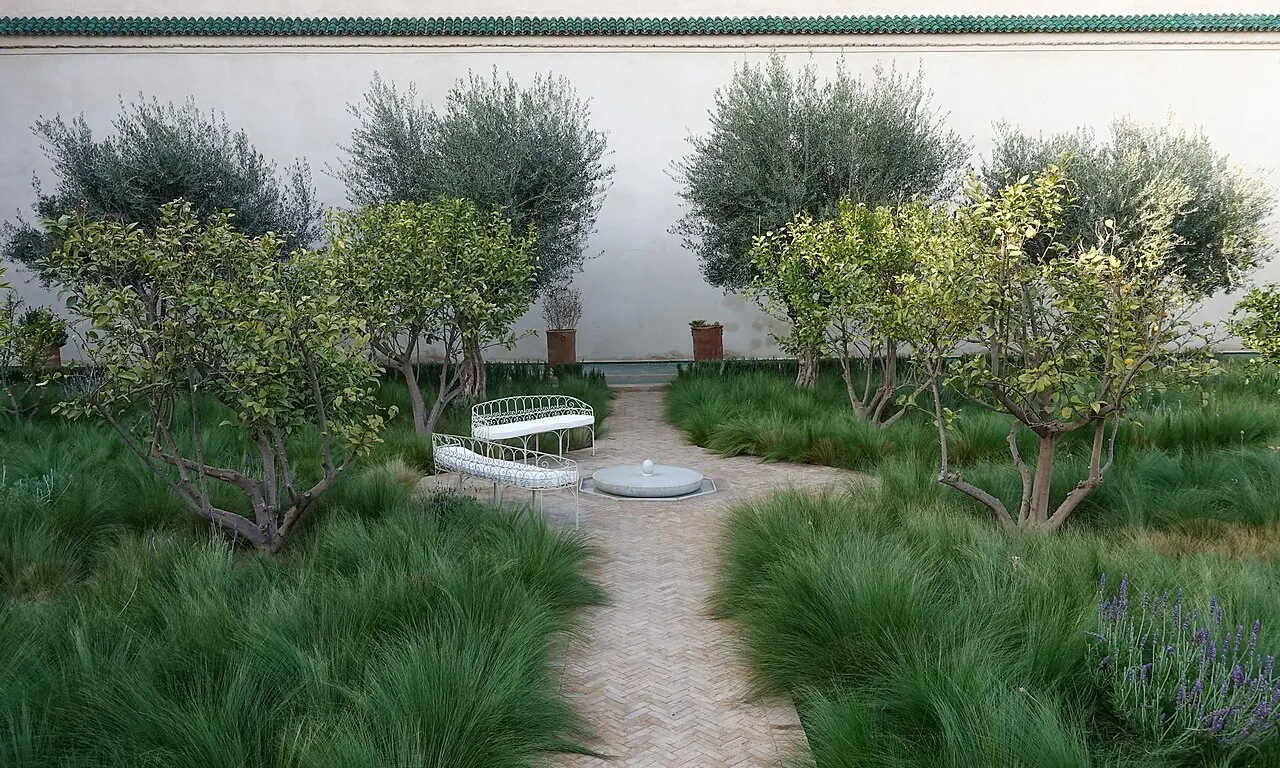
Mouassine gives a medina stay a different centre of gravity from the main square. Rue Mouassine leads to Le Jardin Secret, with its restored garden courts and cafe setting; the nearby music museum and the route towards Dar el Bacha add cultural stops between browsing the souks. Ben Youssef's monuments lie farther east within the northern medina, so an address near the garden is not identical to one beside the madrasa. This base suits travellers who want their daily walks to include workshops, courtyard visits and small lanes rather than repeated square-side evenings.
Airport or railway transfers still end at the road access point agreed with the riad, followed by the relevant lane on foot where required. Ask for the named meeting point instead of treating a landmark pin as vehicle access, especially with large bags. The trade-off is more intricate navigation and a longer return from southern sites such as the Saadian Tombs. A courtyard room may face inward, but the word riad does not guarantee silence. Choose the Kasbah for a southern heritage itinerary or Hivernage when hotel facilities and direct road access take priority.
Plan it well: The map and photograph identify Le Jardin Secret on Rue Mouassine, a landmark within the area rather than its boundaries.
Visit Marrakech: Mouassine and the northern medinaKasbah: Saadian heritage and a southern medina stay
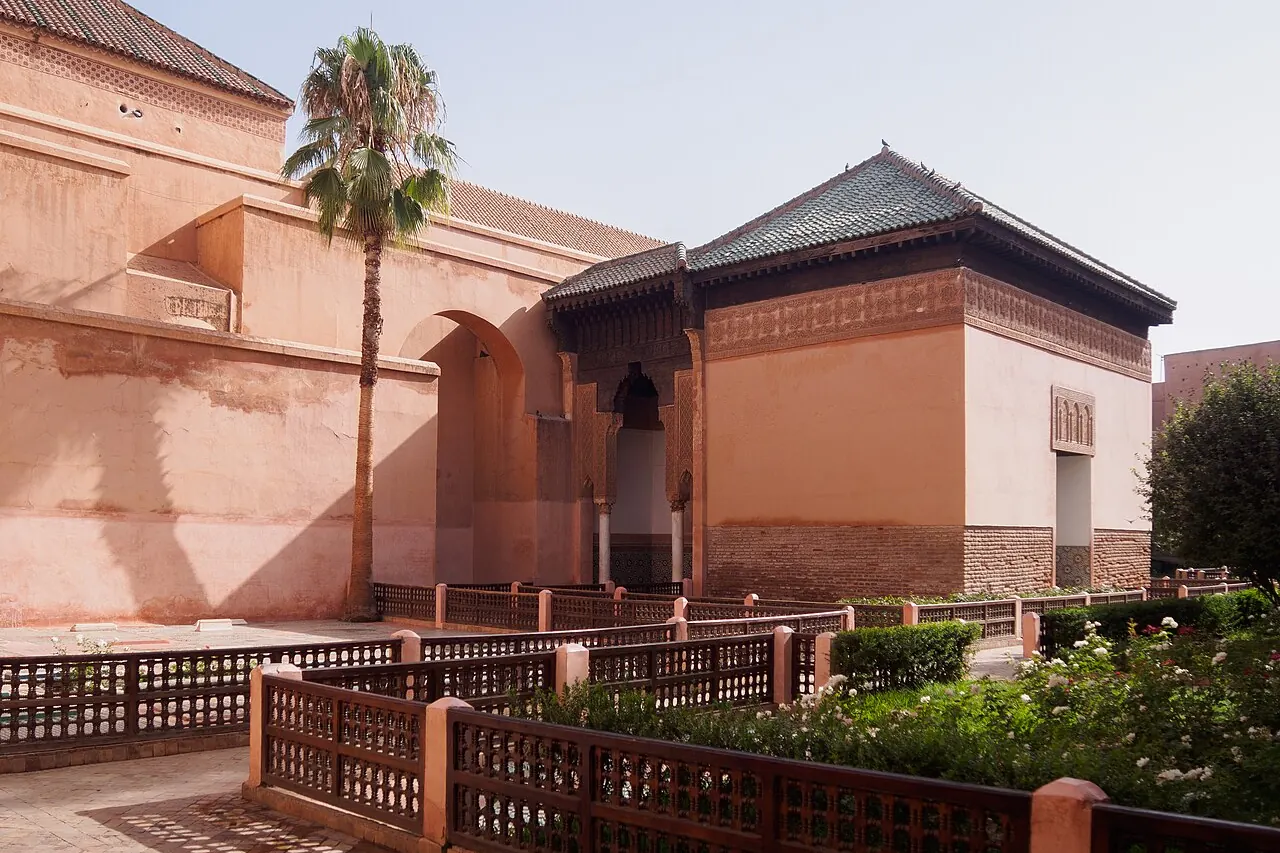
The Kasbah is a purposeful base when the Saadian Tombs and the streets around Bab Agnaou are recurring stops. The Kasbah Mosque provides a prominent local landmark, with everyday shops and stalls on the surrounding routes; El Badi Palace is another nearby heritage visit towards the adjoining southern quarter. The experience is still a medina stay, but its daily sightseeing emphasis differs from the northern souks. Choose an address around these southern streets when you would rather begin with tombs and palace history than walk north before each visit.
Bab Agnaou is a useful named orientation point when discussing a road transfer, not proof that a taxi can reach every accommodation door. From Menara airport or Marrakech's ONCF station, agree the precise drop-off and the remaining luggage route. The trade-off is the extra walking involved in reaching Mouassine, Ben Youssef and the northern cultural sites, plus a smaller immediate choice of square-side evening venues. Choose the Jemaa el-Fnaa area for frequent returns to the main square, or the Mellah and Bahia area if Jewish heritage and the palace-side shopping streets are the focus.
Plan it well: The pin and photograph show the Saadian Tombs, not the Kasbah Mosque or a vehicle drop-off.
Visit Marrakech: KasbahMellah and Bahia Palace: palaces, spice shopping and Jewish heritage
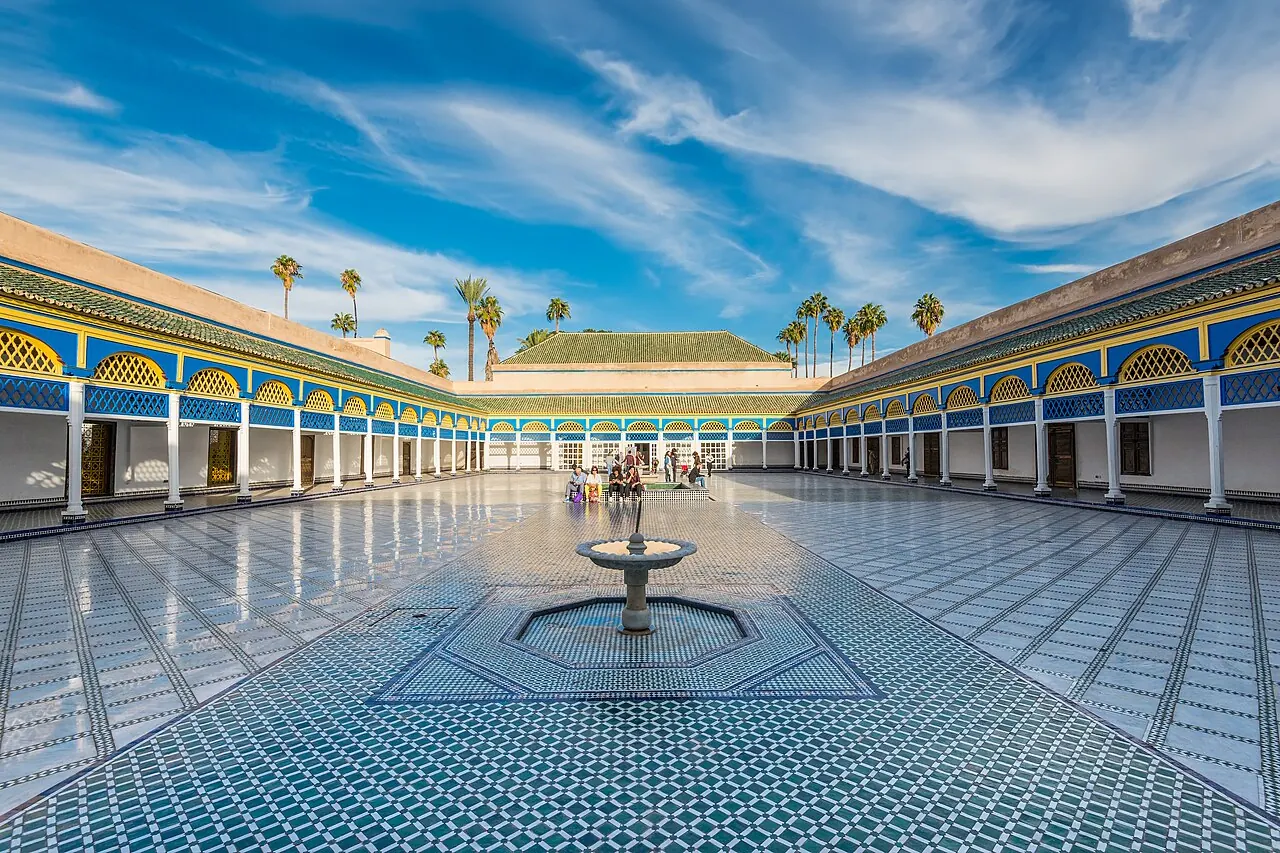
The Mellah and Bahia area suit a southern-medina itinerary with a different historical emphasis from the Kasbah. Bahia Palace anchors one side of the visit; Place des Ferblantiers, the spice souk and the lanes towards the Alzama synagogue give the surrounding quarter its own shopping and heritage circuit. The Jewish cemetery adds another site with a distinct entrance rather than a casual extension of a palace visit. For meals, the square and the Riad Zitoun routes offer practical places to look between sightseeing stops without returning to the northern souks.
Visit Marrakech describes access through Place des Ferblantiers and the Riad Zitoun approach from Jemaa el-Fnaa. For an airport transfer, use the road-side meeting point confirmed by the accommodation rather than assuming the narrow lane is vehicle-accessible. This is a useful palace-side base, not a way to avoid all medina activity: busy market approaches and the walk back from northern museums remain compromises. Choose Mouassine for repeated northern-souk visits or Hivernage for a road-connected hotel stay. Choose the Mellah because its particular history and southern walking circuit fit the trip.
Plan it well: Bahia Palace is the landmark anchor beside the Mellah; the photograph is its courtyard, not a synagogue or the whole Jewish quarter.
Visit Marrakech: Mellah and Bahia PalaceGueliz: modern-city cafes, galleries and rail access
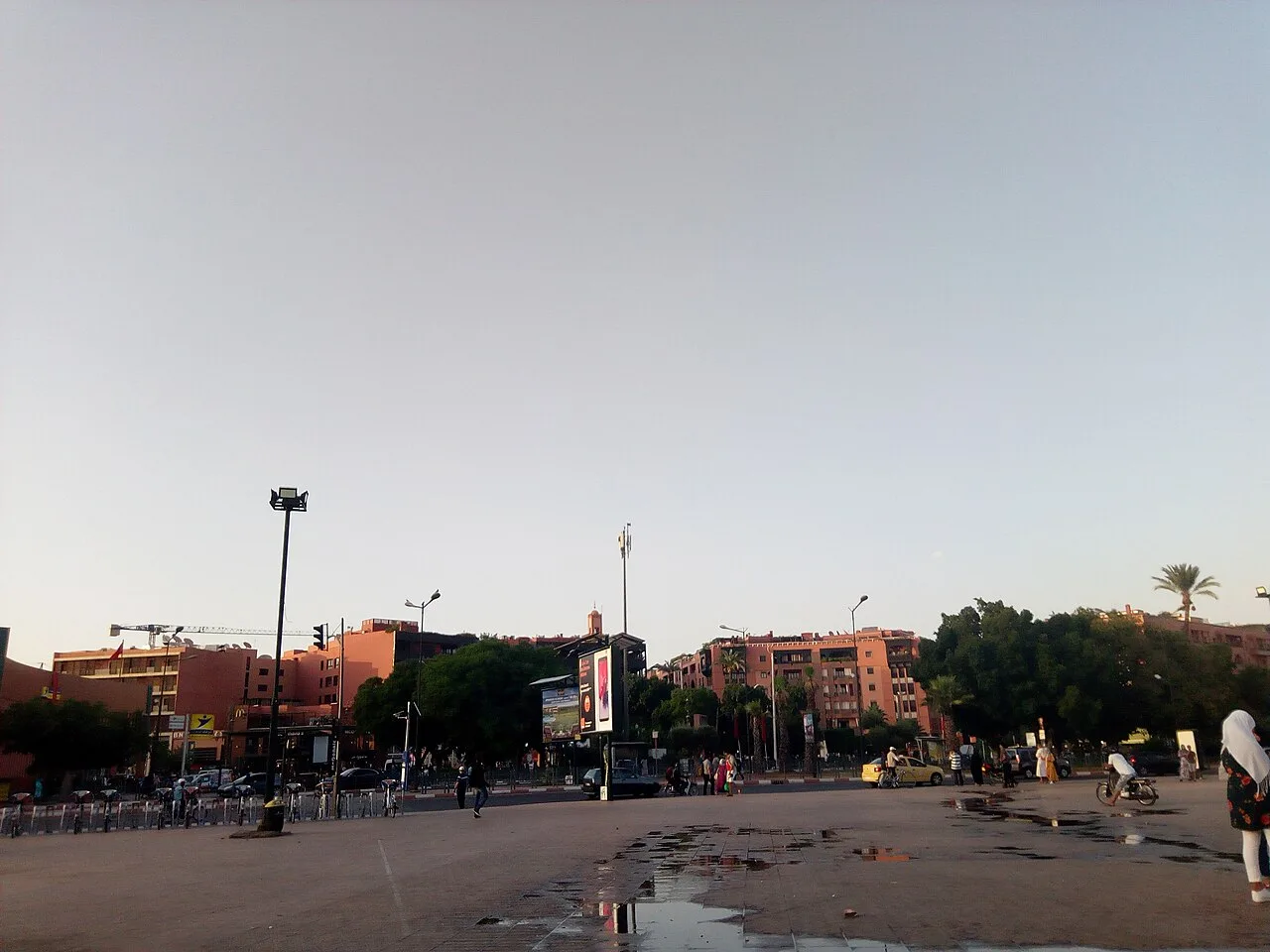
Gueliz suits travellers who want cafe terraces, shops and a modern street network to be the everyday setting. Around Avenue Mohammed V, Place du 16 Novembre and Carre Eden, restaurants and shopping provide a different evening circuit from the souks. El Harti is the local garden pause, while gallery and museum visits add reasons to stay outside the walls. Jardin Majorelle and the Yves Saint Laurent museum belong in the wider northern-city itinerary, but should not be treated as the entrance to every Gueliz hotel.
Marrakech's ONCF railway station is a relevant western-city gateway; compare the remaining street journey rather than assuming every Gueliz address is beside the platforms. Menara airport arrivals can use the airport's taxi options, with the hotel's actual road entrance as the destination. The trade-off is repeated travel into the medina for palace visits and souk evenings, plus traffic on the larger avenues. Choose Mouassine for a courtyard-and-lane stay where northern-medina wandering begins at the door, or Hivernage if larger-hotel amenities and the convention centre matter more than Gueliz's cafe-and-shopping circuit.
Plan it well: The pin uses Wikidata's central Gueliz coordinate, not arrondissement boundaries or a hotel. The photograph depicts the district's modern streetscape.
Visit Marrakech: GuelizHivernage: larger hotels and convention-centre trips
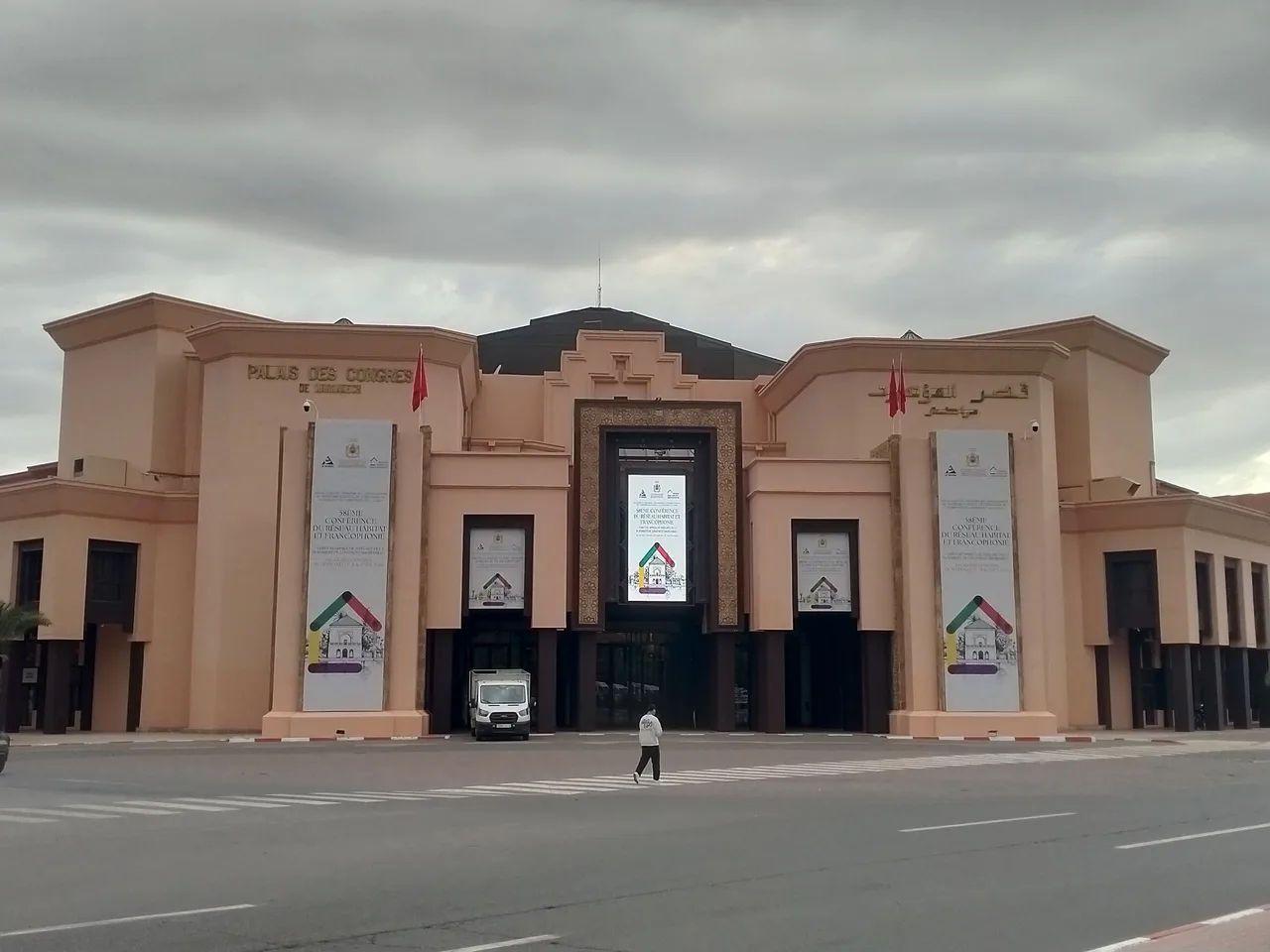
Hivernage is the practical choice when the stay itself needs a larger hotel setting or your programme includes the Palais des Congres. Avenue Mohammed VI and the hotel restaurants give the district a different scale from the medina's courtyards and souk lanes. Look for the individual property facilities that matter, such as a pool, lift or space to work, rather than treating those as automatic district benefits. It also suits visitors who prefer dinner at a hotel restaurant and are comfortable making separate journeys into the historic centre.
Road arrivals from Menara airport can be planned around the actual hotel entrance; Marrakech's ONCF station is another relevant western gateway. The Palais des Congres map anchor helps orient a business trip but is not a drop-off for every hotel in Hivernage. The compromise is that shopping in the souks or visiting Ben Youssef becomes a deliberate outing, not a lane just outside the door. Hotel bars, event venues and larger roads also mean this is not inherently silent. Choose Gueliz for a stronger independent cafe-and-shopping circuit, or the Kasbah for a southern-medina heritage stay.
Plan it well: The pin and photograph identify the Palais des Congres on the Hivernage side of Avenue Mohammed VI, not a hotel or district boundary.
Visit Marrakech: HivernagePlan the road arrival and the medina's last leg
Use the airport's actual taxi information
ONDA lists a taxi stand on the airport esplanade, with destination tariffs displayed at the taxi parking area. For a riad, give the driver the agreed road access point and arrange the final lane with the accommodation; do not assume a taxi can reach an internal medina door.
ONDA: Marrakech Menara airport taxis and city shuttleConfirm current bus details before relying on them
The regional tourism transport page still names ALSA, while ONCF's 2025 reporting records the Marrakech urban-transport contract for Supratours. Confirm the current airport service, stop and operating day before planning around a published old route or timetable.
ONCF: 2025 reporting on the Marrakech urban contractTreat the railway station as a separate arrival gateway
ONCF's Marrakech-Fes timetable identifies Marrakech as a railway terminus, not a medina arrival point. Match the station-to-hotel transfer to your exact Gueliz, Hivernage or medina address rather than assuming a train delivers you beside the sightseeing square.
ONCF Voyages: Marrakech-Fes route timetableChoose the southern medina approach deliberately
The official Mellah guide identifies Place des Ferblantiers and the Riad Zitoun route from Jemaa el-Fnaa. These named approaches are useful for orientation, but the accommodation must confirm its own luggage meeting point.
Visit Marrakech: Mellah access and heritageCompare hotels and riads in your chosen Marrakech base
Explore Marrakech hotels and riads on Roomundo, comparing the actual arrival route with your daily plans. In the medina, check the final lane, room orientation and stairs. In Gueliz or Hivernage, compare the road location and the property facilities you need rather than assuming a district label guarantees a pool or a quiet room.
Explore Marrakech hotels