
Macau city guide
10 things to do in Macau
A first visit shaped around the historic peninsula, hilltop views and the quieter streets of Taipa and Coloane, without making casinos compulsory.
Plan your visit
Macau is more than its resort skyline. Begin with the historic peninsula, where squares, temples, houses and fortifications fit together, then cross to Taipa and Coloane for a different pace. Use one indoor visit or observation deck as an anchor, with room for food and the streets between the landmarks.
Read the surviving facade at the Ruins of St Paul's
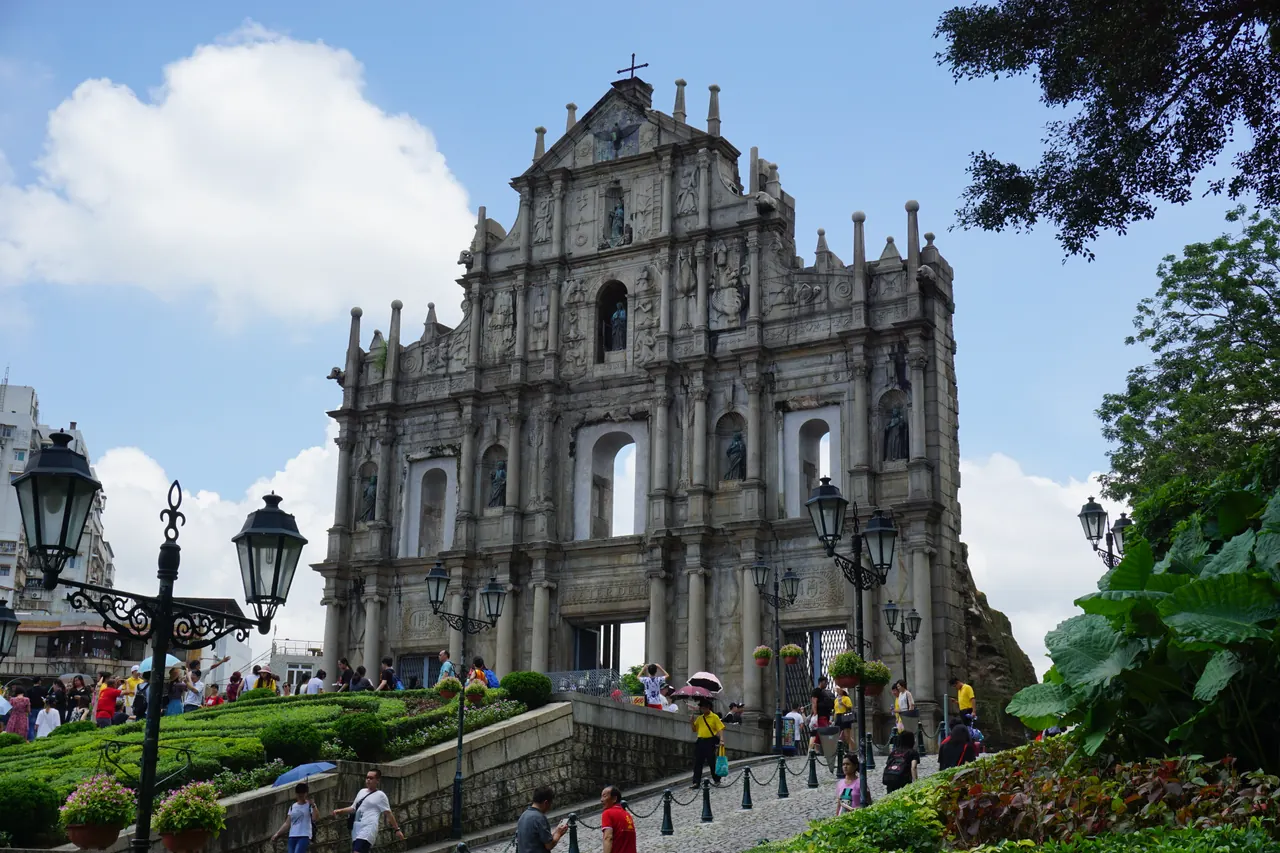
The Ruins of St Paul's are not an intact cathedral waiting behind a grand entrance. The surviving facade makes a remarkable landmark precisely because so much of the building is gone. Look at the carved tiers from the square, then move closer to understand how the surviving stonework records religious imagery and the city's cultural connections.
Give the staircase and the area behind the facade time rather than treating the top as a turnaround point for photographs. The historic setting links naturally with Senado Square and Mount Fortress, but the ascent and crowds can make the combination tiring in humid weather. Check current access to associated displays separately, keep the stairs clear and leave a quiet pause after the busiest stretch of the approach.
Plan it well: See the facade from the lower square first, then decide whether the stair climb and rear archaeological area suit your group.
Macao Tourism: Ruins of St Paul'sUse Senado Square to understand the historic centre
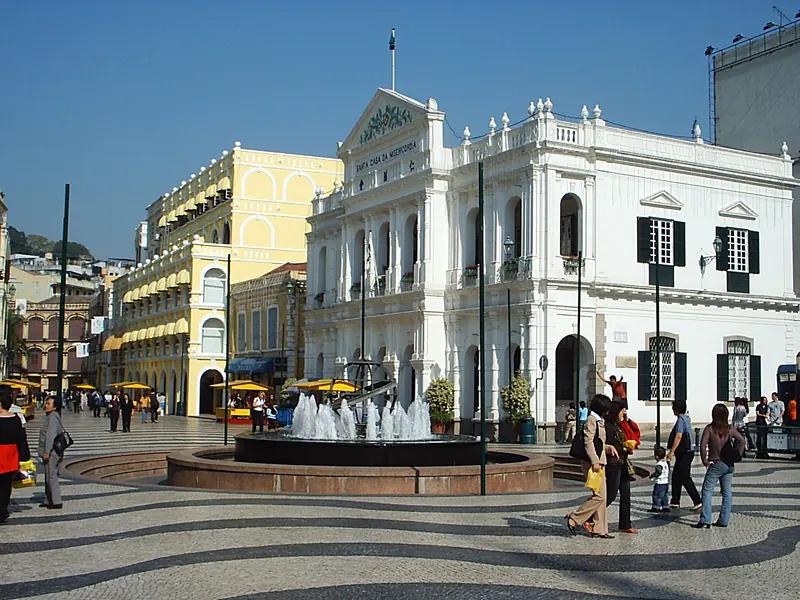
Senado Square gives the old centre a recognisable rhythm: wave-patterned paving, civic buildings and narrow streets opening off the main space. Rather than crossing directly to the next landmark, pause to look at how the facades frame the square. Its civic role helps explain why Macau's historic story involves public institutions as much as churches and temples.
Make this the starting point for a manageable central walk toward St Paul's, with food or a break on a nearby street. Events and heavy visitor traffic can change how easy it is to move around, so treat the square as a public place in use rather than an empty photographic backdrop. The paving deserves care in wet weather, and entering neighbouring buildings is a separate decision from walking across the square itself.
Plan it well: Choose a meeting point away from the busiest pedestrian flow before exploring the lanes around the square.
Macao Tourism: Senado SquareSlow down among the pavilions of A-Ma Temple
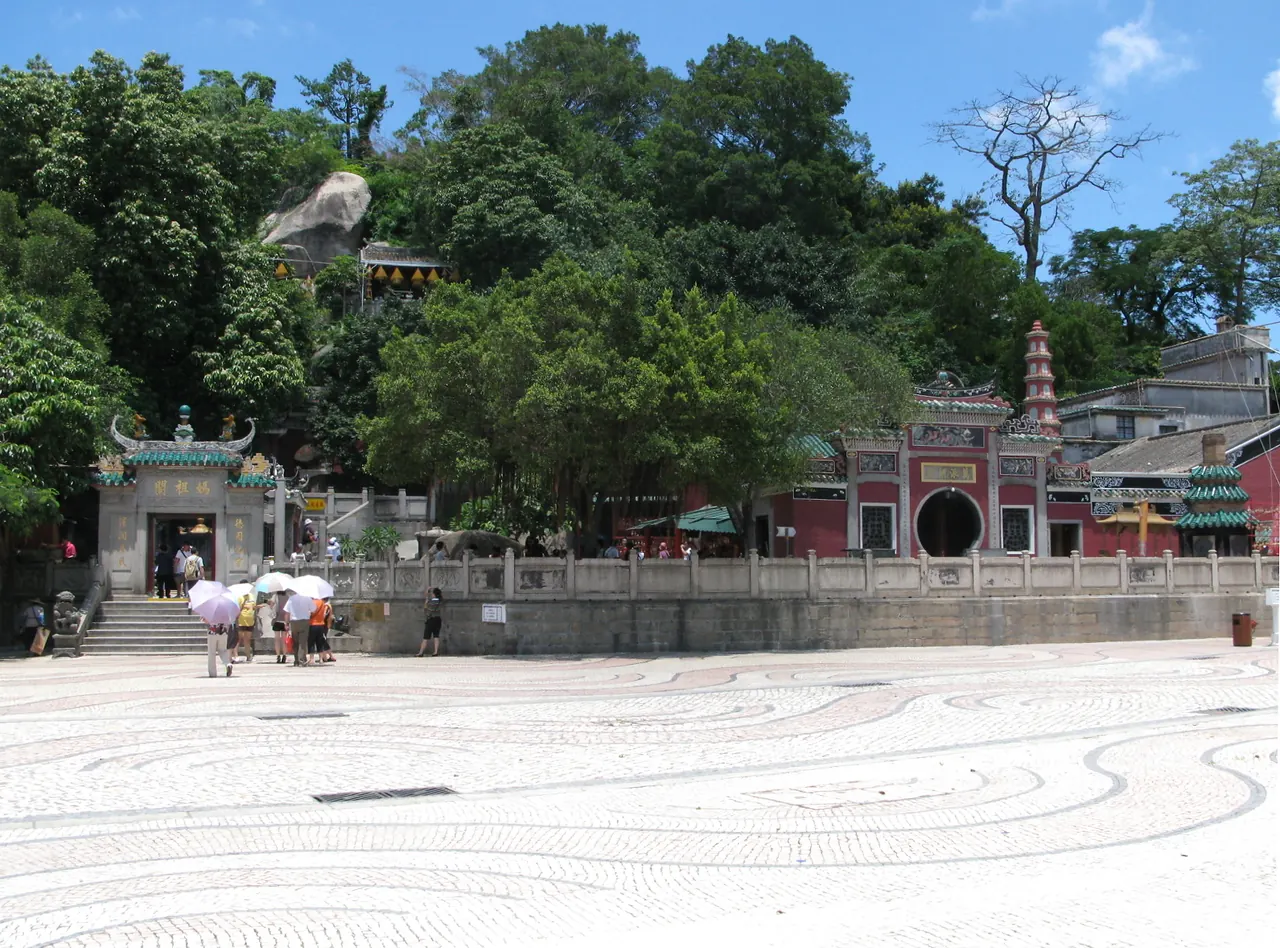
A-Ma Temple introduces another side of the historic centre: a sequence of pavilions, gates and rock-side spaces associated with religious practice and the maritime city. Move through the public areas slowly, noticing the relationship between the architecture and the slope. Incense and offerings are part of worship, not decorative props to rearrange for a photograph.
Visit as the anchor of a southwestern peninsula walk, rather than adding it to the far end of an already long St Paul's circuit. Steps connect parts of the grounds, so choose the extent of the visit according to your mobility and the weather. Avoid obstructing worshippers and ask before photographing rituals. Barra Square and the streets toward Lilau offer a natural continuation, but a temple visit is enough on its own if your group needs a shorter outing.
Plan it well: Wear shoes suitable for steps and follow worshippers' right of way; not every terrace is a step-free route.
Macao Tourism: A-Ma TempleLook across the peninsula from Mount Fortress
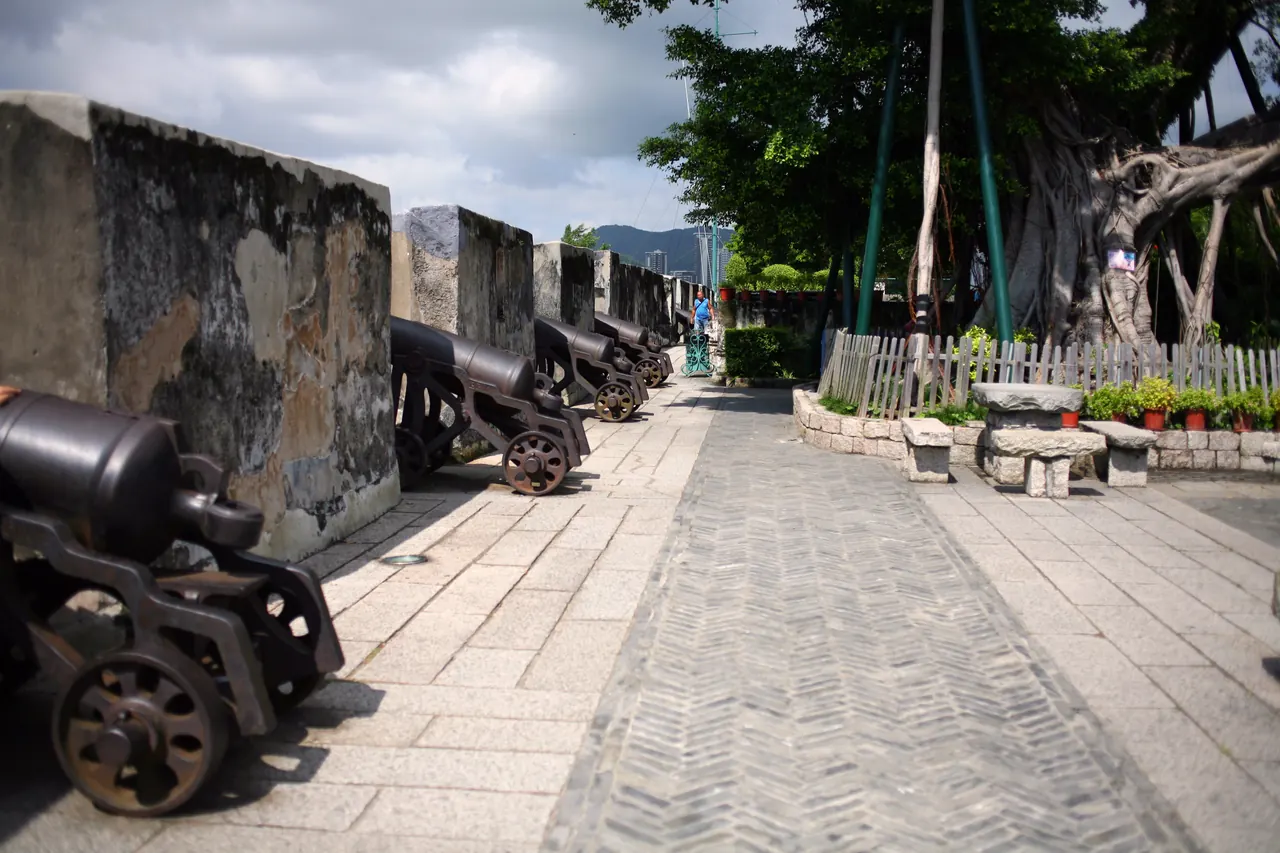
Mount Fortress puts the dense old city into a wider frame. The ramparts and surviving cannon positions explain its defensive purpose, while the view shows how small historic streets sit beside modern towers. Walk a section of the perimeter and look in more than one direction; the contrast between the fort's heavy stone boundaries and the surrounding city is the attraction.
The site combines naturally with St Paul's and the Macao Museum, but the fortress and museum should not be treated as the same visit. Check the route up the hill and any access instructions before starting, particularly if stairs or heat are an issue. Once at the top, choose a short rampart circuit rather than rushing straight to the next building. Keep well back from edges and do not climb on historic cannon mounts for a better view.
Plan it well: Pair the fort with the museum only if you want the extra indoor visit; confirm a suitable hill approach first.
Macao Tourism: Mount FortressMake Guia a hilltop outing, not a shortcut
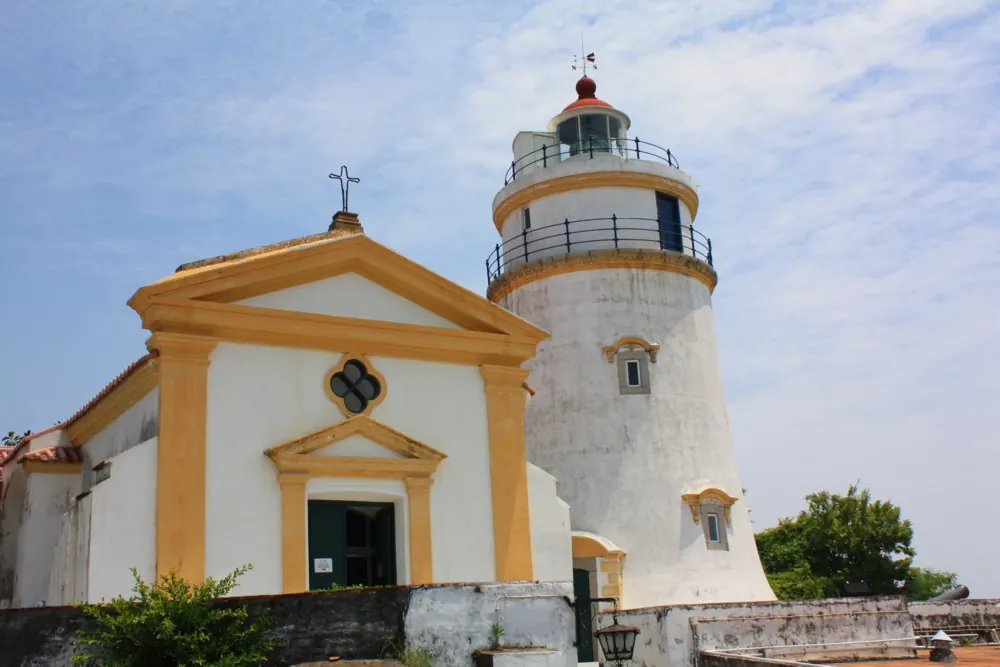
Guia brings a chapel and lighthouse into the setting of a hilltop fortification, creating a different view of Macau from Mount Fortress. Look at the small ensemble of buildings before concentrating on the skyline. The lighthouse connects the place to navigation, while the chapel adds a religious layer to a site that might otherwise seem purely military.
Allow for the hill approach and keep the visit separate from an overly ambitious old-centre walking circuit. The grounds, chapel and lighthouse have distinct access arrangements, so do not assume you can climb the tower just because you can reach its base. Check current visitor information and use the public routes through the surrounding hill area. Bring water in warm weather and give the return walk time rather than rushing downhill to a reservation.
Plan it well: Check which interiors are available; reaching the lighthouse does not establish public access to the tower.
Macao Tourism: Guia Fortress and lighthouseChoose the view at Macau Tower
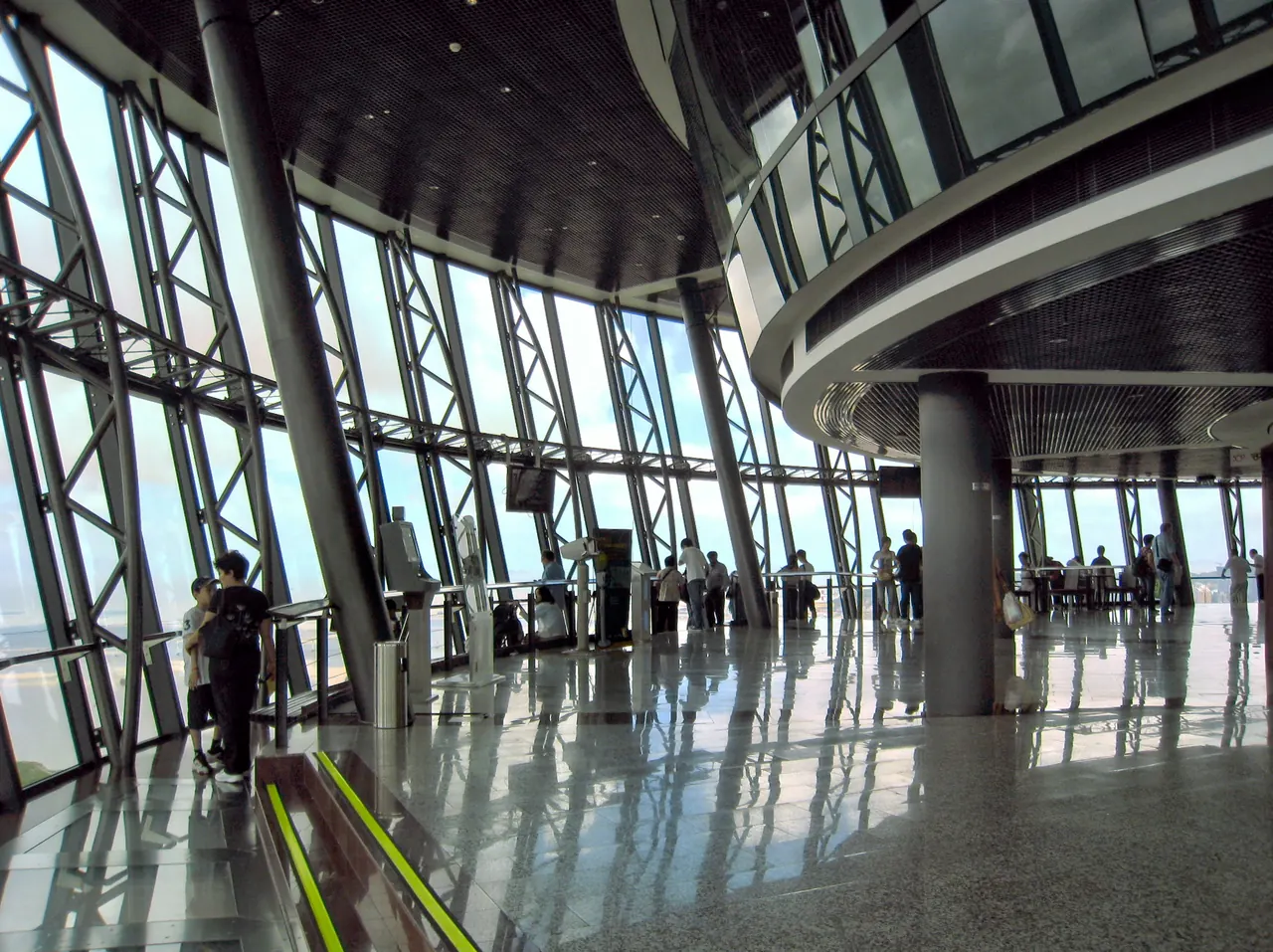
Macau Tower is useful when you want to make sense of the peninsula, bridges and reclaimed resort areas in one broad view. Take time to trace the coastline and the connections across the water rather than treating the observation level only as a place for a quick portrait. Visibility matters more than collecting another superlative about the building's height.
Read the official observation ticket inclusions and choose your date with the weather in mind. Ordinary deck admission and adventure activities are separate products, with different requirements; you do not need a bungee jump to enjoy the setting. The enclosed observation space can be a good alternative to another hill climb, but anyone uncomfortable with heights should look at the venue description before committing. Allow time to reach the waterfront rather than assuming it is beside Senado Square.
Plan it well: Compare the observation ticket with adventure packages and check visibility before making this your main viewpoint.
Macau Tower: observation deck informationFollow the courtyards through Mandarin's House
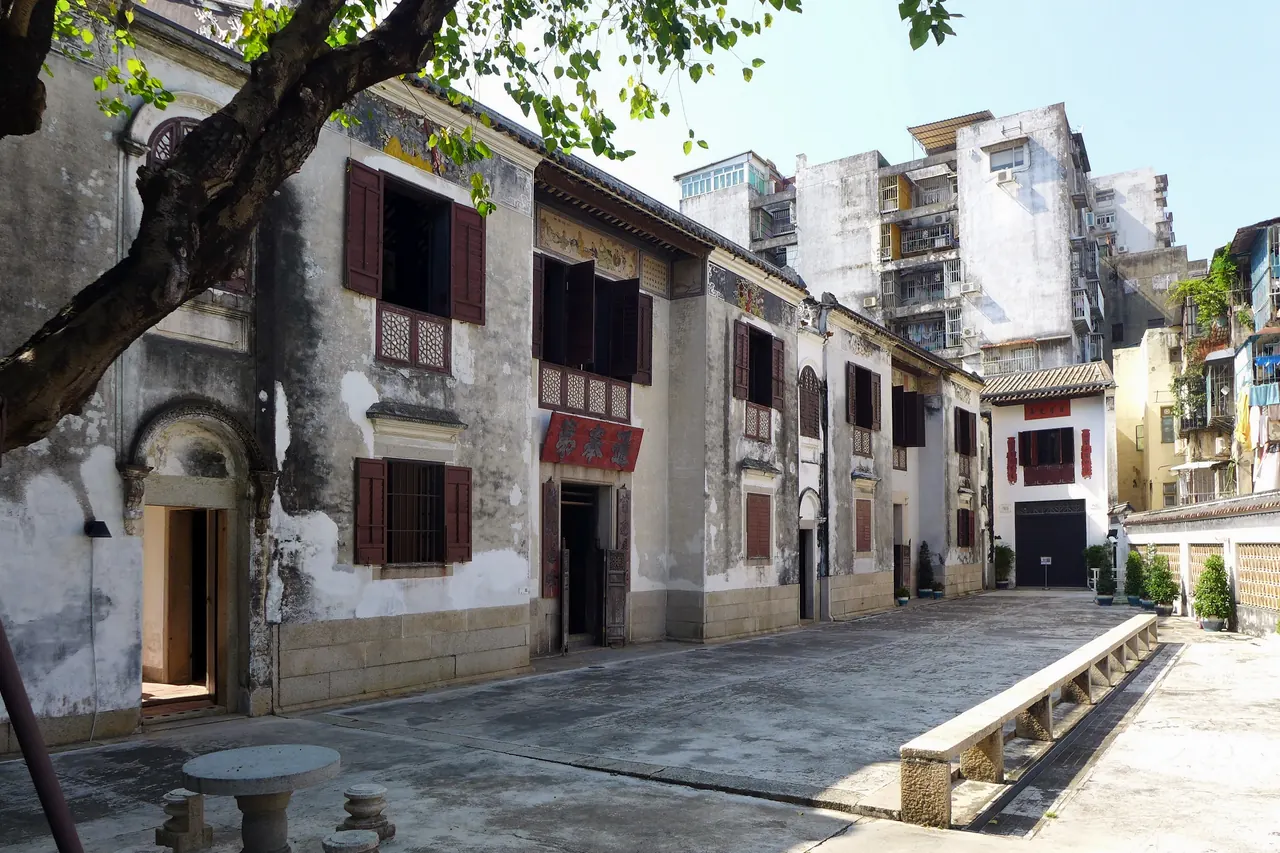
Mandarin's House offers a domestic scale after Macau's grand facades and fortifications. The former residence associated with Zheng Guanying contains connected rooms and courtyards that reward attention to thresholds, windows and the way one space leads to another. Look for practical household organisation as well as decorative details: this is a place to understand living space, not only admire ornament.
Use it as an indoor anchor for the Lilau and Barra area, with A-Ma Temple as an optional continuation rather than a distant northern detour. Check the house's current visitor information and any guided-tour arrangements before travelling; a scheduled language-specific tour is not the same as ordinary entry. Old surfaces and changes in level may affect the route, so ask staff about the parts suitable for your needs and keep the visit unhurried.
Plan it well: Confirm the opening day and tour language with the house itself; allow pauses in the courtyards between rooms.
Mandarin's House: official visitor informationUse Macao Museum to connect the city's histories
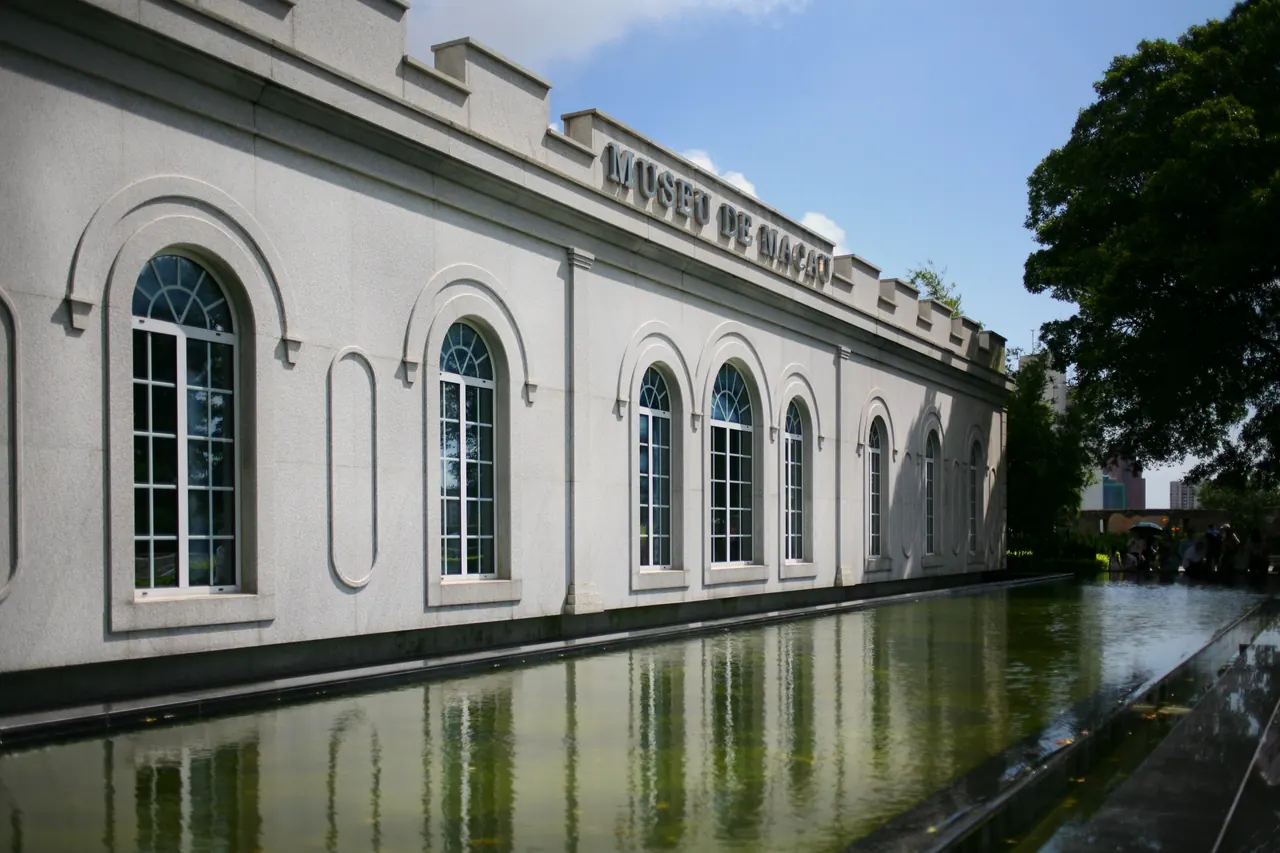
Macao Museum is a worthwhile place to put the city's overlapping cultural influences into context. Objects and displays give the surrounding monuments a social history, helping you think beyond the simplified idea of a Portuguese facade beside a Chinese temple. Choose themes that connect with what you have seen outside, such as domestic life, trade or public celebrations.
The museum is at Mount Fortress, making it an efficient companion to the hilltop rather than a separate journey across the peninsula. Check the current opening day and ticket arrangements, especially before building a Monday plan around it. The museum publishes a lift approach for visitors with disabilities, but use its exact access instructions rather than assuming the staircase from St Paul's is appropriate. An indoor visit also gives a useful break from exposed walks in humid weather.
Plan it well: Consult the museum's published accessible entrance route and current opening calendar before choosing your approach to the hill.
Macao Museum: visiting informationLook at Macanese domestic life at the Taipa Houses
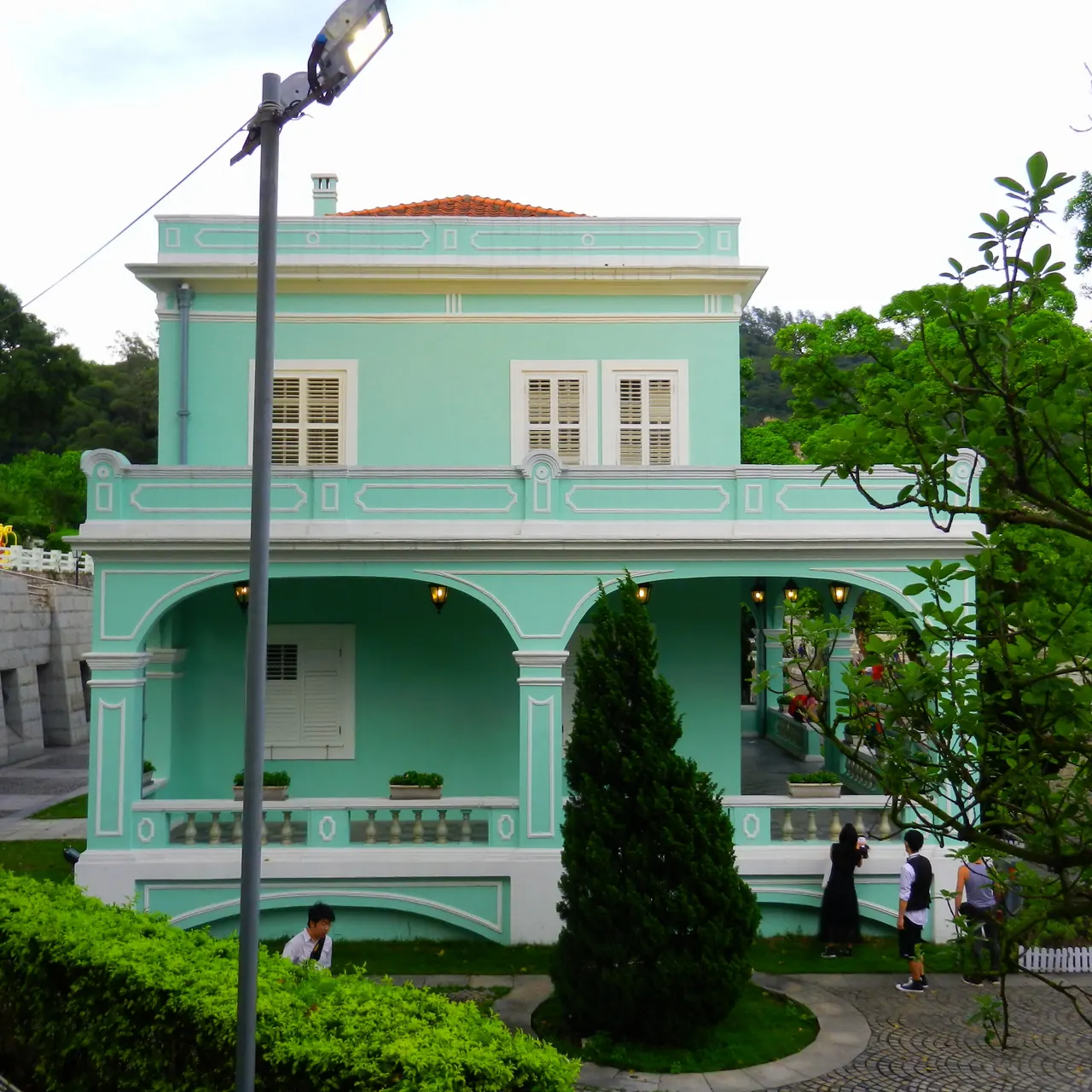
The Taipa Houses introduce an architectural scale quite different from the nearby resort complexes. Their green-and-white facades form a recognisable ensemble, while the interior displays and surrounding paths let you consider domestic life and Macanese cultural history. Spend time looking at the buildings together before choosing which open exhibition spaces to enter.
Combine the houses with a Taipa Village walk and a meal rather than turning the area into a quick stop between casino transfers. Individual houses can have different uses or opening arrangements, so read the current official information instead of expecting every door to offer the same museum experience. The nearby resort skyline makes the contrast visible, but the village is worth time on its own terms. Leave room for residential streets without entering private courtyards.
Plan it well: Check current access to the individual houses; the public ensemble and its indoor exhibitions are not identical visits.
Macao Tourism: Taipa HousesAnchor a Coloane walk at St Francis Xavier Chapel
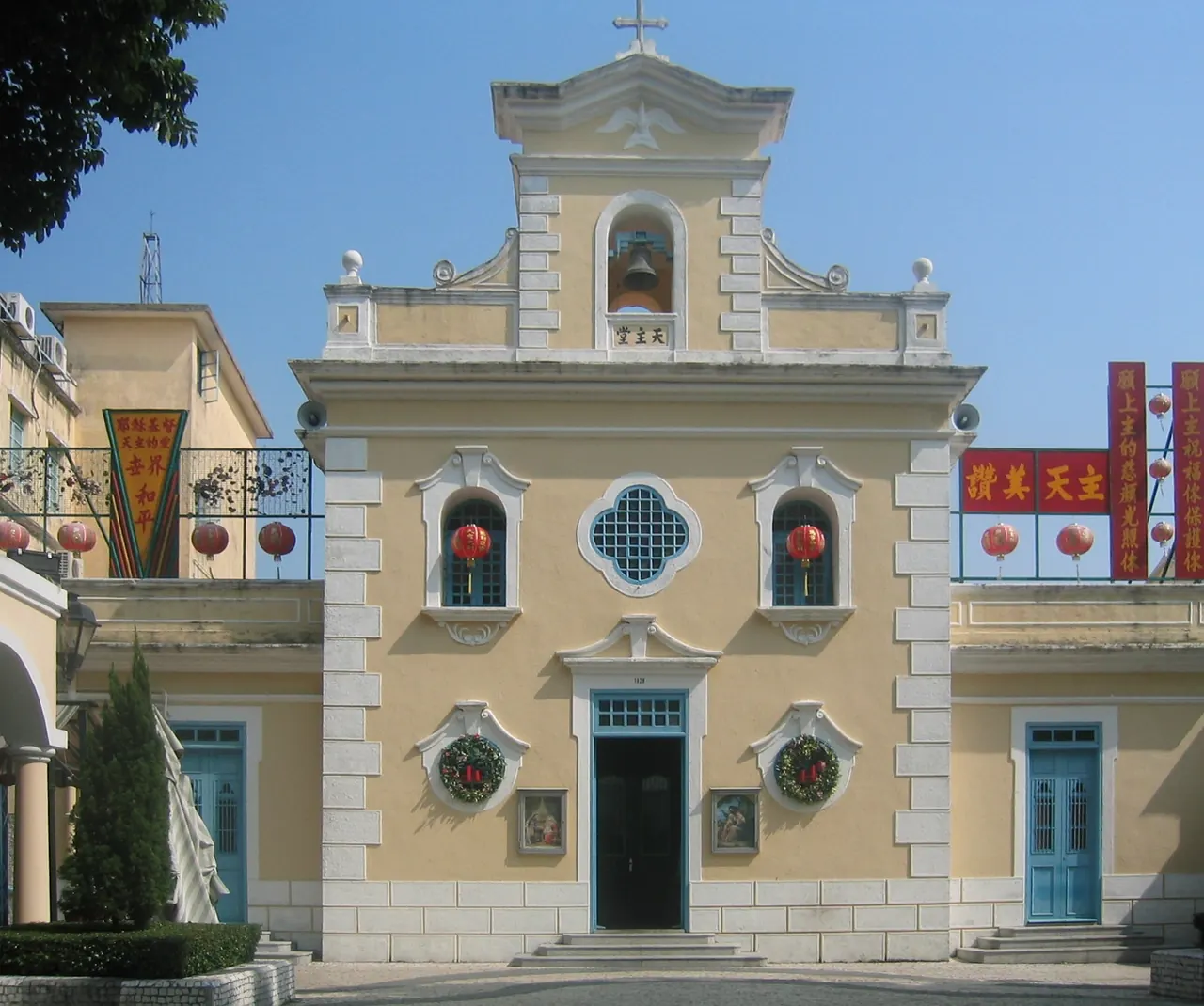
The small chapel facing Coloane's square provides a useful focal point for a village outing. Its bright facade and modest scale make a clear contrast with the peninsula's monumental ruins and Cotai's resort architecture. Look at the relationship between the church, square and neighbouring streets before deciding whether to enter; the surrounding village is part of what makes the stop worthwhile.
Check current church access and respect any service in progress. The chapel is not a substitute for a long museum visit, so leave time for a walk through Coloane and a meal rather than planning a cross-island transfer only for a doorway photograph. Taipa and Coloane can share a day with a bus or taxi connection, but they are distinct places; do not assume a continuous short walk through the resort strip connects every stop.
Plan it well: Use the chapel as the meeting point for a Coloane outing and plan transport between Coloane and Taipa separately.
Macao Tourism: St Francis Xavier ChapelHow to spend two days in Macau
Day one: the historic peninsula
Begin at Senado Square, walk to St Paul's and choose Mount Fortress with or without the Macao Museum. After lunch, either continue with a separate Barra and Mandarin's House outing or keep the afternoon short. Guia is an alternative hilltop, not a requirement to climb a second hill.
Day two: Taipa and Coloane
Visit the Taipa Houses and spend time in Taipa Village before travelling to Coloane for the chapel, streets and a meal. Add Macau Tower on another outing or replace part of the day with it if the skyline interests you more. Check opening days before moving museum visits between the two days.
Before you go
Check opening days for each interior
The square, fortress grounds and museum are different destinations even when they share an area. Confirm house, museum and chapel access before planning an indoor anchor.
Macao Museum visitor informationSeparate peninsula and island journeys
Plan Taipa and Coloane connections deliberately and allow for traffic. A compact map does not make every route a short pedestrian walk.
Respect worship and residential space
Keep voices low in temples and churches, do not obstruct ceremonies, and ask before photographing people. Historic residential streets are still used by residents, not only visitors.
Choose a base for the places you want to see
A historic-peninsula stay suits Senado Square, St Paul's and the museum, while Barra is useful for A-Ma Temple and the southwestern heritage streets. Taipa Village suits food and the houses; a Cotai resort adds facilities but usually requires transport for peninsula sightseeing. Coloane gives a quieter setting with a longer journey to the main historic centre. Compare the actual stop or walking route serving your hotel.
Explore Macau hotels