
Kuala Lumpur city guide
Where to stay in Kuala Lumpur
Eight Kuala Lumpur bases for different trips: Bukit Bintang's food and shops, KLCC's towers, two distinct heritage clusters, the tower hill, the airport-rail hub, Kampung Baru and Bangsar. Compare station access with the streets you actually want to explore.
Plan your visit
Kuala Lumpur's central districts are close on a map but separated by roads, rail corridors and uneven walking routes. Choosing between Bukit Bintang, KLCC and the older riverfront is more useful than looking for a single 'city centre'. KL Sentral is the airport-rail choice; Kampung Baru and Bangsar put different food neighbourhoods first. The station entrance and the side of a major road can matter as much as the district name.
Choose your base
Choose Bukit Bintang for shopping and lively meals, or KLCC for the Petronas Towers and park. Chinatown/Pasar Seni favours market and temple lanes; Masjid Jamek/Merdeka Square favours the civic buildings, river confluence and Masjid India streets. They are adjoining but distinct heritage bases.
Bukit Nanas/Dang Wangi combines the tower hill with station-side dining. KL Sentral/Brickfields is the airport-rail and onward-travel base, Kampung Baru suits Malay food and a village-in-the-city setting, and Bangsar suits longer stays organised around neighbourhood restaurants rather than the central sights.
Bukit Bintang: shopping and lively food streets
Bukit Bintang works when shopping and meals should be easy to build around the hotel. Pavilion and the department-store corridor offer an indoor alternative to the streets, while Lot 10 Hutong and Jalan Alor provide quite different food settings. Changkat Bukit Bintang adds bars and evening activity; a hotel beside that cluster will feel different from one nearer the shopping complexes.
Rapid Rail's Kajang MRT Line and KL Monorail both serve Bukit Bintang, but their entrances are not one interchangeable doorway. MRT Corp's current station directory helps check the Kajang Line approach. From KUL, KLIA Ekspres arrives at KL Sentral; reaching the connected Muzium Negara MRT station then gives an onward route to Bukit Bintang.
The disadvantage is a busy, traffic-filled district where a short distance can still involve awkward crossings. A room above an evening street and one on the quieter edge need comparing carefully. Choose KLCC for the towers and park, Chinatown for heritage lanes, or KL Sentral if the airport rail connection and onward trains are more important than dining outside the door.
Plan it well: The pin is a representative Bukit Bintang district point, not a hotel entrance or a specific station exit.
Tourism Malaysia: Bukit BintangKLCC: Petronas Towers, park and skyline stays
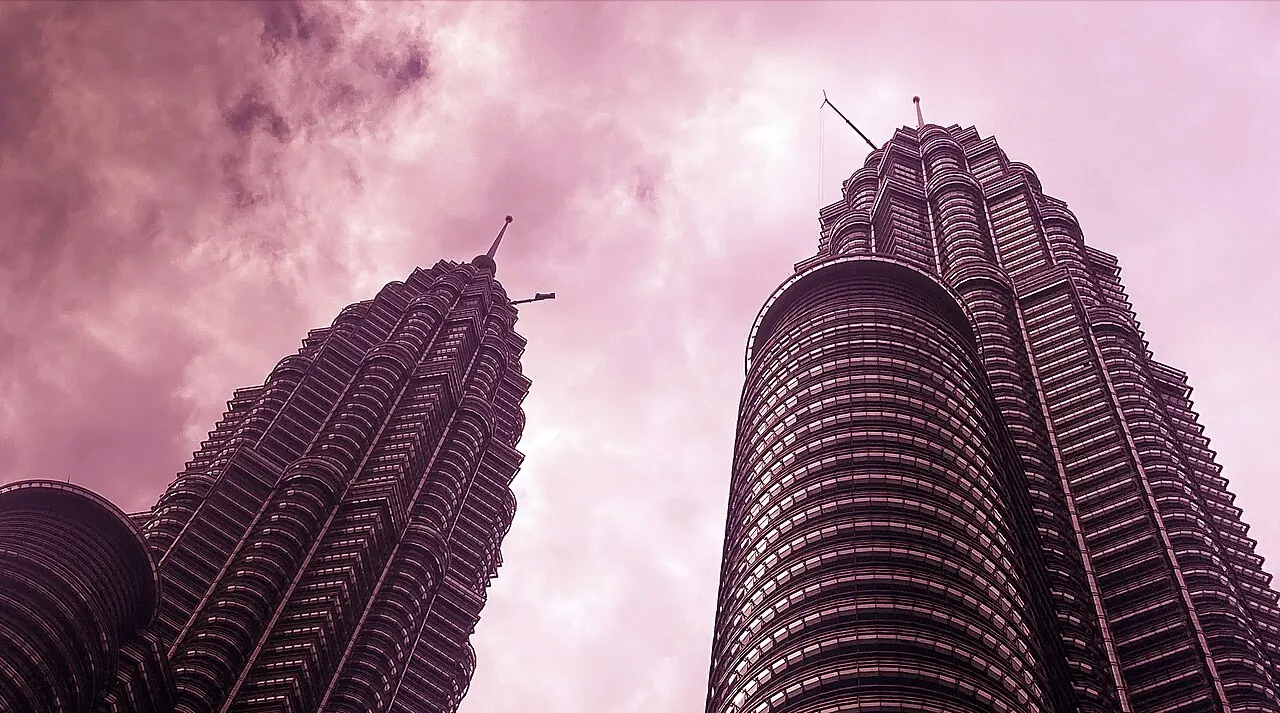
KLCC is the straightforward choice when the Petronas Twin Towers and the surrounding park should anchor the day. Suria KLCC supplies shopping and indoor dining, while the park makes a useful counterpoint to the towers and traffic. Hotels around Jalan Ampang and the convention-centre side do not all provide the same walk to the park or the same skyline view.
KLCC station is on Rapid Rail's Kelana Jaya LRT Line. Persiaran KLCC is a separate station on the Putrajaya MRT Line, so the letters 'KLCC' alone do not settle the arrival route. From KUL, KLIA Ekspres to KL Sentral followed by the Kelana Jaya Line is a useful connection shape for LRT-side addresses.
The compromise is a district of large buildings and major roads rather than a compact heritage food quarter. An apparent neighbour of the towers may still require a less direct approach to the park gates. Choose Bukit Bintang for a denser shopping-and-evening-food circuit, Chinatown for older lanes, or Kampung Baru if Malay dining streets are your main reason to visit.
Plan it well: The photograph and map pin identify the Petronas Twin Towers. KLCC LRT and Persiaran KLCC MRT serve different approaches.
Tourism Malaysia: Kuala Lumpur sightsChinatown and Pasar Seni: market lanes and temple heritage
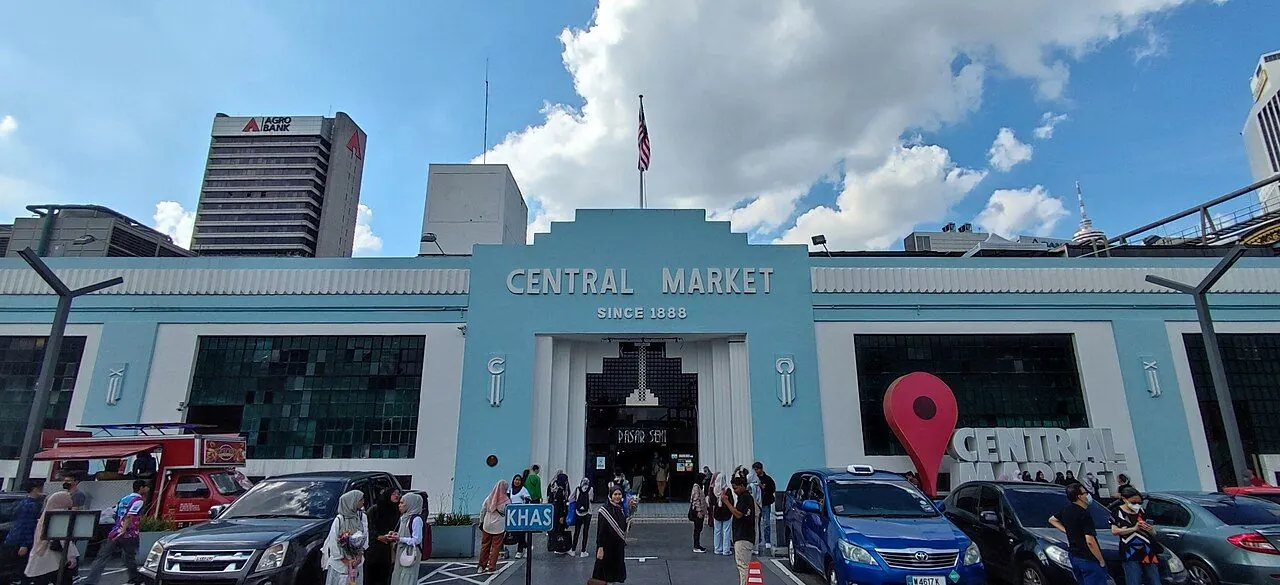
Choose Chinatown for the relationship between Petaling Street's market lanes, Sri Mahamariamman Temple and the shops and craft browsing around Central Market. The appeal is a street-level mix of heritage buildings, kopitiam-style meals and newer cafés, rather than another shopping mall. A hotel near the market can make short explorations easier to fit between longer outings elsewhere.
Pasar Seni connects Rapid Rail's Kelana Jaya LRT and Kajang MRT lines. That combination is useful for KLCC, Bukit Bintang and the KL Sentral connections without moving bases. From KUL, the airport train to KL Sentral followed by the Kelana Jaya Line is one practical approach. Check the hotel side of the station rather than assuming every Chinatown address has the same walk.
The heritage setting includes busy market activity and roads at its edges; it is not a car-free enclave. For the civic square, river confluence and Masjid India shopping, the Masjid Jamek base is more precise. Choose Bukit Bintang for malls and bars, or KLCC if you want the park and towers to structure most days.
Plan it well: The photograph and map pin identify Central Market at the Pasar Seni edge of the Chinatown base.
Tourism Malaysia: Kuala Lumpur shopping districtsMasjid Jamek and Merdeka Square: civic heritage and riverfront walks
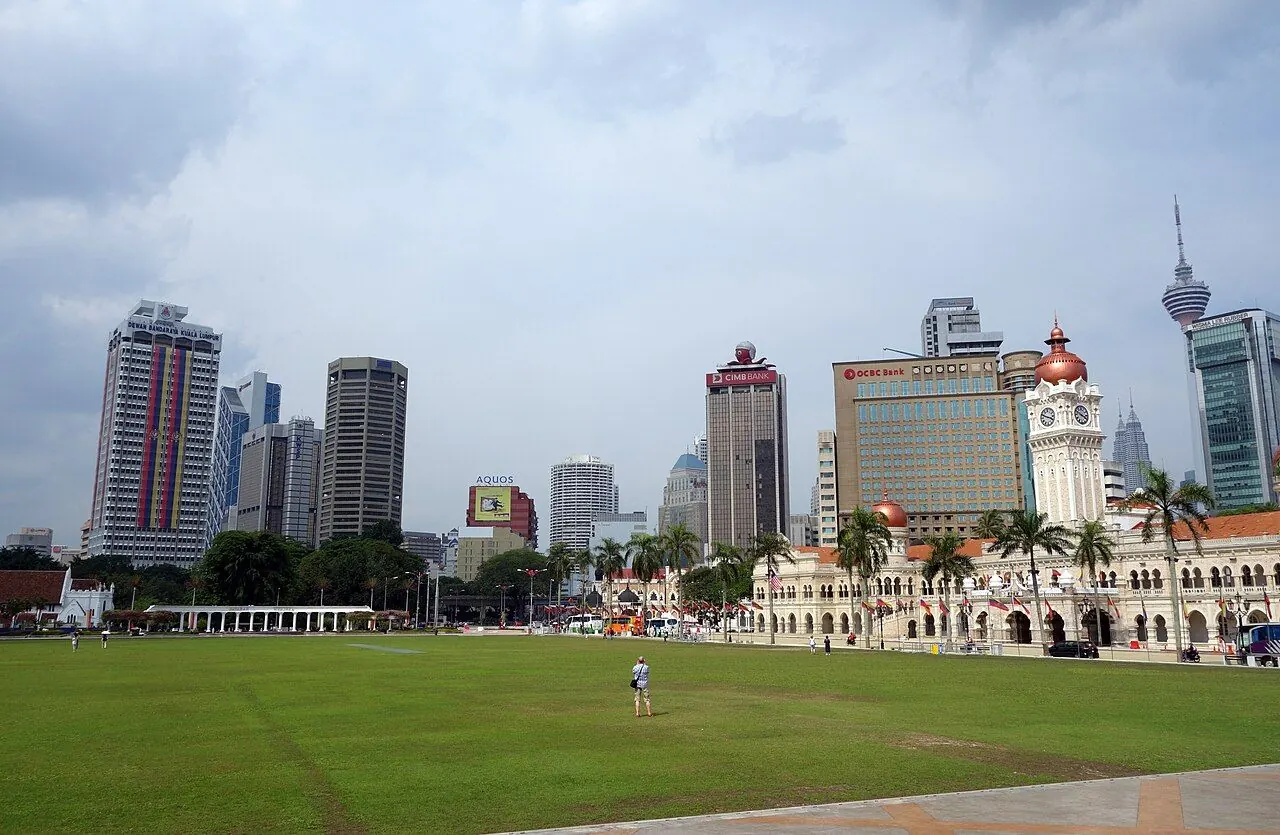
This northern heritage cluster suits travellers more interested in civic architecture and the river confluence than in Petaling Street's market circuit. Merdeka Square and the Sultan Abdul Samad Building give it a recognisable centre, while the Masjid Jamek setting links the streets to the rivers. Jalan Masjid India adds textile shops, Indian food and snacks; Jalan Tuanku Abdul Rahman extends the shopping circuit north.
Masjid Jamek is a Rapid Rail interchange between the Kelana Jaya and Ampang/Sri Petaling LRT services. From KUL, the KLIA Ekspres connection at KL Sentral can feed the Kelana Jaya Line. The square itself is not a station concourse: compare the walk to your address, particularly if a hotel advertises the whole heritage district rather than its actual street.
The area is less focused on contemporary shopping and bar-hopping than Bukit Bintang, and road crossings interrupt the heritage walk. Mosque access follows visitor arrangements rather than unrestricted entry. Choose Chinatown for Petaling Street and Central Market, KLCC for park-and-tower days, or Bangsar for a restaurant-led residential setting.
Plan it well: The image and pin identify Merdeka Square. They do not indicate the mosque entrance or every hotel along Jalan Masjid India.
Tourism Malaysia: Kuala Lumpur heritage sightsBukit Nanas and Dang Wangi: tower hill and station-side dining
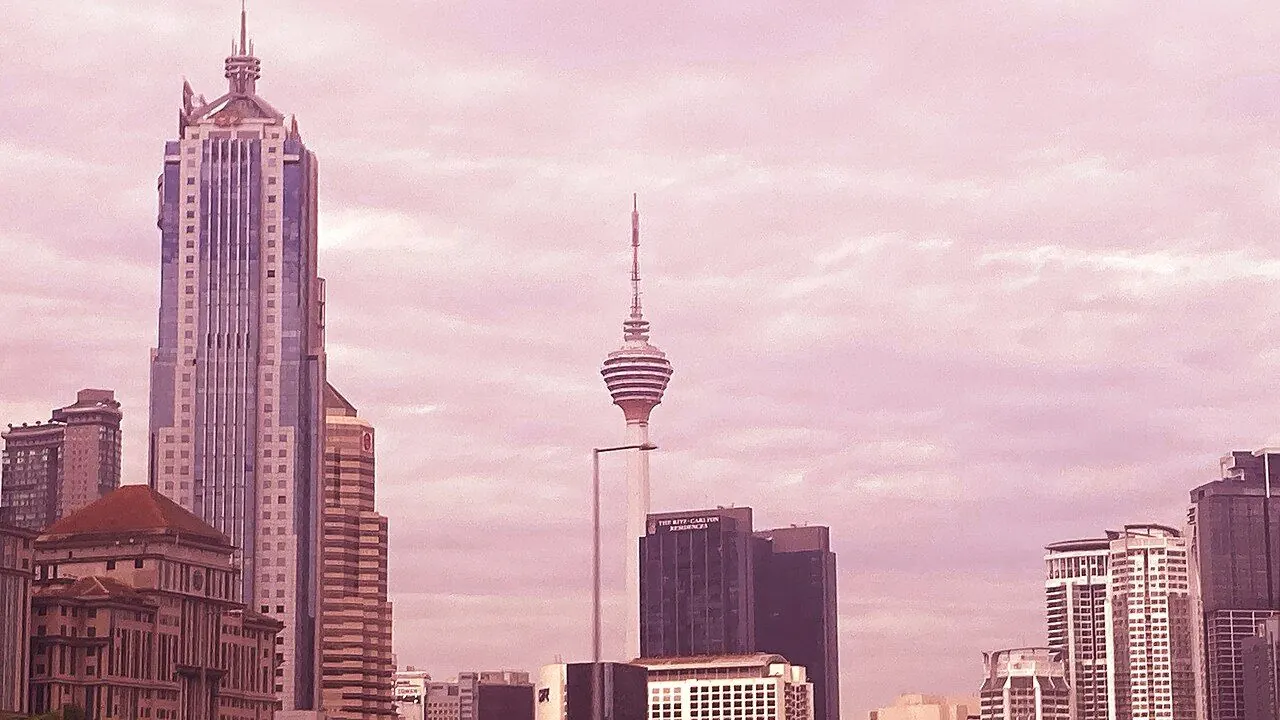
Bukit Nanas gives this base its landmark: KL Tower rises above the hill and the KL Forest Eco Park setting. Down towards Dang Wangi, Jalan Kamunting offers a different scale of neighbourhood dining, with old kopitiam traditions alongside newer cafés; Yut Kee is a specific Hainanese-food anchor. The useful comparison is between a hill-side hotel and an address beside the station streets, not a new invented quarter.
Dang Wangi serves Rapid Rail's Kelana Jaya LRT Line, while Bukit Nanas is on the KL Monorail. MaTiC's official access information identifies both approaches. From KUL, KLIA Ekspres to KL Sentral followed by the Kelana Jaya Line can suit Dang Wangi-side properties. The final uphill route to a tower-side address needs its own check.
The drawback is precisely that change in level and street pattern: tower proximity does not guarantee an easy luggage walk from either station. Forest access also follows current site arrangements, not the hotel address. Choose Bukit Bintang for immediate mall access, Masjid Jamek for the civic heritage cluster, or KLCC if the Petronas park is your daily priority.
Plan it well: The photograph and pin identify KL Tower on Bukit Nanas. The hilltop is not the Dang Wangi station entrance or a forest-trail access guarantee.
Tourism Malaysia: Kuala Lumpur map and guideKL Sentral and Brickfields: airport rail and onward journeys
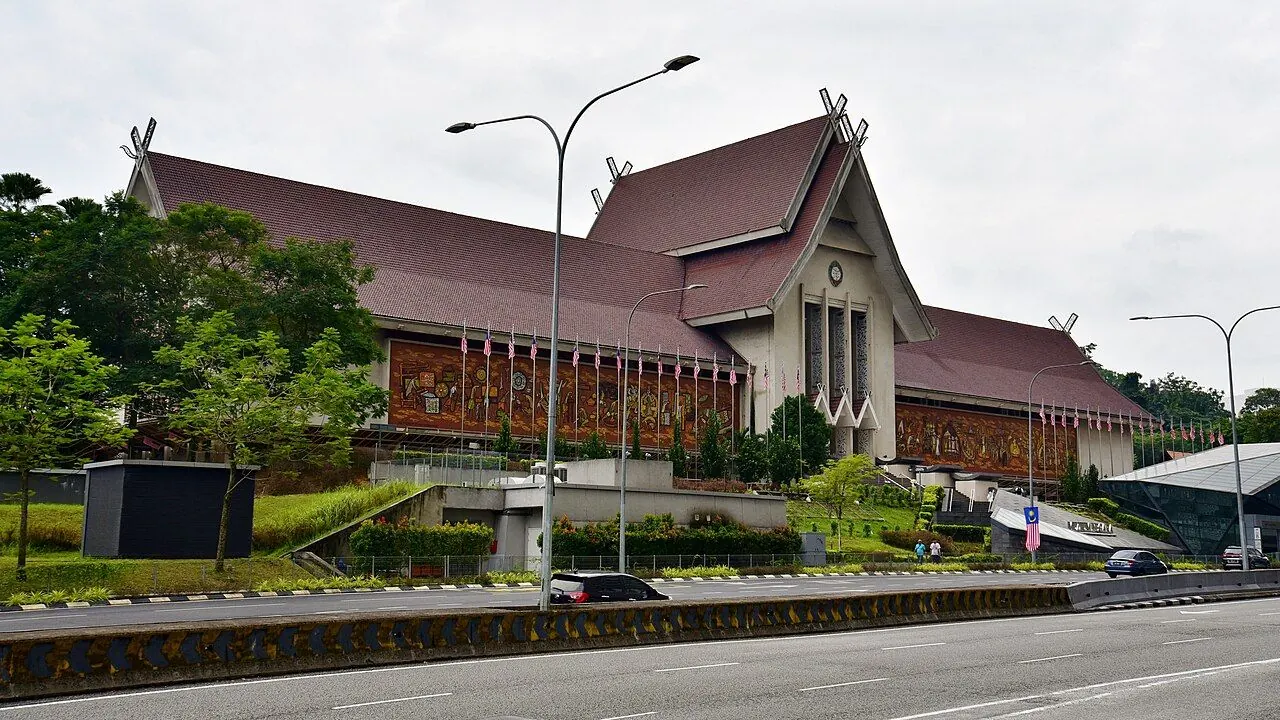
KL Sentral suits a trip shaped by arrival, departure or onward rail journeys. NU Sentral supplies shopping and indoor meals by the transport hub; neighbouring Brickfields adds the Little India streets, Indian restaurants and banana-leaf dining. The National Museum sits on the museum side of the connected MRT approach, giving this wider station base a cultural stop without pretending it is part of the shopping frontage.
KLIA Ekspres and KLIA Transit link KUL with KL Sentral. Urban connections include Rapid Rail's Kelana Jaya LRT, the adjoining KL Monorail approach and Muzium Negara on the Kajang MRT Line. Follow the appropriate pedestrian connection for the actual platform or hotel; these services are not all reached from one identical entrance.
The transport advantage is also the compromise: rail infrastructure and major roads fragment the surrounding walks, and a station-linked hotel feels different from staying in Brickfields itself. Choose Chinatown for heritage lanes immediately around the hotel, Bukit Bintang for lively evening dining, or KLCC for a park-and-skyline stay rather than a hub-centred one.
Plan it well: The photograph and pin show the National Museum on the museum side of the KL Sentral/Muzium Negara connection, not Brickfields' Little India streets.
KLIA Ekspres: around KL SentralKampung Baru: Malay food and a village-in-the-city setting
Kampung Baru is for travellers who want Malay food and a contrast with the tower district rather than another mall-led stay. Jalan Raja Muda Musa and the surrounding dining streets give you nasi lemak and other Malay dishes; Nasi Lemak Wanjo is a recognisable food anchor. The Saloma Link offers a connection towards the KLCC side, but it does not turn every address into a towerside hotel.
Kampung Baru station is on Rapid Rail's Kelana Jaya LRT Line. That gives a connection from KL Sentral after a KUL airport-train arrival and a rail alternative to walking across to KLCC. Check the hotel against the station and the dining streets independently; a broad Kampung Baru label can cover a location away from either.
The trade-off is a less uniform visitor setting, with residential streets and local dining rather than a concentrated attraction complex. Choosing it for food makes more sense than expecting resort facilities or major shopping outside the door. Choose KLCC for the park and towers themselves, Chinatown for market heritage, or Bangsar for a different neighbourhood restaurant circuit.
Plan it well: The pin is a representative Kampung Baru area point, not the entrance to a restaurant or the Saloma Link.
Tourism Malaysia: Kuala Lumpur dining districtsBangsar: neighbourhood restaurants for a longer stay
Bangsar is a useful alternative when you already know the central sights and want a restaurant-led neighbourhood routine. The Jalan Telawi streets in Bangsar Baru combine cafés, restaurants and bars, with Bangsar Village providing an adjoining retail anchor. That cluster is different from the office-and-hotel district marketed as Bangsar South, and from the station-side stretch of Jalan Bangsar.
Bangsar LRT sits on Rapid Rail's Kelana Jaya Line, but the Telawi restaurant cluster is not immediately at its entrance. Allow for a checked local bus, taxi or suitable walking route depending on the hotel. From KUL, KLIA Ekspres to KL Sentral gives an airport-rail backbone, followed by the appropriate urban connection rather than a direct airport train into Bangsar Baru.
The disadvantage is the extra step between the dining streets and rail, plus more journeys back to KLCC or the historic core. It is a considered choice for food and a longer stay, not automatically the best first-visit base. Choose Bukit Bintang for central evening activity or KL Sentral for a simpler airport-and-onward-rail focus.
Plan it well: The map pin is a representative Bangsar point. Bangsar Baru's Telawi dining streets are not the same location as Bangsar LRT or Bangsar South.
Tourism Malaysia: Kuala Lumpur entertainment districtsAirport arrival and the right rail connection
Kuala Lumpur's rail systems connect, but the station names and pedestrian links matter. Plan the airport leg and the last hotel approach separately.
KUL airport trains reach KL Sentral
KLIA Ekspres and KLIA Transit serve the airport and KL Sentral with different stopping patterns. Use the operator's current service information, then add the LRT, MRT, monorail or road leg for the hotel.
KLIA Ekspres: airport serviceUse current MRT station information
MRT Corp's current Kajang Line directory includes Muzium Negara, Pasar Seni and Bukit Bintang. Its network map separates Kajang and Putrajaya lines; Rapid Rail operates the trains.
MRT Corp: travel and network mapKLCC is not one station
KLCC on the Kelana Jaya LRT and Persiaran KLCC on the Putrajaya MRT are different approaches. Match the hotel to its useful entrance instead of choosing a route from the district name alone.
MRT Corp: Persiaran KLCC stationCheck LRT and monorail interchanges
Rapid KL's integrated map shows the Kelana Jaya and Ampang/Sri Petaling lines, the monorail and their connections. Dang Wangi and Bukit Nanas serve separate systems; Bangsar station is not the Telawi dining cluster.
Rapid KL: integrated transit mapMuseum-side pedestrian connection
The National Museum's official access page explains the Muzium Negara/KL Sentral approaches. Use the designated connections rather than treating the major road as an informal shortcut.
National Museum: getting hereBukit Nanas and Dang Wangi approaches
MaTiC lists the LRT and monorail approaches to its Jalan Ampang location. Check the onward street and hill route separately for a KL Tower-side hotel.
Malaysia Tourism Centre: access informationFind a Kuala Lumpur hotel in the right district
Compare Kuala Lumpur hotels by the streets you want outside the door and the rail entrance you will actually use. Distinguish KLCC's two station systems, Bangsar Baru from Bangsar South, and a station-linked KL Sentral property from the Brickfields or museum-side edges.
Explore Kuala Lumpur hotels