
Oslo city guide
Where to stay in Oslo
Compare six Oslo bases, from rail-connected Sentrum and the new waterfront to cafe-filled Grunerlokka, residential Frogner and the wooded Holmenkollen hills.
Plan your visit
Oslo's centre is compact, but its hotel bases are not interchangeable. The waterfront has two quite different art-and-dining districts, the western residential streets favour parks, and Grunerlokka turns the focus towards independent shops and evenings out. Choose the surroundings you want to return to, then compare the complete arrival journey.
Choose your base
Choose Sentrum for a short first visit and straightforward rail arrivals; Bjorvika for the Opera House and MUNCH; Aker Brygge and Tjuvholmen for waterfront dining and contemporary art; Frogner for park time and residential streets; Grunerlokka for independent shops and evenings out. Holmenkollen is a deliberate hills-and-forest choice, not a convenient substitute for a central hotel. Airport rail access is strongest around Oslo S and Nationaltheatret; the other bases add a local journey.
Sentrum and Kvadraturen: the most flexible first-visit base
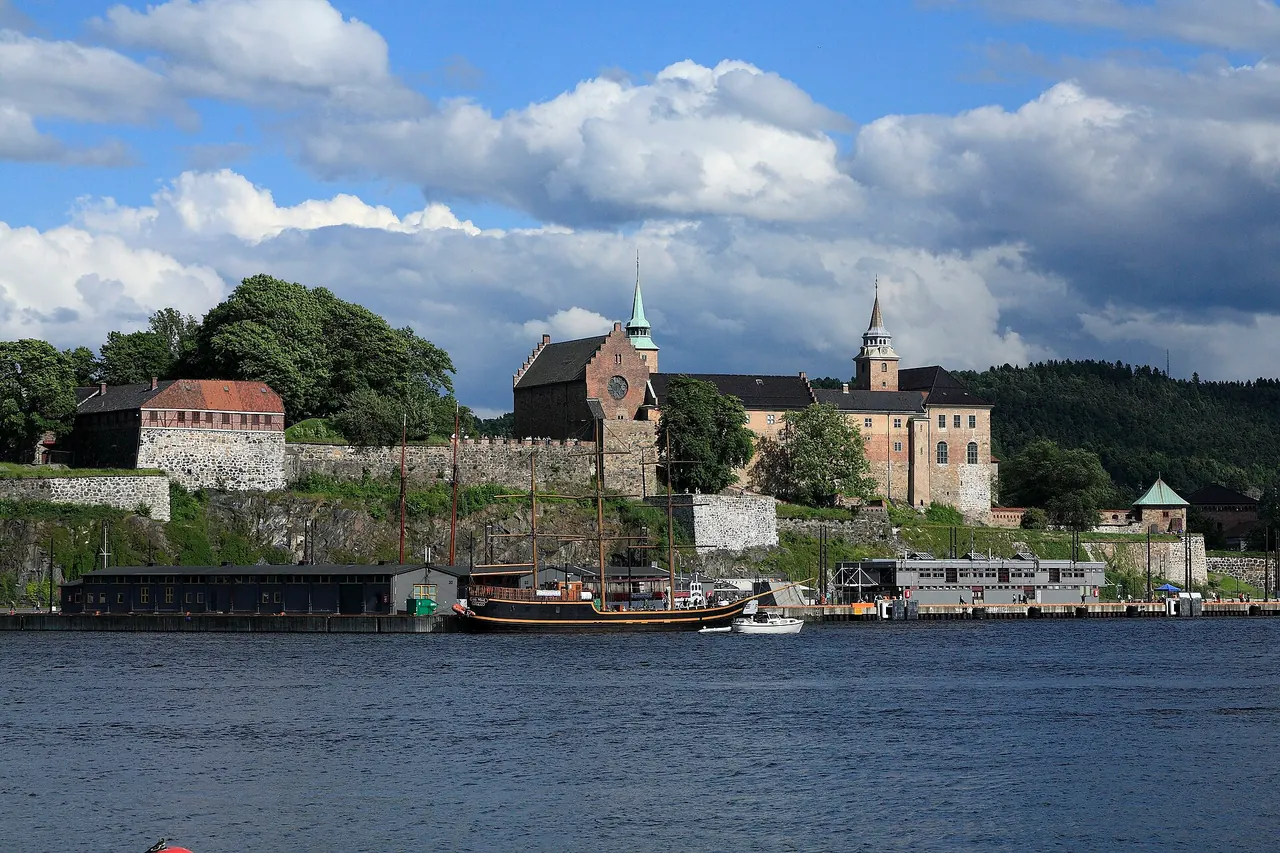
Sentrum puts the practical parts of a first visit together: Oslo S at the eastern end, Karl Johans gate through the middle and Nationaltheatret towards the west. Stay in the Kvadraturen streets south of the main shopping route if Akershus Fortress and the older harbour interest you. The grid gives you a different setting from the station forecourt, while cafes and restaurants around Karl Johans gate keep breakfast and dinner within the central area.
Jernbanetorget and Stortinget are useful Ruter interchanges; choose the one that actually suits the hotel entrance. Airport trains serve Oslo S, while some also continue to Nationaltheatret, so the western centre need not mean returning to the main station. The compromise is traffic, shopping crowds and nightlife on particular streets. A central postcode is not a quiet-room guarantee: travellers who want park walks outside the door should consider Frogner, while those prioritising neighbourhood bars may prefer Grunerlokka.
Plan it well: The photograph and pin show Akershus Fortress in southern Sentrum, not a boundary or hotel entrance.
VisitOSLO: city centreBjorvika: waterfront architecture with easy rail arrivals
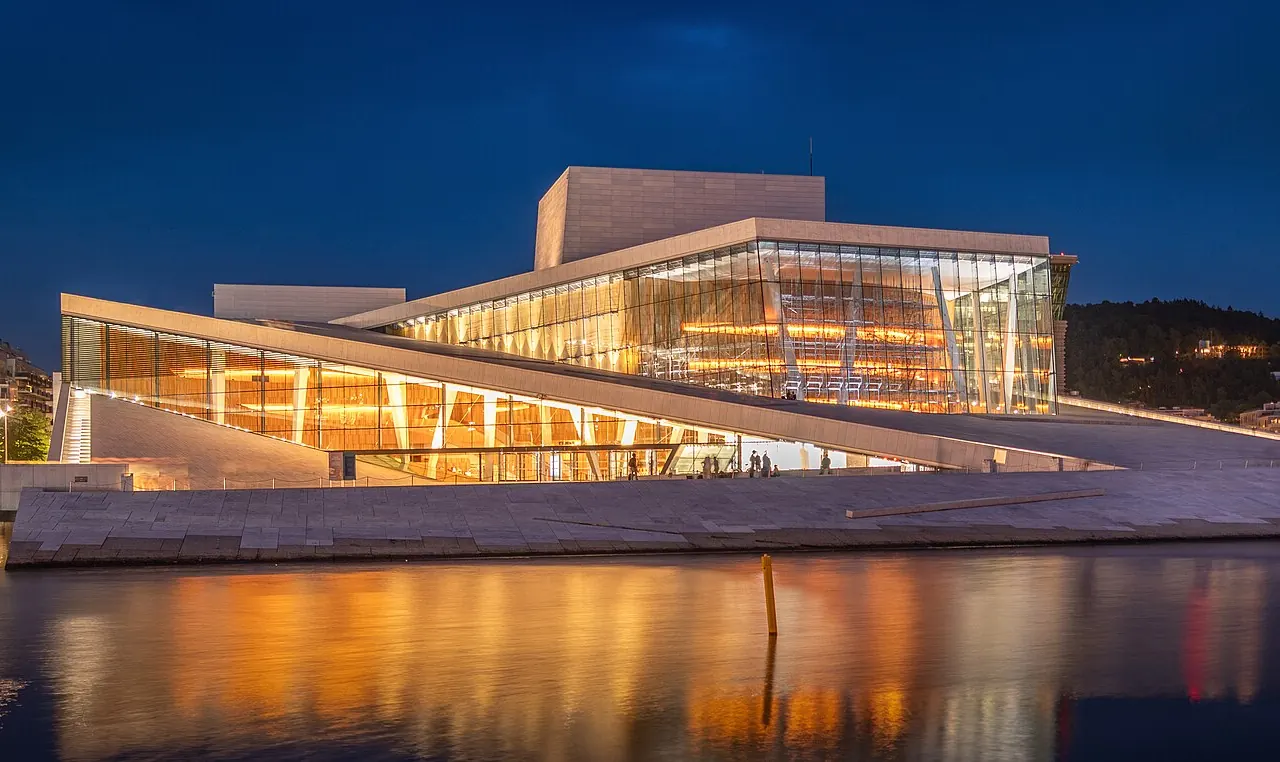
Bjorvika is the eastern waterfront base for a trip built around the Opera House, Deichman library and MUNCH. The Barcode buildings and Oslobukta dining streets create a modern urban setting, with the water close enough to become part of an ordinary evening rather than a special excursion. Choose a hotel on this side of Oslo S if arriving by rail and spending your first day between museums and the harbour appeals more than browsing older shopping streets.
Ruter trams around Bjorvika and Dronning Eufemias gate complement the wider connections at Jernbanetorget. Airport arrival normally involves Oslo S followed by a walk or local service, but a waterfront address further south can add more walking with bags than the map suggests. Exposed quays are less inviting in wind and winter weather, and this is not the city's vintage-shop district. Grunerlokka is a better fit for independent shopping and bar-led evenings; Frogner offers a more established residential setting.
Plan it well: The Opera House is the named map anchor. Compare the hotel entrance with Oslo S, not simply its waterfront description.
VisitOSLO: Bjorvika and OslobuktaAker Brygge and Tjuvholmen: art and harbour evenings
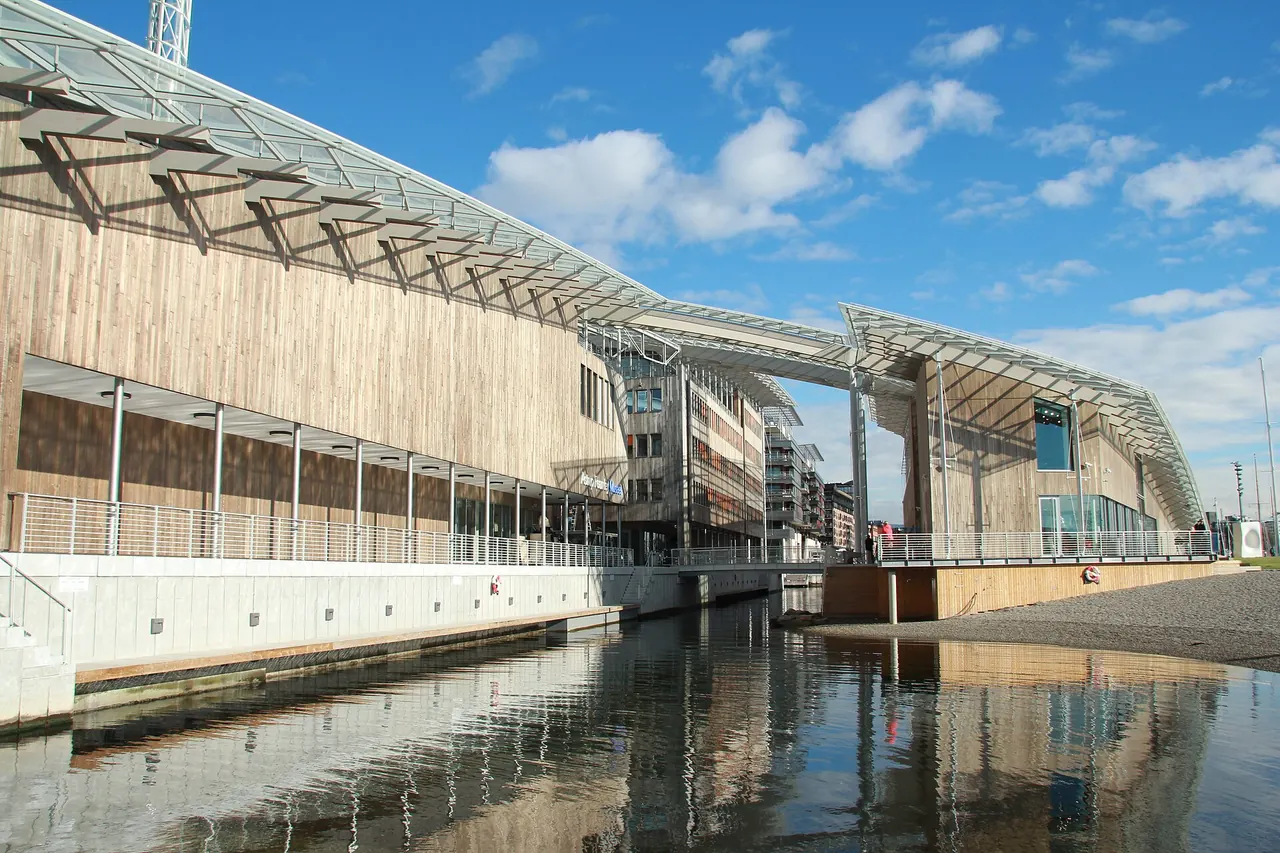
Aker Brygge and Tjuvholmen work well when the harbour is the reason for your Oslo trip. The former dockside buildings around Stranden offer restaurants and shopping, while Tjuvholmen continues towards galleries, the sculpture park and Astrup Fearnley Museum. The National Museum is on the adjoining Vika side, making this a useful art base without treating every museum as a cross-city journey. The waterfront terraces favour lingering after an exhibition over fitting in another distant sight.
Aker Brygge has Ruter tram and ferry connections; Nationaltheatret is the rail interchange to compare for airport access. Tjuvholmen extends beyond the tram stop, so a hotel near its tip adds a final walk rather than giving you a train station at the door. Busy restaurant terraces and exposed waterfront paths are the main trade-offs. Choose Sentrum for the simplest luggage-to-train routine, or Grunerlokka if small independent shops and a less polished evening scene matter more than harbour views.
Plan it well: Astrup Fearnley Museum is the Tjuvholmen anchor pictured here; the pin does not describe the whole waterfront.
VisitOSLO: Aker Brygge and TjuvholmenFrogner: sculpture, parks and a residential rhythm
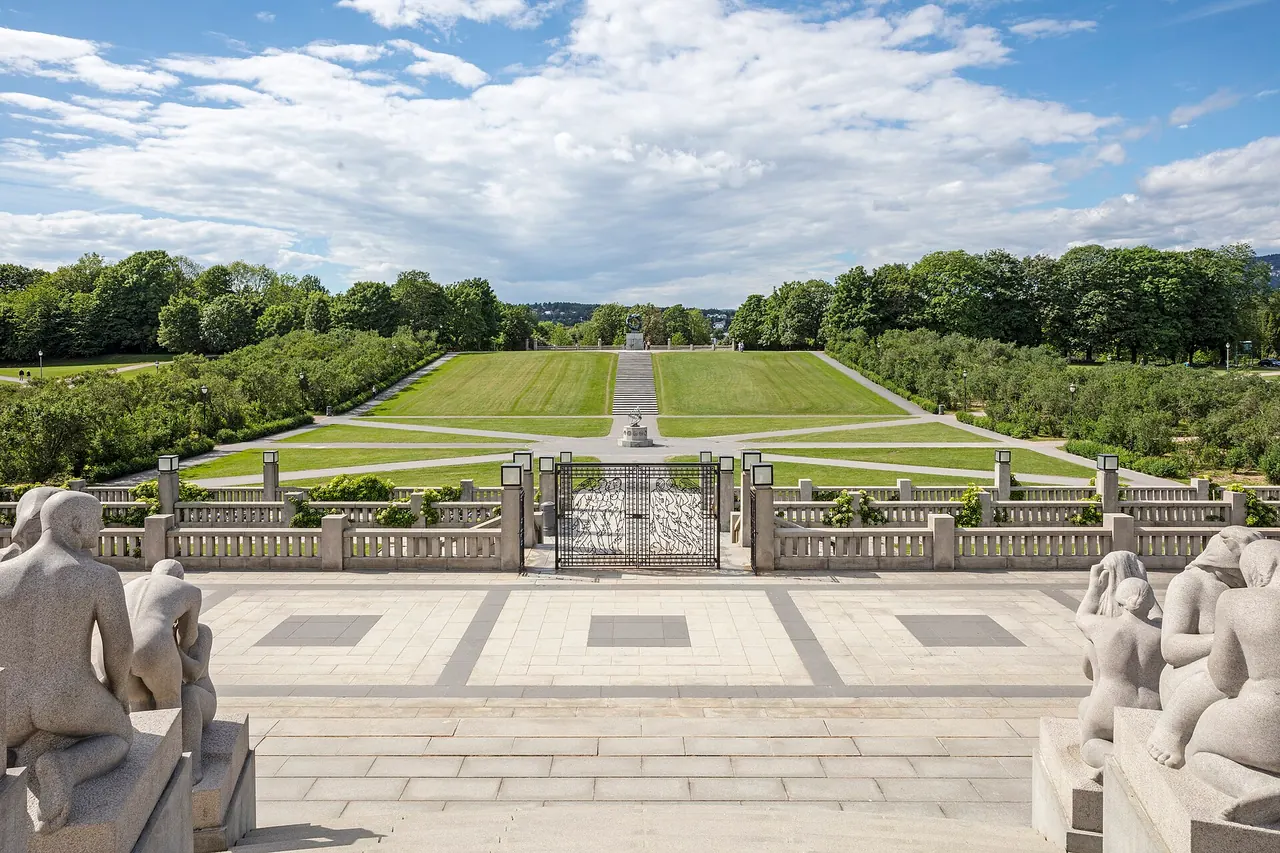
Frogner is a useful alternative to the harbour when your ideal morning includes a park rather than a station concourse. The Vigeland installation, Museum of Oslo and Vigeland Museum give the area its cultural focus, while the streets around Frogner and Bygdoy alle add cafes, galleries and ornate apartment buildings. Majorstuen and Bogstadveien are separate adjoining shopping options, not names for every hotel in Frogner. This base particularly suits travellers who want room in the itinerary for ordinary neighbourhood walks.
Look at Ruter tram stops such as Frogner plass and the actual journey to Nationaltheatret or Oslo S for an airport train. A hotel advertised as near Majorstuen may have different connections from one beside the park. The price of the residential setting is repeated local travel for MUNCH, the Opera House and eastern waterfront meals. Grunerlokka suits a bar-and-boutique trip better; Sentrum is more practical when a very short visit leaves little appetite for transfers.
Plan it well: The map and photograph identify Frogner Park, home to the Vigeland installation, rather than an accommodation location.
VisitOSLO: Oslo WestGrunerlokka: independent shops and evenings out
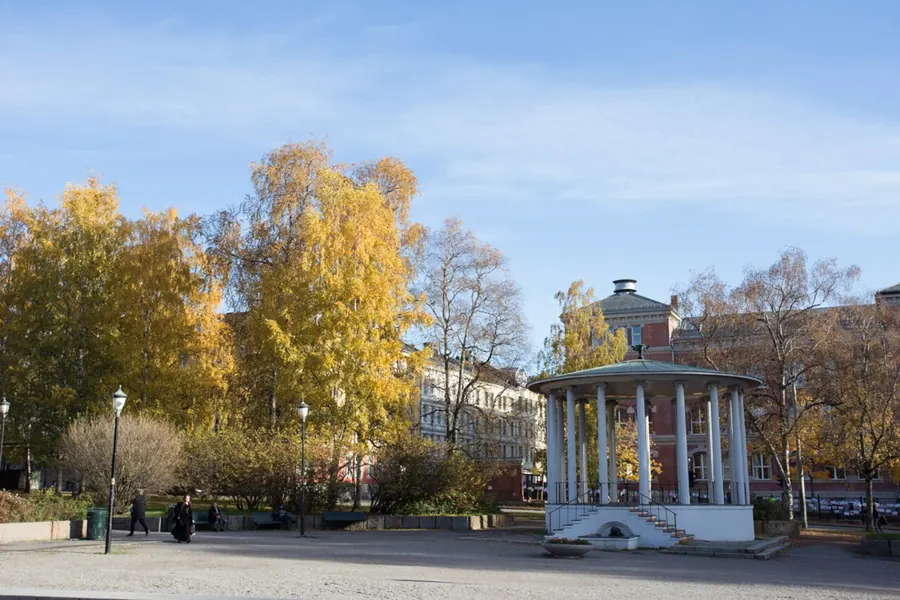
Grunerlokka makes sense when dinner and the streets around it matter as much as the major museums. Thorvald Meyers gate, the squares around Olaf Ryes plass and Birkelunden, vintage shops and neighbourhood cafes provide enough interest to keep an evening local. The Akerselva riverside brings industrial buildings and walking paths into the picture; Mathallen on the Vulkan side of the river is a nearby food excursion, not a reason to relabel all of Vulkan as Grunerlokka.
Ruter's tram network serves Olaf Ryes plass and Birkelunden; airport rail arrivals generally add a local connection from Oslo S rather than a direct train to the neighbourhood. Compare a southern address with one further north before assuming every listing has the same walking access. Bars, live music and busy street corners are part of the attraction and can also affect sleep. Choose a room away from the evening terraces, or switch to Frogner for a more park-oriented stay and fewer nightlife priorities.
Plan it well: Birkelunden park is the illustrated landmark and verified map anchor within Grunerlokka.
VisitOSLO: GrunerlokkaHolmenkollen: a deliberate hills-and-forest retreat
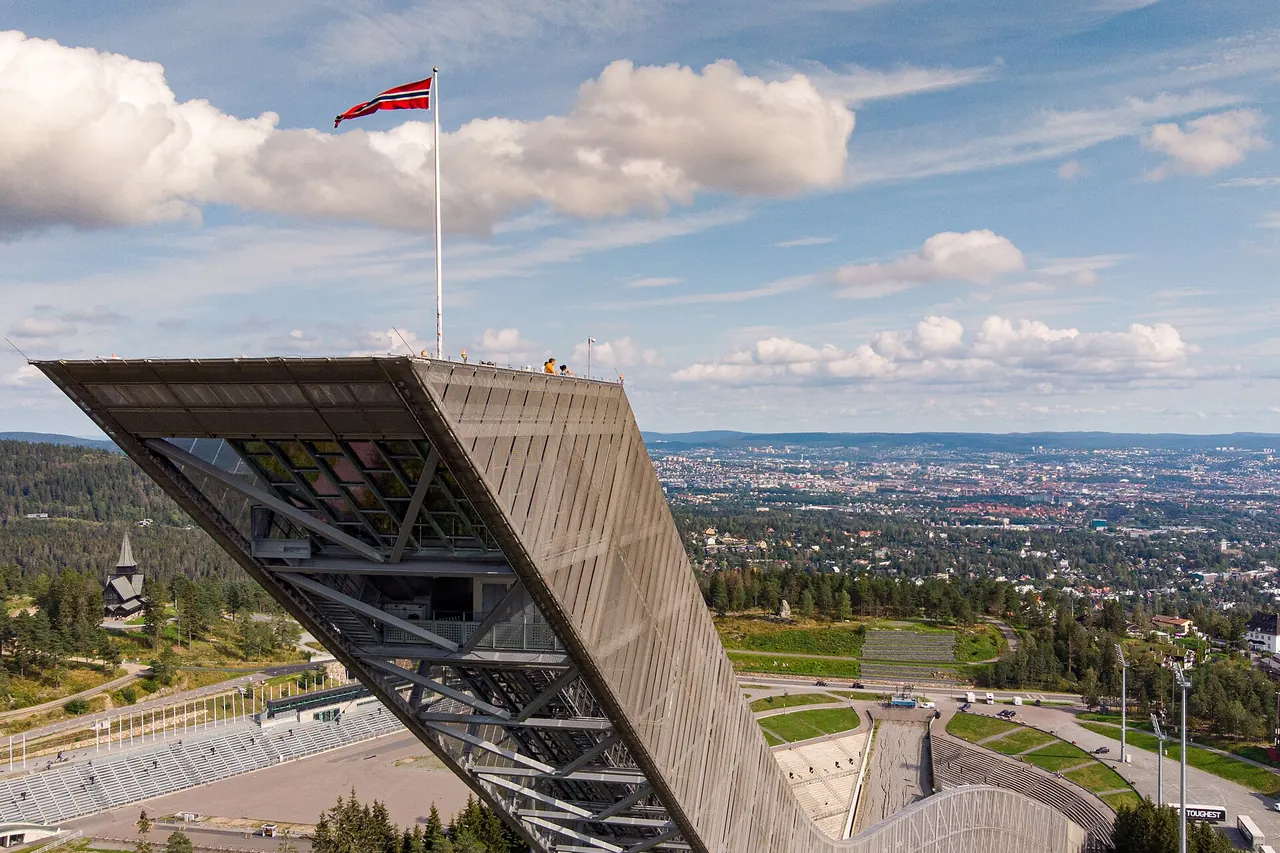
Holmenkollen suits an Oslo visit in which the ski-jump area and access towards the forest are central plans rather than one sightseeing detour. The ski museum, tower and wooded surroundings give the stay a different rhythm from the waterfront: allow time outdoors and decide on city-centre excursions in advance. Dining is more tied to individual hotels and hillside venues than to a dense sequence of restaurant streets. Check that the property's setting matches the kind of walking you actually want.
Ruter metro line 1 serves Holmenkollen, with the final approach to a hotel or attraction still potentially uphill. Airport rail brings you into Oslo before the local connection; there is no airport train to the hillside. This is a poor fit for frequent late returns from central bars, and snow or ice can make the last stretch more demanding. Ruter's major metro upgrade also includes closures, so check the dated journey plan. Choose Frogner for greenery with a stronger urban setting, or Sentrum for an intensive museum weekend.
Plan it well: The ski-jump landmark is the map anchor, not a hotel. Check both the station-to-door slope and planned metro closures.
VisitOSLO: HolmenkollenArriving and moving between bases
Use the right airport rail stop
For Oslo Airport at Gardermoen, Avinor lists Vy and Flytoget rail services, with Oslo S and Nationaltheatret among the relevant city stops. Compare the service and its ticket conditions with your hotel's location. Torp is a different airport and needs a different transfer plan.
Avinor: Oslo Airport public transportMatch the hotel to a local stop
Use Ruter's current tram, metro, bus and ferry maps to compare the complete journey to the entrance. A harbour view or a Frogner address does not mean the nearest rail interchange is beside the property.
Ruter: timetables and route mapsCheck the metro upgrade dates
Ruter lists major metro work in 2026 and 2027, including a near-network-wide closure on 19-22 November 2026. This is particularly relevant to Holmenkollen; use the journey planner for the actual travel dates.
Ruter: the great metro upgradeFind your Oslo base
Compare Oslo hotels in the area that matches your trip, then check the exact entrance against the relevant Ruter stop or airport rail station. For a short first visit, start with Sentrum or Bjorvika; choose a hillside stay only when its outdoor setting is part of the plan.
Explore Oslo hotels