
Singapore city guide
Where to stay in Singapore
Compare Singapore's civic centre, bayfront, heritage precincts, shopping corridor, eastern food streets and island resorts. Eight bases with distinct dining, sightseeing and MRT trade-offs, including the garden-facing Tanglin end of Orchard.
Plan your visit
Singapore is compact enough to explore from several bases, but they do not offer the same daily experience. City Hall suits museums and a mixed itinerary; Chinatown and Little India put food and heritage close together; Marina Bay prioritises big attractions. Orchard's retail core feels different from its Tanglin garden end, and an east-coast or Sentosa stay changes the journeys you make most often.
Choose your base
Choose City Hall and the Civic District for a balanced museum-and-city stay, or Marina Bay for the Gardens and waterfront attractions. Chinatown suits heritage and hawker meals; Bugis/Kampong Gelam combines independent shops, Malay-Muslim dining and a useful interchange; Little India centres Indian food and temple streets.
Orchard Road is the shopping choice, with Tanglin offering a garden-facing western alternative. Katong/Joo Chiat rewards food-led stays outside the central landmark circuit. Sentosa is for an island-and-resort routine, with an extra connection whenever you head into the mainland city.
City Hall and the Civic District: museums with a central base
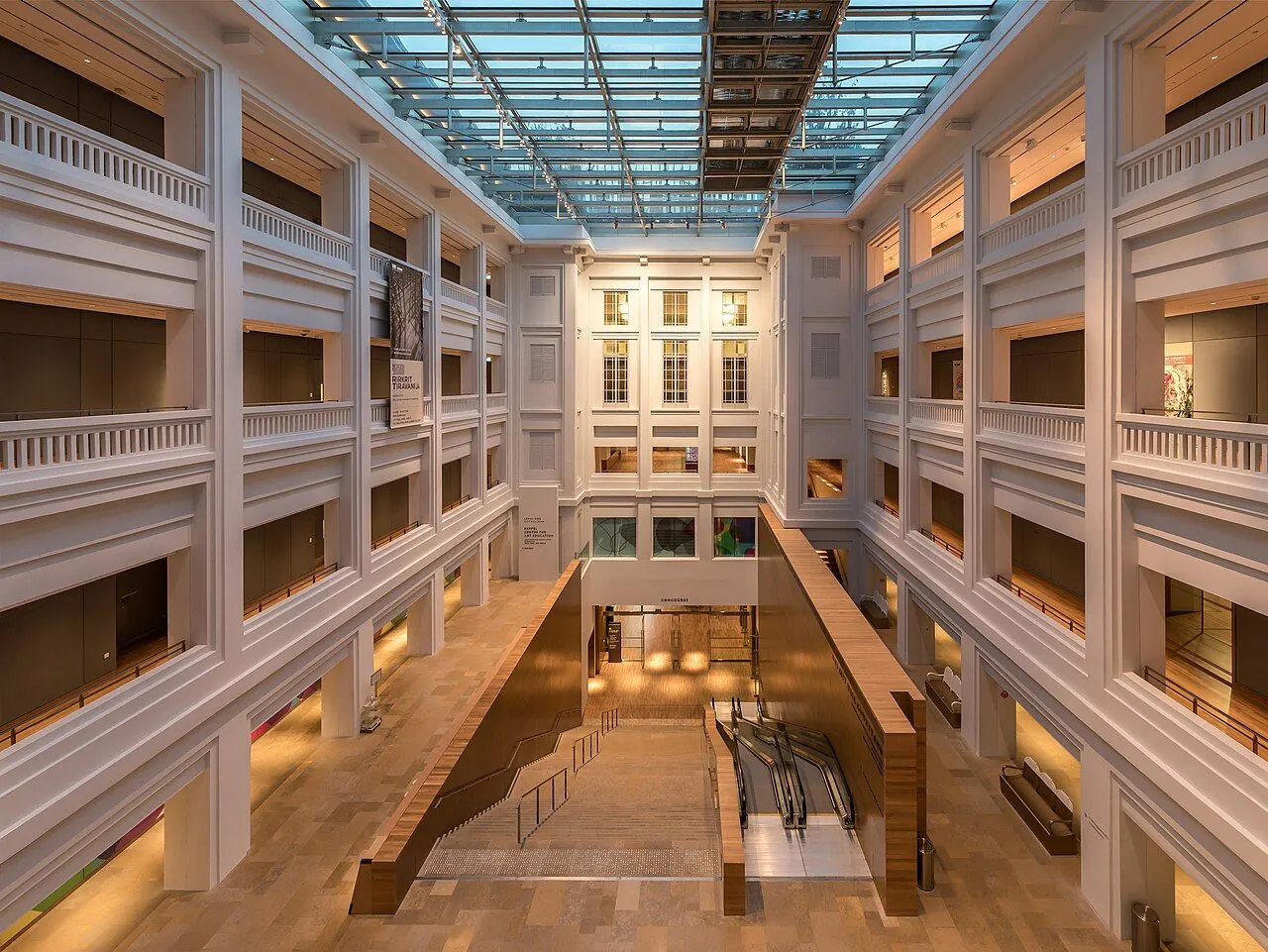
The Civic District is a useful compromise when you want museums, riverfront walks and access to other neighbourhoods without sleeping in a resort enclave. National Gallery Singapore, the Padang and the Victoria Theatre area give the streets a civic rather than shopping-mall focus. The Asian Civilisations Museum adds another substantial cultural stop, while CHIJMES on Victoria Street supplies a courtyard restaurant setting.
SMRT's network places City Hall on the North-South and East-West lines, making it a practical station to check against your hotel entrance. Bras Basah and Esplanade may suit other edges of the district. From Changi, the airport rail route requires the appropriate connection at Tanah Merah or Expo; City Hall is not served by a separate airport express.
The compromise is that attractions and hotels spread across several blocks rather than one heritage lane. Major roads and the route to the river still matter in the heat or rain. Choose Chinatown for hawker meals woven into temple streets, or Marina Bay if the Gardens and your bayfront hotel are the main events.
Plan it well: The image and pin identify National Gallery Singapore in the Civic District, not the City Hall MRT entrance.
Visit Singapore: Civic DistrictMarina Bay: gardens, skyline and waterfront attractions
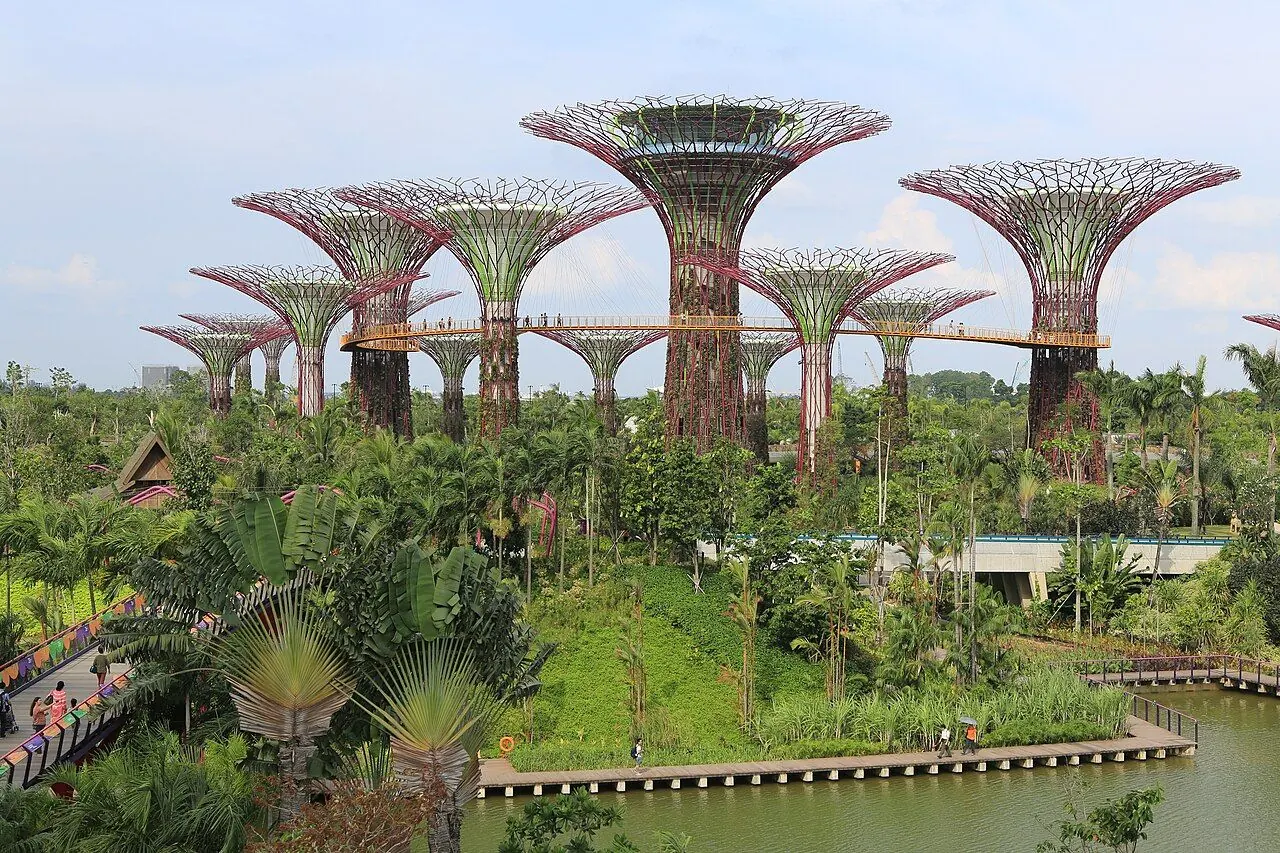
Marina Bay suits a trip organised around Gardens by the Bay, Marina Bay Sands and skyline walks rather than small neighbourhood streets. Bayfront-side addresses favour the Gardens; the City Hall and Merlion side gives a different route around the water. Meals can range from resort dining to Caffe Fernet on the opposite shore, with Lau Pa Sat in the adjoining CBD rather than inside the Gardens.
Bayfront is on SMRT's Circle and Downtown lines; Marina Bay station serves a different part of the district. Check the specific station and entrance, because a bay-view room is not necessarily close to your chosen attraction. Changi's rail options run via Tanah Merah or Expo, followed by the relevant city connection; there is no current direct airport branch of the Thomson-East Coast Line.
The waterfront's scale is the disadvantage: long promenades, large complexes and exposed stretches make it less intimate than a heritage precinct. Choose City Hall for a broader sightseeing balance, Chinatown for everyday hawker dining, or Sentosa when beaches matter more than the city skyline.
Plan it well: The photograph and pin show Gardens by the Bay on the Bayfront side. Hotels on the opposite shore are a different walking base.
Visit Singapore: Marina BayChinatown: heritage streets and hawker meals
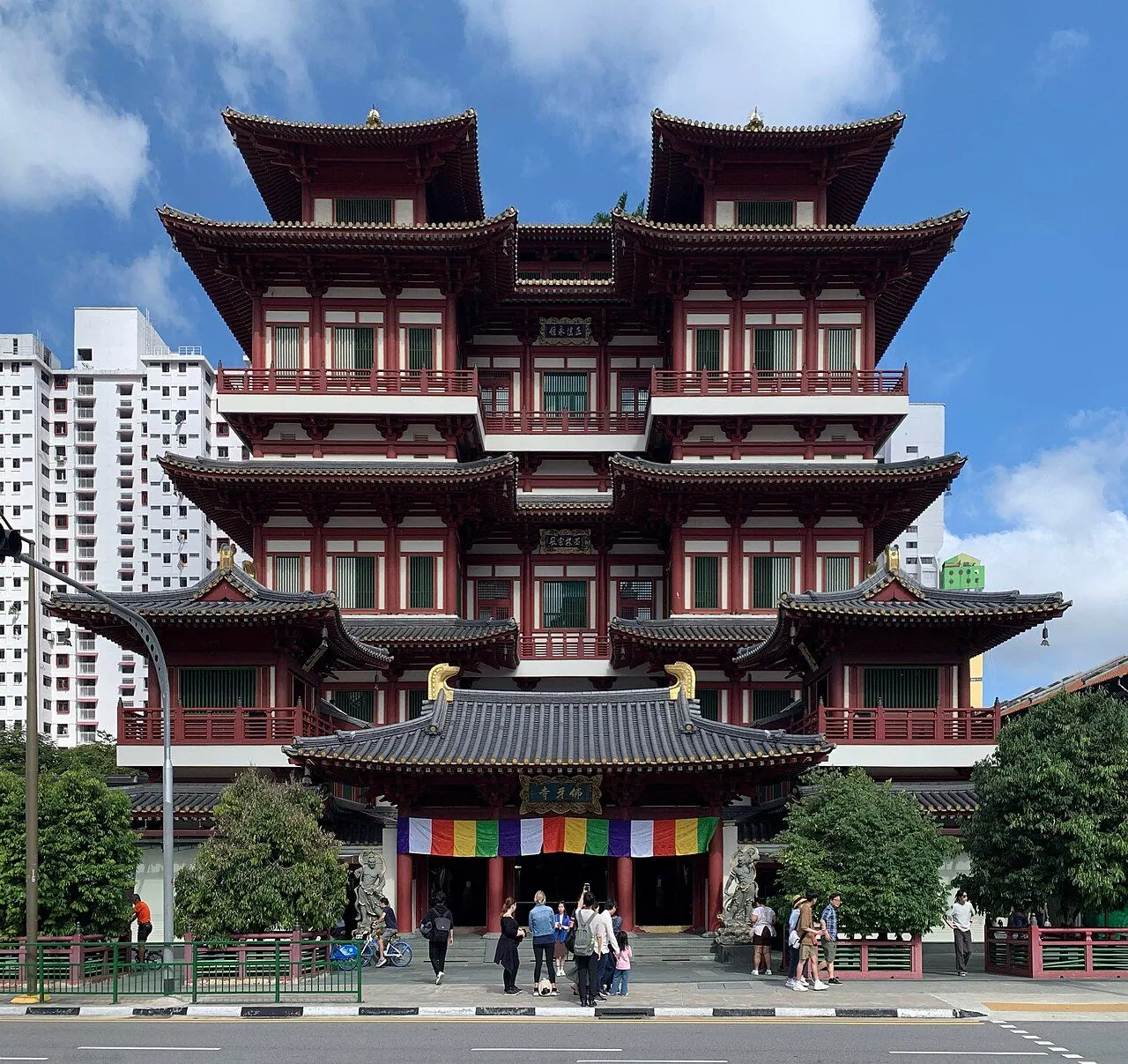
Chinatown puts several kinds of heritage and dining into a compact central setting. Buddha Tooth Relic Temple and Museum, Sri Mariamman Temple and the streets around South Bridge Road give you more than a shopping strip. Maxwell Food Centre and Chinatown Complex are useful meal anchors, while Telok Ayer's Thian Hock Keng adds another historic street to explore beyond the main souvenir lanes.
Chinatown station joins the North East and Downtown lines; Maxwell on the Thomson-East Coast Line suits the southern edge, while Outram Park serves another approach. SMRT's current network helps separate these hotel catchments. For Changi, an Expo change onto the Downtown Line can suit Chinatown station, but it is not a direct ride from the airport to every hotel in the area.
The trade-off is choosing the right street. A shophouse room near dining and visitor footfall has a different setting from a larger hotel towards Outram or the business district. Choose the Civic District for museum-led days, Katong/Joo Chiat for a more eastern food circuit, or Sentosa for resort space rather than urban heritage.
Plan it well: Buddha Tooth Relic Temple and Museum is the pictured and mapped landmark near Chinatown's southern dining streets.
Visit Singapore: ChinatownBugis and Kampong Gelam: independent shops and Malay-Muslim food
Choose this base for Haji Lane's small shops, the textile streets around Arab Street and the Sultan Mosque setting along Bussorah Street. Dining has specific local roots: Zam Zam and Victory on North Bridge Road are murtabak anchors, while Hjh Maimunah adds Malay dishes. Bugis brings larger retail and hotel buildings nearby, but the shophouse lanes are the part to favour for neighbourhood atmosphere.
Bugis connects the East-West and Downtown lines on SMRT's network. That interchange offers a useful arrival shape from Changi via Tanah Merah or Expo, followed by the walk to your address. Hotels described as Bugis can sit beside malls or towards Kampong Gelam's outer edges; the mosque pin is not a substitute for checking the station approach.
The appeal comes with visitor activity, busy dining streets and uneven proximity to the rail entrance. This is not the best base for a secluded resort routine or immediate bayfront attractions. Choose Chinatown for a different temple-and-hawker circuit, City Hall for museum concentration, or Tanglin when gardens should replace lively shopping lanes outside the hotel.
Plan it well: The pin identifies Sultan Mosque within Kampong Gelam, not Bugis station or the boundaries of the combined base.
Visit Singapore: Kampong GelamLittle India: Indian dining and temple streets
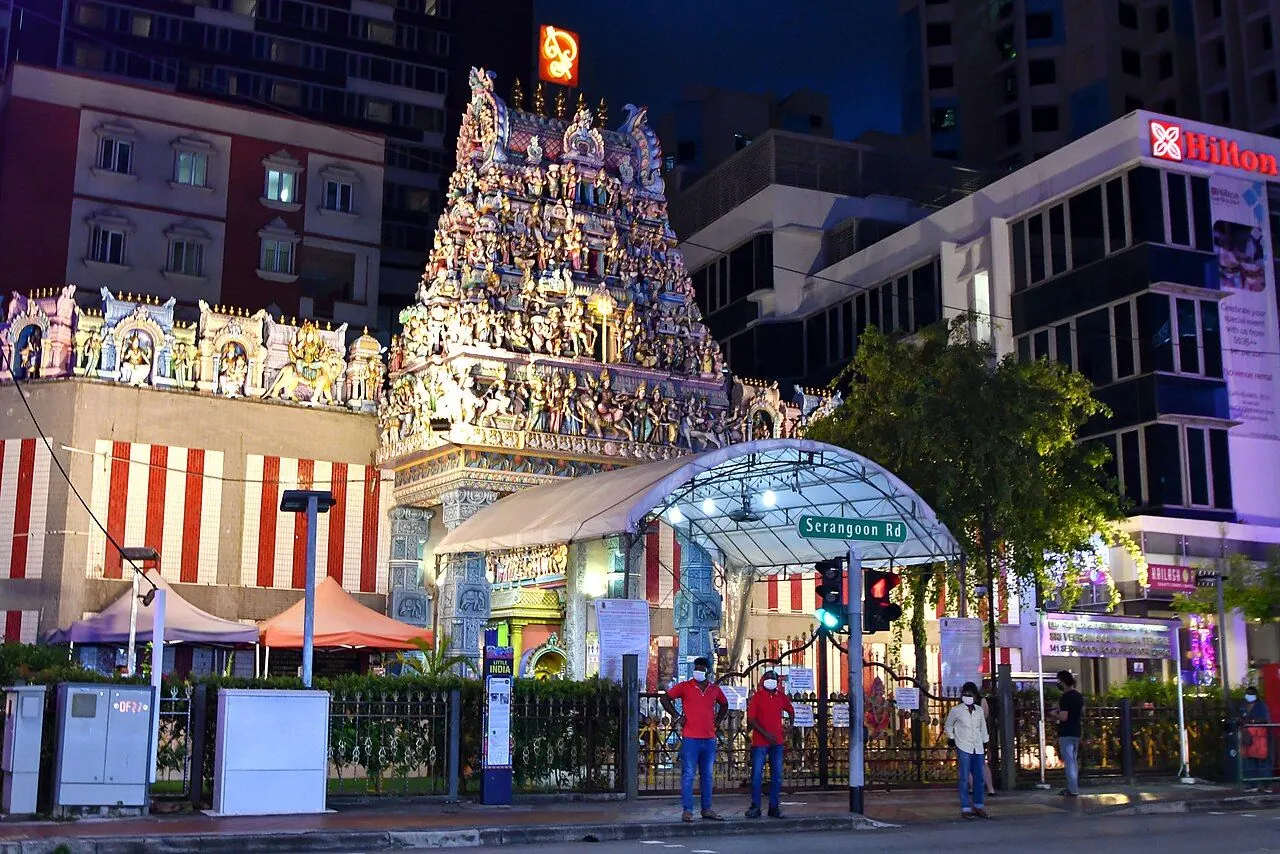
Little India is a strong choice when meals and street-level heritage are central to the visit. Tekka Centre anchors the southern end, Serangoon Road holds Sri Veeramakaliamman Temple, and Race Course Road gives you a cluster of Indian restaurants including Banana Leaf Apolo. Mustafa's retail complex lies farther north, so not every named stop sits beside the same hotel entrance.
Little India station connects the Downtown and North East lines. Farrer Park on the North East Line serves the northern hotel sector, and the distinction matters for luggage and repeated journeys. Changi's Expo interchange onto the Downtown Line is one possible route to Little India station; an address towards Farrer Park may favour a different onward connection.
The district's market and shopping activity creates a lively urban stay rather than a quiet retreat. A room on a busy road and one in an adjoining side street can have quite different surroundings. Choose City Hall for museums within the civic core, Orchard for department-store shopping, or Sentosa if swimming and resort facilities are the daily priority.
Plan it well: The photograph and map pin identify Sri Veeramakaliamman Temple on Serangoon Road. Farrer Park is a separate northern approach.
Visit Singapore: Little IndiaOrchard Road and Tanglin: shopping with a garden-facing alternative
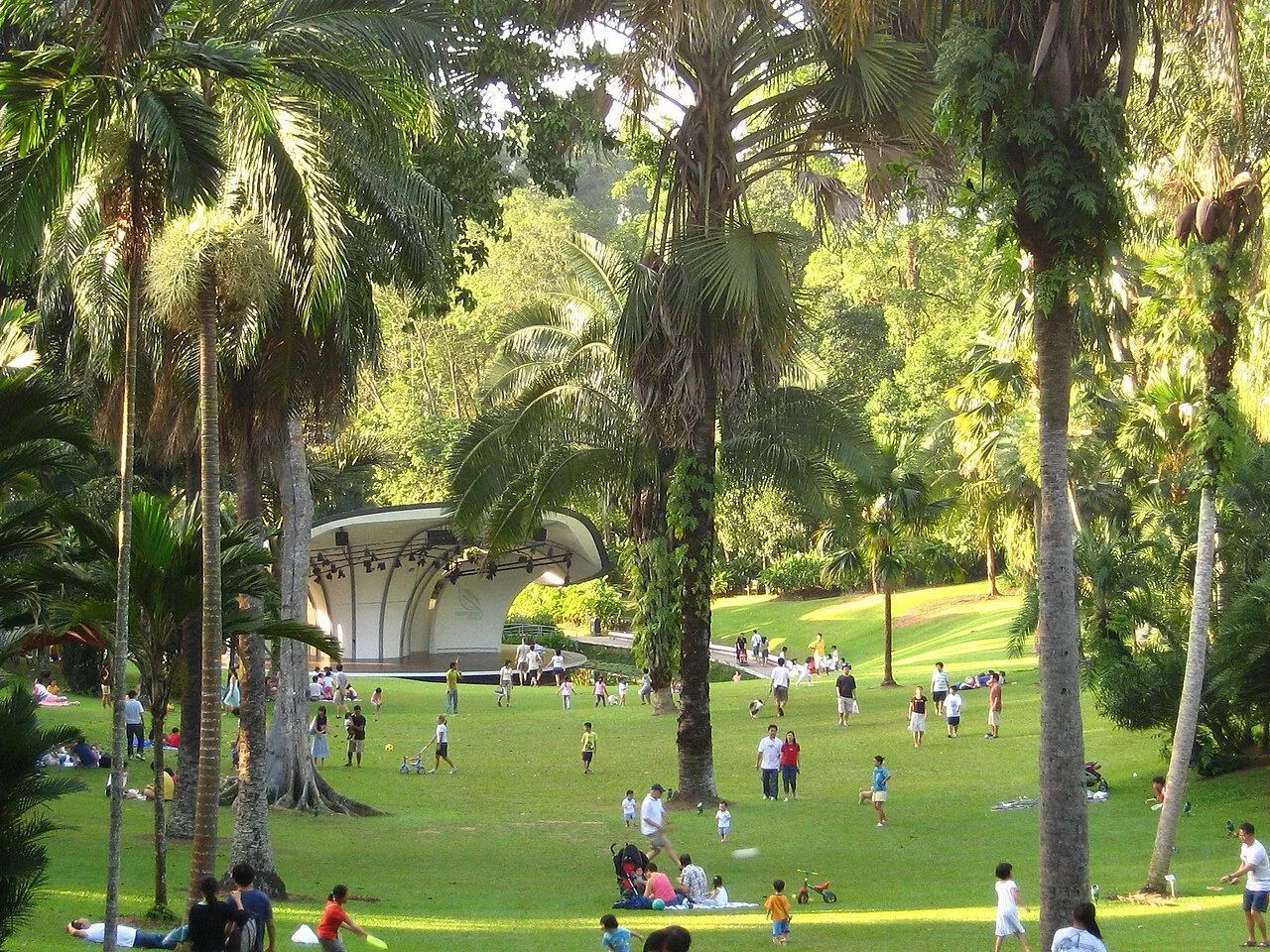
Orchard is the natural base for department stores, shopping-centre dining and the retail stretch around Orchard and Somerset. Emerald Hill offers shophouse streets and bars just off that corridor. The western Tanglin end is a distinct choice: favour it for access to Singapore Botanic Gardens through the Tanglin entrance rather than assuming the gardens sit beside every Orchard Road hotel.
SMRT's map places Orchard on the North-South and Thomson-East Coast lines, Somerset on the North-South Line, and Napier on the Thomson-East Coast Line near the garden's Tanglin approach. These are different station catchments. From Changi, rail arrival still starts with the airport branch and a city interchange; the Thomson-East Coast Line does not yet run directly into the airport.
The main compromise is a split identity: a retail-core hotel gives easier mall access, while a Tanglin address can add a journey to the central shopping cluster. Neither is a beach base. Choose Chinatown for heritage and hawker dining, City Hall for museums, or Tanglin specifically when garden visits matter more than shopping.
Plan it well: The photograph and pin show Singapore Botanic Gardens, the garden anchor for the Tanglin end of this base, not Orchard Road's shopping frontage.
Visit Singapore: Orchard RoadKatong and Joo Chiat: Peranakan heritage and eastern food streets
Katong and Joo Chiat reward travellers who want the neighbourhood to shape their meals. Katong laksa, Kim Choo's dumpling-and-heritage setting and the shophouse streets around Koon Seng Road give the eastern district its own identity. Sri Senpaga Vinayagar Temple adds a local landmark. The Intan is a private Peranakan collection with arranged visits, not an attraction to assume you can enter unannounced.
Use the current SMRT map rather than an older guide that lists only Eunos or Paya Lebar. Marine Parade and Tanjong Katong on the Thomson-East Coast Line provide newer approaches, but a Joo Chiat Road address can still need a walk or local connection. Changi rail access starts via Tanah Merah or Expo; being on the east side does not create a direct airport train to the hotel.
The trade-off is distance from the Civic District and the Gardens, plus variation between coastal-edge hotels and the inland shophouse streets. Choose Chinatown for central heritage dining, Orchard for retail concentration, or Sentosa for a beach-and-resort stay rather than a food neighbourhood.
Plan it well: The pin is Sri Senpaga Vinayagar Temple, a Katong landmark with a coarse Wikidata coordinate, not a hotel entrance.
Visit Singapore: Katong-Joo ChiatSentosa: beaches and resort time on the island
Sentosa is a deliberate choice to make beaches and resort facilities the centre of the trip. Siloso, Palawan and Tanjong are separate beach settings; Resorts World Sentosa concentrates attractions and its own dining around a different part of the island. A beach hotel, an Imbiah-side stay and a Resorts World address should therefore be compared as distinct locations, not one interchangeable resort zone.
HarbourFront on the North East and Circle lines is the mainland rail approach. Official access information lists the Sentosa Express from VivoCity, the boardwalk and the RWS8 connection among the onward options. The final island leg still depends on your hotel. From Changi, a city transfer precedes that connection; a direct road transfer may be preferable with luggage for some properties.
The compromise becomes obvious on a museum-heavy itinerary: every mainland outing introduces another connection, and island dining is not the same everyday hawker circuit as Chinatown or Little India. Choose Marina Bay for landmark attractions without an island transfer, or the Civic District if most of your days will be spent exploring central Singapore.
Plan it well: The map pin is a representative island point, not a beach access point or a particular resort entrance.
Visit Singapore: Sentosa IslandArriving and choosing the useful station
Singapore's stations are useful only when matched to the correct side of the neighbourhood. Check the final walk as carefully as the rail connection.
Changi rail requires a connection
Changi Airport lists rail connections through Tanah Merah for the East-West Line and Expo for the Downtown Line. Check the route for your destination and terminal; the Thomson-East Coast Line is not a current direct airport arrival route.
Changi Airport: leaving the airportUse the live MRT network
Compare City Hall, Bayfront, Bugis, Chinatown, Little India and Orchard with the actual hotel address. For the east coast, Marine Parade and Tanjong Katong are now important options that older tourism maps may omit.
SMRT: journey planner and networkSentosa has a final island leg
HarbourFront and VivoCity are mainland approaches. Choose the Sentosa Express, boardwalk, road or listed resort connection for the property you actually booked rather than ending the plan at the MRT station.
Resorts World Sentosa: getting hereTanglin is a specific garden approach
NParks identifies the Botanic Gardens' Tanglin entrance at the Napier/Holland Road end. This supports the garden-facing Tanglin choice, not a claim that all Orchard Road hotels sit beside the gardens.
Singapore Botanic Gardens: visitor informationFind a Singapore hotel in your chosen neighbourhood
Compare Singapore hotels by the station and streets you will use most often. In particular, distinguish Bayfront from the opposite bay shore, Orchard's retail core from Tanglin, and Sentosa's beaches from its attraction complexes before choosing a property.
Explore Singapore hotels