
Tashkent city guide
10 things to do in Tashkent
Combine Tashkent's working bazaar, Islamic heritage and craft museums with broad central squares, a theatre evening and an architectural journey through the metro.
Plan your visit
Tashkent is not just a stop between flights and the Silk Road cities. Its market, religious complexes, museums and metro reveal different layers of the capital, but they do not all sit in one walkable old town. Plan by neighbourhood, use transport between clusters and leave time to eat and look closely.
Start with the working market at Chorsu
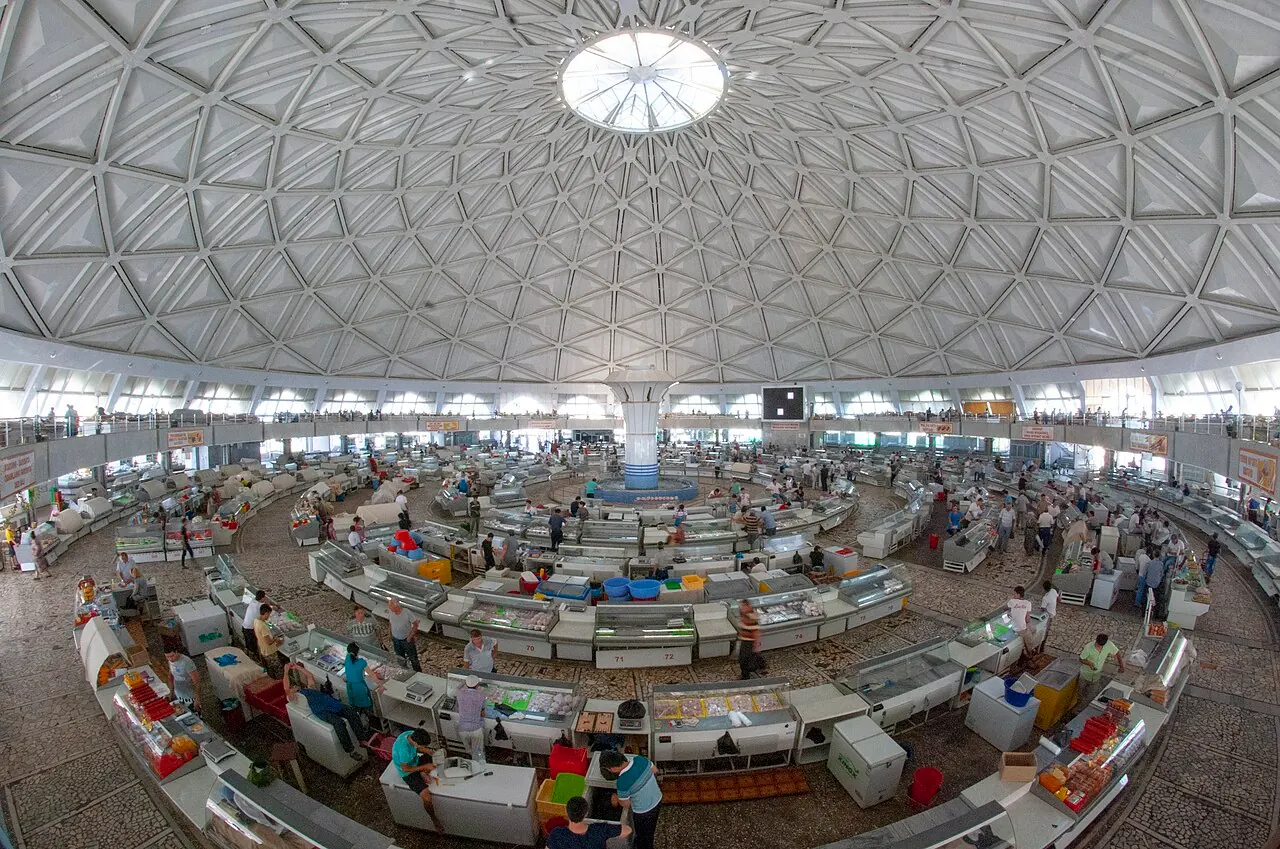
Chorsu is a working bazaar, so the most useful way to visit is to follow what people are buying rather than hunt only for souvenir stalls. The large covered market brings produce, spices and everyday shopping into one memorable setting. Uzbekistan's tourism organisation highlights its food traditions, but the first reward is observation: look at how goods are arranged, where local shoppers pause and how the central dome changes the feeling of the space.
Give yourself a circuit before purchasing, then ask about quantities and prices in a clear, friendly way. For a food stop, choose something prepared in front of you and clarify what is included rather than assuming every tasting is complimentary. Avoid blocking narrow aisles while taking photographs, and ask before photographing vendors closely. Kukeldash Madrasah makes a natural nearby second stop, but do not let that appointment cut short the market's everyday rhythm. A simple purchase and conversation can be more revealing than rushing through every aisle.
Plan it well: Carry smaller notes and agree on the quantity and total price before accepting a purchase.
Uzbekistan Tourism: the food traditions of ChorsuLook beyond the portal at Kukeldash Madrasah
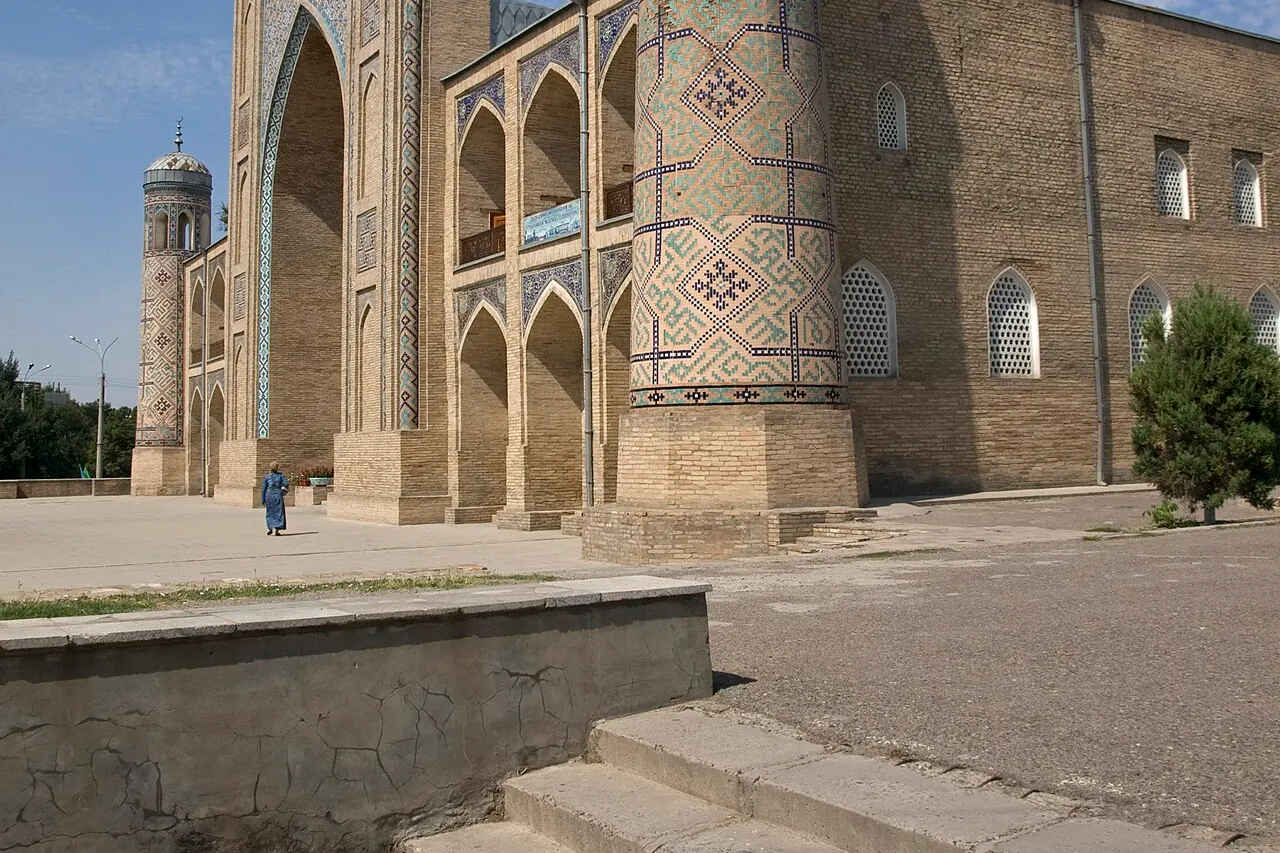
Kukeldash Madrasah offers a quieter architectural counterpart to Chorsu's busy market. Its monumental brick entrance is a good starting point, but the interest is not limited to a single photograph of the portal. The national tourism source explains the building's sixteenth-century origins and later restoration, and identifies its continuing educational role. That helps distinguish it from a ruin or a museum whose rooms are simply arranged for sightseeing.
Ask which areas are open to visitors before entering the courtyard, and respect any teaching or religious activity taking place. Notice the relationship between plain brick surfaces and the more decorative parts of the entrance rather than expecting every corner to look like a heavily tiled monument in Samarkand. Pair the stop with Chorsu to keep travel efficient, then continue to another neighbourhood by transport. If courtyard access is restricted, a thoughtful exterior look remains worthwhile without trying to follow someone through a private doorway.
Plan it well: Confirm current visitor areas; a working madrasah is not automatically open throughout.
Uzbekistan Tourism: Kukeldash MadrasahAllow a proper visit to the Hazrati Imam complex
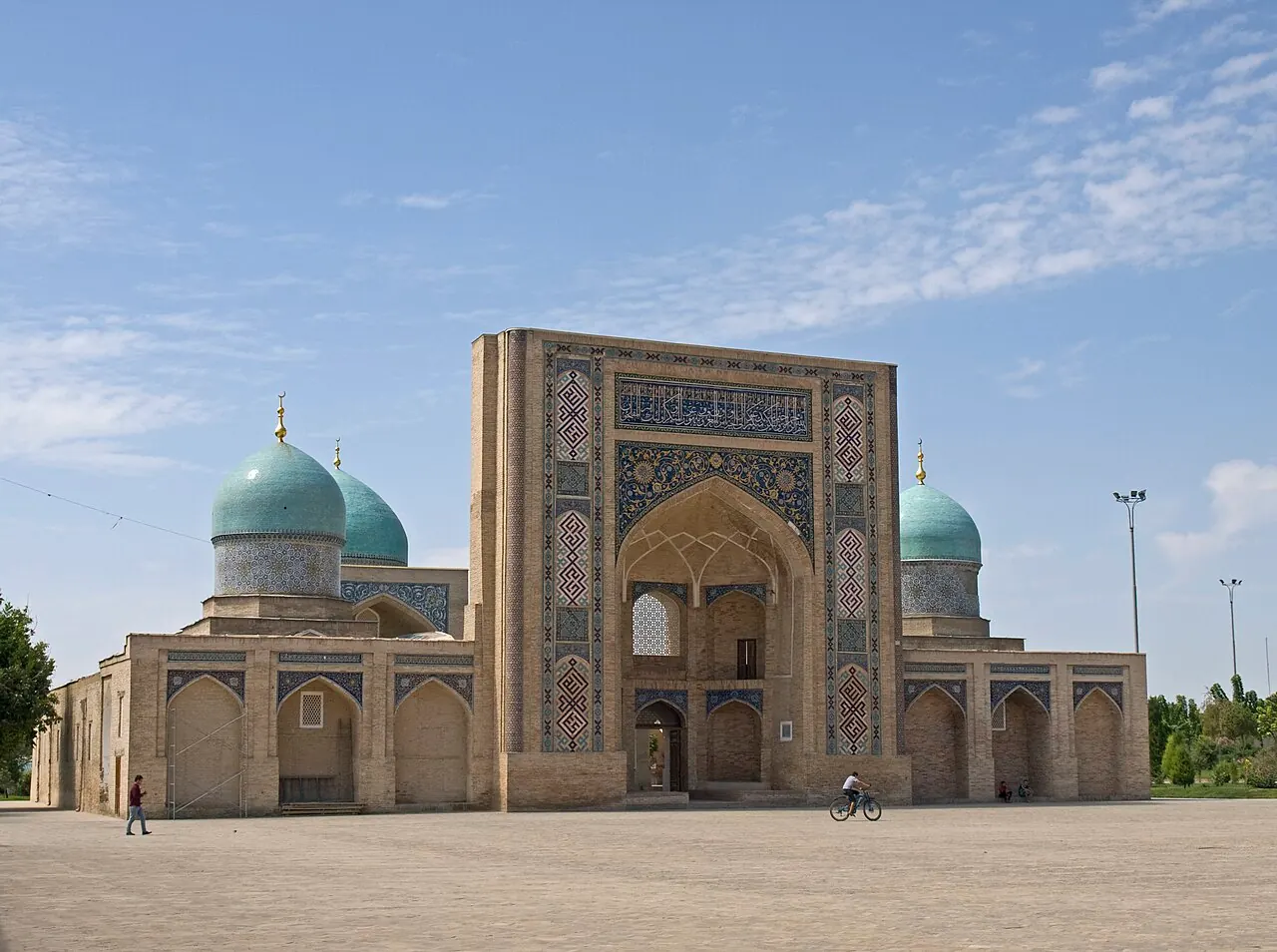
Hazrati Imam is an ensemble of religious and historic buildings, not a single mosque you can understand from the edge of the square. The national tourism information introduces the complex and its manuscript heritage, while the madrasah portals and surrounding spaces provide visible clues to its different functions. Begin by identifying the buildings on a current site plan or with a guide. Older maps may use Khast Imam or Khazrati Imam for the same district.
Choose what you want to enter and confirm the admission and visitor rules for that particular building. Important religious manuscripts deserve careful interpretation; do not repeat confident stories about their origins just because they appear in a tour sales pitch. Modest clothing and discretion around worshippers matter throughout the complex. The open square can be exposed in hot weather, so bring water and avoid making this a rushed midday photo stop. Arrange transport from Chorsu rather than assuming the whole old-city cluster is a short continuous stroll.
Plan it well: Use the current site plan and check each building's visitor and photography rules separately.
Uzbekistan Tourism: Khazrati ImamCompare craft traditions at the Applied Arts Museum
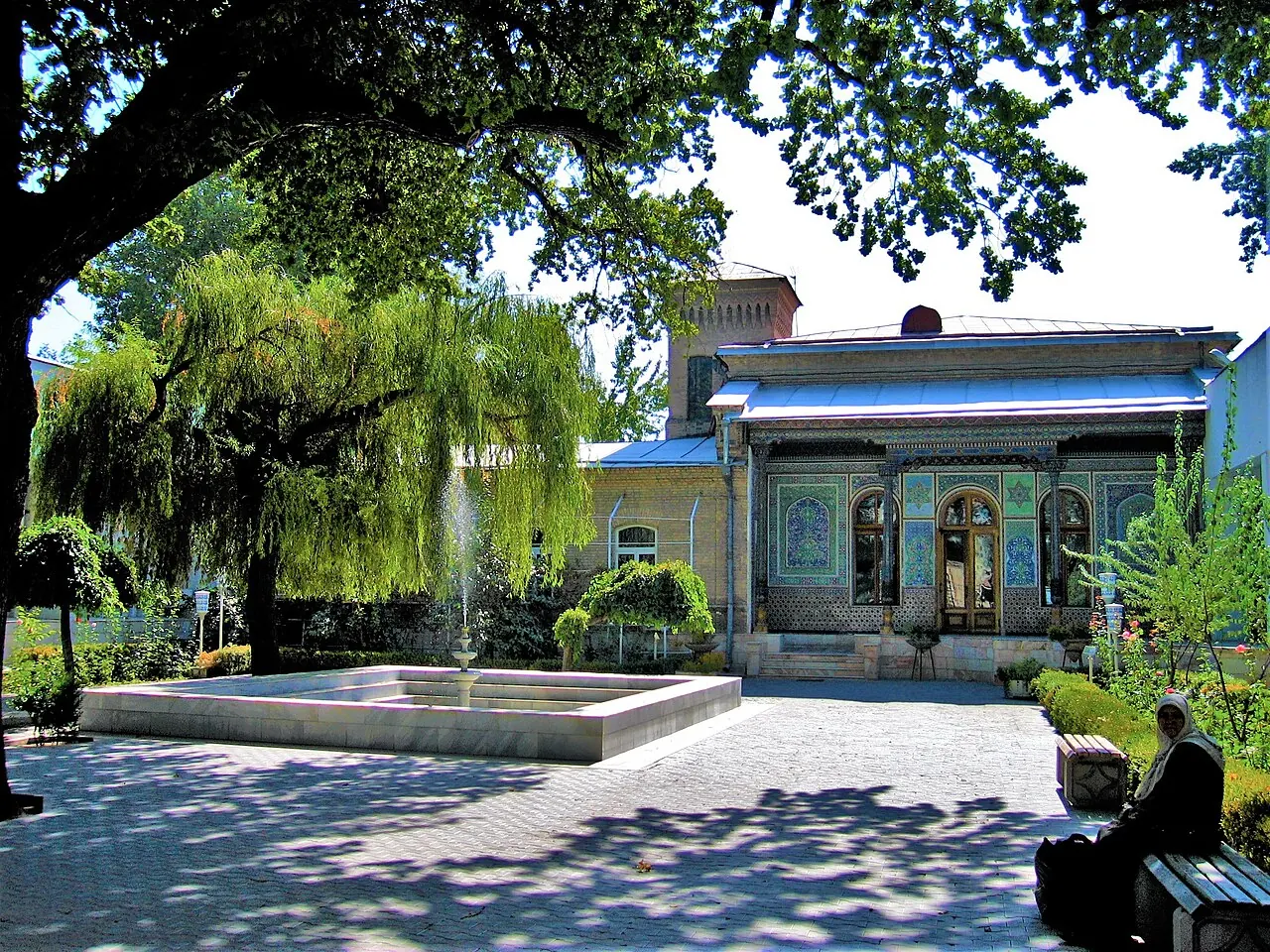
The Museum of Applied Arts gives textiles, ceramics and decorative work a setting that is itself part of the visit. Tashkent's city administration describes the museum in the former Polovtsev residence and explains its craft collections. Look at the rooms and courtyard as well as the objects; the architecture helps you understand why decoration matters in everyday spaces. This is a useful contrast with the larger political and historical narratives presented elsewhere in the capital.
Pick two materials to compare closely, perhaps embroidered textiles and painted ceramics, instead of reading every object label at the same speed. Notice differences in repeated patterns, colour and technique, then use that attention when browsing market craft later. Ask staff about current exhibitions and photography restrictions rather than assuming all display rooms are available. The museum is not beside Chorsu, so plan it as a separate central-city stop with transport. A compact visit here can fit comfortably before an evening at the Navoi Theatre.
Plan it well: Study a few materials closely; this is more useful than trying to record every display.
Tashkent City Administration: Applied Arts MuseumRead the Timurid story in its dedicated museum
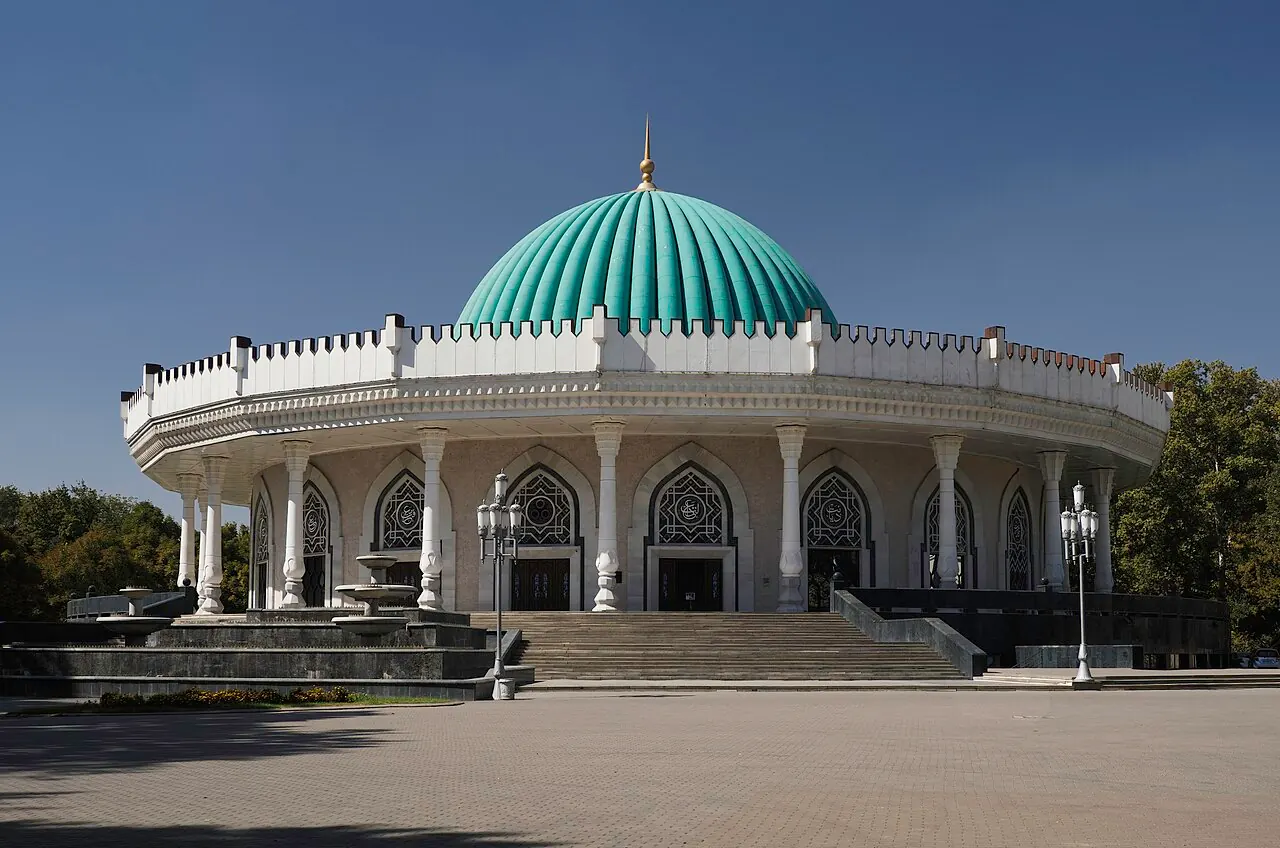
The State Museum of the Timurids gives a focused account of Amir Timur and the dynasty associated with him. The city tourism source identifies the museum as a dedicated institution opened in 1996, rather than a general survey of all Uzbek history. Begin with that distinction in mind. Its green dome is an unmistakable exterior landmark, while the displays offer a chance to connect names and places you may encounter later in Samarkand.
Read the presentation critically and take time with a few objects or maps instead of treating every label as an unqualified account of a complicated period. If you want deeper context, a guide can help distinguish historical evidence from later national commemoration. Combine the visit with the adjacent square, giving the museum the quieter part of the day and the gardens a relaxed break afterwards. Check which galleries are operating and whether any temporary exhibition needs separate admission before committing to a longer stay.
Plan it well: Keep this museum distinct from a general history museum when choosing your limited museum time.
Visit Tashkent: State Museum of the TimuridsPause in the gardens of Amir Timur Square
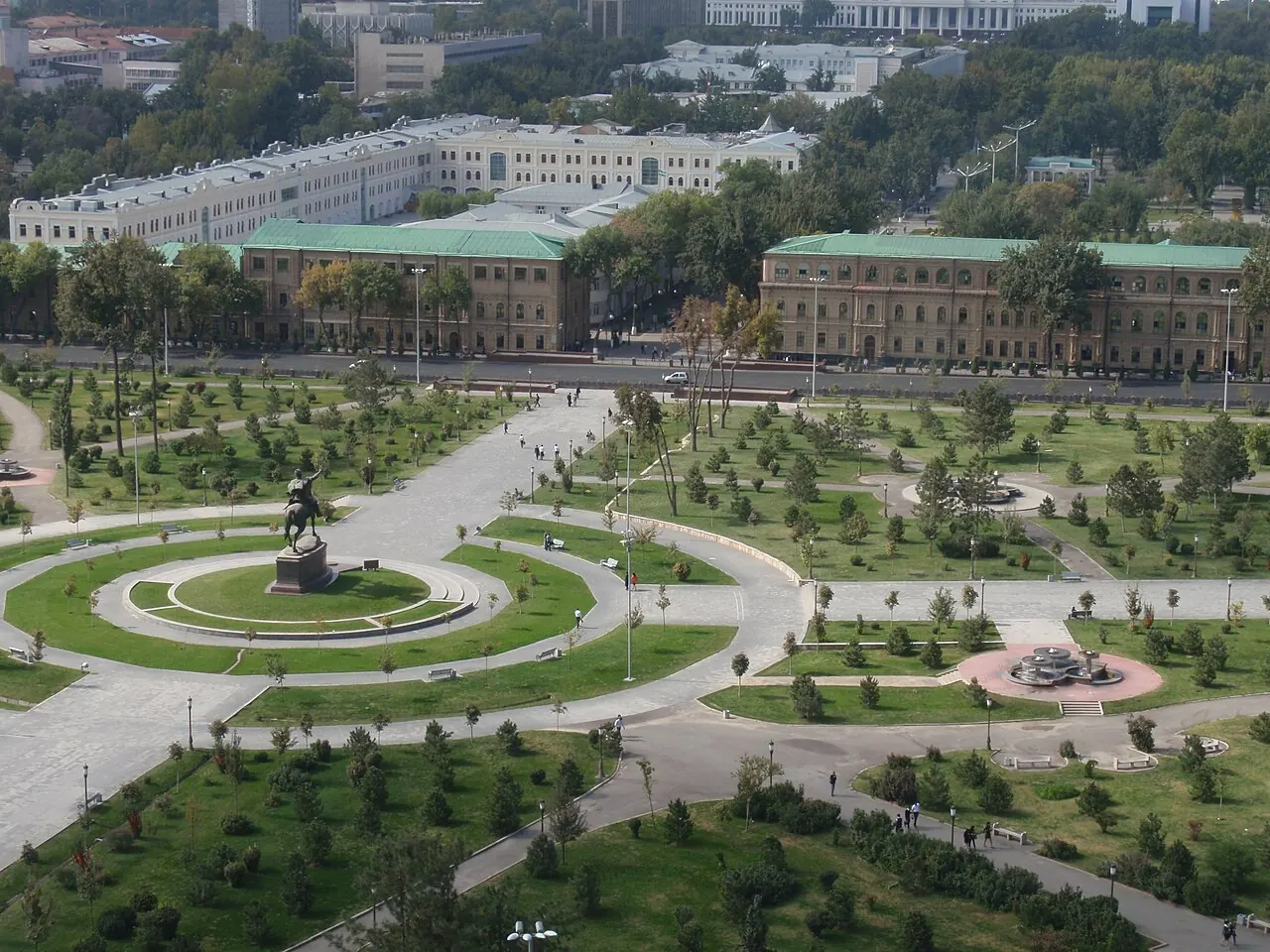
Amir Timur Square makes the capital's commemorative story visible outdoors. The national tourism information describes the central equestrian monument and the square's role in the city, but the gardens also make it a useful place to slow down. Walk around rather than stopping only in front of the statue. Looking towards the surrounding buildings reveals a different architectural scale from the religious complexes and market area of old Tashkent.
Keep the square with the Timurid Museum so that the indoor displays and public monument inform one another. A short shaded rest can be more valuable than adding another cross-city stop, particularly during warm weather. The monument is a meeting point, but choose an exact side if travelling with a group because several paths lead into the gardens. Do not assume that every surrounding street is a pedestrian route; follow marked crossings when continuing through the centre. This is a pause in the itinerary, not a substitute for the museum's historical context.
Plan it well: Pair the gardens with the Timurid Museum and use marked crossings beyond the square.
Uzbekistan Tourism: Amir Timur SquareSee the changing civic landscape at Independence Square
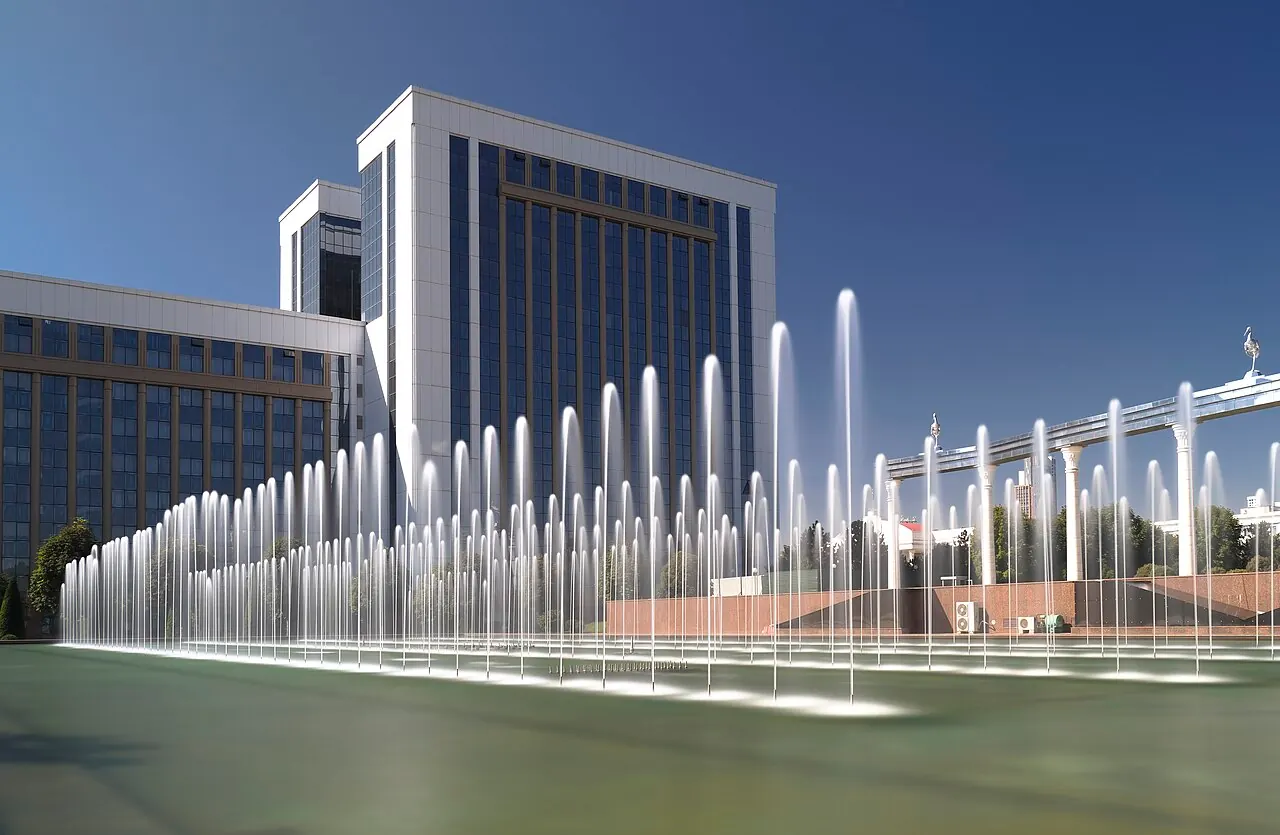
Independence Square, or Mustaqillik Maydoni, brings fountains, green space and government architecture into one civic landscape. The city administration's architectural account explains that the square has been repeatedly reshaped, particularly following the 1966 earthquake and in the early twenty-first century. That makes it more interesting than a claim that everything here belongs to one period. Look at how planted areas and formal approaches have changed the scale of the open ground.
Follow the paths that are available on your visit and respect any barriers or official-event arrangements. Government buildings are not part of an assumed public interior tour. The fountains and gardens provide a comfortable break when conditions are suitable, but shade and access differ across the site. Use the nearby metro connection to continue the day rather than extending the walk along every major road. A short, attentive visit can reveal how the modern capital presents itself without requiring a long explanation at each monument.
Plan it well: Stay in permitted public areas and accept route changes during official events.
Tashkent City Administration: Mustaqillik SquareConsider the city view from Tashkent TV Tower
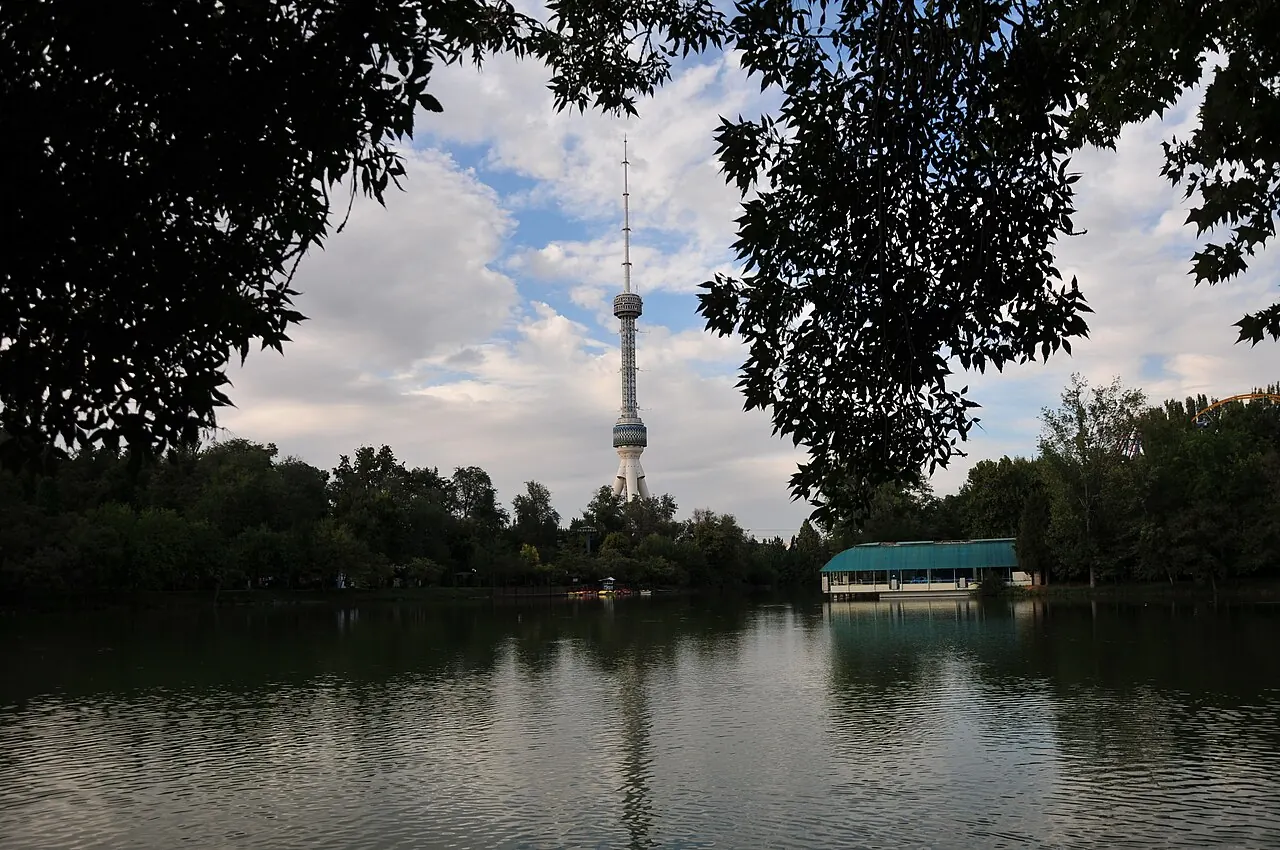
Tashkent TV Tower gives the itinerary a vertical perspective, but it is also an engineering landmark. The national tourism source describes the lattice structure and supporting legs, along with visitor excursions and observation facilities. Look at the structure from outside before deciding to go up. The view is most useful when visibility is good enough to show the city's spreading neighbourhoods; a hazy day may favour a museum or metro visit instead.
Confirm the current visitor arrangements directly, including any identification, security or guided-entry requirements. Restaurant access and an observation visit may not be the same booking, so clarify what you are paying for if you want a meal. This is a separate northern stop rather than a quick detour between the central squares. Allow transport time and decide what you will do if the visit is unavailable. The exterior still offers an interesting look at a very different kind of city landmark.
Plan it well: Ask about current access requirements and visibility before purchasing a tower visit.
Uzbekistan Tourism: Tashkent TV TowerReserve an evening at the Alisher Navoi Theatre
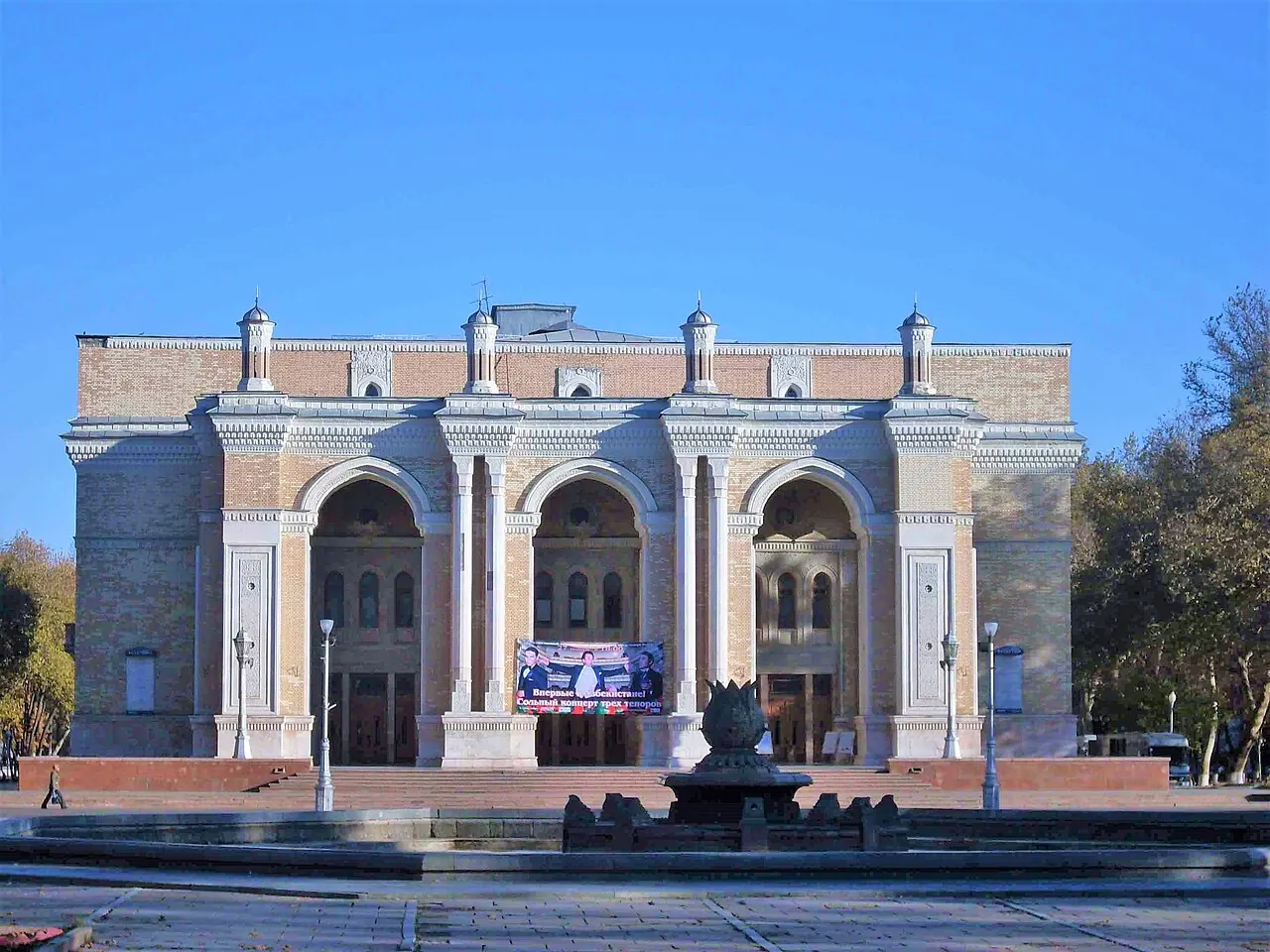
The Alisher Navoi Theatre offers a cultural evening that is distinct from daytime monument visits. National tourism information presents the theatre as a major opera and ballet venue, and its arched exterior is worth looking at before the performance. Choose something from the actual programme rather than assuming a show will be available every evening. A ballet, an opera and a concert can involve very different lengths and levels of interest for your group.
Confirm the performance date, the official ticket channel and the seating arrangement before building dinner plans around it. Allow arrival time for entry procedures and finding your seat, especially if you have spent the afternoon in another district. The surrounding public space can be a pleasant pre-show pause, but do not assume a fountain display follows a fixed schedule. If no suitable event is available, keep the exterior as a short architectural stop and spend the evening elsewhere rather than seeking unofficial access to the auditorium.
Plan it well: Check the current programme first, then reserve the evening and nearby meal around your ticket.
Uzbekistan Tourism: Grand Theatre named after Alisher NavoiUse Kosmonavtlar as an architectural metro stop
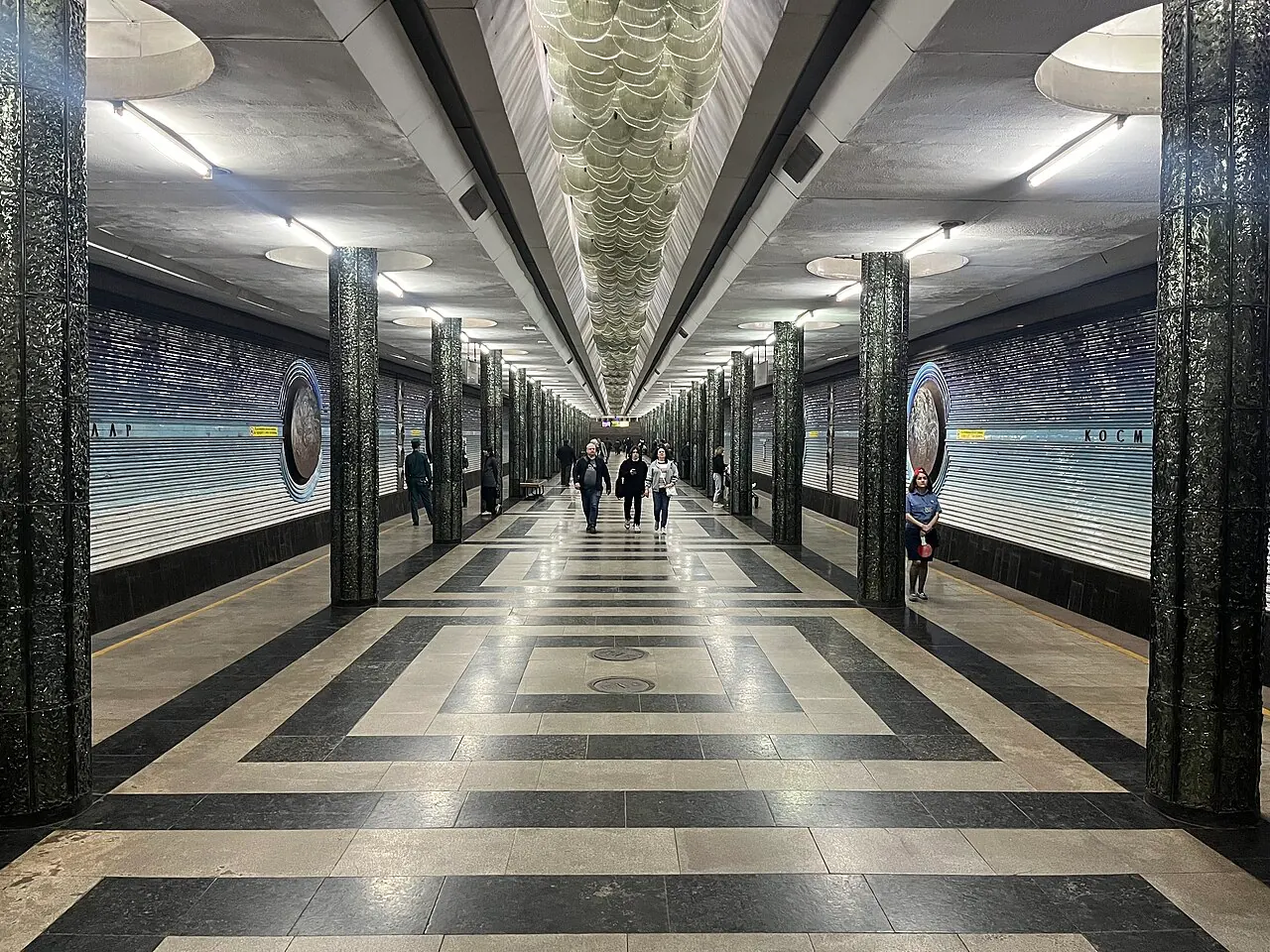
Kosmonavtlar makes a metro ride part of the sightseeing rather than merely the gap between attractions. Its decorated platform and space-themed imagery reward a slower look at walls, columns and ceiling together. The national tourism source treats Tashkent's metro as an architectural attraction and emphasises the variety of artistic decoration across stations. Choose this particular station for a focused visit, then compare it with another station you actually need for your journey.
Remember that the station is first a working transport space. Stand clear of doors and platform edges, avoid blocking passengers and follow staff instructions about photography. Do not photograph security activity or people closely without permission. Check the current route map rather than relying on an old diagram, and buy whatever ticket or payment option is valid on the day. Keeping the visit within a useful journey makes it both more efficient and more revealing than repeatedly entering stations just to collect pictures.
Plan it well: Visit outside the busiest commuting period and keep passenger circulation clear.
Uzbekistan Tourism: Tashkent MetropolitanHow to spend two days in Tashkent
Day 1: market life and religious heritage
Start at Chorsu with time to browse and eat, then visit nearby Kukeldash Madrasah if its visitor areas are open. Take transport to Hazrati Imam for a properly paced complex visit. Choose the Applied Arts Museum later if opening arrangements and your energy allow, then make a theatre evening only if you have a confirmed performance.
Day 2: central squares, a museum and the metro
Begin with the Timurid Museum and Amir Timur Square. Continue to Independence Square using a sensible walking route or transport, then build Kosmonavtlar into a metro journey. Choose a TV Tower excursion for the remaining afternoon only when visibility and visitor access are suitable; otherwise keep more time for a museum or meal.
Before you go
Group stops by district
The bazaar and Kukeldash fit together, as do the Timurid Museum and Amir Timur Square. Hazrati Imam, the Applied Arts Museum and the TV Tower need their own transport planning.
Respect religious and passenger spaces
Dress modestly at religious sites and ask about visitor areas. On the metro, keep paths clear, follow staff photography instructions and avoid security activity in pictures.
Confirm performances and special admissions
Check current museum access, tower visitor arrangements and the actual theatre programme. This guide deliberately does not promise ticket prices or fixed opening hours.
Keep documents and entry checks in order
Confirm visa and registration requirements for your nationality before travel, and ask your accommodation how guest registration is handled. Read current official travel and transit advice rather than relying on old forum itineraries.
FCDO: Uzbekistan travel adviceLeave room for heat and market breaks
Take water on longer outdoor visits, use shade when available and plan a seated meal between neighbourhoods. Agree food quantities and prices before ordering at market stalls.
Where to stay in Tashkent
For a first visit, consider a central base with a convenient metro connection and a clear route to your evening plans. A hotel near Amir Timur Square or the central theatre area keeps several stops close, while staying near Chorsu prioritises the bazaar and old-city cluster. Compare actual walking routes and transport costs rather than a generic central label. Confirm the room, cancellation terms, airport arrival arrangements and how the property handles visitor registration.
Explore Tashkent hotels