
Hotels in Dakar, SN
Appart Place De l'independance
Smoke-free
About this property
If you want to feel like you’re at home no matter where you are, choose this — apartment "Appart Place De l'independance" is located in Dakar. This apartment is located in 3 km from the city center.
Location
Free Wi-Fi on the territory will help you to stay on-line. If you travel by car, there’s a parking zone. For the free movement around the city, the apartment offers a transfer for you. At the guests’ disposal, there’s also an ATM.
At the apartment
Popular facilities
Good to know
- Check-in
- From 14:00
- Check-out
- Until 12:00
- Airport shuttle
- XOF 35000
- Pets
- Not allowed
- Languages
- Multi-language staff
- Smoking
- Smoke-free
Rooms
Choose dates to see live prices
See rooms and prices for your stay.
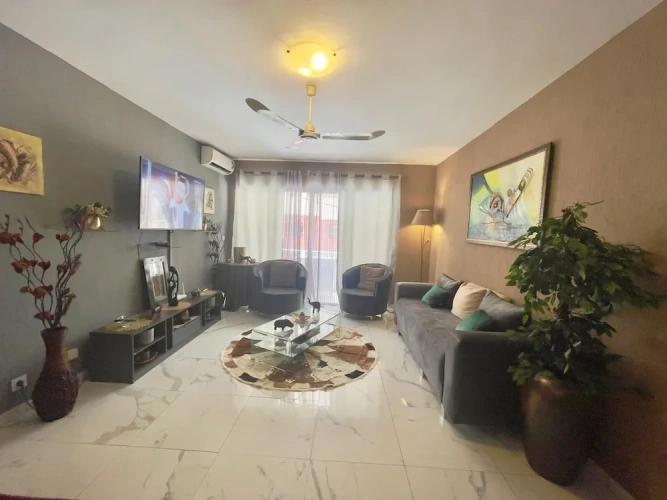 1 / 26
Comfort Quadruple Apartment
- 4 guests
- Private bathroom
- Air conditioning
- Balcony
- Blackout blinds
- Dining area
- Heating
See all facilitiesShow Less
- Iron
- Kitchen
- Microwave
- Private bathroom
- Safe
- Toiletries
- Towels
- TV
- Washing machine
- Wi-Fi
1 / 26 Comfort Apartment
- Private bathroom
- Air conditioning
- Balcony
- Blackout blinds
- Dining area
- Heating
See all facilitiesShow Less
- Iron
- Kitchen
- Microwave
- Private bathroom
- Safe
- Toiletries
- Towels
- TV
- Washing machine
- Wi-Fi
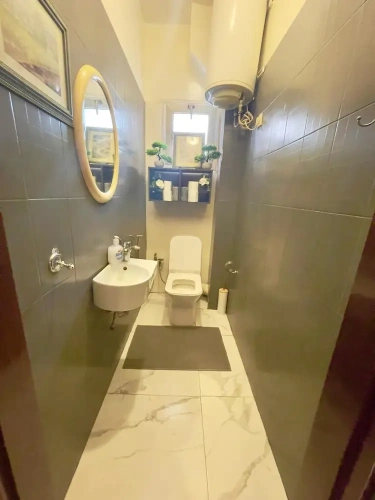 1 / 26
Comfort Quadruple Apartment with balcony
- 4 guests
- Private bathroom
- Air conditioning
- Balcony
- Blackout blinds
- Dining area
- Heating
See all facilitiesShow Less
- Iron
- Kitchen
- Microwave
- Private bathroom
- Safe
- Toiletries
- Towels
- TV
- Washing machine
- Wi-Fi
Guest reviews
Recent reviews shared by hotel guests
8.6/10
10/10
A lovely central square in Dakar, with pleasing symmetry and a thoughtful layout. Buildings surround it, and people come to enjoy themselves at an easy pace. It’s a nice place to relax morning or evening, or really any time. Just watching people move around is fun.
8/10
It’s a great open-air spot where people sit in the park and vendors sell their goods. There’s also a big “I heart DAKAR” sign at one end that draws people taking souvenir photos. The square represents Senegalese independence, with a huge concrete replica of the flag. The fountains near the flag are in disrepair, and the concrete flag needs another coat of paint. The plaza deserves some attention. Tourist buses used to stop so people could walk around and take photos for social media, but they’re no longer allowed to stop.
10/10
Place de l’Indépendance has a real sense of Dakar’s daily life and history. Historic buildings, banks, and busy streets surround the square, where people pass with purpose and conversations fill the air. There’s a strong feeling of national pride. It’s lively rather than quiet, a good place to take photos and watch the city move. If you want to get a feel for Dakar beyond its beaches, this is worth a visit.
10/10
Place de l'Indépendance tells a complicated story of Senegal, from colonial rule to independence, and remains part of the country’s cultural memory. Established in 1857 as Dakar was founded, the square had no name at first. It became the center of French colonial administration, with offices such as the Gouvernance governor's office and Chambre de Commerce. Dakar replaced SaintLouis as the capital in 1902. In 1960, after independence, the square took its current name and became a symbol of sovereignty. A fountain with lions, Senegal's national emblem, replaced colonial imagery. The square still serves public life, hosting Independence Day parades, national celebrations, markets, and cultural festivals. Its colonial architecture and busy Senegalese surroundings make it a living record of resilience. The historical record also carries unresolved tensions. Nearby Gorée Island, a UNESCO site about 2.32 miles away, is associated with the history of slavery, while the square itself recalls both colonial authority and later independence. The Théodore Monod Museum, about 0.58 miles away, preserves African art and history and adds context to stories of resistance and cultural continuity. French colonial rule extracted Senegal’s resources. Peanuts were pushed as a cash crop under coercion, and railways built between 1882 and 1923 carried harvests to ports for export. That entrenched monoculture, impoverished farmers, and weakened local food security. Gold and Gum Arabic were also taken through forced labor, enriching French merchants while suppressing local industries. By 1865, Governor Louis Faidherbe had entrenched this extractive system and called Senegal the pearl of the French Empire. Gorée Island, though not on the square itself, was a major slave trading hub. From the 15th to 19th centuries, millions of enslaved Africans were processed there. Captives were held in coastal forts such as the House of Slaves before being shipped across the Atlantic, with an estimated 15-20% dying during the journey. The Wolof, Senegal’s largest ethnic group, suffered depopulation, fractured kinship networks, and internal conflicts as some elites collaborated with European traders. The effects included lasting social divisions and psychological trauma. Colonial policy also deepened regional inequality. French citizenship went only to residents of four coastal communes, Dakar, SaintLouis, Gorée, and Rufisque, leaving inland populations without the same rights and resources. After independence, those policies developed into regional poverty gaps. Coastal Dakar’s poverty rate is about 25%, while inland areas such as Matam exceed 80%. Senegal remains dependent on raw material exports following colonial extraction. Oil accounts for 15% of exports, phosphates 13%, and fish 10%, while overfishing and unstable prices make economic stability harder. Despite GDP growth of 7% in 2024, 70% of people face poverty. Youth unemployment contributes to risky migration, and thousands have died attempting Atlantic crossings to Europe. In 2025, President Bassirou Diomaye Faye launched an initiative to rename streets, including replacing Avenue Faidherbe with Senegalese heroes such as musician Youssou Ndour, as a way to reclaim public memory. Some argue that economic justice, including lower rice prices, must accompany symbolic changes. As one citizen put it, reducing the cost of living matters more than new street signs.
10/10
I spent a lovely, peaceful evening at this beautiful place. It was a really pleasant way to spend the evening.
Amenities
Everything available at this property
10 Facilities
General Services
3 available- ATM
- Smoke Free Property
- No elevators
Meals
1 available- Breakfast
Internet
1 available- Free Wi Fi
Transfer
1 available- Airport transportation
Languages
1 available- Multi Language Staff
Parking
1 available- Parking
Pool and beach
1 available- Next to the beach
Pets
1 available- Pets Not Allowed
What's nearby
Explore attractions, restaurants and transport around the hotel
60 places nearby
Closest Bus Place de l’Indépendance
69 m 1 min walk
Closest Ferry Dakar
556 m 7 min walk
Top attraction nearbyCasino du Port
662 m 8 min walk
Dining nearby 20 Restaurants
69 m 1 min walk
Attractions
20- Casino du Port662 m 8 min walk
- The Museum of Black Civilisations894 m 11 min walk
- Grand Mosque of Dakar1.4 km 18 min walk
- Anse Bernard baignade1.4 km 18 min walk
- Rond-Point Sahm2.8 km 35 min walk
Restaurants
20- Le Coste dakar69 m 1 min walk
- Restaurant Africain Le Ngalam79 m 1 min walk
- Le Rond Point99 m 1 min walk
- Le Layal133 m 2 min walk
- TASTY BOX140 m 2 min walk
Transit
20- Aéroport International Blaise-DiagneAirport38.6 km
- Place de l’IndépendanceBus69 m 1 min walk
- Hôtel de villeBus225 m 3 min walk
- Hôtel de ville de DakarBus228 m 3 min walk
- AlybabaBus265 m 3 min walk
Stay rules
Important conditions for your stay
Check-in14:00 – 22:00
Check-out12:00
Fees and optional services
Deposit
Deposit required
Transfers
One-way Airport shuttle - Extra charge may apply
Hotel information
- Total rooms
- 1
Electricity
- Voltage
- 230 V
- Frequency
- 50 Hz
- Socket types
- C, D, E, K