
Karlovy Vary city guide
10 things to do in Karlovy Vary
Follow the Tepla through contrasting colonnades, climb above the spa streets and leave room for art, restored bathing architecture or a separate trip to Loket.
Plan your visit
Karlovy Vary rewards a walk that follows the river before climbing into the wooded slopes. The colonnades are not interchangeable: stone, carved timber, cast iron and modern glass each express a different chapter of the spa town. Choose one museum or heritage interior to break up the promenade, and treat Loket as an outing beyond the city. A short visit is better with pauses than with a schedule that tries to combine every spring and viewpoint.
Start with the stone rhythm of the Mill Colonnade
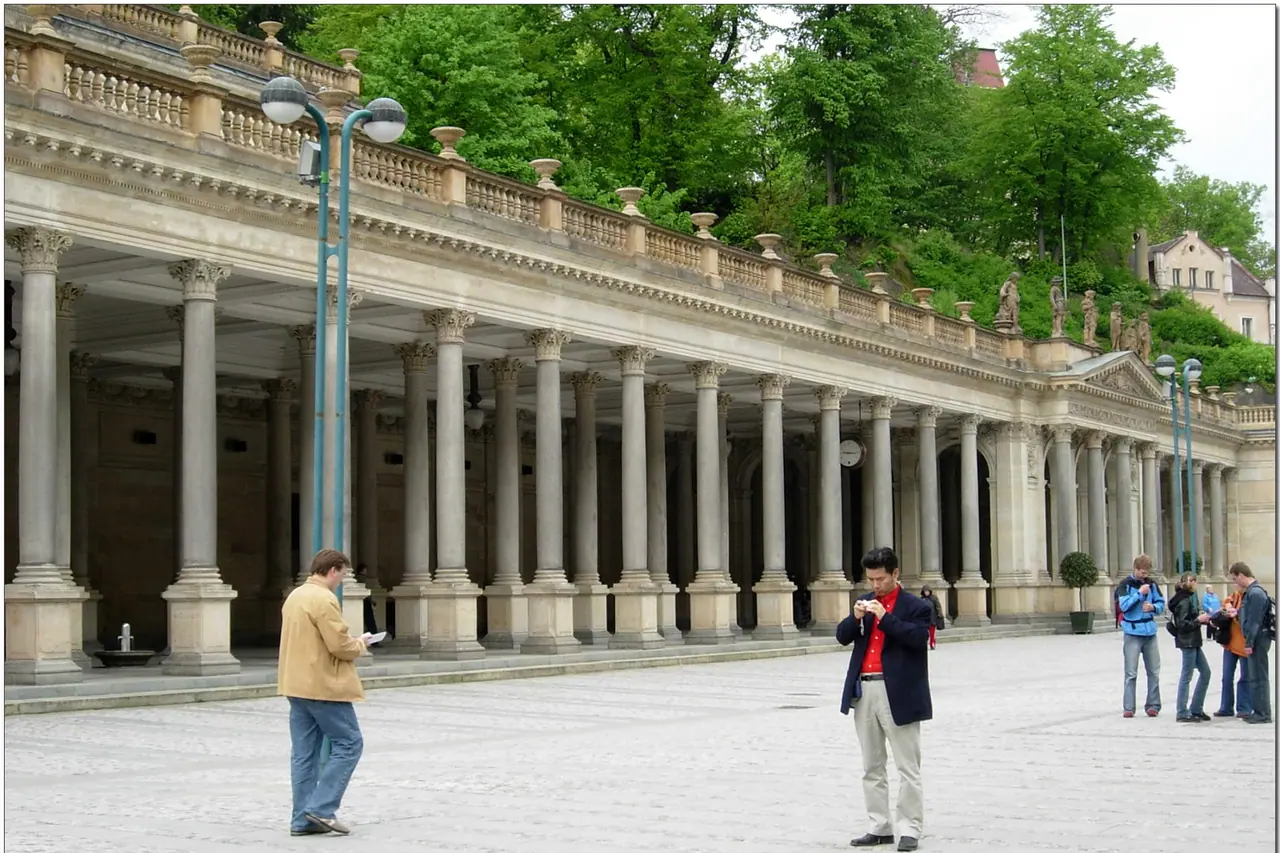
The Mill Colonnade gives the spa centre its most monumental covered promenade. Its long sequence of stone columns is best understood by walking through it, then crossing to see the building against the hillside. Josef Zitek designed the nineteenth-century structure; the figures above the roof and the spring outlets below reward looking beyond the familiar view of its frontage. This is a good first stop for understanding how architecture organised the spa routine.
Follow the river rather than arranging a separate transfer for each colonnade. Leave space around the drinking outlets and remember that mineral-water treatment is a clinical programme, not a challenge to sample as much as possible. A sheltered promenade can still have wet paving and busy passages. Use the stop to orient yourself before continuing towards the Park Colonnade or back towards the Hot Spring.
Plan it well: The pin identifies the colonnade, not a hotel entrance or an individual spring outlet.
Mill Colonnade: official visitor informationLook at the timber detail of the Market Colonnade
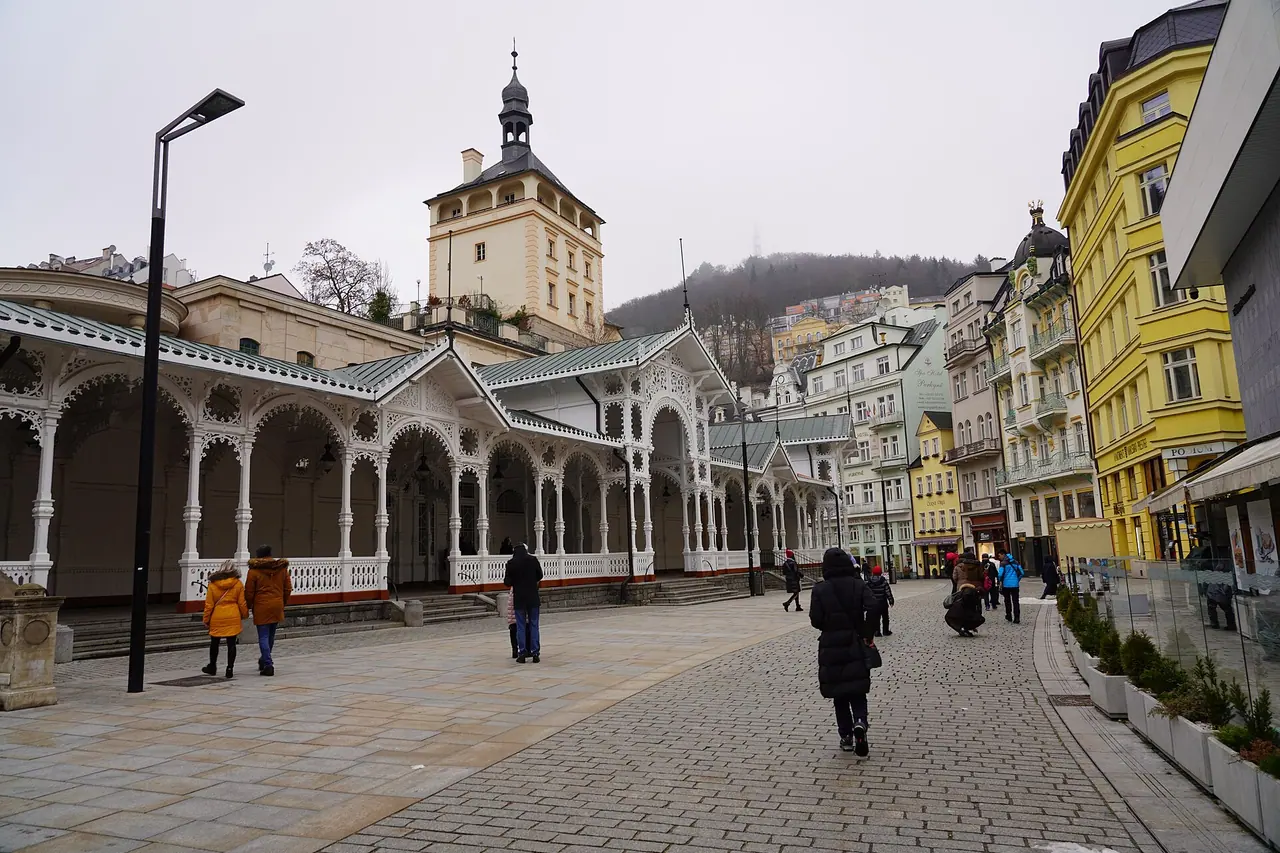
The Market Colonnade changes the mood of the river walk. Instead of the heavy stone of the Mill Colonnade, it uses finely worked timber and a light, almost lace-like frontage. The city identifies its design as Swiss-style and credits Fellner and Helmer. Stand far enough back to take in the whole shelter, then look more closely at the carved decoration and the way the roof covers the spring-side passage.
Trziste is a useful hinge between the river and the rising streets behind it. Continue here after the Hot Spring, but do not confuse the nearby Castle Hill climb with a flat extension of the promenade. Allow other visitors room to reach the spring outlets. If you are planning a drinking cure, follow the instructions given for your own treatment rather than treating the various outlets as identical refreshments.
Plan it well: Check the slope before using Trziste as a shortcut to an uphill hotel.
Market Colonnade: official visitor informationFind cast-iron detail beside Dvorak Park
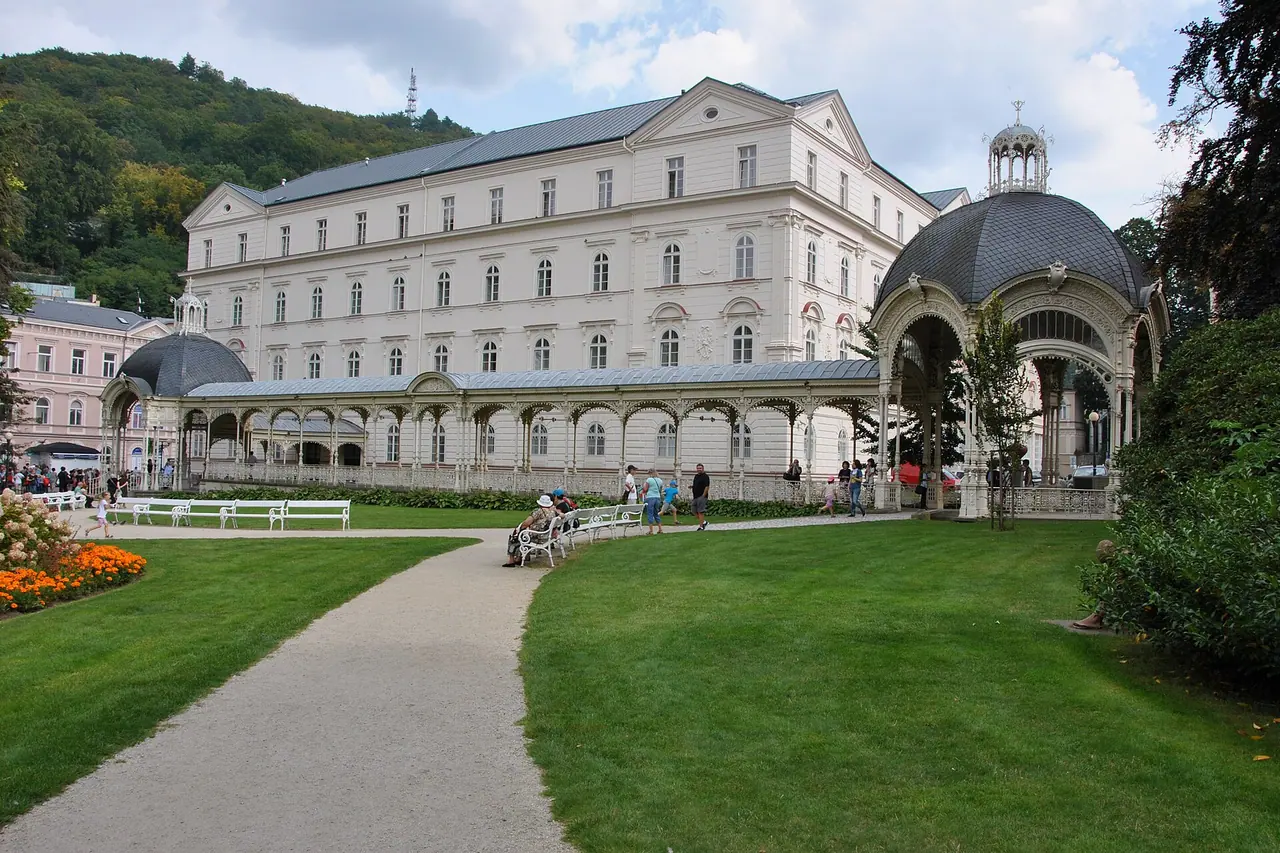
The Park Colonnade is the lighter, garden-facing counterpart to the larger spa buildings. Its decorated cast-iron structure survives from a more extensive nineteenth-century pavilion complex. Look at the repeated metalwork and the relationship between the covered route, planting and surrounding buildings. It makes particular sense after the Mill Colonnade, when the change of material is still fresh in your mind, rather than as an isolated photograph.
Use the adjoining park as a pause in the walking day. The colonnade is also a useful marker when choosing how far to continue along the spa centre before turning back. A spring inside or near a historic structure does not establish unrestricted access to every associated interior. Stay on the public promenade and read any local notices. Seats, shade and a shorter return route can matter more than extending a walk simply to collect another landmark.
Plan it well: The public colonnade and adjoining institutional interiors have separate access arrangements.
Park Colonnade: official visitor informationSee the Hot Spring in its modern colonnade
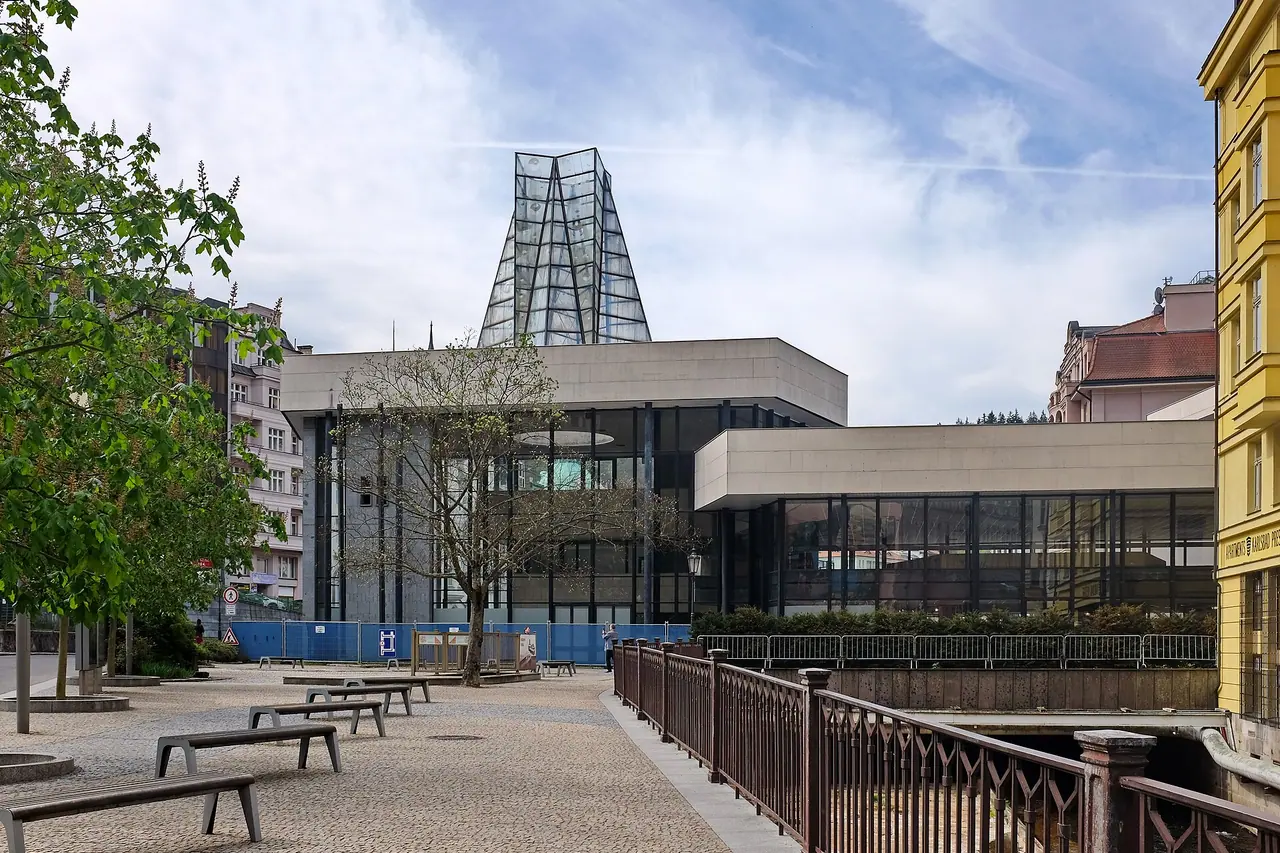
The Hot Spring Colonnade deliberately breaks with the decorative nineteenth-century shelters elsewhere along the river. Its glass and concrete building encloses the famous Vridlo spring, making the relationship between water and engineering unusually visible. Look at the spring as part of the wider system that supplies the spa town, not merely as a fountain. The city describes the modern colonnade as the latest in a succession of protective buildings.
Plan the hall visit around the current access arrangements. Underground tours, where offered, are separate from seeing the spring above ground and should not be assumed to depart whenever you arrive. Keep clear of barriers and follow instructions around the hot water. The church of Saint Mary Magdalene stands close by, so combine the two without another transfer. A photograph of the geyser is not a reason to touch the water or improvise a bathing activity.
Plan it well: Confirm a guided underground visit separately from ordinary colonnade access.
Hot Spring Colonnade: official visitor informationRise above the river valley at Diana
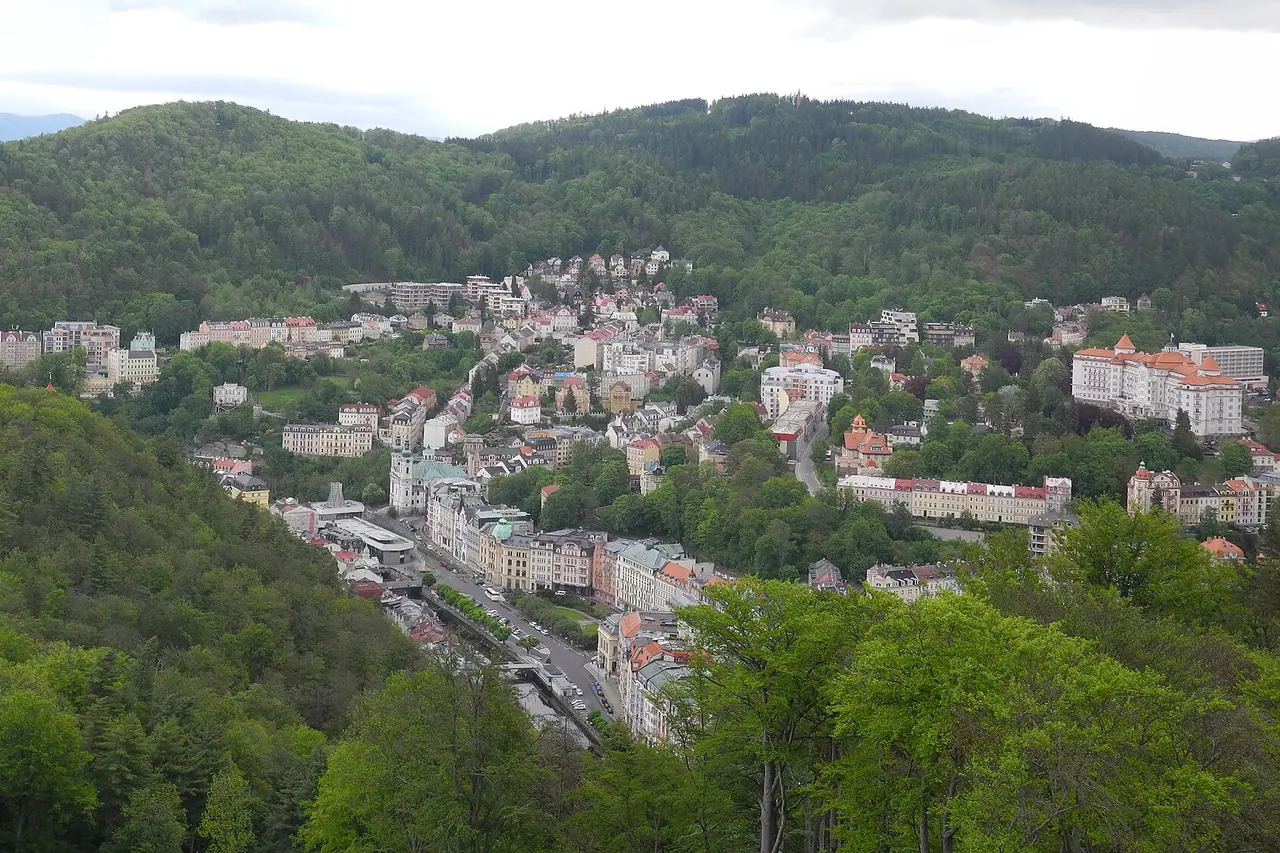
Diana gives the spa town a different scale. From above the river corridor, the buildings fit into a wooded valley rather than filling the entire view. The lookout tower is the destination, but the ascent is part of the decision: a funicular journey and a forest climb are not equivalent activities. The operator describes several walking approaches, which lets you choose a route that matches your energy rather than automatically taking the steepest way.
Check the funicular status before building the day around it, especially during maintenance periods. If you walk, carry water and use an actual trail plan for the descent instead of following a straight line on a map. Visibility changes with weather, so an ascent is not a guarantee of a distant panorama. The tower pin is at the top, not at the lower boarding point near the Pupp quarter.
Plan it well: Use the operator map for the lower funicular station; the guide pin marks the tower.
Diana Lookout Tower: official visitor informationStep back to see Saint Mary Magdalene
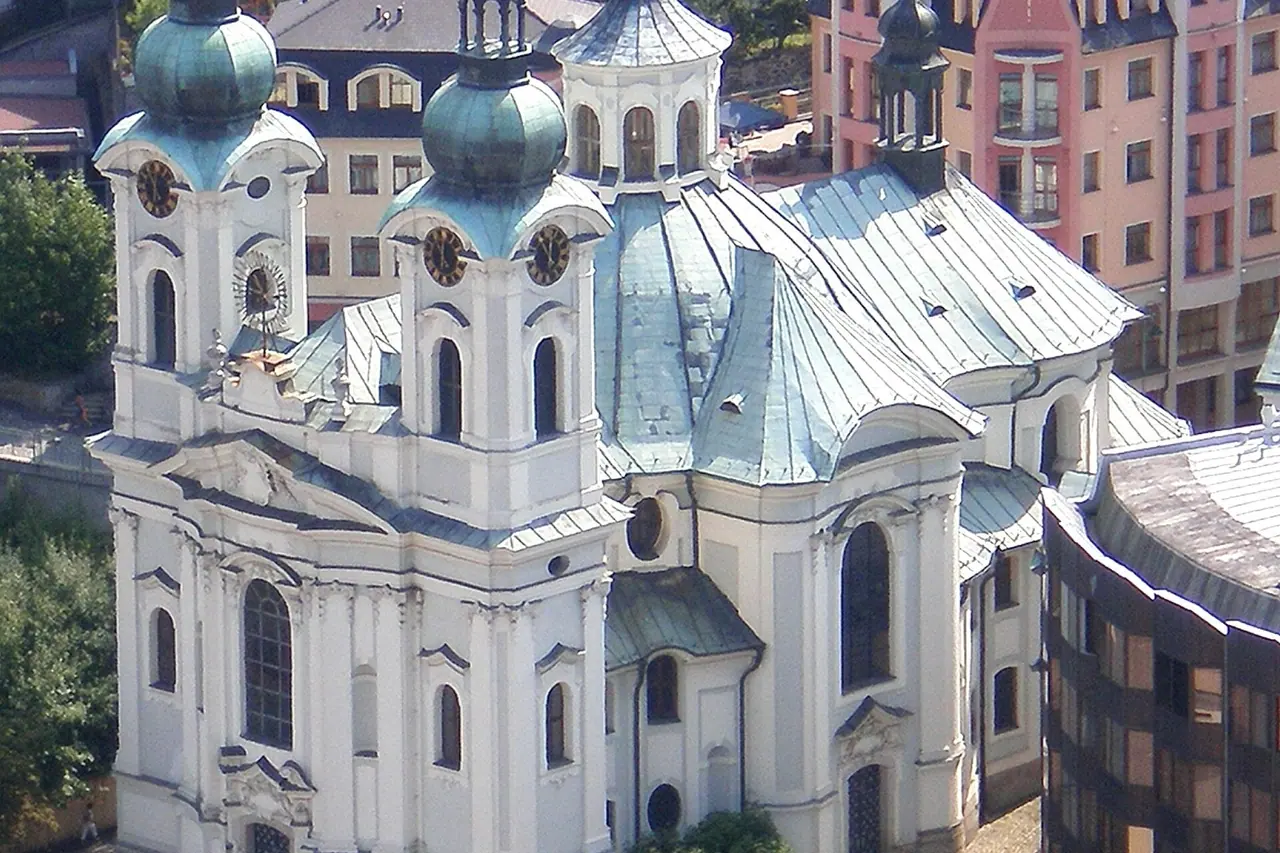
Saint Mary Magdalene is a useful architectural counterpoint to the modern Hot Spring Colonnade. Its Baroque towers and curved forms rise above the spring-side streets, and the national tourism authority attributes the design to Kilian Ignac Dientzenhofer. First look at the building from outside, where its position in the spa centre is clear. An interior visit adds a closer view of the church furnishings if visitor access permits.
Do not use a service as a sightseeing appointment or assume that the crypt is open on the same basis as the church. The underground spaces have their own visitor arrangements, and seasonal or group booking conditions can differ. Dress respectfully and keep photography unobtrusive. This is a short addition to a river walk, not an excuse to rush between worship spaces. If an interior is unavailable, the exterior still makes a worthwhile stop.
Plan it well: Check crypt tours separately; a church doorway does not guarantee underground access.
Saint Mary Magdalene: official visitor informationWalk into Westend for the Peter and Paul church
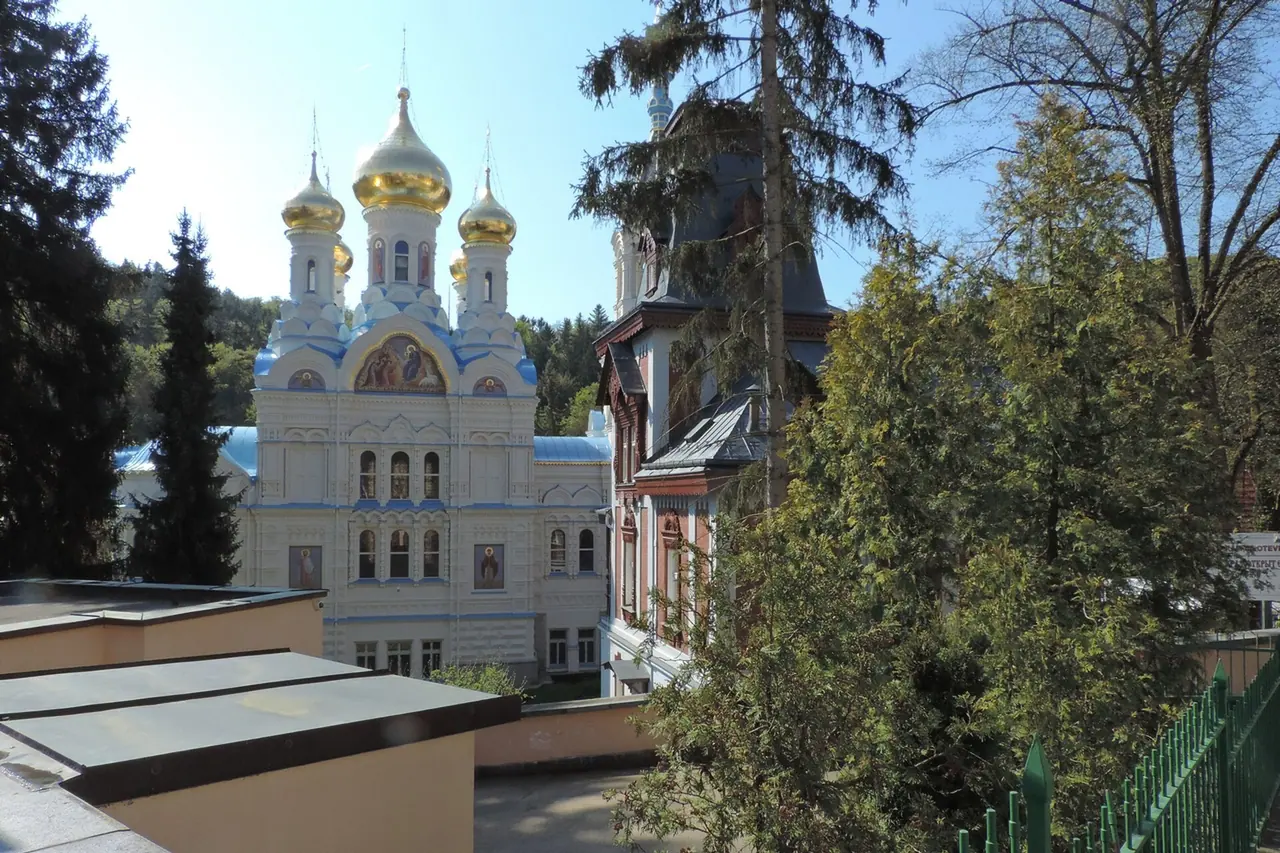
The Orthodox church of Saints Peter and Paul introduces the villa district above the main promenade. Its domes and richly articulated exterior have a different visual language from Saint Mary Magdalene, and the surrounding streets make the change from riverfront spa town to hillside residential setting tangible. Come for the building and its position among the villas rather than expecting a large sightseeing complex with several public attractions.
The approach matters if you are walking from the colonnades. Choose an uphill route that suits your group and allow for the descent afterwards, particularly in wet weather. The church remains a religious place: follow posted visitor rules, cover appropriately and do not photograph worshippers without permission. An exterior stop is a reasonable plan when interiors are unavailable. Link the walk with Becher Villa if its exhibition programme interests you, keeping both buildings separate in your plans.
Plan it well: Westend is above the river; short map distances can conceal a noticeable climb.
Karlovy Vary: official accommodation and town mapRead spa history at the restored Imperial Baths
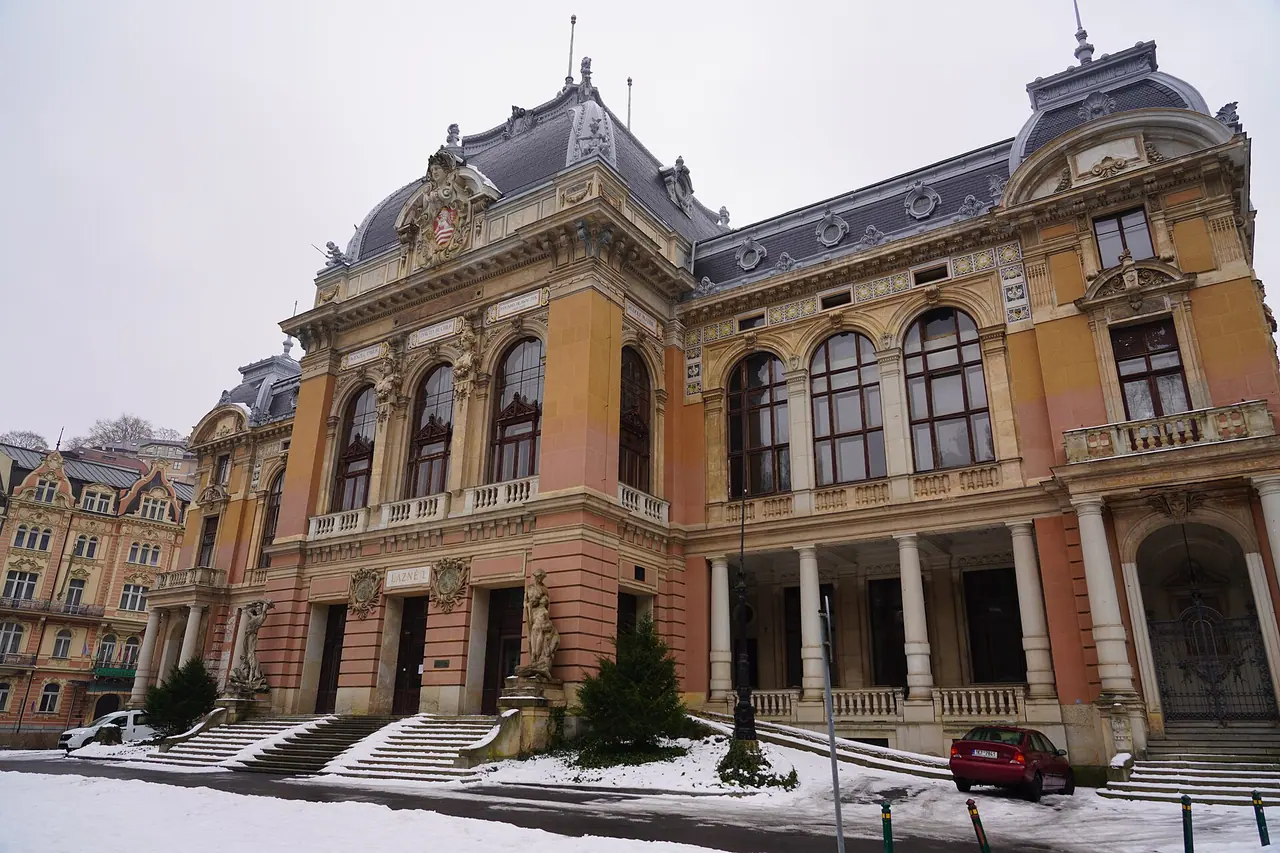
The Imperial Baths, also called Cisarske lazne or Lazne I, show how elaborate the architecture of spa treatment became. The imposing building near the southern end of the centre is worth examining before going inside: its ceremonial frontage makes bathing infrastructure look like a civic palace. The restored complex now has cultural and visitor uses, so a visit concerns the history and architecture of the baths rather than a promise of ordinary swimming.
Check the current guided-tour programme and the rooms included in your chosen visit. A concert or other event is a separate booking, and access may change when the building is in use. Combine the exterior with a walk through the Pupp end of the valley, then decide whether to continue uphill to Diana or return along the river. Keep time for interpretation instead of treating this heritage building as another quick photo on the colonnade circuit.
Plan it well: This is a heritage and cultural visit, not a public thermal-pool recommendation.
Imperial Baths: official visitor informationMake room for an exhibition at Becher Villa
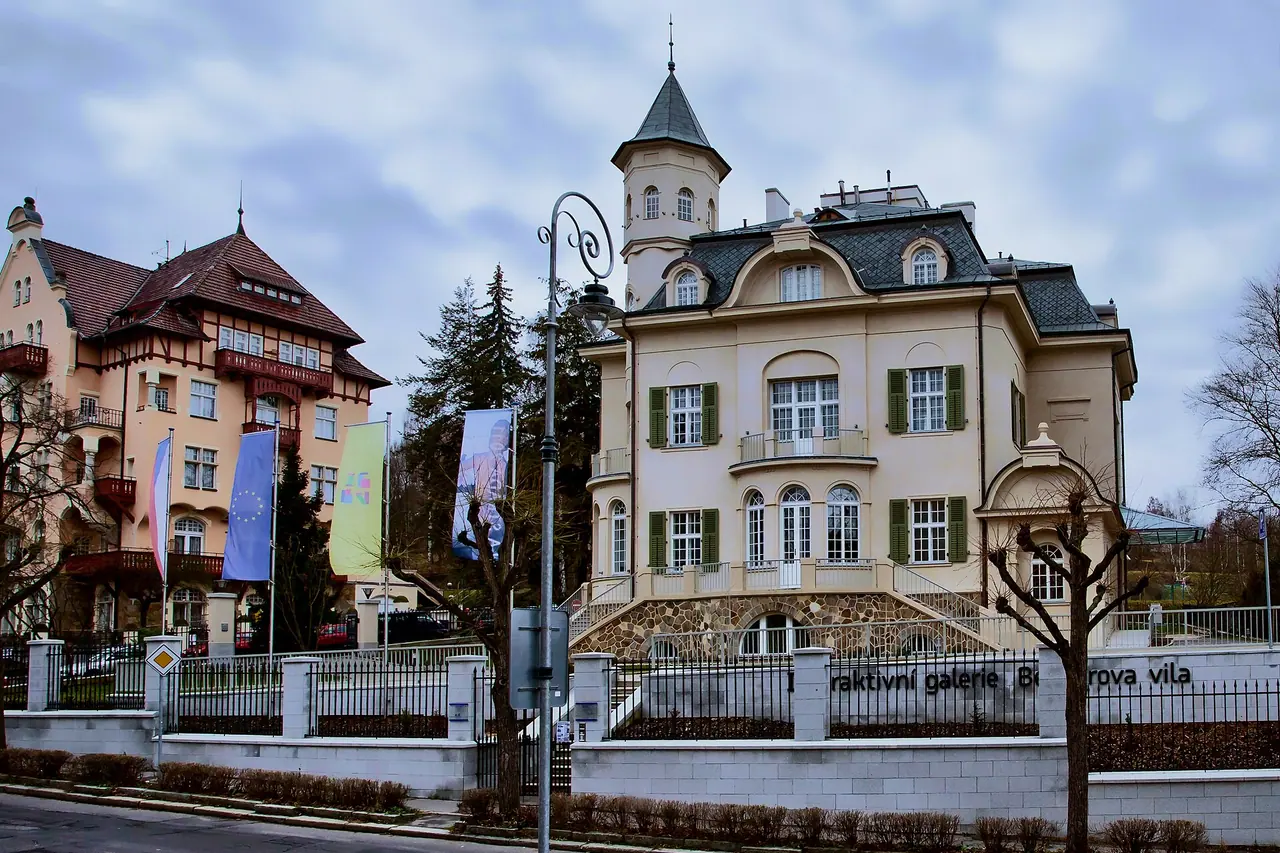
Becher Villa offers a change from springs and bathing architecture. The Art Nouveau house was built as a family residence and now forms part of the Karlovy Vary art gallery network. The city lists contemporary exhibitions, education and workshops here. Look at the building as well as the programme: the domestic scale helps explain the hillside district in a way that the grander riverfront hotels do not.
Choose this stop because an exhibition or the architecture interests you, not because every museum must fit into one afternoon. The villa is uphill from parts of the centre, so examine the walking approach before combining it with Saints Peter and Paul. Check the gallery for the current display and any altered visitor arrangements. A workshop listing is not necessarily ordinary drop-in admission, and a previous exhibition title should not determine your expectations for a later visit.
Plan it well: Use the current gallery programme; a city listing may retain older holiday opening notices.
Becher Villa: official visitor informationGive Loket Castle a separate regional outing
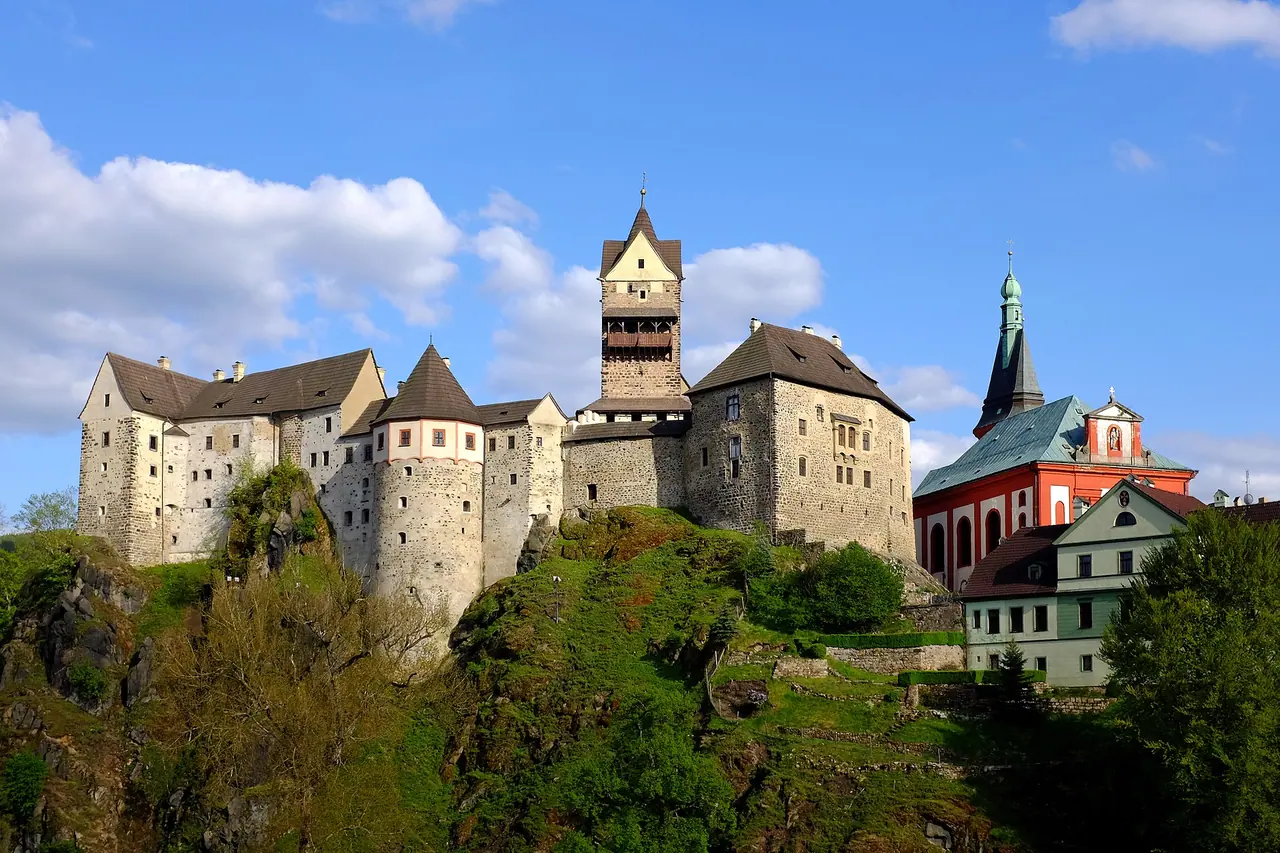
Loket Castle is an option for a day when you want to leave the spa valley. The castle stands over a compact town within a bend of the Ohre, so the setting deserves time as well as the interiors. Start with the approach through the town and the castle silhouette, then choose the visitor route offered by the operator. This is a regional excursion, not a sight reached by continuing along the Karlovy Vary colonnades.
Check admission, accessible areas and the return journey before leaving your hotel. Castle steps and sloping streets require a different walking plan from the riverfront promenade. Do not add Loket after a full morning of hillside walking simply because the towns look close on a regional map. Leave room for a meal or a riverside pause, and confirm the last useful connection back if you are travelling without a car.
Plan it well: Keep Loket transport separate from Karlovy Vary city bus planning.
Loket Castle: official visitor informationA balanced two-day plan
Use the first day for the local cluster and give the second day one clear theme. The regional alternatives are choices, not a checklist to finish together. Match any booked visit to current access and the journey back to your accommodation.
Diana Lookout Tower: official visitor informationDay one: the river and one interior
Walk from the Park and Mill colonnades to the Market and Hot Spring colonnades, pausing at Saint Mary Magdalene. Add the Imperial Baths only if a tour fits, then leave the evening free in the spa centre.
Day two: choose a hill or a regional outing
Take the Diana route and explore Westend with Saints Peter and Paul or Becher Villa. Alternatively, replace that programme with Loket and its own return transport. Do not append Loket to a full hill-walking day.
Practical details to check before travelling
Recheck the operator and transport information for your actual dates. Seasonal notices, facility inclusions and the final approach matter more than a broad distance on a map. Keep an indoor or lower-effort alternative when conditions make the original outing unsuitable.
DPKV: current timetablesWater and treatment
Follow the advice of your treating clinician for mineral-water cures. A sightseeing itinerary does not prescribe quantities or promise health benefits.
Mill Colonnade: official visitor informationHill routes
The riverfront and Westend offer different terrain. Check steps, gradients and the final hotel approach before committing to an ambitious walking loop.
Saints Peter and Paul: official visitor informationOperator notices
Confirm Diana operation, museum programmes and regional return connections close to the visit; historic tourism pages can retain dated notices.
DPKV: current timetablesChoose a hotel around your daily routine
For repeated spa-promenade walks, compare a riverfront address with the southern quarter around the Imperial Baths. A Westend property can be attractive for its villa setting without offering a level return from the river. An arrival-focused short stay may work better near the new-town edge than high above the valley.
Check which pools, treatment appointments and meals are actually included, along with the entrance, lift and luggage transfer. A photograph of a colonnade does not establish access to private hotel facilities. Confirm the property's written arrangements rather than treating every Karlovy Vary room as a complete spa package.
Karlovy Vary: official accommodation and town map Explore Karlovy Vary hotels