
Munich city guide
Where to stay in Munich
Compare six Munich bases for old-town walks, museum days, station connections, park time, river evenings and Nymphenburg, without treating the whole centre as one district.
Plan your visit
Munich is not just a choice between the centre and somewhere outside it. The museum streets of Maxvorstadt, the restaurants south of the old town and the palace neighbourhood in the west offer genuinely different stays. Start with the days you want to repeat, then compare the nearest station and the actual walk from it to the hotel.
Choose your base
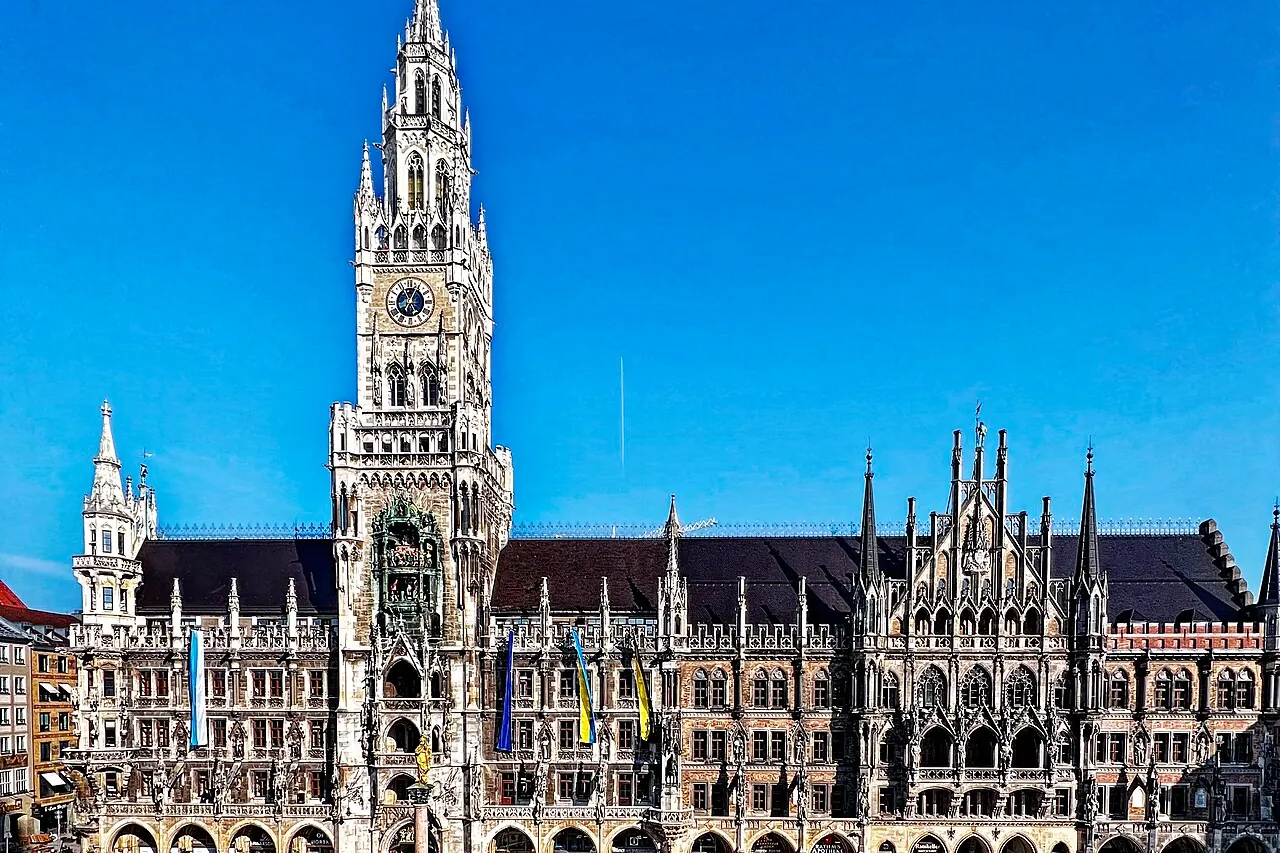
Altstadt is the clearest choice for a short first visit centred on Marienplatz. Maxvorstadt suits galleries and university-area cafes; Schwabing suits park time and neighbourhood evenings. The southern Hauptbahnhof quarter is useful for train arrivals and onward journeys, with a busy station setting. Isarvorstadt and Museum Island combine dining, theatre and river walks. Neuhausen-Nymphenburg trades an immediate old-town doorstep for palace grounds, residential streets and western-city connections.
Altstadt: Munich landmarks without a daily commute
Altstadt works when you want Munich to unfold on foot from Marienplatz. The Frauenkirche, Viktualienmarkt, traditional inns and shopping streets sit in a compact central cluster; the Residenz and opera area extend the day towards the north. A hotel near the market has a different setting from one beside Karlsplatz or the large roads on the edge. Choose the entrance you will actually use rather than relying on an old-town description that might include a much wider area.
Marienplatz brings together the S-Bahn with U3 and U6, while other old-town edges have their own useful stations. The airport S1 and S8 connect through the city rail network, subject to the operating timetable. The drawback is crowds around famous squares, commercial bustle and potential evening noise near busy dining streets. Choose Maxvorstadt for several gallery days or Neuhausen-Nymphenburg for more time around parks. Altstadt earns its place when central sights and short returns to the room matter most.
Plan it well: The map pin marks Marienplatz, not the neighbourhood boundary.
Munich Tourism: Altstadt neighbourhood guideMaxvorstadt: galleries and university-area cafes
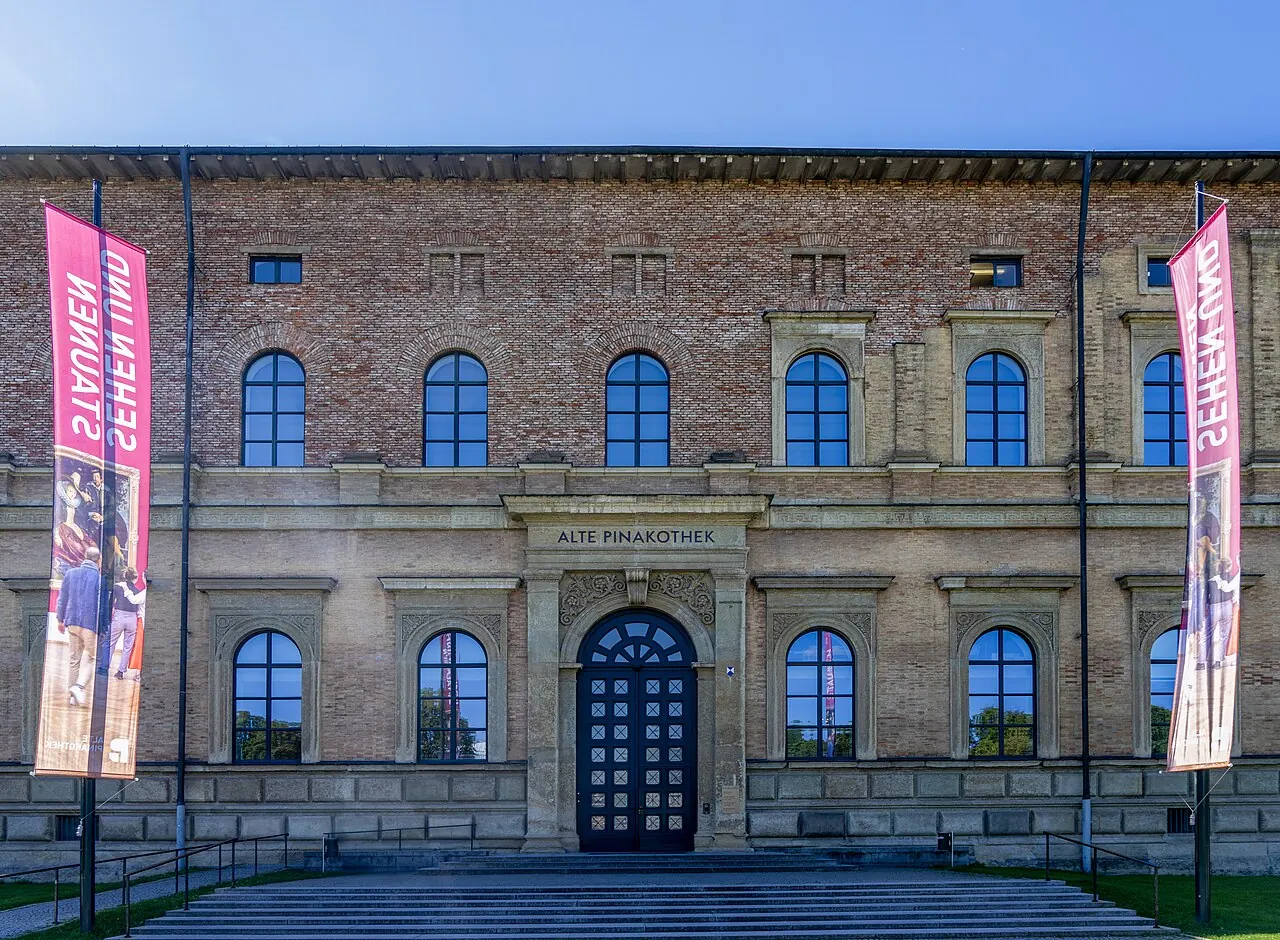
Maxvorstadt is the natural base for days in the Kunstareal rather than rushing back and forth from the old town. The Alte Pinakothek and nearby collections give the area substance, while Theresienstrasse, Turkenstrasse and the streets around the universities provide cafes, restaurants and small shops between exhibitions. The district stretches further than the museum cluster, so an address near Stiglmaierplatz is not the same stay as one near the university on its eastern side.
Konigsplatz and Theresienstrasse are U2 reference points for the western museum streets; Universitat serves the eastern side on U3 and U6. Airport travel normally combines S1 or S8 with a station change or a final walk chosen for your address. The trade-off is that riverfront walks, beer-market evenings and the main old-town squares are not directly outside every hotel. Choose Altstadt for landmark-led sightseeing, or Schwabing if the English Garden is a daily priority rather than an occasional break from galleries.
Plan it well: The map pin marks Alte Pinakothek, not the neighbourhood boundary.
Munich Tourism: Maxvorstadt district guideSchwabing and the English Garden: park time and neighbourhood evenings
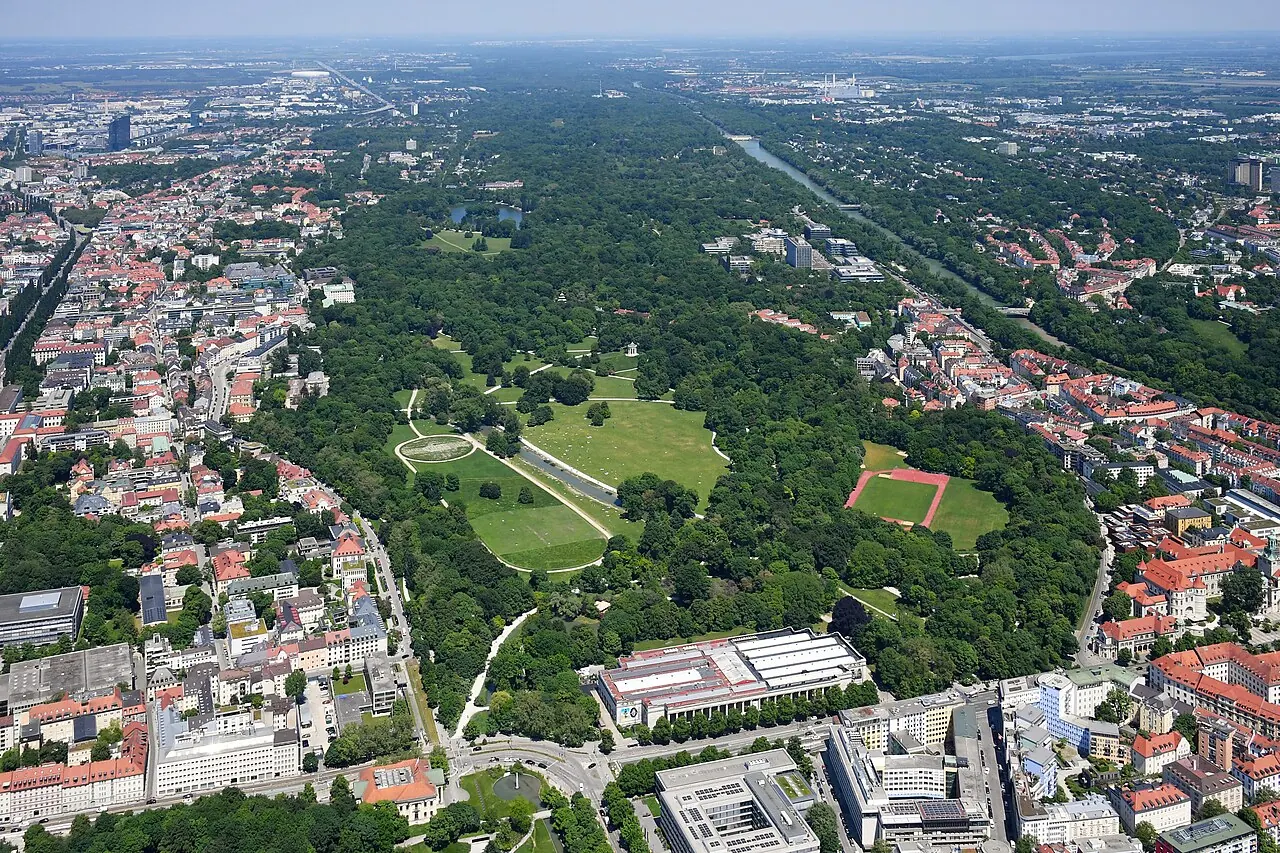
Schwabing suits a stay with repeat visits to cafes and the English Garden rather than a new central monument every morning. Leopoldstrasse gives it a busy spine, with shops and eating streets around Hohenzollernstrasse and Feilitzschstrasse. Addresses nearer the park offer a different routine from hotels further north or west. The English Garden is large: choose the entrance and section you expect to use rather than interpreting any mention of the park as a short walk from your room.
Munchner Freiheit and Giselastrasse connect with U3 and U6 through the centre. The airport offers S1 and S8 rail journeys with an onward connection; the airport express bus also has a Munich North stop, which is not interchangeable with Munchner Freiheit. The downside is a longer start to old-town sightseeing and road activity along Leopoldstrasse. Choose Maxvorstadt for museums on foot or Altstadt for a brief first visit. Schwabing makes more sense when park time and neighbourhood dining are part of most days.
Plan it well: The pin and photograph identify the English Garden, not central Schwabing. Compare your hotel with Munchner Freiheit and the park entrance you will use.
Munich Tourism: Schwabing neighbourhood guideSouthern Hauptbahnhof quarter: useful rail connections
The southern station quarter in Ludwigsvorstadt is a practical choice when Munich is one stage of a rail trip. Streets around Schillerstrasse, Goethestrasse and the Deutsches Theater contain hotels, everyday food shops and a broad mix of restaurants. Karlsplatz and the western old-town entrance are nearby, but the immediate setting is a transport district rather than a historic square. For an arrival with luggage, the side of the station and the route to the hotel can matter more than the property being described as central.
Hauptbahnhof has long-distance trains, S-Bahn and several U-Bahn lines; S1 and S8 are the airport railway options. Check station works, the operating service and the appropriate exit before relying on the shortest mapped walk. The main compromise is traffic, station activity and an unevenly attractive streetscape, not a claim about safety or guaranteed hotel value. Choose Altstadt for an old-town atmosphere, or Maxvorstadt if galleries matter more than onward rail convenience.
Plan it well: The map pin marks Munich Central Station, not the neighbourhood boundary.
Munich Tourism: Ludwigsvorstadt and the southern station districtIsarvorstadt and Museum Island: restaurants, theatre and the river
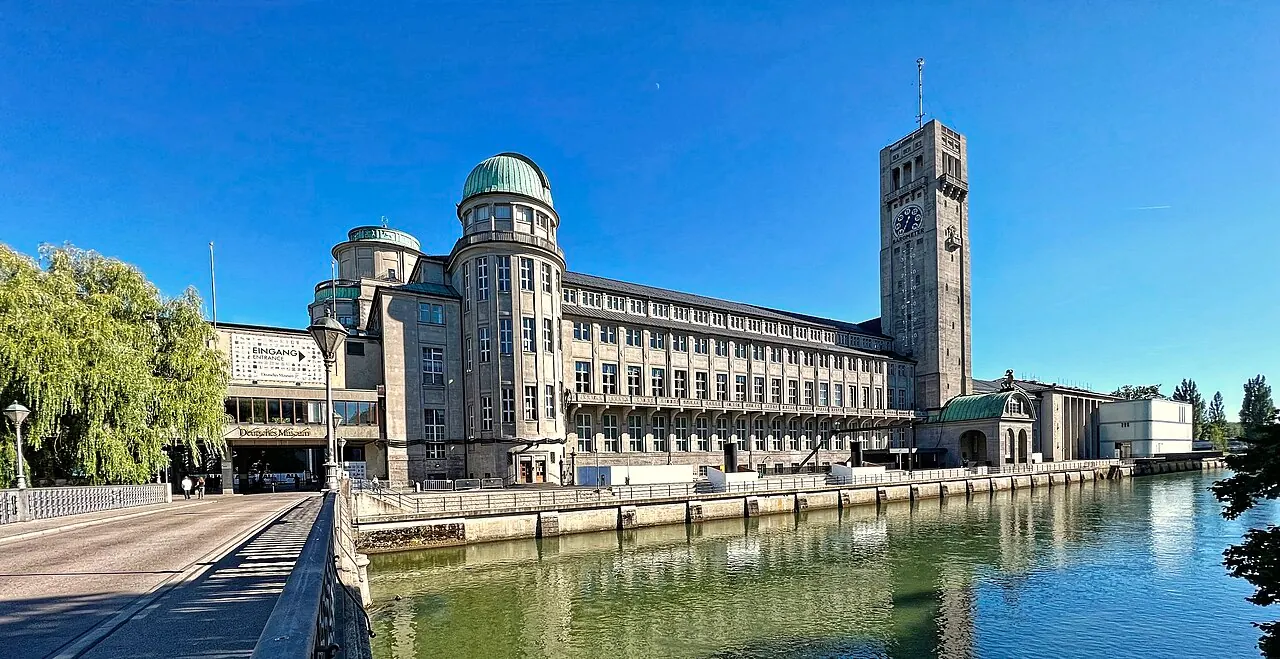
South of the old town, Isarvorstadt offers a different Munich from the market-and-town-hall circuit. The Gärtnerplatz and Glockenbach streets are known for restaurants, bars, independent shops and the Gärtnerplatztheater, while the Isar brings an outdoor pause close to Museum Island and the Deutsches Museum. Pick a street that reflects your plans: staying beside a lively square is not the same as an address closer to the river. The photograph and map pin mark the museum, not the whole restaurant district.
Fraunhoferstrasse serves the area on U1 and U2, with other options at Sendlinger Tor and Isartor depending on the address. Airport journeys connect through the S-Bahn network, so compare both the station change and the final walk. Evening activity is the attraction and the downside: bar-facing rooms may not suit early sleepers. Choose Neuhausen-Nymphenburg for palace-and-park days or Altstadt for a short landmark-led visit. This base suits travellers who want dinner and a neighbourhood evening after the museums close.
Plan it well: The map pin marks Deutsches Museum, not the neighbourhood boundary.
Munich Tourism: Isarvorstadt and Museum IslandNeuhausen-Nymphenburg: palace grounds and western neighbourhood life
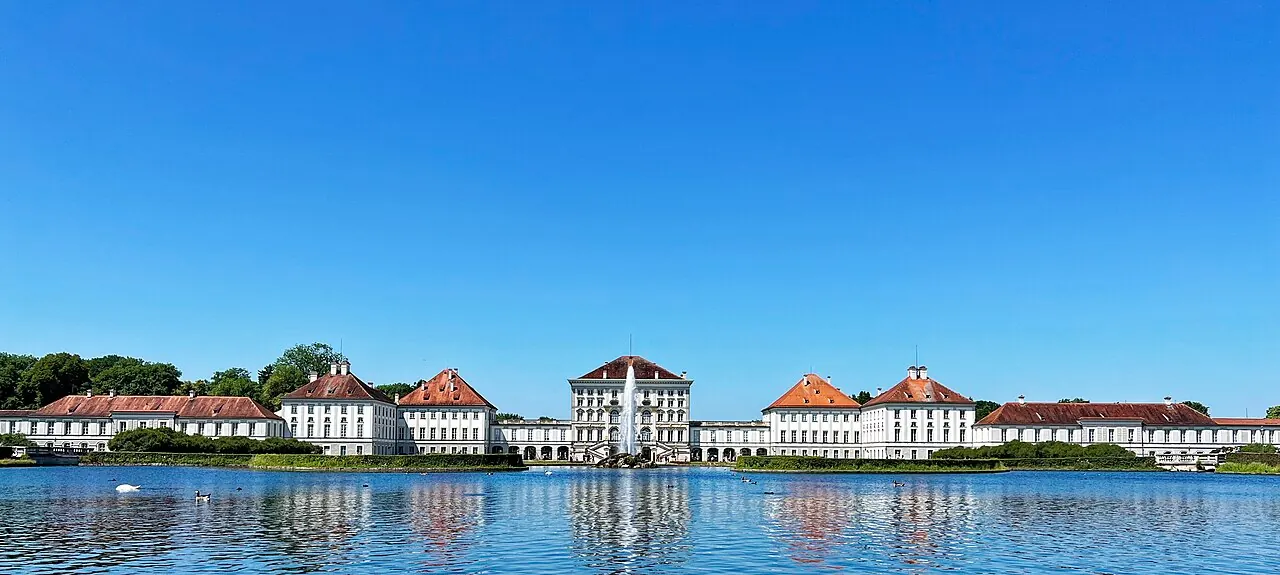
Neuhausen-Nymphenburg is a broad western district with two useful accommodation settings. Around Rotkreuzplatz and Volkartstrasse, shops, cafes and restaurants support a neighbourhood routine. Towards Nymphenburg Palace, the canal, palace park and nearby Botanical Garden become the main draw. A hotel described with both district names may still be much closer to one than the other. Stay here because you want these western places in your days, not because the palace photograph implies every property has a garden outside.
Rotkreuzplatz is on U1. The palace administration describes public-transport approaches through Rotkreuzplatz with an onward tram, or Laim with an onward bus; those are different arrival routes. Airport travel uses S1 or S8 with the appropriate local connection rather than a direct palace train. The compromise is repeated travel to Marienplatz and a spread-out area where the station-to-hotel leg matters. Choose Altstadt for a brief central itinerary, or Schwabing for the English Garden and northern dining streets.
Plan it well: The map pin marks Nymphenburg Palace, not the neighbourhood boundary.
Munich Tourism: Neuhausen-Nymphenburg neighbourhood guideArriving and getting around
Use the airport railway that fits your address
Munich Airport lists S1 through the west and S8 through the east as its city railway connections. Both serve the city rail network, but the appropriate change or final walk depends on the hotel. Check the operating situation before a flight rather than using a fixed transfer estimate.
Munich Airport: public-transport connectionsCompare districts on the current rail map
The MVV rail map published by MVG shows the S-Bahn and U-Bahn stations used in these comparisons. Use the date-specific planner for tram and bus legs, and check access information when lifts or step-free routes are important.
MVG / MVV: current rail network mapKeep the palace connection distinct from the district name
Nymphenburg Palace recommends a bus connection from Laim or a tram connection from Rotkreuzplatz. A hotel near one station may be convenient for arrival without being immediately beside the palace park.
Bavarian Palace Administration: reaching NymphenburgCheck disruptions and station access
MVG lists current and planned changes for U-Bahn, trams and buses and links its lift and escalator status. This is especially useful when a station-quarter booking depends on a particular entrance or interchange.
MVG: operating notices and accessibility statusWhere to stay in Munich
Compare Munich hotels in the district that supports your repeat journeys. Check the nearest useful station, not just the distance from Marienplatz, and weigh a gallery or park doorstep against the route to your evening plans. Station-quarter stays and old-town stays solve different travel needs.
Explore Munich hotels