
Kathmandu city guide
Where to stay in Kathmandu
Compare Thamel, Durbar Marg, Boudha, Basantapur and Swayambhu, plus old Patan across the river in Lalitpur, for traveller services, living heritage, temple routines and practical arrivals.
Plan your visit
Kathmandu has several different centres of daily life. Thamel concentrates visitor services, Durbar Marg offers a broader commercial boulevard, and Boudha revolves around its stupa. The old city and western Swayambhu streets suit different cultural priorities again. Patan, included as a valley alternative, is in the separate city of Lalitpur across the Bagmati River. Decide which place you want outside your door: cross-city traffic makes a hotel convenient for one set of sights less convenient for another. None of these bases removes the need to plan the road journey from Tribhuvan International Airport.
Choose your base
Choose Thamel for a first visit built around travel offices, meals and shopping. Durbar Marg suits boulevard hotels without committing to Thamel's lanes; Lazimpat is another real north-central option for full-service hotels, but it remains a busy-road location. Boudha fits Buddhist study and stupa mornings. Basantapur suits old-city walks; Swayambhu suits a western hill base with more trips into town. Old Patan is the stronger valley alternative for Newar craft and a slower heritage stay, provided you accept river-crossing journeys to Kathmandu.
Thamel: traveller services and restaurant choice
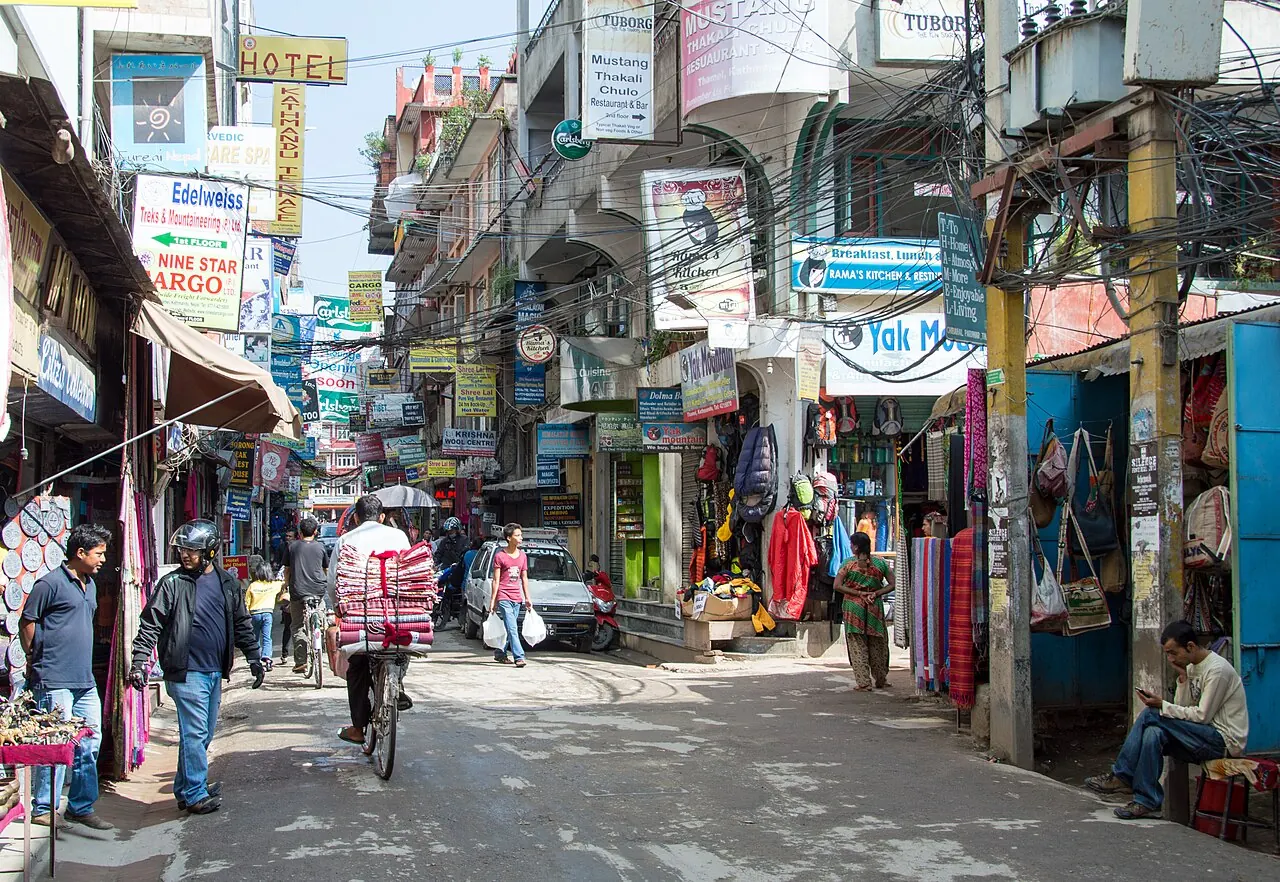
Thamel is useful because visitor services are concentrated, not because it is an untouched old quarter. Its lanes bring together hotels, travel offices, souvenir shops and places to eat, with the Nepal Tourism Board identifying the area for both shopping and restaurant choice. Use this base when you need to organise a trek, replace equipment or make plans over several cafe stops. The Garden of Dreams at the Kaiser Mahal edge offers a separate garden visit, while Asan and the old-city markets lie south. A room inside a courtyard can feel quite different from one facing a busy lane.
Sajha Yatayat lists Lainchaur and Jamal on its north-south routes; these are approach points, not stops at every Thamel doorway. Give an airport driver your property's entrance or agreed drop-off, since the final lane may require walking with luggage. Thamel's concentration of bars, shops and traffic is also its drawback: check the room position rather than assuming a side lane is silent. Choose Durbar Marg for a boulevard hotel arrangement, Boudha for a stupa-focused routine, or Basantapur when old-city walks matter more than travel-agent convenience.
Plan it well: The map and photograph identify Thamel; use the hotel entrance separately for arrival directions.
Nepal Tourism Board: Thamel shopping and visitor streetsDurbar Marg: boulevard hotels and central dining
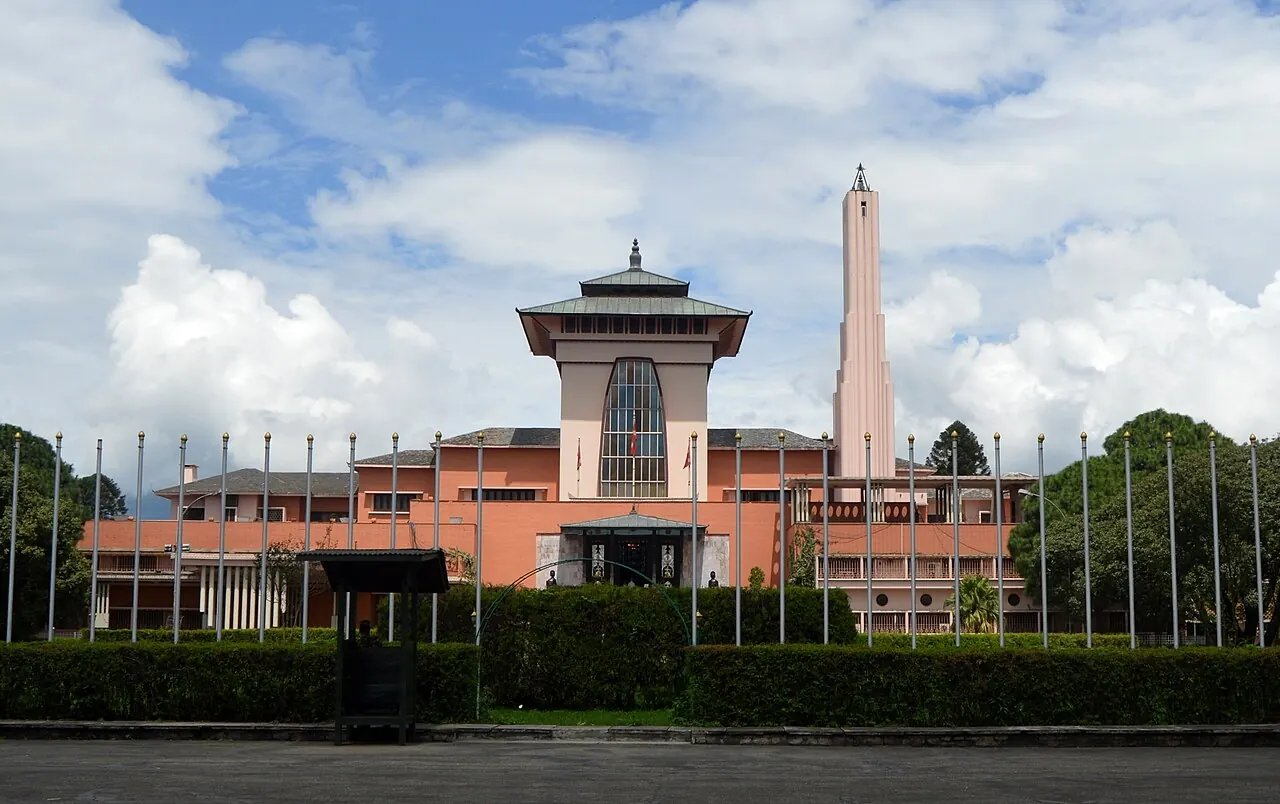
Durbar Marg gives a central stay a different shape from Thamel. The avenue leads towards Narayanhiti Palace Museum, with shops, hotel restaurants and commercial buildings along the surrounding blocks. Nepal Tourism Board identifies Durbarmarg as both a shopping area and one of Kathmandu's restaurant concentrations. This is a sensible choice when you want a recognisable boulevard address and a hotel-centred evening rather than a maze of souvenir lanes. The palace supplies a nearby museum visit; the Garden of Dreams is another outing towards Thamel, not part of the palace grounds.
Jamal is a useful nearby reference on Sajha Yatayat's published network; identify your walking connection before relying on a central-city label. Airport pickup can be arranged to the hotel entrance, but this central address does not guarantee a short road journey. Broad roads and commercial activity are the trade-off, and being near Thamel does not make every crossing pleasant with luggage. Choose Thamel when travel offices and casual restaurant browsing are the priority, or Boudha if you would rather spend your mornings around a Buddhist landmark than return to it from the centre.
Plan it well: The map and photograph identify Narayanhiti Palace; use the hotel entrance separately for arrival directions.
Nepal Tourism Board: Narayanhiti Palace MuseumBoudha: stupa mornings and Buddhist culture
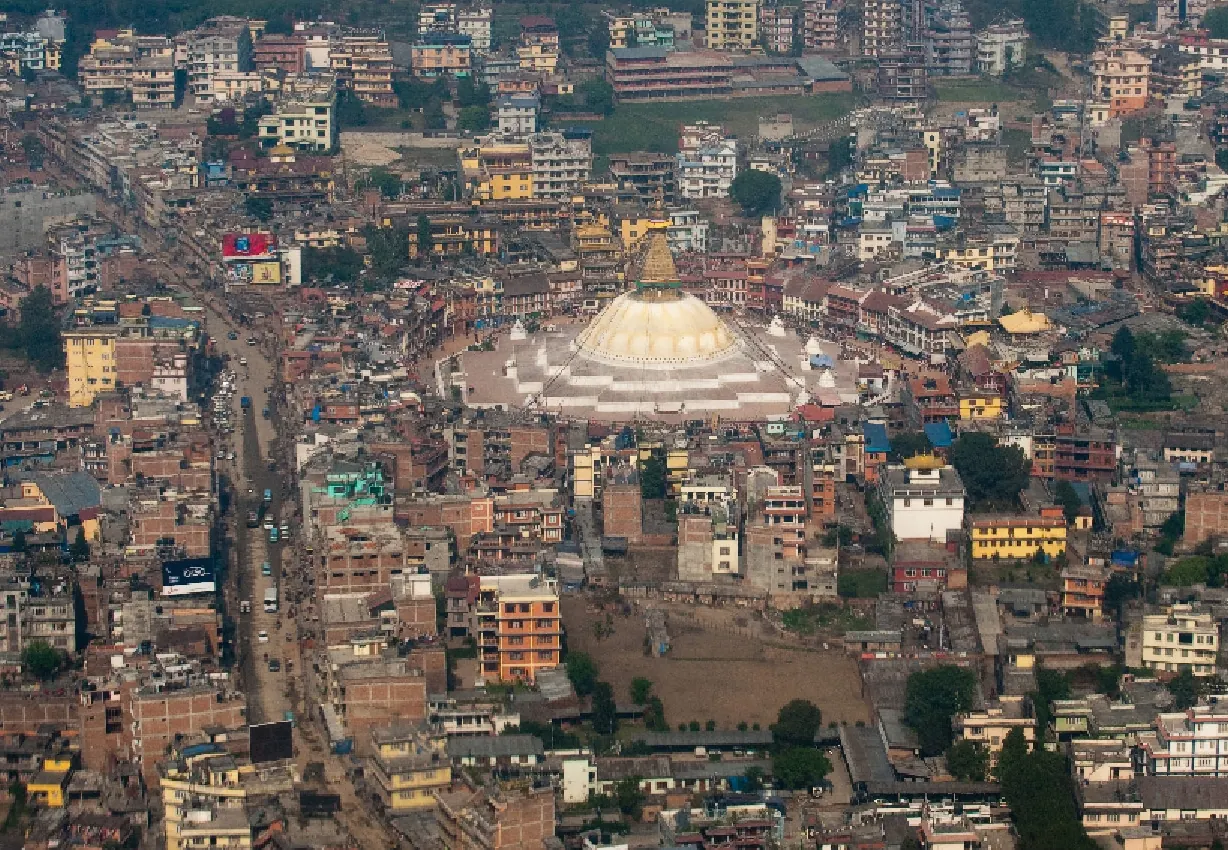
Boudha works best when the stupa is part of your daily routine rather than a single stop between other sights. The great dome, prayer-wheel circuit and nearby monasteries give this northeastern area a strong Buddhist identity. Back lanes contain accommodation and places to eat; stupa-facing terraces are a different proposition from guesthouses set farther into the neighbourhood. Tibetan food, including momos and noodle soup, belongs naturally to the area's dining context. Nepal Tourism Board recognises Boudha among the city's restaurant concentrations, so an evening here need not depend on returning to Thamel.
The surrounding road network serves the precinct, but a taxi drop-off and your final walking route should be agreed separately from the stupa pin. Sajha's current short-route list does not establish a direct bus to the stupa; use a confirmed local connection or arranged car instead. Airport arrival comes from the eastern side of the city, yet road conditions still determine the journey. Boudha's limitation is its separation from the western old city and Thamel services. Choose it for repeated monastery visits or a longer local routine; stay centrally when shopping, tour offices and Basantapur sightseeing dominate a short trip.
Plan it well: The map and photograph identify Boudhanath; use the hotel entrance separately for arrival directions.
Nepal Tourism Board: Boudha and its Buddhist landmarkBasantapur and the old city: courtyards and market walks
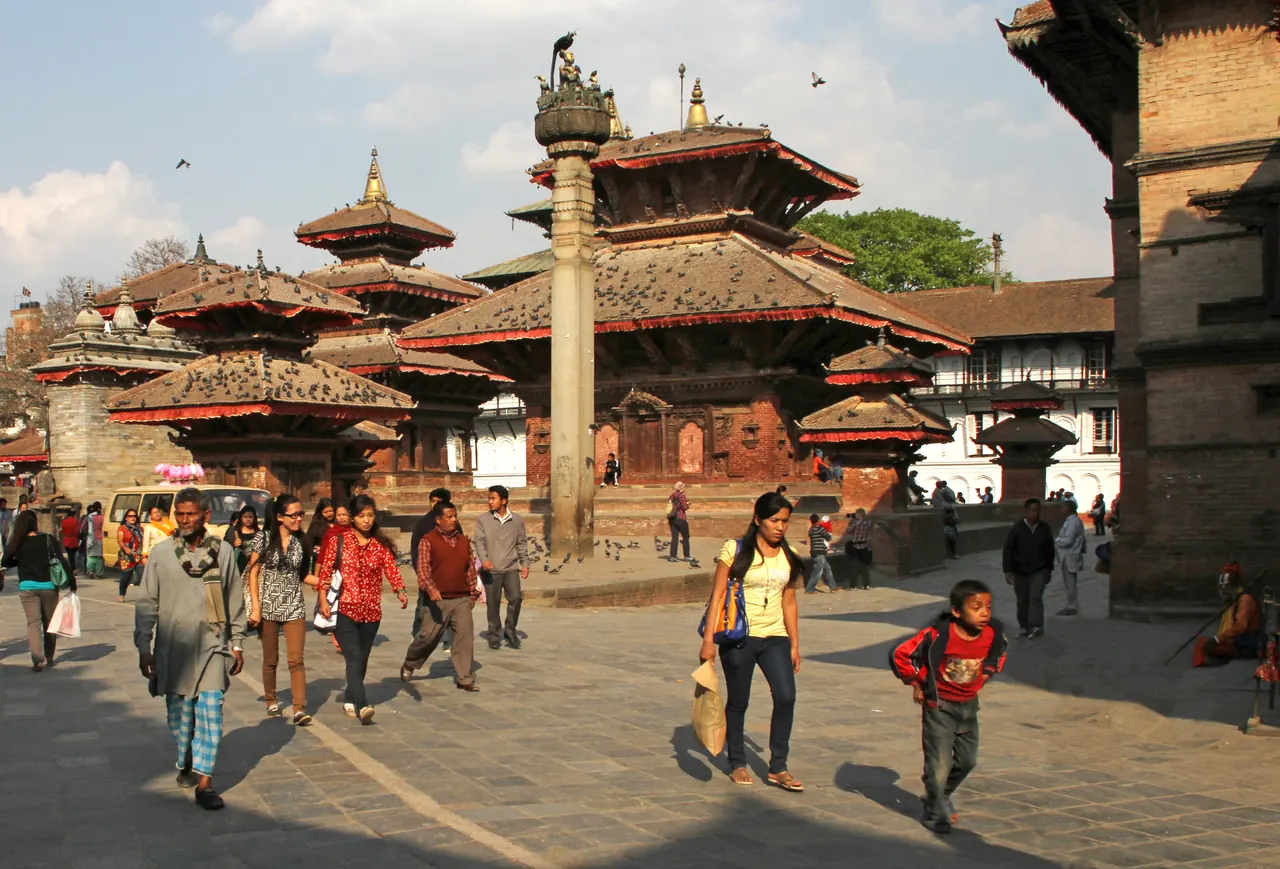
Basantapur is the choice for travellers who want old Kathmandu outside the door. Hanuman Dhoka, Kumari Ghar and the temple-filled Durbar Square give the area its cultural focus, while the surrounding courtyards contain craft shops. Accommodation around Freak Street and adjoining lanes puts you among this historic street pattern rather than among Thamel's travel offices. Walk towards Indra Chowk and Asan for market life and everyday shopping. Small eateries and Newar food stops suit this setting better than expecting the same concentration of international hotel restaurants found around Durbar Marg.
The old streets require an honest arrival plan: confirm where a vehicle can stop and how far you must carry bags. Sajha publishes central stops at NAC and Ratnapark, outside the square's lanes. An airport transfer should use the agreed street pickup rather than the monument pin. The downside is that heritage buildings and compact lanes can bring stairs, street activity and awkward vehicle access; ask about the actual room and entrance. Choose Thamel for traveller services or Durbar Marg for a more straightforward hotel frontage. Basantapur is strongest when your plan allows time to return to its courtyards between visits.
Plan it well: The map and photograph identify Basantapur Durbar Square; use the hotel entrance separately for arrival directions.
Nepal Tourism Board: Basantapur and Kathmandu Durbar SquareSwayambhu: a western hill base with temple access
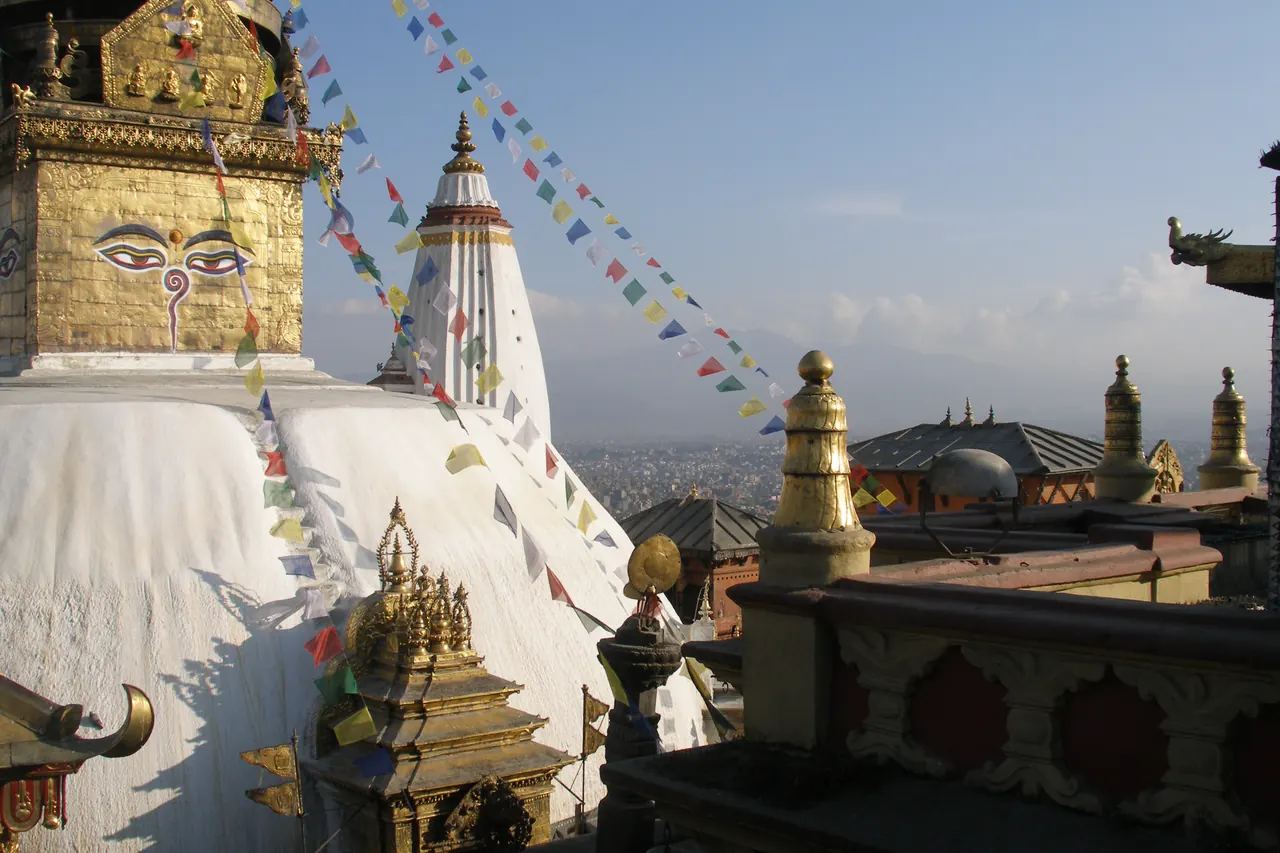
Swayambhu offers a western base with a clear cultural landmark rather than a distant resort label. The stupa crowns a hill with shrines and monasteries, and accommodation in the approach neighbourhood can suit guests who want to make several visits instead of crossing the city for one. Hotel Vajra is an established example on the approach, with a garden and on-site dining; check its actual address rather than assuming every Swayambhu room is beside the stupa. The temple steps are an outing in their own right and should not be confused with the walking route to your accommodation.
Sajha Yatayat's Thankot-Budhanilkantha route lists Swayambhu between Sitapaila and Banashthali. That provides a network reference, not a promise of a stop at a hillside entrance. A road transfer from the eastern airport crosses the city, so this is not the base to choose solely for flight convenience. The trade-off is thinner immediate traveller-service choice than Thamel and an uphill element to temple visits. Choose it for a property-led stay and Buddhist heritage; choose Thamel when multiple restaurant stops and last-minute trek arrangements are more important.
Plan it well: The map and photograph identify Swayambhunath; use the hotel entrance separately for arrival directions.
Nepal Tourism Board: Swayambhu hill and surrounding shrinesOld Patan: a separate Lalitpur heritage base
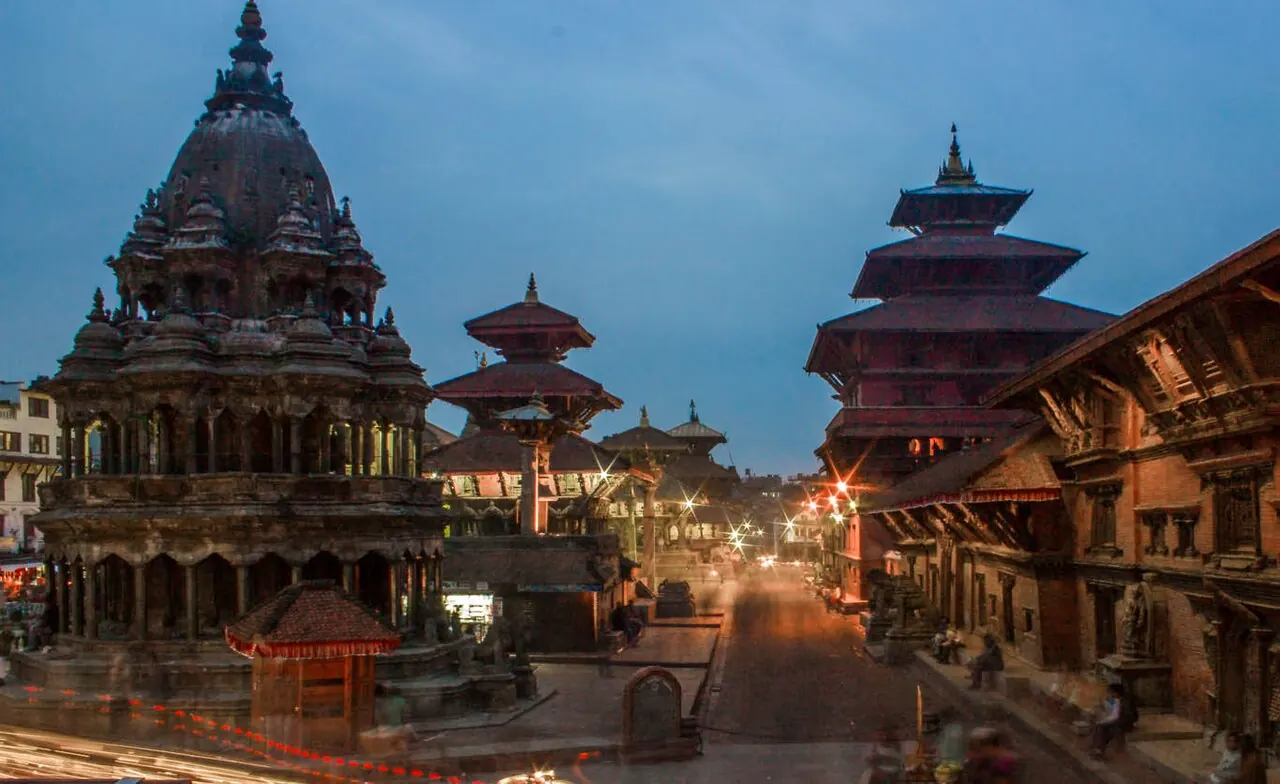
Old Patan is not a Kathmandu neighbourhood: it is the historic core of Lalitpur, included here as a practical alternative for a valley stay. Patan Durbar Square, the palace museum and the Golden Temple provide a substantial local sightseeing plan, with metalworking and craft streets around them. Choose a heritage guesthouse near the old square when you want to return between visits and spend evenings in the same local streets. Courtyard cafes and Newar meals fit that rhythm. Jhamsikhel's wider restaurant scene lies elsewhere in Lalitpur; it is not automatically outside an old-Patan hotel.
Sajha Yatayat lists Lagankhel, Jawalakhel and Pulchowk on its city routes; reaching the old square still requires a separate last leg. Airport arrivals should specify Lalitpur and the agreed hotel drop-off rather than simply Kathmandu city centre. The main compromise is crossing the Bagmati for Thamel, Narayanhiti or the western city, which adds road dependence to a short trip. Choose old Patan for craft, museums and several local days. Choose Thamel for tour logistics or Boudha for Buddhist study, and treat either as a different base rather than an effortless daily commute.
Plan it well: The map and photograph identify Patan Durbar Square; use the hotel entrance separately for arrival directions.
Nepal Tourism Board: Patan, Lalitpur and its craft heritageAirport arrivals and valley connections
Arrange the last lane as well as the airport car
Tribhuvan International Airport lists prepaid taxis beyond arrivals, with rates displayed at the counter. Use the current posted information and your precise drop-off. In Thamel, Basantapur and old Patan, agree where the vehicle stops and who handles the remaining walk.
Tribhuvan International Airport: arrival lounge and prepaid taxisUse Sajha's current routes, not an old route number
Sajha Yatayat lists central north-south services, a Swayambhu connection and route 5 between Thankot and the airport. Consult the current stop sequence and live tracking before travelling; an airport route does not imply that it enters Thamel or serves every hotel.
Sajha Yatayat: current intracity routes and stopsCompare dining at the neighbourhood level
Nepal Tourism Board identifies Thamel, Lazimpat, Durbarmarg, Jhamsikhel and Boudha as restaurant concentrations. These are different local bases: a property in old Patan is not necessarily a short walk from Jhamsikhel, and a Boudha dinner does not require crossing back to central Kathmandu.
Nepal Tourism Board: dining areas in Kathmandu ValleyCheck a western property's own arrival details
Hotel Vajra is a real accommodation and dining option on the Swayambhu approach. Confirm its entrance and meal arrangements, especially when comparing it with a room advertised more broadly as being near the stupa.
Hotel Vajra: official accommodation and diningFind your Kathmandu Valley base
Compare hotels against the neighbourhood you will use each day, not just the distance from the airport. Check room position in busy lanes, vehicle access, stairs and the local dining options. For old Patan, confirm the Lalitpur address and plan your Kathmandu outings together rather than adding several river crossings to every day.
Explore Kathmandu hotels