
Zurich city guide
Where to stay in Zurich
Choose between the two old-town banks, the main-station district, the Seefeld and Enge lakeshores and the converted industrial spaces of Zurich-West.
Plan your visit
Zurich is easier to compare by riverbank, lakeshore and station than by the word central. A room in the east-bank lanes offers lively historic surroundings; Europaallee favours train arrivals. Seefeld and Enge put different lake landscapes nearby, while Zurich-West suits contemporary culture. These six bases make those differences explicit without treating every central address as equivalent.
Choose your base
Choose Niederdorf and Oberdorf for historic lanes and evening venues, or the west-bank old town for churches, shopping and river walks. The HB and Europaallee area is the practical rail-led choice. Seefeld suits the right-bank lake promenade and Enge the greener left shore. Zurich-West is the alternative for industrial architecture, design and contemporary culture.
Niederdorf and Oberdorf: historic lanes and restaurant-led evenings
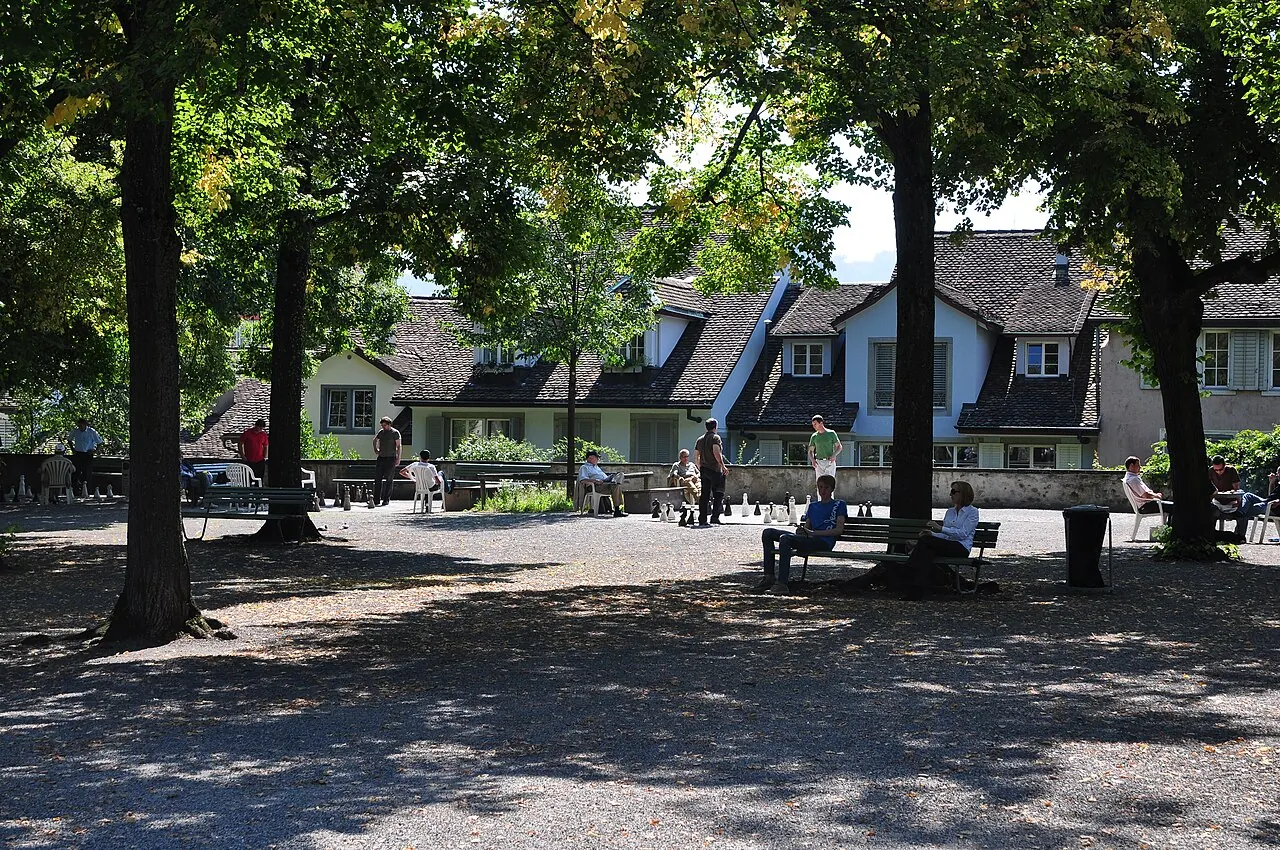
The east-bank old town suits travellers who want Zurich's historic streets to remain part of the stay after daytime sightseeing. Niederdorf'strasse and the smaller lanes contain independent shops, cafes and bars; south towards Oberdorf, Grossmunster and the approach to Bellevue add landmark and lake connections. Zurich Tourism treats this wider Dorfli stretch as a connected old-town setting. Choose a specific lane rather than assuming every room has the same level of evening activity.
ZVV lists useful stops along this side of the river, including Central and Rudolf-Brun-Brucke, with further connections towards Bellevue. For airport arrivals, trains reach Zurich HB before the final walk or tram leg; a room in a pedestrian lane may involve carrying bags from the stopping point. Restaurants and bars are an advantage for evenings out but a drawback directly under a light sleeper's window. Choose the west-bank old town for Bahnhofstrasse shopping and a different street pattern, or HB and Europaallee if departures and luggage access matter more than medieval lanes.
Plan it well: Grossmunster marks the southern Oberdorf end of the east-bank old town, not the whole Niederdorf street.
Zurich Tourism: Niederdorf and OberdorfWest-bank old town and Bahnhofstrasse: central landmarks, shopping and river walks
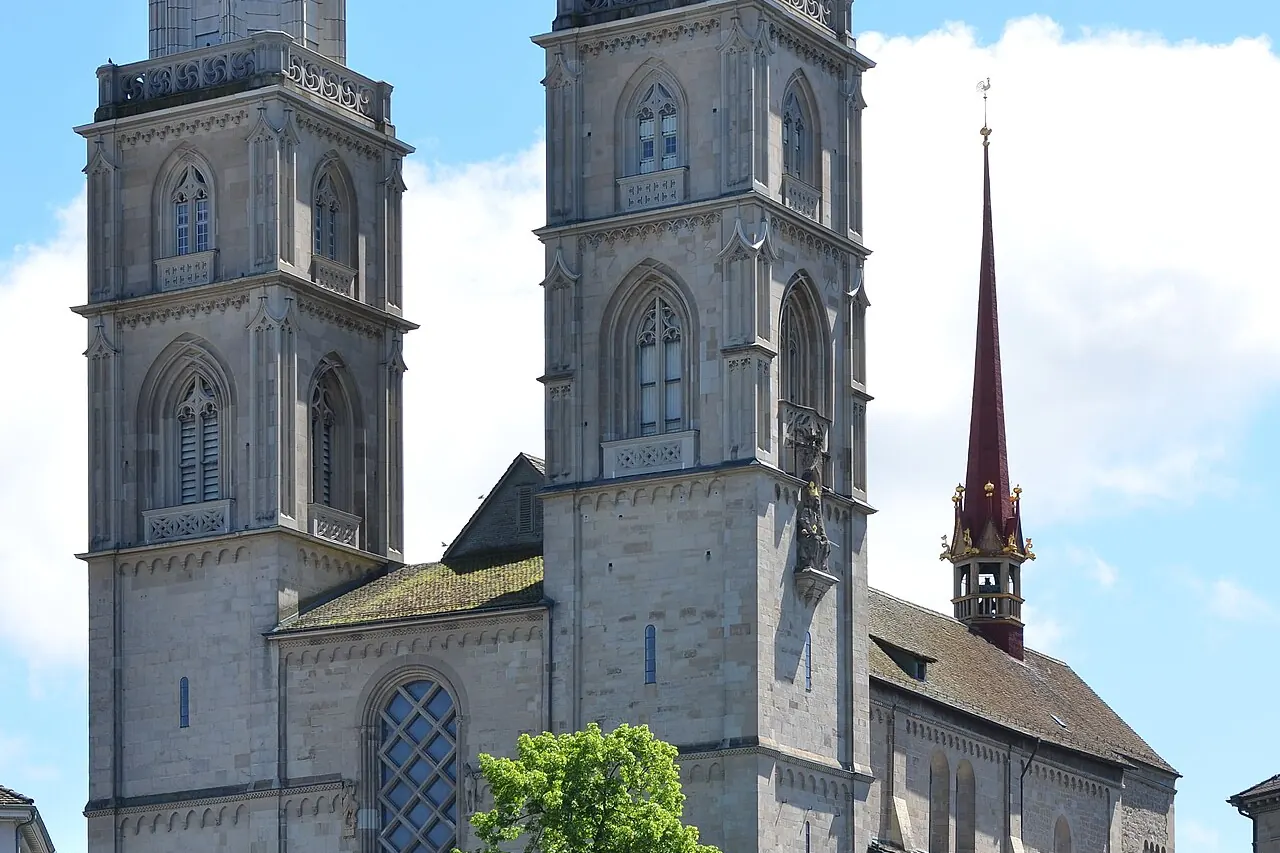
This bank offers a central stay with a different emphasis from Niederdorf's evening lanes. Around Lindenhof, Augustinergasse and St Peter, smaller historic streets sit behind the larger Bahnhofstrasse shopping axis. Fraumunster and the river crossings make it easy to connect church visits with a lakeside walk. Cafes and confectionery stops along the shopping streets support a leisurely break, but a commercial avenue address is not the same experience as a room in an old-town side lane.
The ZVV city map shows tram stops including Rennweg and Paradeplatz, while Zurich HB anchors the northern end of Bahnhofstrasse. An airport train arrival therefore works with either a final walk or a local tram connection, depending on the hotel. Lindenhof itself is elevated, so check the entrance approach rather than relying on a nearby map point. The compromise is concentrated shoppers and visitors, and less of Zurich-Wests contemporary cultural setting. Choose Seefeld for longer lake walks or the station area when several early rail departures would make the historic location secondary.
Plan it well: Lindenhof is an elevated square, not a hotel or tram stop; compare the actual street entrance with Rennweg or Paradeplatz.
Zurich Tourism: West-bank old town and BahnhofstrasseHB and Europaallee: airport arrivals and rail-based exploring
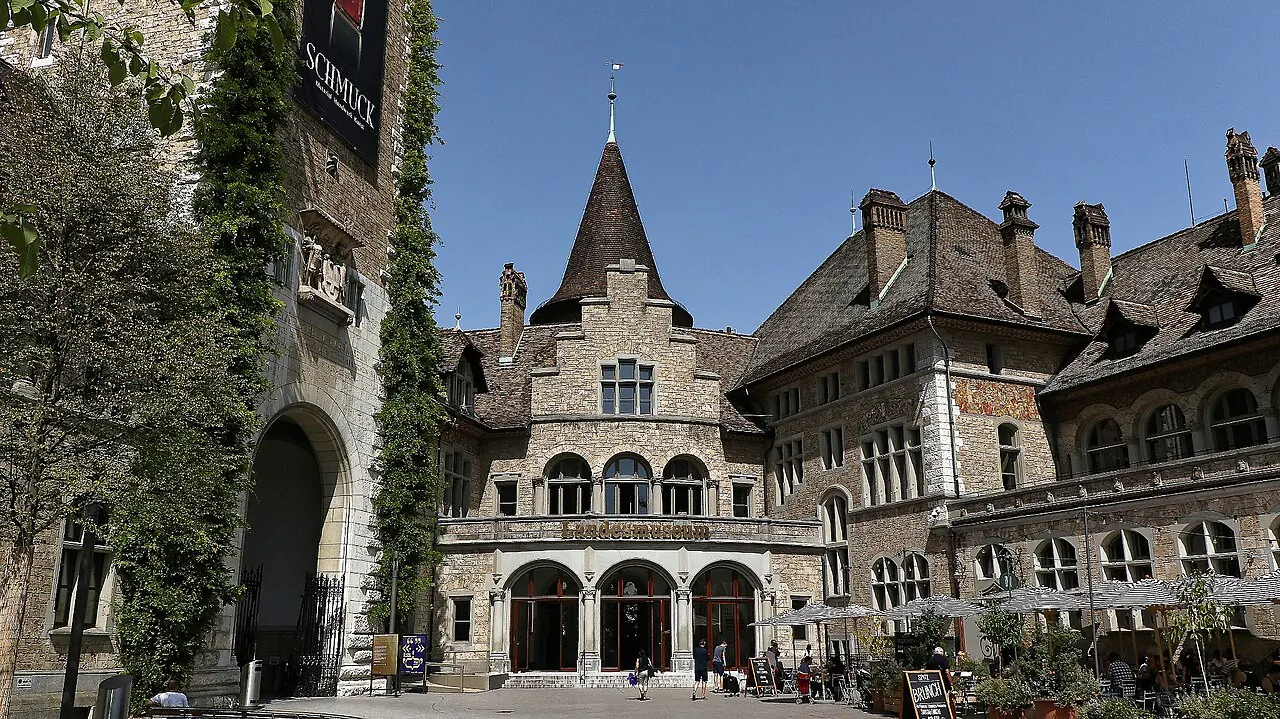
The main-station area is the straightforward choice when Zurich is a rail hub for your trip rather than only a sightseeing destination. Europaallee extends west from the station towards Langstrasse, with shops, cafes, restaurants and bars in a newer urban setting. The National Museum and Platzspitz sit on the northern station side, supplying nearby cultural and green-space options. They belong to the wider station base, not to Europaallee itself; the photograph and pin deliberately identify the museum.
Airport rail services arrive at Zurich HB, and ZVV's map shows the surrounding local stops and interchanges. Check the actual station exit for your hotel: the HB complex and tracks separate addresses that may look adjacent on a map. The trade-off is a more transport-and-commercial environment than the small old-town lanes, with traffic or railway activity around some properties. Europaallee's western end also approaches Langstrasse's evening venues. Choose the west-bank old town if central sightseeing is the main purpose, or Enge if a greener lakeshore routine matters more than repeated rail connections.
Plan it well: The National Museum photo and pin identify the northern station side, not Europaallee west of the tracks.
Zurich Tourism: HB and EuropaalleeSeefeld: lake promenades and a longer leisurely stay
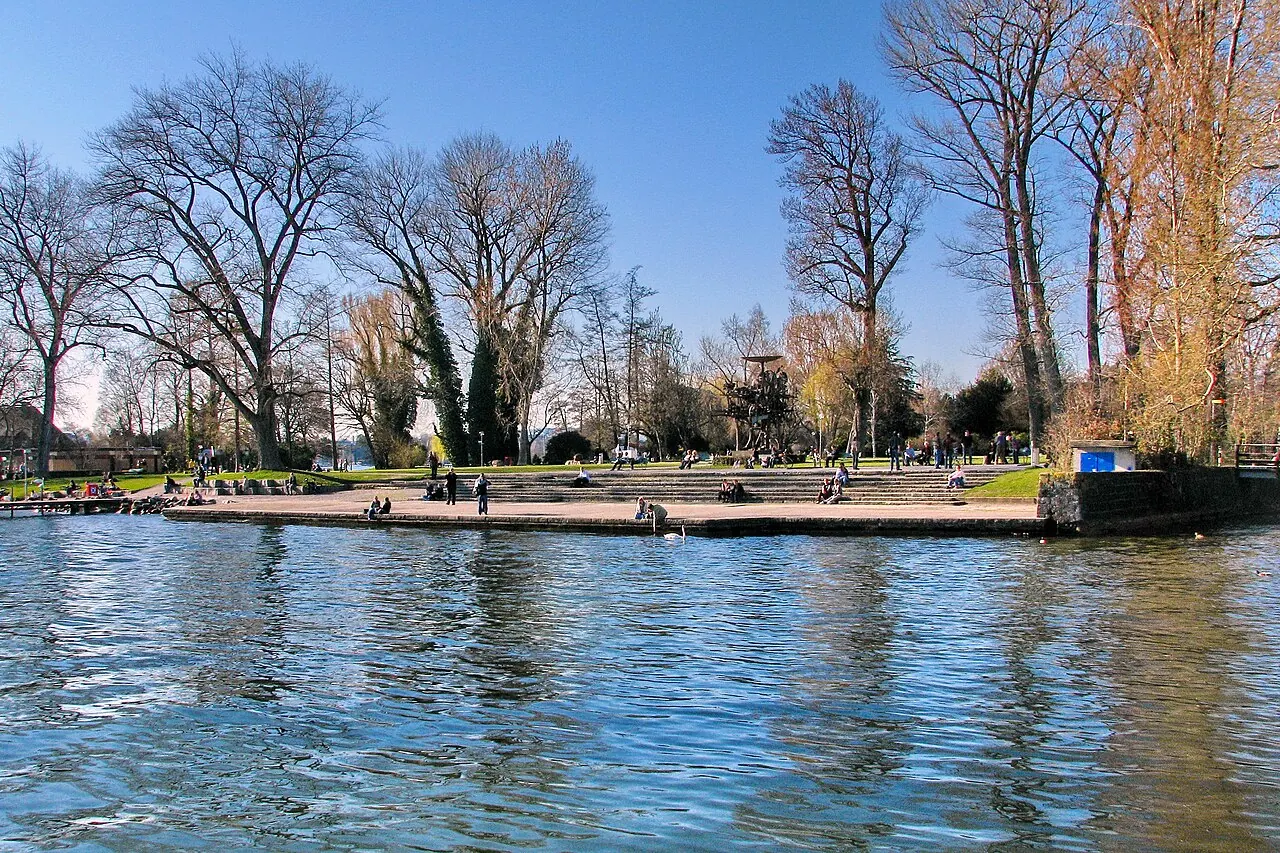
Seefeld puts the right shore of Lake Zurich into everyday hotel life. Starting behind the Opera House and continuing towards Zurichhorn and Tiefenbrunnen, the area combines residential streets, boutiques and a long sequence of lakeside places to pause. Utoquai, the Chinese Garden and the Pavillon Le Corbusier setting give the shore purposes beyond simply admiring the water. Cafes and restaurants on the neighbourhood streets offer an alternative to old-town dining without making every meal a central-city outing.
Use the ZVV map to distinguish the Bellevue and Stadelhofen end from addresses farther along Seefeldstrasse or near Tiefenbrunnen. The relevant rail or tram stop determines the airport connection; do not assume every lakeshore hotel is close to the same interchange. The main compromise is distance from HB and the western contemporary-culture venues, especially towards the farther end of the shore. Choose the old town for a compressed first visit or Enge for the left-bank park and museum combination rather than the right-bank promenade.
Plan it well: Zurichhorn anchors the farther lakeshore park setting. A hotel near Stadelhofen has a different rail arrival.
Zurich Tourism: SeefeldEnge: left-bank parks, Rietberg and a calmer itinerary
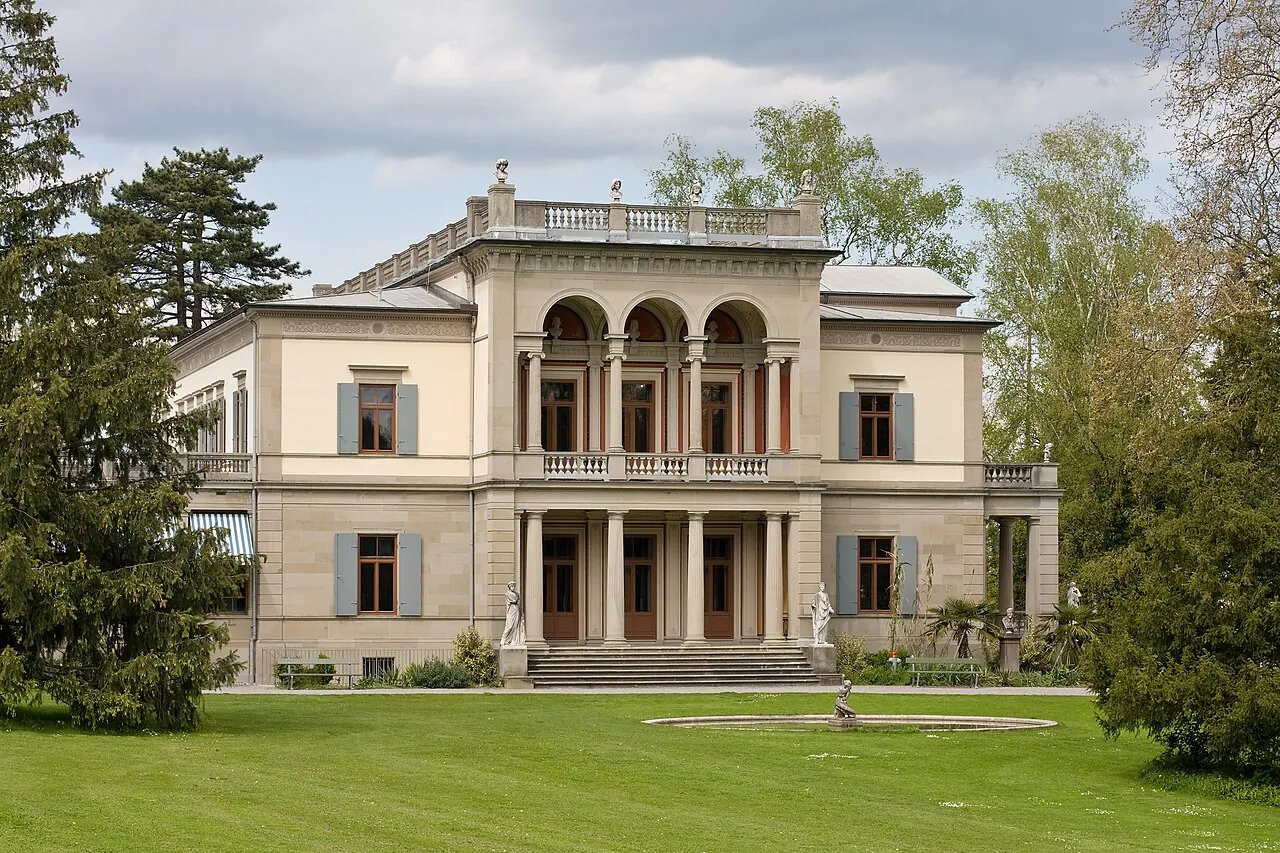
Enge is useful when Zurich should include time in parks and beside the lake rather than only old-town streets. Museum Rietberg and Rieterpark give the neighbourhood a strong cultural-and-green-space pairing, while Seebad Enge adds a lakeside destination. The station area supplies everyday food stops and a practical focal point. Choose an address according to that balance: a property near Enge station and one nearer the park approaches have different walks and different immediate surroundings.
ZVV identifies Enge railway station and Museum Rietberg among the useful local transport points. Airport arrivals can be planned through the rail network with the appropriate onward connection; use the actual departure and station rather than promising a direct service for every journey. The park and hillside approaches may still involve an uphill walk from a stop. The compromise is extra travel for Niederdorf evenings and Zurich-West, with a less concentrated restaurant-and-bar circuit. Choose HB for repeated long-distance departures or Seefeld if the right-shore promenade and Opera House matter more than Rietberg's collection.
Plan it well: Rietberg is the museum-and-park anchor; a room by Enge station has a different final walk.
Zurich Tourism: EngeZurich-West and Hardbrucke: design, industrial heritage and contemporary culture
Zurich-West is the purposeful alternative to a postcard old-town stay. Former industrial structures around Schiffbau and the Viadukt have become cultural venues, shops and places to eat; the Freitag container tower and Prime Tower give the area a distinct contemporary skyline. This base suits travellers who want design, performance and an evening in the converted industrial quarter to be part of the holiday. It is not a quieter extension of Bahnhofstrasse, and its broad urban spaces feel different from the river lanes.
Hardbrucke is the useful rail reference, with Schiffbau and Technopark among the local stops on ZVV's city map. For the airport, compare the actual train connection from Hardbrucke or via HB rather than assuming every service runs directly. The trade-off is a separate journey to the principal old-town churches and lake promenade, with railway, road and evening-venue activity near some addresses. Choose Niederdorf for historic surroundings immediately outside, or Enge and Seefeld if green lakeside downtime matters more than contemporary culture and industrial architecture.
Plan it well: Prime Tower anchors Zurich-West beside the Hardbrucke area. It is not an old-town location or a railway-platform pin.
Zurich Tourism: Zurich-West and HardbruckeArriving by rail and choosing the right interchange
Airport rail and city trams are separate choices
Zurich Airport lists its train, tram and bus connections. Rail to Zurich HB is useful for the central station base; other neighbourhoods require the relevant onward walk, tram or rail connection. Match the route to your terminal arrival and hotel address.
Zurich Airport: train, tram and bus accessChoose the stop before judging the neighbourhood
ZVV's city network map distinguishes HB, Stadelhofen, Enge and Hardbrucke and the surrounding tram stops. Seefeld and Enge each cover more than one arrival position; a lake or museum pin does not identify the closest useful hotel stop.
ZVV: Zurich city transport network mapCheck the airport zone as well as the city
Use the ZVV zone map and fare information for the actual airport-and-city journey. A ticket or pass described as central-city travel should not be assumed to cover the airport without checking its included zones.
ZVV: zone map and travel coverageUse HB exits deliberately
The National Museum is on the northern side of the main station, while Europaallee extends west beside the tracks. Pick the station exit and final walking route for the hotel, especially with luggage or limited mobility.
Swiss National Museum: visitor accessFind hotels in Zurich
Compare Zurich hotels by the riverbank, lakeshore and station connection that fit your stay. Check the nearest usable stop and the final entrance route alongside the neighbourhood name.
Explore Zurich hotels