
Paris city guide
Where to stay in Paris
Compare central museum streets, the Marais, two distinct Left Bank bases, Opera, hilltop Montmartre, the canal and the Eiffel-side pocket, with real airport transfer choices.
Plan your visit
Choose Paris by the streets you want outside your door, not simply by an arrondissement number. Saint-Germain and the Latin Quarter share a Left Bank position but offer different reasons to stay; a Montmartre hotel adds a hill, while a Canal Saint-Martin address changes the daily journey to western landmarks. Within each base, the airport connection belongs to a particular station and hotel pocket. These eight comparisons separate that useful geography from the broad names used in hotel listings.
Choose your base
Choose Louvre and Palais-Royal for central art-led days, the Marais for historic shopping streets, Saint-Germain for cafes and bookshops, or the Latin Quarter for university history and a useful RER B arrival. Opera favours shopping and theatres; Montmartre favours evenings on the hill; Canal Saint-Martin favours neighbourhood food and walks. Rue Cler and Invalides suit repeated Eiffel-side outings.
For airports, CDG is on RER B and Orly on metro 14. Neither serves every neighbourhood directly. Auber is RER A, not B, and the Montmartre summit is not an airport station. Count the interchange and final hotel walk before choosing solely for a famous view.
Louvre and Palais-Royal: central art-led days
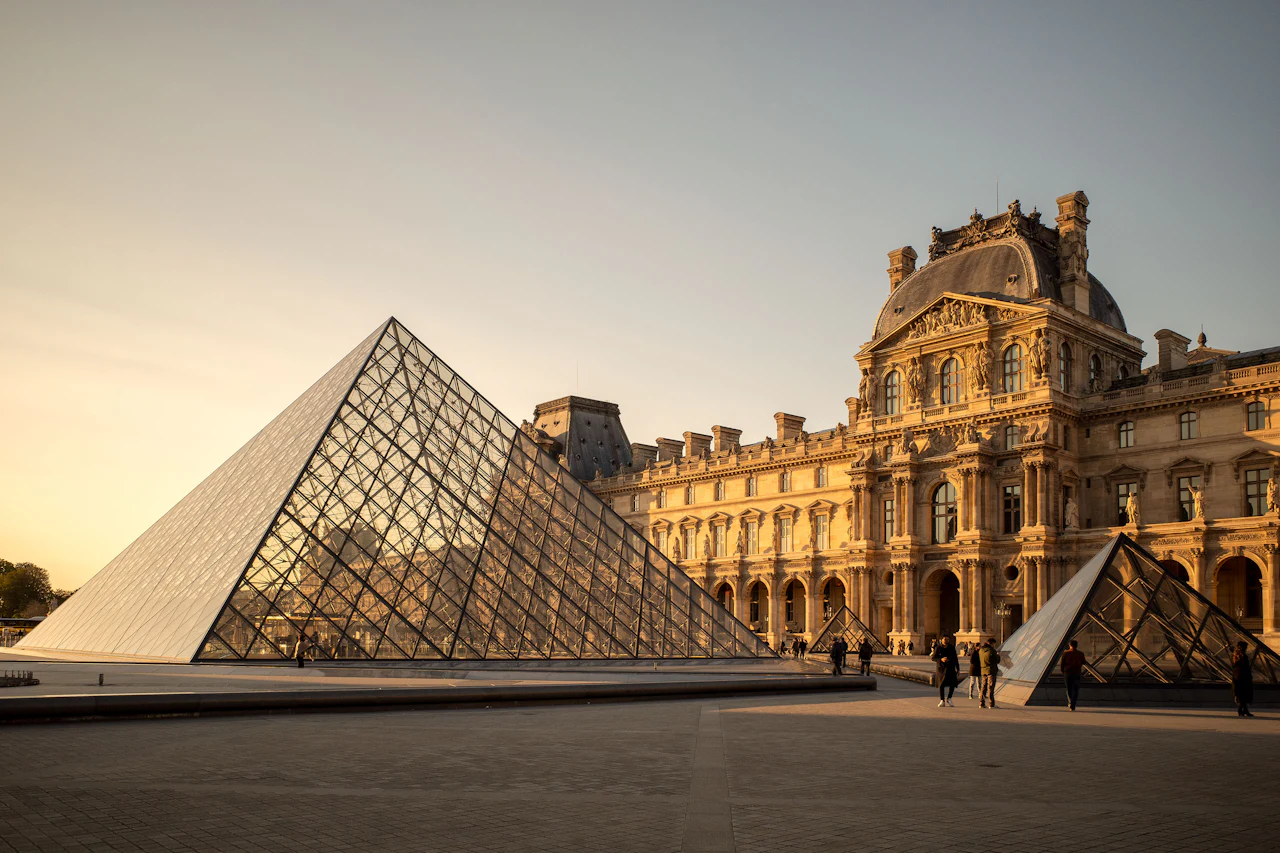
This is a useful base when the Louvre deserves more than one hurried visit and central Right Bank walks will fill the gaps. Palais-Royal supplies gardens and arcades, the Tuileries extend the museum outing west, and Rue Sainte-Anne offers Japanese dining away from the museum forecourt. A hotel by the river and one north of Palais-Royal have different evening streets and airport walks, despite sharing a central description.
RATP lists Palais Royal-Musee du Louvre on lines 1 and 7, and Pyramides on 7 and 14. CDG can use RER B to Chatelet-Les Halles and line 1 through the connected interchange; Orly line 14 to Pyramides suits the northern pocket. It is not a line 14 arrival at the Louvre museum station. The drawback is visitor activity and shopping-street footfall rather than a village setting. Choose Montmartre for hilltop evenings, the Marais for smaller historic streets, or Saint-Germain for a Left Bank cafe-led stay.
Plan it well: The photograph shows the Louvre courtyard; the marker identifies neighbouring Palais-Royal, not a museum entrance.
Paris je taime: Palais-Royal to Vendome walkLe Marais: galleries, boutiques and historic streets
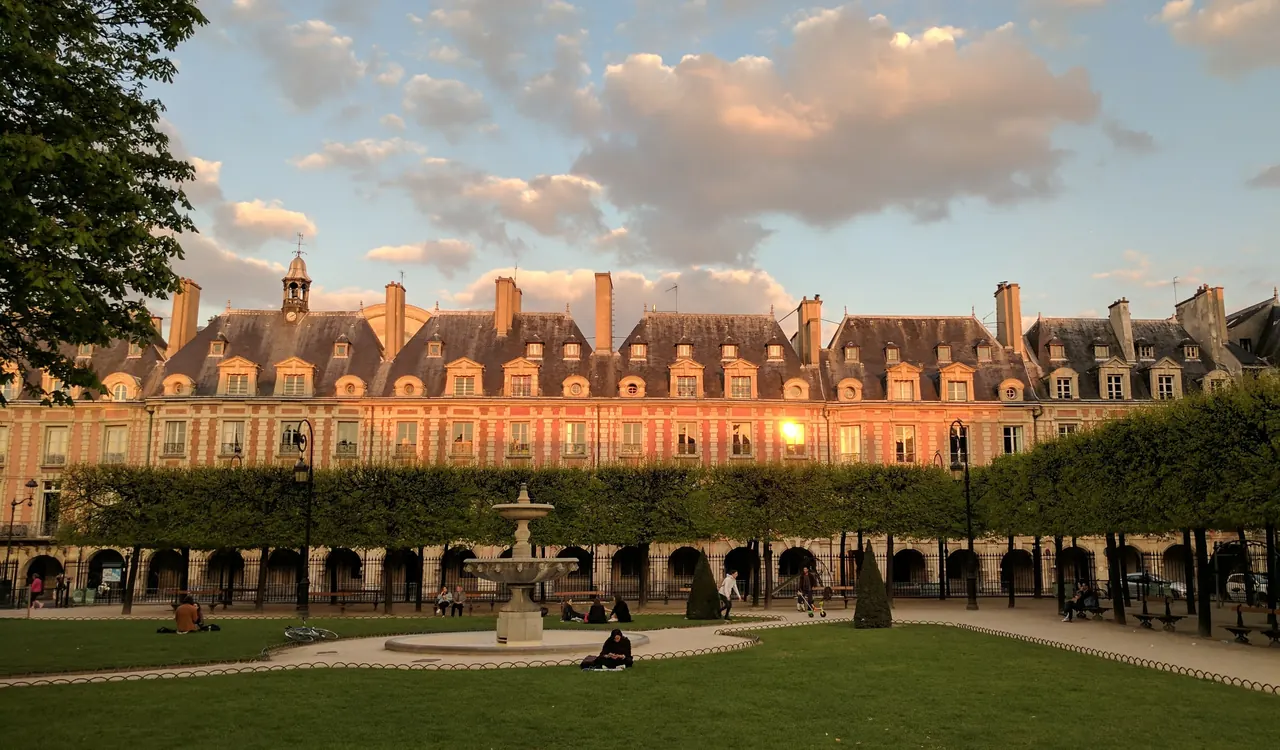
The Marais is a strong choice when Place des Vosges, Musee Carnavalet, Musee Picasso and the streets between them are the attraction rather than stops on a cross-city checklist. Rue des Rosiers adds a specific food-street focus, while boutiques and galleries pull the day north into Upper Marais. Saint-Paul-side hotels and addresses farther north are distinct pockets: the historic neighbourhood name does not put every room beside the same square or station.
Saint-Paul is on RATP line 1; Temple on 3 and Rambuteau on 11 serve other edges. From CDG, use RER B to Chatelet-Les Halles and the appropriate local line; Orly line 14 reaches Chatelet before the neighbourhood connection. An Upper Marais stay does not inherit Saint-Paul's station walk automatically. Narrow shopping streets and visitor activity are part of the setting, while the airport arrival requires a change. Choose Louvre and Palais-Royal for repeated museum visits farther west, or the Latin Quarter when a station-side RER B hotel is the stronger arrival advantage.
Paris je taime: Marais neighbourhoodSaint-Germain-des-Pres: cafes, books and Left Bank evenings
Choose Saint-Germain for the particular Left Bank streets around the church, Rue de Buci and Rue du Four. Cafe de Flore and Les Deux Magots are recognisable landmarks; the covered food market provides another dining focus beyond a famous terrace. Bookshops, cafes and river walks make a coherent stay here. This differs from the Latin Quarter's university and medieval-history emphasis even though both bases lie south of the Seine.
RATP line 4 serves Saint-Germain-des-Pres and line 10 serves Mabillon. CDG RER B to Saint-Michel-Notre-Dame can work with a westward hotel walk, or use a line 4 connection; Orly line 14 to Chatelet then line 4 is a rail example. The farther west or south the hotel, the less useful the direct RER walk becomes. Cafe and bar streets are an active setting, not a guarantee of silence. Choose the Latin Quarter for stronger station-side RER access or the Marais for Right Bank galleries and shopping. Saint-Germain rewards guests who want these local evenings themselves.
Paris je taime: Saint-Germain-des-Pres area walkLatin Quarter: university history and a CDG rail approach
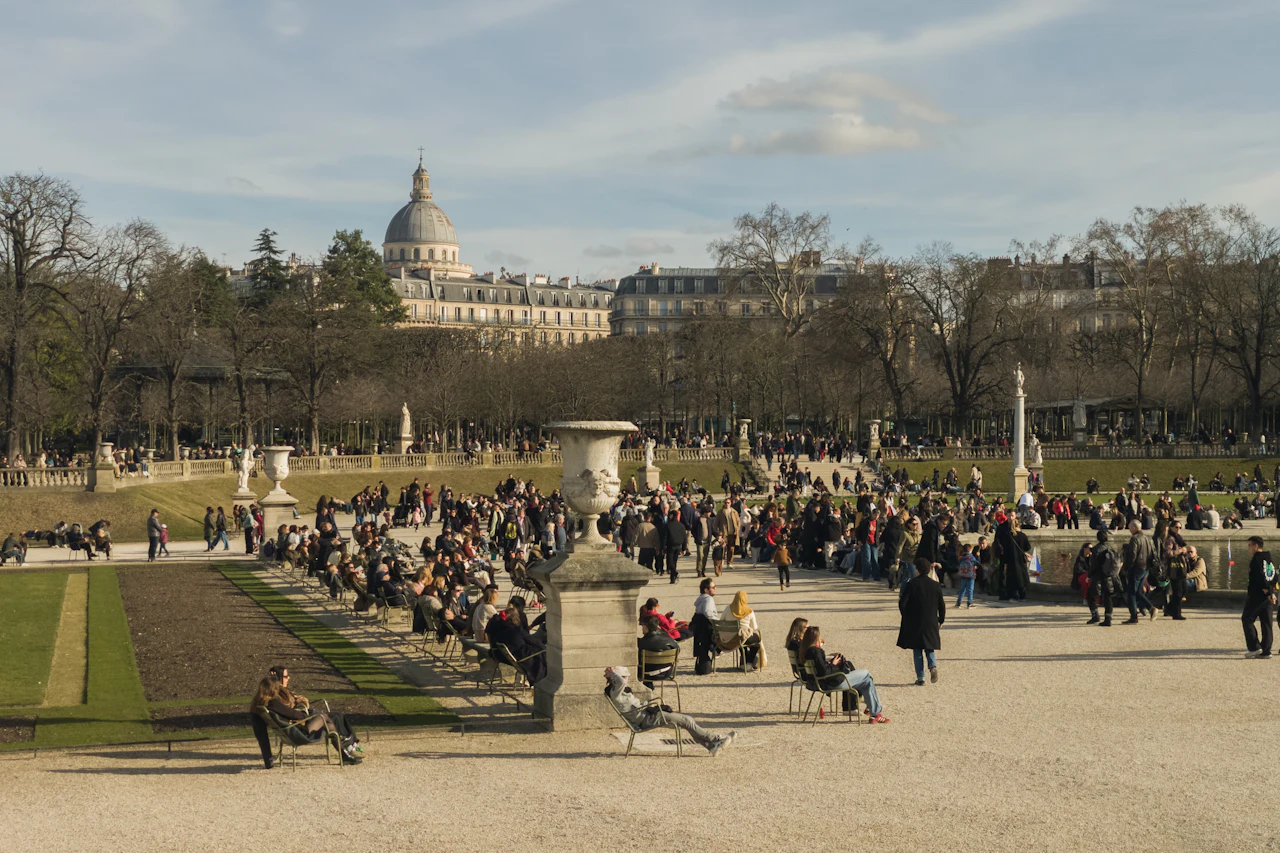
The Latin Quarter suits a stay shaped by the Sorbonne, Pantheon and old university streets, with Luxembourg Garden on the western edge. Rue Mouffetard supplies food shops farther south, while Rue de la Huchette gives the river-side pocket a different dining and jazz setting. A hotel near Saint-Michel and one near Mouffetard will not give the same walks or evening surroundings. Choose the historic pocket you want rather than all of the fifth arrondissement at once.
RER B serves Saint-Michel-Notre-Dame and Luxembourg for the CDG connection; Cluny-La Sorbonne is on metro 10 with linked Saint-Michel access. Orly can use line 14 to Chatelet and line 4 to Saint-Michel before the final walk. Southern and hillier hotel streets weaken the simple station-side arrival. Tourist dining lanes near the river also differ from the university-side setting farther inland. Choose Saint-Germain for cafe-and-bookshop evenings west of here, or Louvre and Palais-Royal for Right Bank museum days. The photographed garden illustrates the park edge, not Rue Mouffetard itself.
Paris je taime: Latin Quarter historic walkOpera and Grands Boulevards: shopping, passages and theatres
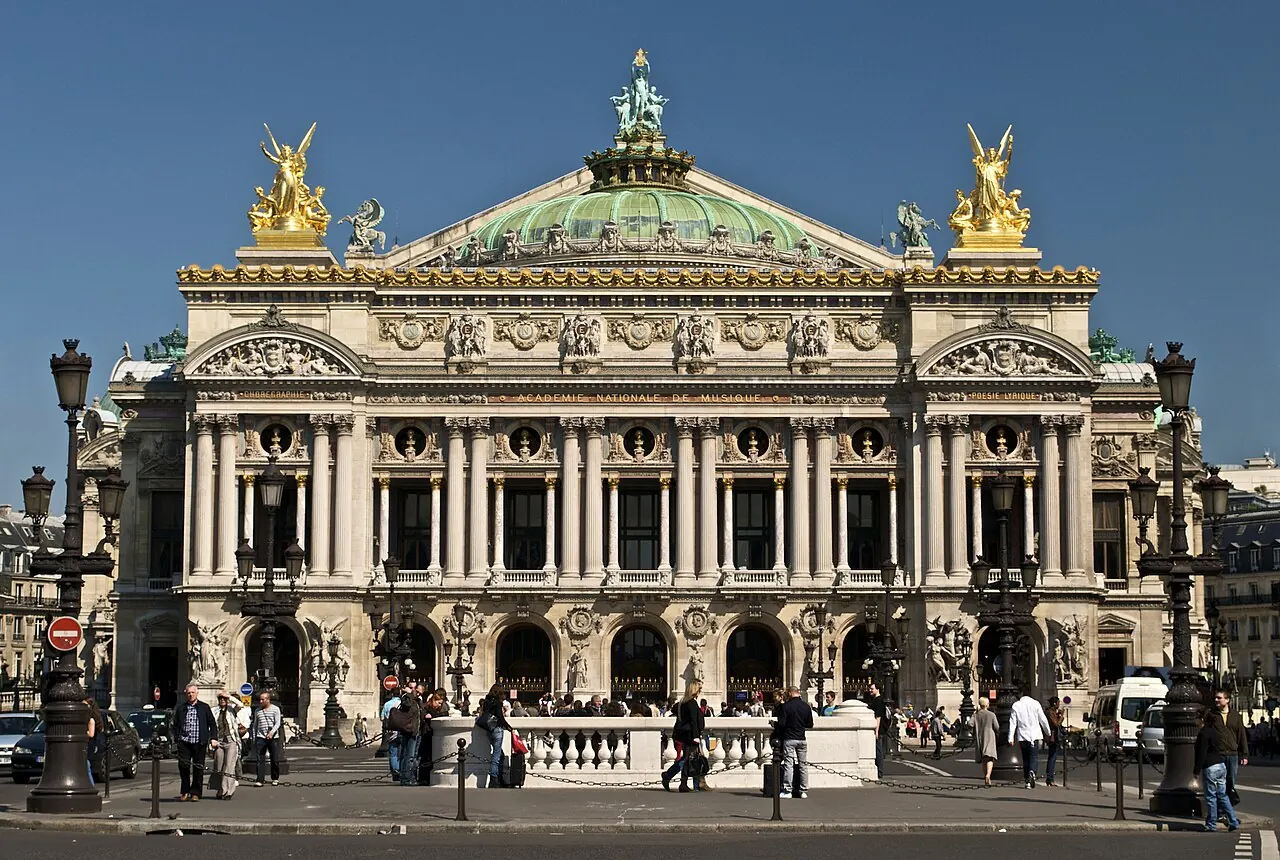
Opera gives the stay a boulevard scale rather than the Marais pattern of smaller historic lanes. Palais Garnier, the Boulevard Haussmann department stores and covered passages provide a clear shopping-and-culture focus. Farther east, Opera Comique and the Grands Boulevards passages offer another theatre and restaurant pocket. Hotels in those eastern streets should not be treated as though they stand at the opera house or beside its rail entrances.
RATP lists Opera on 3, 7 and 8; Auber is RER A, while Saint-Lazare provides line 14 farther west. CDG can use RER B to Chatelet-Les Halles and change to RER A for Auber; Orly line 14 to Saint-Lazare helps the western hotel pocket. There is no direct CDG RER B train to Auber. Boulevard traffic and retail activity are the tradeoff, with airport convenience diminishing farther east. Choose Montmartre for hilltop streets or Saint-Germain for cafe-led Left Bank evenings. This base works when shopping and performances recur, not simply because Opera appears on a hotel label.
Paris je taime: Palais Garnier area walkMontmartre: hilltop evenings with a real luggage climb
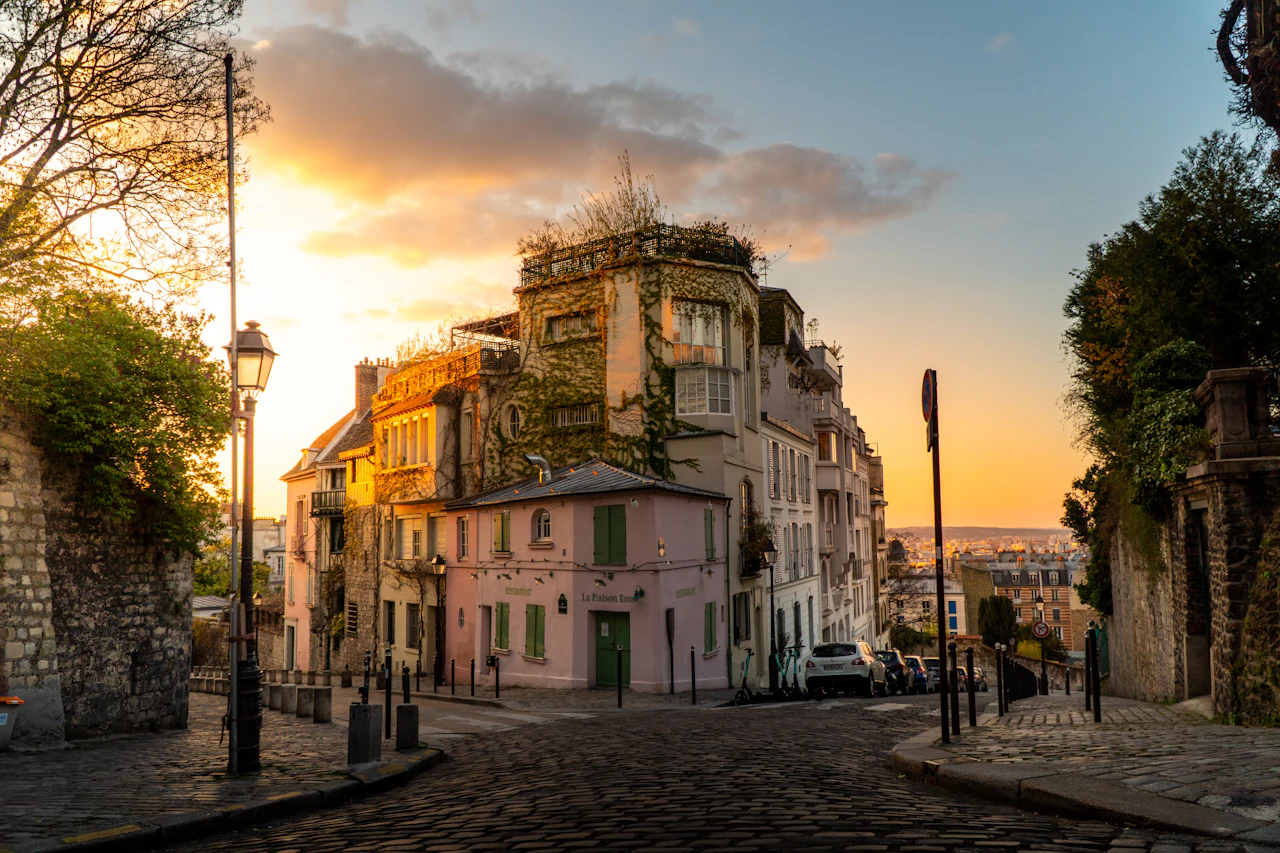
Choose Montmartre for evenings on its own streets, not only to see Sacre-Coeur once. Abbesses and Rue Lepic provide cafes and food businesses below the summit; the La Maison Rose streets make the climb itself part of the neighbourhood experience. A hotel near Abbesses, one by Lamarck and a summit address have different approaches. South Pigalle is another setting below the hill rather than the same stay with a different name.
RATP line 12 serves Abbesses and Lamarck-Caulaincourt; Anvers is on line 2 on the southern slope. Orly can use line 14 to Madeleine then 12 to Abbesses. CDG RER B to Gare du Nord still leaves a local connection or a real hotel walk. Steep lanes, steps and daily descents are the meaningful cost of this choice. The funicular handles a particular climb, not every hotel approach. Choose a central museum or Left Bank base if several timed visits make repeated cross-city trips burdensome. Montmartre is strongest when the hill is where you want to end the day.
Plan it well: The marker is a hill reference, not Abbesses station or a step-free route to the photographed street.
Paris je taime: Montmartre village walkCanal Saint-Martin and Republique: food streets and canal walks
Stay around the southern Canal Saint-Martin when locks, bridges, cafes and small food businesses matter more than a famous museum outside the door. Quai de Valmy and Quai de Jemmapes frame the canal, while Rue de Lancry connects its shops and bistros to the Republique end. This is a social neighbourhood setting worth using in the evening, not merely a way to label any hotel north of the historic centre.
RATP lists Republique on lines 3, 5, 8, 9 and 11; Jacques Bonsergent on 5 suits the southern canal streets. CDG can use RER B to Gare du Nord then 5; Orly line 14 to Chatelet then 11 reaches Republique. A hotel farther up the canal has a longer final walk from those interchanges. Repeated Louvre or Eiffel-side outings mean travel, and canal-side evening activity is not a promise of peace. Choose the Marais for more central historic shopping streets, or the Louvre pocket for art-led days. Republique is the transport reference here, not a substitute name for the entire canal.
Plan it well: The marker identifies Republique square at the southern edge, not a canal endpoint or hotel entrance.
Paris je taime: Canal Saint-Martin area walkRue Cler and Invalides: a western Left Bank base
Choose this pocket when the Eiffel Tower, Champ de Mars, Invalides and Quai Branly will feature repeatedly rather than on one isolated outing. Rue Cler provides food shops and cafes that give a stay here a street-level focus beyond the tower skyline. The whole western seventh arrondissement is not one compact hotel cluster: a room near Rue Cler, the river or Invalides has a different walk to each of those visits.
RATP line 8 serves Ecole Militaire and La Tour-Maubourg; Invalides adds 13 and RER C on the eastern edge. CDG can use RER B to Saint-Michel-Notre-Dame then C to Invalides, with the actual hotel leg still to follow. Orly line 14 to Madeleine and line 8 is another rail approach. Rue Cler proximity does not automatically mean RER C proximity. Marais or canal evenings require a cross-city trip. Choose Saint-Germain for a more central Left Bank cafe base, or Louvre and Palais-Royal for central art walks. This western choice works best when its landmarks shape several days.
Plan it well: The Rue Cler marker is a street reference, not an entrance to the Eiffel Tower or Invalides.
Paris je taime: sights around the Eiffel TowerSeparate the airport train from the neighbourhood leg
CDG: use the airport branch of RER B
RER B links Charles de Gaulle with Gare du Nord, Chatelet-Les Halles, Saint-Michel-Notre-Dame and Luxembourg. On the airport return, select the CDG branch rather than assuming every northbound B train serves the terminals.
RATP: RER B route and stationsOrly: line 14 is the current rail spine
Line 14 reaches Orly and serves Pyramides, Chatelet, Madeleine and Saint-Lazare. Match the local transfer to the hotel pocket; the old Orlybus is not a current alternative.
Ile-de-France Mobilites: airport accessChatelet-Les Halles is a connected interchange
An RER arrival and a metro departure can involve a substantial internal walk. Allow for the particular platforms and exits when using this interchange for the Louvre, Marais or Left Bank.
RATP: line 14 route and interchangesAuber and Invalides use other RER lines
Auber is RER A; Invalides is RER C. The suggested CDG approaches require a change from B, not a direct airport train to those neighbourhood stations.
RATP: RER and Transilien mapCheck the hill-side hotel approach
Abbesses is line 12. Compare the station approach with the actual hotel elevation and street route; the funicular serves one part of the hill rather than every Montmartre address.
RATP: Abbesses stationCompare hotels in the Paris pocket you will use
Browse Paris hotels around your chosen streets and useful station. Separate Upper Marais from Saint-Paul, Montmartre summit from Abbesses, and the Opera-side rail pocket from eastern Grands Boulevards. Compare the final arrival walk and room details alongside the neighbourhood setting.
Explore Paris hotels