
Bangkok city guide
Where to stay in Bangkok
Choose between old-city temples, Bang Lamphu evenings, Chinatown food streets, the Bang Rak river edge, Silom, Siam and the Asok to Phrom Phong rail corridor.
Plan your visit
Bangkok hotel choices are easier when the old city, working river and rail-connected modern districts are kept distinct. Tha Tien suits temple days; Bang Lamphu puts a different evening scene in the historic quarter; Chinatown and Talat Noi reward food and heritage walks. Farther south and east, Bang Rak, Silom, Siam and central Sukhumvit offer different combinations of boats, parks and rail. Choose the local streets first, then plan for the right airport: the Airport Rail Link serves Suvarnabhumi, not Don Mueang.
Choose your base
For repeated Grand Palace and Wat Pho visits, choose Rattanakosin near Tha Tien. Choose Bang Lamphu for old-quarter evenings, distinguishing Khao San from the Phra Athit edge. Chinatown favours food streets and Talat Noi heritage lanes; Bang Rak favours the river near Saphan Taksin; Silom favours park access and two rail networks. Siam suits shopping with nearby cultural stops; Asok and Phrom Phong suit modern dining and rail-led days.
The label riverside can mean either bank and a long distance from a pier. Sukhumvit is a long road, not one compact stay area. These comparisons deliberately cover useful pockets rather than every district that happens to have hotels.
Rattanakosin and Tha Tien: temple days with an old-city base
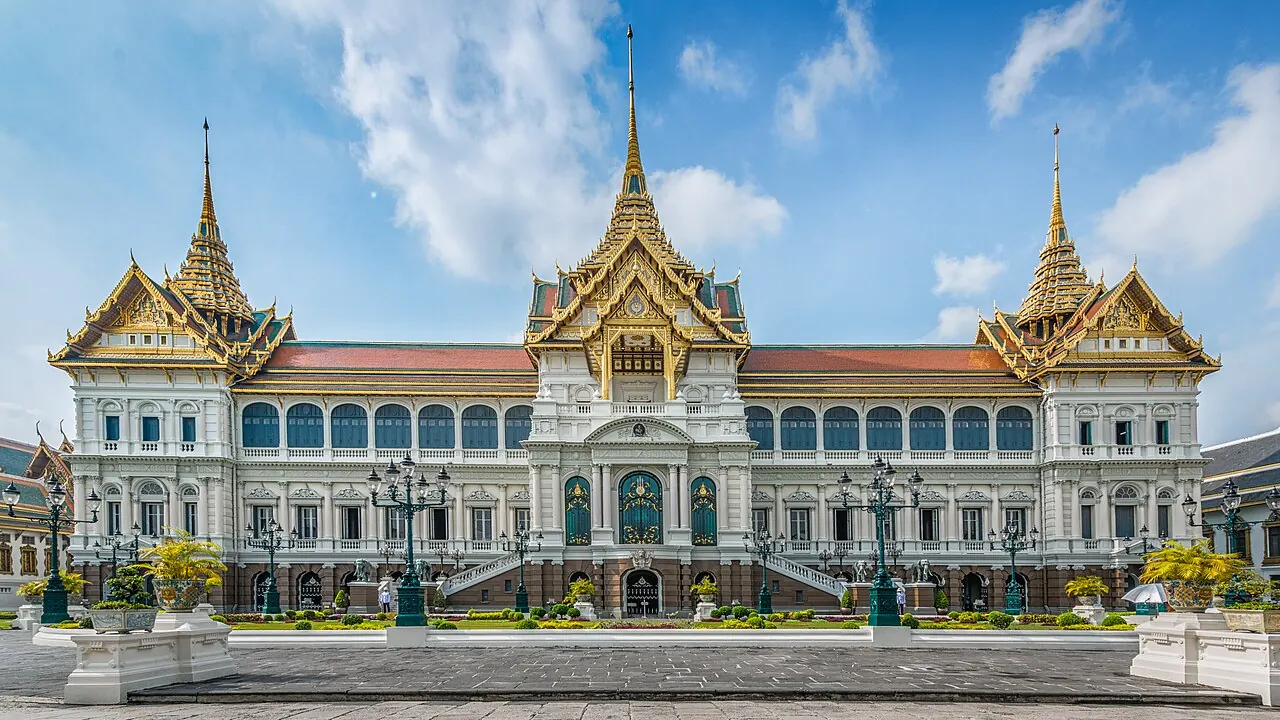
Stay in the royal-city pocket when the Grand Palace and Wat Pho will anchor several outings. Tha Tien adds historic lanes, markets, cafes and riverside dining facing Wat Arun, so the stay need not end when temple visiting does. A room nearer Sanam Luang or the National Museum is a different northern pocket from one near Wat Pho and Tha Tien. Choose which set of walks you want rather than assuming the whole old city is one compact compound.
BEM Blue line Sanam Chai serves the southern side, with exits towards Museum Siam, Wat Pho and the flower-market or Rajini-pier edge. From Suvarnabhumi, Airport Rail Link to Makkasan, the pedestrian connection to Phetchaburi and Blue line to Sanam Chai is a rail approach. Don Mueang instead uses Red line to Krung Thep Aphiwat and the Bang Sue Blue connection. This base trades doorstep Siam shopping for temple geography. Choose Siam or Asok if modern-city rail trips dominate. Tha Tien's crossing to Wat Arun is a particular ferry, not proof that every river service stops there.
Plan it well: The photograph shows the Grand Palace; the marker is a regional old-city reference, not Tha Tien pier or a hotel entrance.
Tourism Authority of Thailand: Tha Tien neighbourhoodBang Lamphu: choose Khao San nightlife or the Phra Athit edge
Bang Lamphu is a different old-city stay from the temple-side Tha Tien pocket. Khao San concentrates pubs, clubs and street-food activity; the Phra Athit side puts river walks and Santi Chai Prakan Park into the local outing. Wat Bowonniwet and the surrounding historic quarter provide daytime interest. Choose the entertainment core deliberately, or a river-edge street for a different setting, without assuming that moving one lane away guarantees quiet.
There is no BTS or MRT station on Khao San Road. Phra Arthit pier appears in the tourist-boat operator's route-linked attraction list, and Suvarnabhumis official airport page lists BMTA S1 towards Khao San and Sanam Luang. Confirm the actual bus stop and dated departure rather than treating it as a hotel shuttle. Don Mueangs Red line approach still leaves a local leg into this quarter. Boats do not supply an assumed late-night return. Choose Tha Tien for a stronger Sanam Chai and temple pairing or Siam for frequent rail-led outings. Bang Lamphu earns its inconvenience when these local evenings are a main reason for the stay.
Tourism Authority of Thailand: Khao San neighbourhoodChinatown and Talat Noi: food streets versus heritage lanes
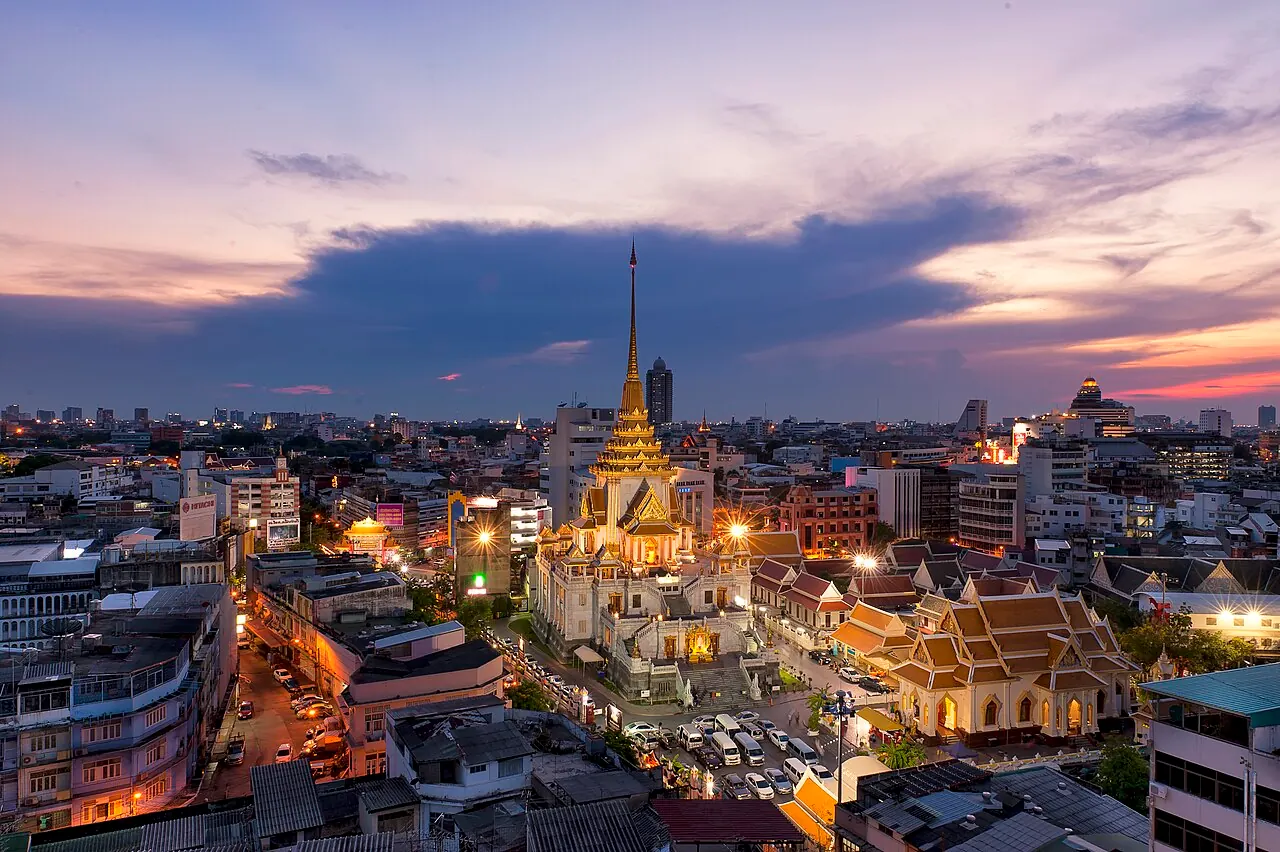
Choose the Yaowarat side for Chinese-Thai cooking, gold-shop streets, Wat Mangkon and a distinctly food-led evening. Wat Traimit anchors the eastern edge. Talat Noi is another local choice: shrines, So Heng Tai and small cafes or galleries make heritage lanes the attraction rather than the main neon food street. Neither description belongs equally to every Chinatown hotel, so decide whether dinner outside the door or daytime lane-walking matters more.
BEM Blue line Wat Mangkon suits the Yaowarat core; Hua Lamphong serves another approach near the Talat Noi edge. Ratchawongse pier is a Chinatown river node, not every Talat Noi hotel entrance. From Suvarnabhumi, Airport Rail Link to Makkasan and the Phetchaburi Blue connection supplies a rail approach; Don Mueang uses Red line and the Bang Sue Blue interchange. Small lanes and the final luggage walk can weaken a broadly advertised station benefit. Choose Silom for park-and-rail days or Siam for repeated shopping outings. The photo identifies Wat Traimit, not a Talat Noi cafe lane or the whole Yaowarat street.
Tourism Authority of Thailand: Chinatown area guideBang Rak river edge: boats, old trading streets and Saphan Taksin
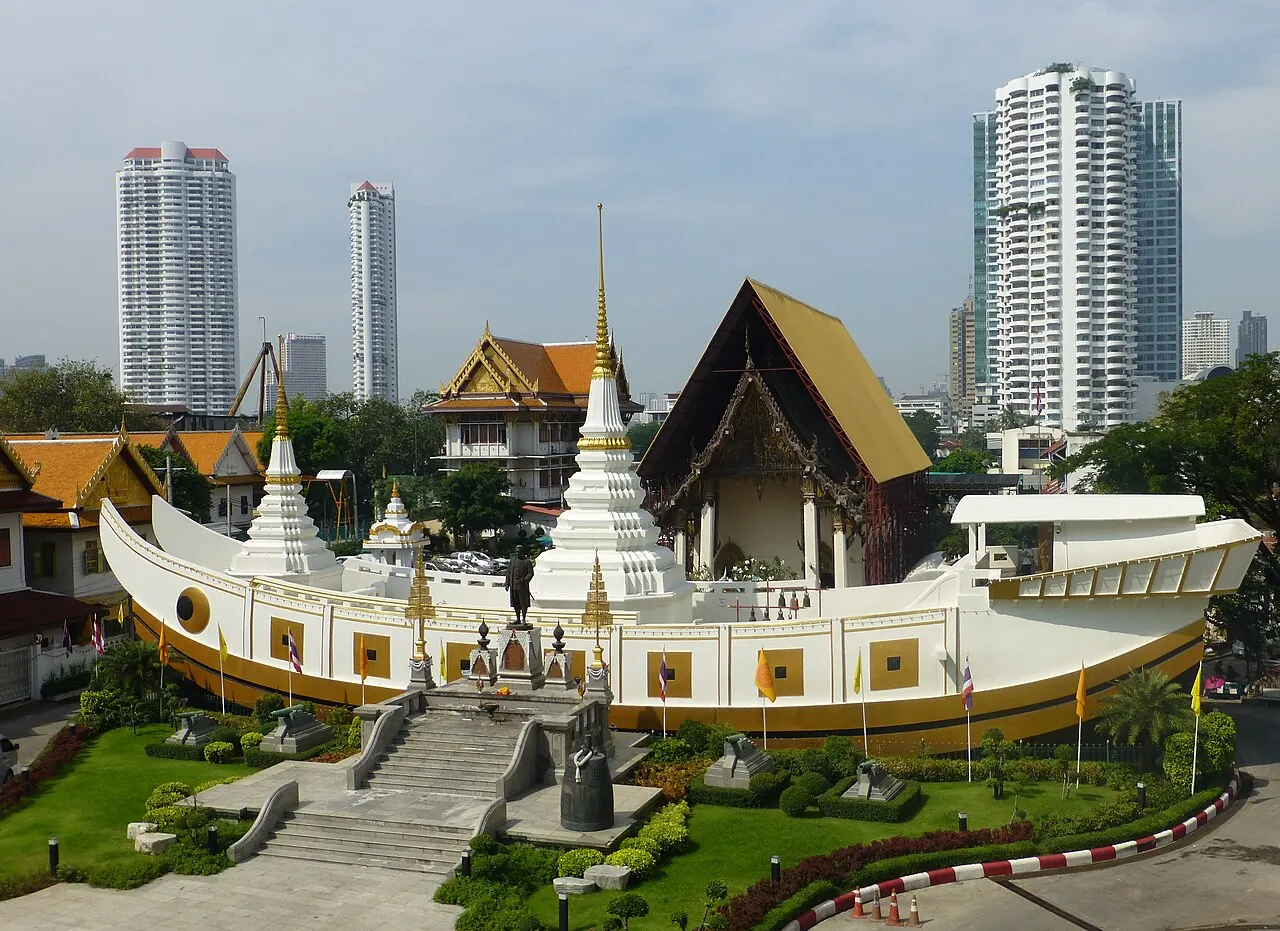
Choose this Bang Rak pocket for the working river and historic Charoen Krung streets rather than any property labelled riverside. Assumption Cathedral, the Mandarin Oriental Authors Wing and nearby old trading streets give the area a cultural focus; Wat Yannawa is near the southern station-and-pier node. Cafes and dining along the wider Silom and Charoen Krung setting supply another reason to stay. The northward historic pocket and a Saphan Taksin-side hotel do not share the same final station walk.
BTS Silom line serves Saphan Taksin; the boat operator identifies its exit 2 connection with Sathorn pier. Suvarnabhumi can use Airport Rail Link to Phaya Thai, BTS to Siam and a Silom-line change. Don Mueangs Red line and Bang Sue Blue connection can reach Si Lom before a Sala Daeng BTS leg. River hotels farther from the station, especially on the opposite bank, add another movement. Choose Silom for more direct Blue-line access or Tha Tien for repeated temple walks. A river view alone does not establish a convenient pier or included hotel shuttle.
Tourism Authority of Thailand: Silom and Charoen Krung areaSilom and central Sathorn: park access and two rail networks
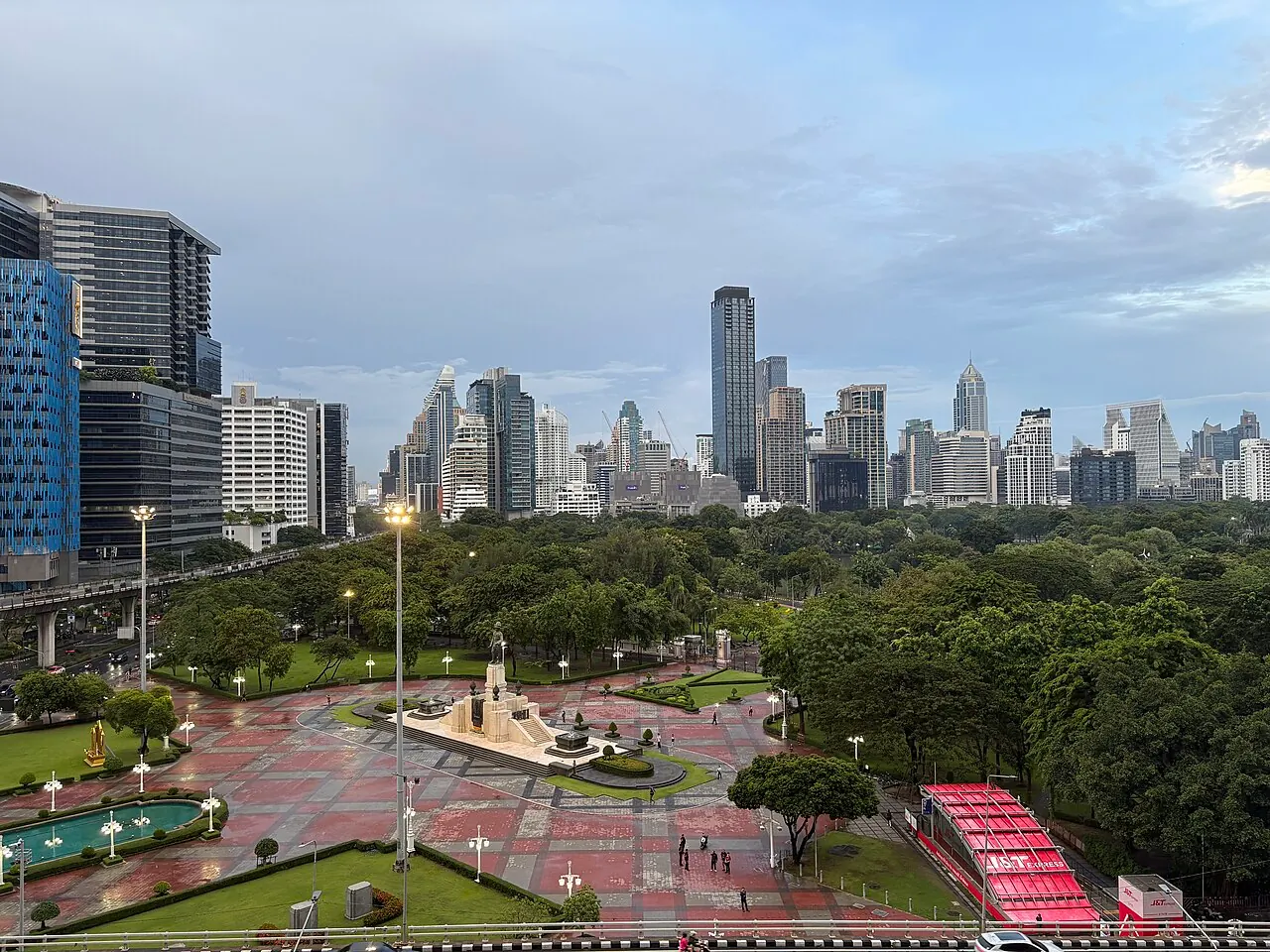
Silom works when Lumphini Park and a useful pair of rail networks matter more than a temple outside the door. The Sala Daeng and Si Lom end gives a park-side pocket with restaurants and shopping; farther west, Patpong and Thaniya provide a different nightlife and dining setting. Chong Nonsi-side Sathorn hotels form another office-and-dining pocket. Neilson Hays Library on Surawong adds a cultural outing, but these local places are spread across the wider area, not beside every room.
BTS Sala Daeng connects with BEM Blue line Si Lom, whose exit information names the park and the BTS approach. Chong Nonsi is on BTS, not a Blue-line station. Suvarnabhumi can use Airport Rail Link to Makkasan, walk to Phetchaburi and take Blue to Si Lom; Don Mueang uses Red to Krung Thep Aphiwat and the Bang Sue Blue connection. Broad office roads and a hotel deep into Sathorn add street walking. Choose Bang Rak for repeated boats or Siam for shopping-led days. Compare the exact station pocket rather than assuming all Silom or Sathorn offers the same access.
Tourism Authority of Thailand: Silom area guideSiam and National Stadium: shopping with nearby cultural stops
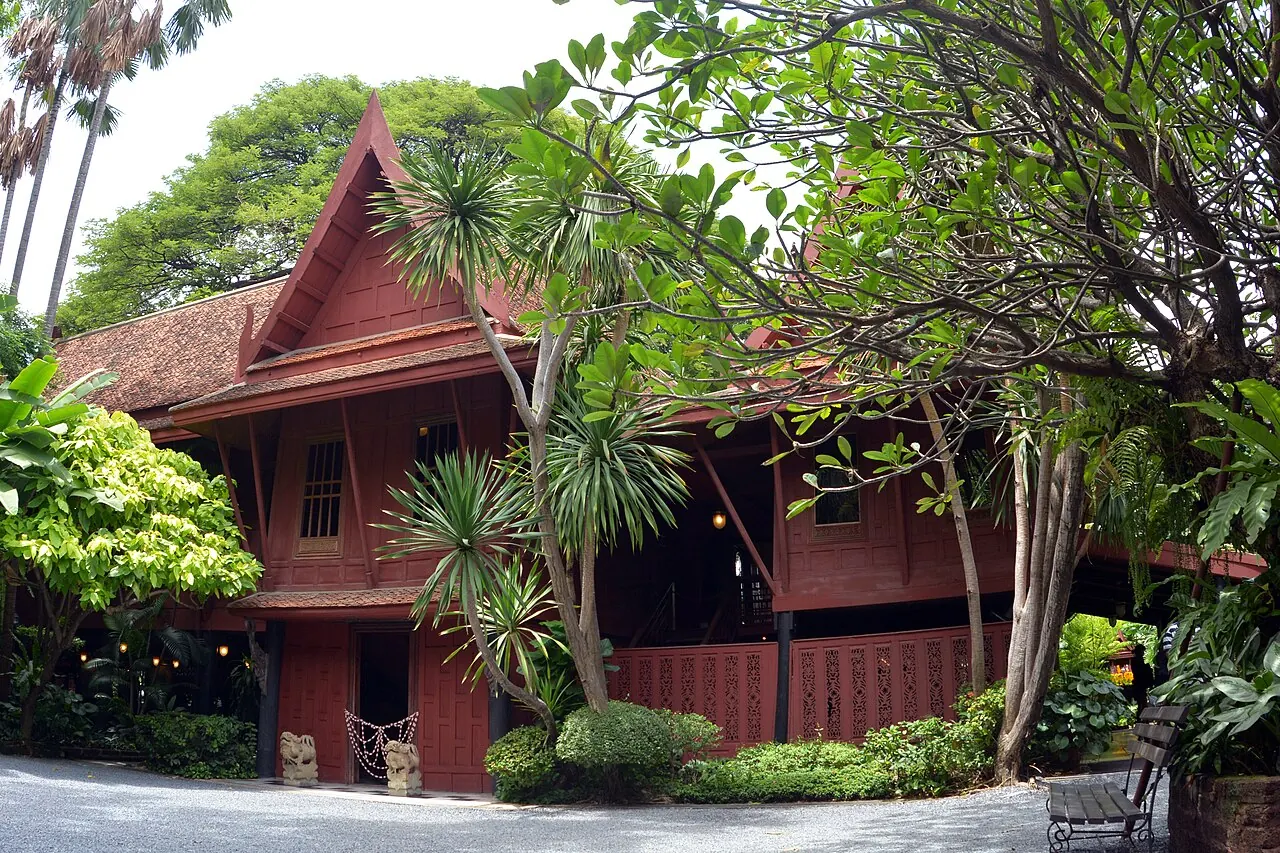
Choose Siam for shopping and food around Siam Square, Siam Paragon and MBK, with cultural visits that keep the day from becoming only malls. Jim Thompson House and Bangkok Art and Culture Centre give the National Stadium end its own reasons to stay. A hotel by Siam interchange and one near the house museum or Pathumwan intersection have different local walks, even within this relatively connected modern-city base.
BTS Siam is the Sukhumvit and Silom interchange; National Stadium is on the Silom branch. Suvarnabhumi Airport Rail Link to Phaya Thai connects with BTS towards Siam, while National Stadium adds the change at Siam. Don Mueang can use Red line to Krung Thep Aphiwat, Blue towards Chatuchak Park and the walking connection to BTS Mo Chit. The drawback is a mall-and-arterial setting and a separate journey to old-city temples. Choose Tha Tien if those visits dominate. Phaya Thai station-side hotels are an arrival-oriented alternative north of here, not another name for the National Stadium cultural pocket.
Plan it well: The photograph shows Jim Thompson House near National Stadium, not a Siam Square streetscape.
Tourism Authority of Thailand: Siam and Ratchadamri areaAsok and Phrom Phong: modern dining with deliberate rail access
Keep this choice to Asok and Phrom Phong rather than the whole long Sukhumvit Road. Asok supplies the major rail junction; Phrom Phong supplies Emporium, EmQuartier and Japanese dining around Soi 33. Choose between junction-side access and the shopping-and-dining pocket one BTS stop farther along. A hotel deep down a soi has a different daily walk from a station-side property, despite the same broad Sukhumvit label.
BTS Asok connects with BEM Blue line Sukhumvit; Phrom Phong has BTS but no MRT station under its malls. From Suvarnabhumi, Airport Rail Link to Makkasan, the walk to Phetchaburi and Blue to Sukhumvit is a rail approach. Don Mueang can use Red to Krung Thep Aphiwat and the Bang Sue Blue connection; Phrom Phong still adds the BTS or actual hotel leg. Busy junctions, long side streets and distance from the old city are the tradeoffs. Choose Siam for concentrated shopping and cultural stops or Tha Tien for temple days. This base is strongest for repeated modern-city outings, not an assumed quick road trip to every river sight.
Plan it well: The marker identifies Asok station, not all Sukhumvit or the Phrom Phong mall pocket.
Tourism Authority of Thailand: Sukhumvit area guideSeparate the two airports and the last neighbourhood leg
Suvarnabhumi: choose the Airport Rail Link interchange
Phaya Thai connects with BTS for Siam and onward Silom-line bases. Makkasan connects by a walk to Blue-line Phetchaburi for Asok, Silom, Chinatown and Sanam Chai approaches. Neither is the hotel doorstep.
BTS: current linked network mapMakkasan and Phetchaburi are a pedestrian connection
BEM names the Makkasan Airport Rail Link connection at Phetchaburi exit 1. Plan that interchange rather than describing Asok BTS as an Airport Rail Link station.
BEM: Phetchaburi station and exitsDon Mueang: use Red line, not Airport Rail Link
The Red-line operator lists Don Mueang and the Blue-line connection at Krung Thep Aphiwat. The city-side Blue station is Bang Sue; a BTS destination can require another interchange.
SRTET: Red-line route and station connectionsBang Lamphu: S1 is an old-quarter airport approach
Suvarnabhumi lists BMTA S1 for Khao San and Sanam Luang. Match its actual stop and departure to your flight arrival; it is an old-quarter approach, not a hotel shuttle or an assumed overnight service.
Suvarnabhumi Airport: BMTA bus routesUse named piers rather than a riverside label
The tourist-boat operator pairs Sathorn pier with BTS Saphan Taksin exit 2, Ratchawongse with Chinatown, Rajinee with the flower-market edge and Phra Arthit with Bang Lamphu. Choose the pier for the actual hotel and route.
Chao Phraya Tourist Boat: piers and local attractionsSanam Chai serves different old-city edges
BEM lists exit 1 towards Museum Siam and the palace or Wat Pho side, and exit 5 towards the flower market and Rajini pier. Those are local approaches, not a station at every old-city hotel.
BEM: Sanam Chai station and exitsSi Lom and Sala Daeng give a particular park-side connection
The BEM exit guide links Si Lom with Lumphini Park and BTS Sala Daeng. A Chong Nonsi-side Sathorn hotel uses a different local approach.
BEM: Si Lom station and exitsCompare Bangkok hotels around the streets and stop you need
Browse Bangkok hotels within the useful pocket, then compare the actual walk to Sanam Chai, Wat Mangkon, Saphan Taksin, Sala Daeng, Siam or Asok. Distinguish both river banks, station-side rooms from long-soi addresses, and Suvarnabhumi from Don Mueang arrivals. Compare room details alongside the transport approach.
Explore Bangkok hotels