
Los Angeles city guide
Where to stay in Los Angeles
Compare Downtown, Hollywood, Miracle Mile, Santa Monica, Venice and Universal City by the places you will visit, evening atmosphere and actual transport connections.
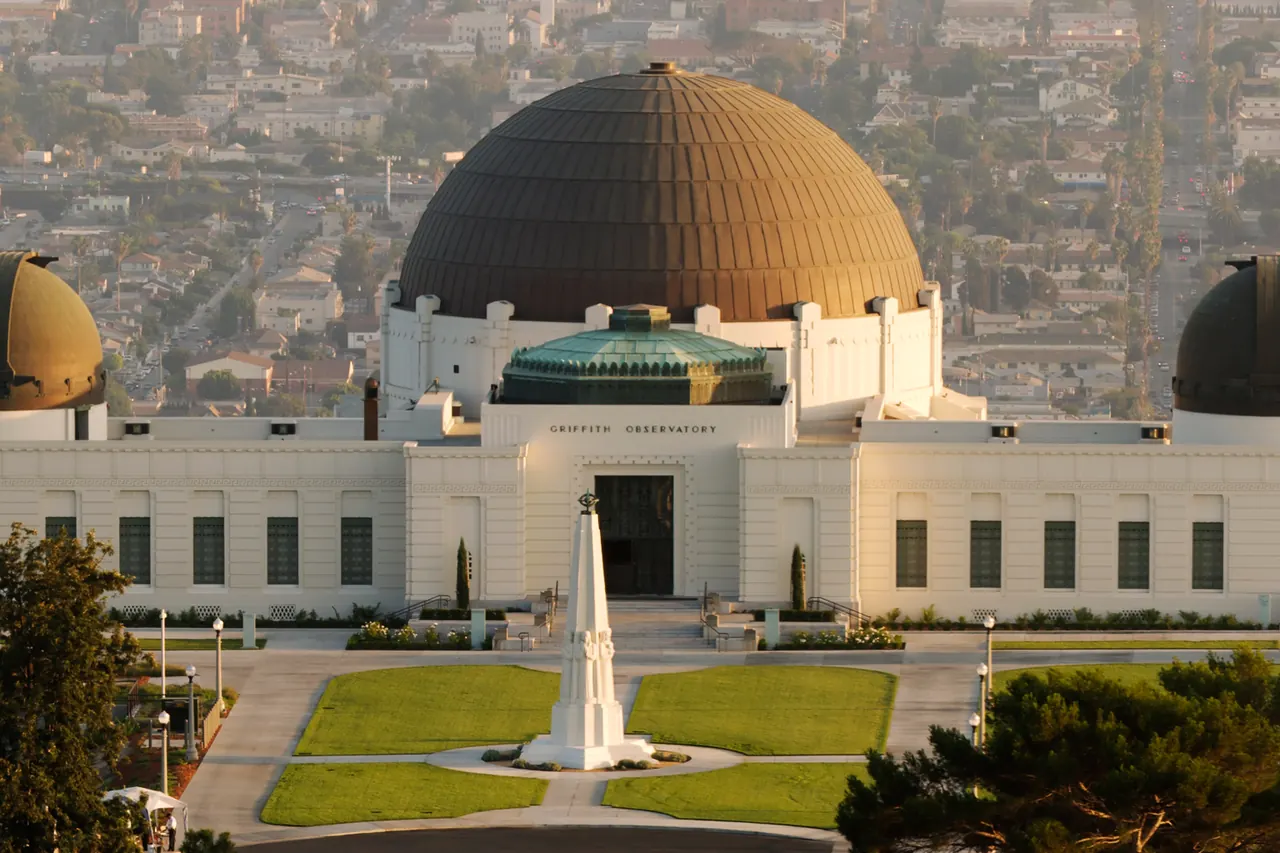
Plan your visit
Los Angeles rewards choosing a side of the city, not simply the room closest to a centre pin. A beach stay and a film-and-museums stay create very different daily journeys. These six bases include Santa Monica, a separate coastal city within the metropolitan area, and Universal City, the specialised theme-park base. Neither should be mistaken for a neighbourhood next to Downtown.
Choose your base
Downtown suits art, concerts and multiple rail lines; Hollywood suits film landmarks and shows. Miracle Mile puts Museum Row first. Santa Monica is the clearest beach-and-rail compromise, while Venice trades a rail station for canals, Abbot Kinney and the boardwalk. Universal City is useful when the theme park takes priority. If your plans repeatedly cross from the ocean to inland venues, consider dividing a longer stay between two bases.
Downtown: museums, concerts and rail connections
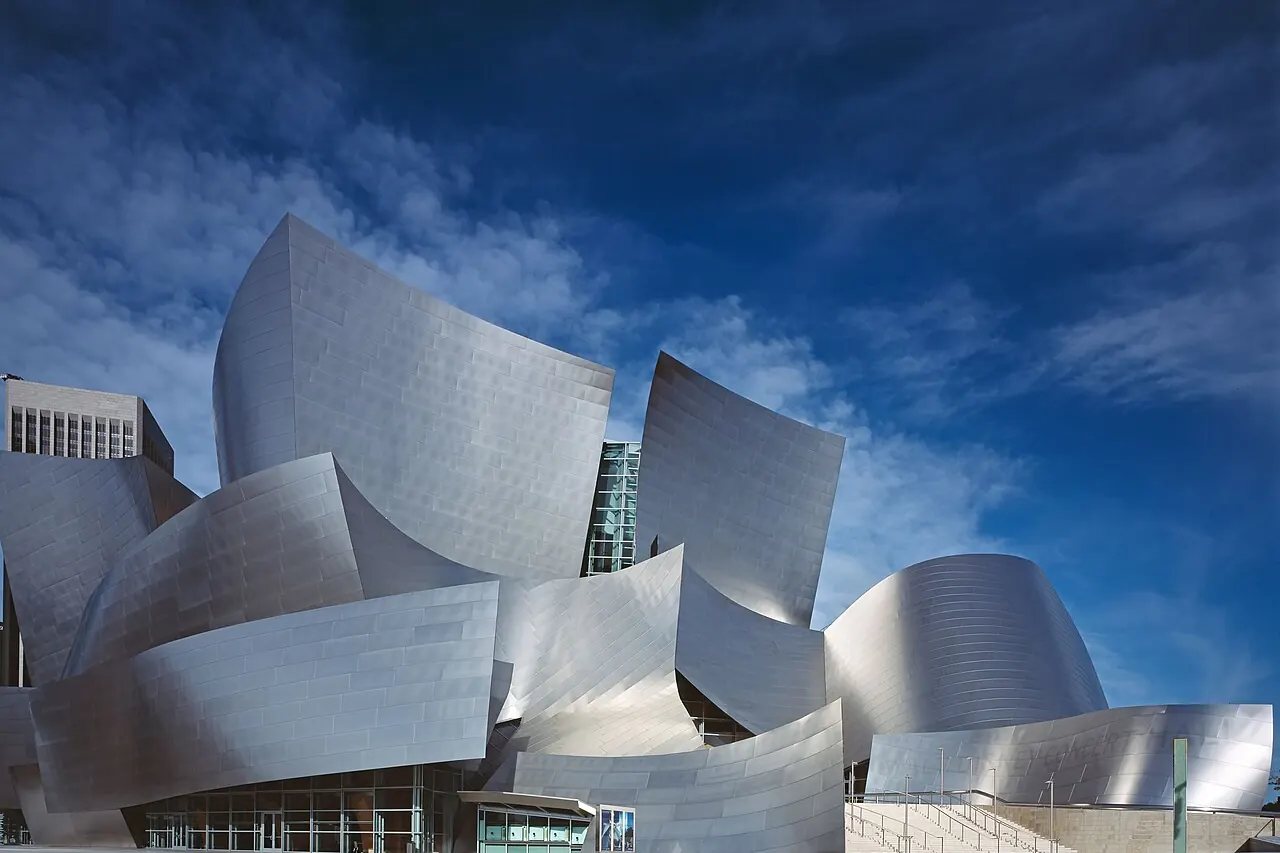
Downtown is a useful base when the Broad, Walt Disney Concert Hall and Grand Central Market form the core of your visit. Bunker Hill concentrates major cultural buildings; Broadway and the Historic Core supply a different streetscape and a food-hall stop. Little Tokyo adds Japanese restaurants and shops farther east, while the Arts District is another distinct pocket rather than the street outside every Downtown hotel. Choose among these clusters deliberately: a room beside the convention centre does not put you beside the concert hall, even though both are sold as Downtown.
Metro's Regional Connector gives the central district A and E Line stops, including Grand Avenue Arts/Bunker Hill and Historic Broadway; B and D services use other Downtown stations. FlyAway links LAX with Union Station, where you still need a final connection to most hotels. The drawback is a fragmented, traffic-heavy district with slopes around Bunker Hill and uneven distances between its evening destinations. Check the actual door-to-door route rather than counting attractions inside one label. Choose Hollywood for repeated theatre nights or Santa Monica when beach time matters more than the cultural cluster.
Plan it well: The photograph and pin identify Walt Disney Concert Hall on Bunker Hill. They are not a Downtown-wide hotel centre.
LA tourism: Downtown and the Arts DistrictHollywood: film landmarks and live entertainment
Hollywood works best when you actually want to spend your evenings here. The Walk of Fame, TCL Chinese Theatre and nearby movie palaces give the main boulevard an unmistakably visitor-oriented atmosphere; farther east, the Pantages anchors theatre plans. Restaurants and bars around the Hollywood-and-Sunset corridor offer a different evening from the coast. Choose the address by your intended venue, rather than assuming the Hollywood name covers every studio or viewpoint. The Hollywood Sign is on a hillside, and Griffith Observatory requires a separate uphill journey.
Metro's B Line serves Hollywood/Highland and Hollywood/Vine, linking this district with Downtown and Universal City/Studio City. From LAX, FlyAway to Union Station followed by the B Line is one public-transport approach; there is no current FlyAway Hollywood route to rely on. The downside is the busy, commercial boulevard and potential music or traffic noise near nightlife venues, alongside substantial travel for beach days. Choose Santa Monica for an ocean-led trip, Universal City for repeated theme-park visits, or a side-street hotel here when shows outweigh shopping and beach time.
Plan it well: The pin marks the Hollywood Walk of Fame on Hollywood Boulevard, not the Hollywood Sign or a studio entrance.
LA tourism: beginner's guide to HollywoodMiracle Mile: a stay built around Museum Row

Miracle Mile puts a distinctive group of museums within the same Wilshire corridor. La Brea Tar Pits, LACMA, the Academy Museum of Motion Pictures and the Petersen Automotive Museum make a strong reason to spend several days here rather than rush west after breakfast in Downtown. The Original Farmers Market and the Grove give you additional food and shopping farther north, not directly on Museum Row. A Wilshire address is convenient for the museums; a hotel towards Fairfax or Third Street changes the walk to both dinner and rail.
Metro's current map includes the D Line extension stations Wilshire/La Brea and Wilshire/Fairfax, so older advice treating the area as entirely bus-dependent is no longer adequate. Compare those station entrances with the hotel; Metro also lists Wilshire bus services. LAX arrivals still require a transfer or a road journey, rather than a direct airport train to the museum doors. The compromise is broad roads and a less concentrated late-evening circuit than Hollywood, with the beach remaining a separate outing. Choose Downtown for concerts and multiple rail directions, or Hollywood when nightly entertainment is the deciding factor.
Plan it well: The photo and map pin show La Brea Tar Pits. Check current individual museum access rather than assuming one museum's opening covers the whole row.
LA tourism: Mid City and Museum RowSanta Monica: beach time with an inland rail option
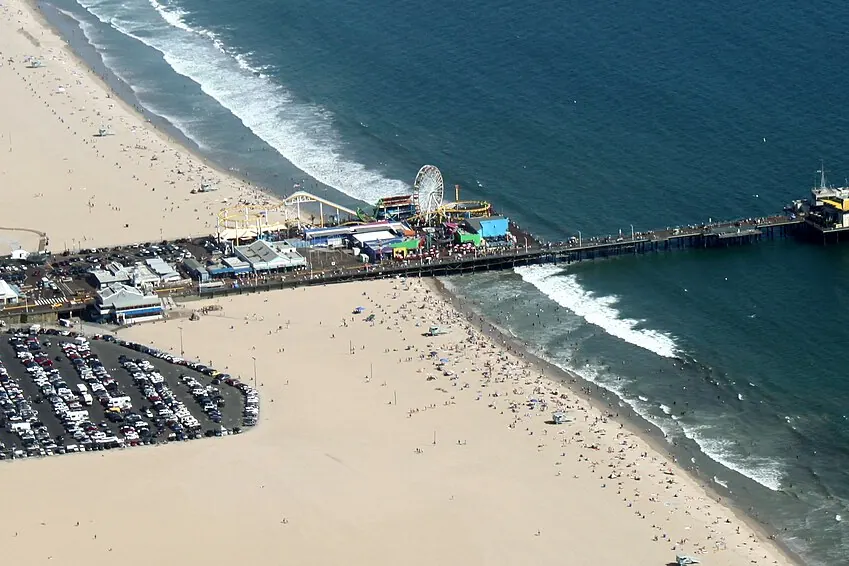
Santa Monica is a separate city, and a good metropolitan base when the ocean matters every day. Around Ocean Avenue and the pier, you have the beach, Palisades Park and restaurants overlooking the coastal setting. Downtown's Third Street Promenade and Santa Monica Place add shopping and meals inland; Main Street supplies another dining corridor farther south. Staying near Downtown Santa Monica station is a different proposition from an inland property carrying the same city name. Pick the immediate walking area you want, not simply a hotel described as near the beach.
Metro's E Line runs between Santa Monica and East Los Angeles through Downtown LA, giving this coastal base a useful rail connection. Big Blue Bus publishes local routes and services to the LAX/Metro Transit Center, which is separate from the airport terminals. Compare that connection with a road transfer when arriving with luggage. The trade-off is repeated cross-city journeys if your plans revolve around Hollywood, studio visits or eastern museums; the rail line does not erase the geography. Choose Hollywood for shows, or Venice if canals and Abbot Kinney matter more than immediate access to an E Line station.
Plan it well: The photograph and pin identify Santa Monica Pier, not the station or a Los Angeles city boundary.
Santa Monica tourism: neighbourhood comparisonsVenice: canals, independent shops and coastal evenings
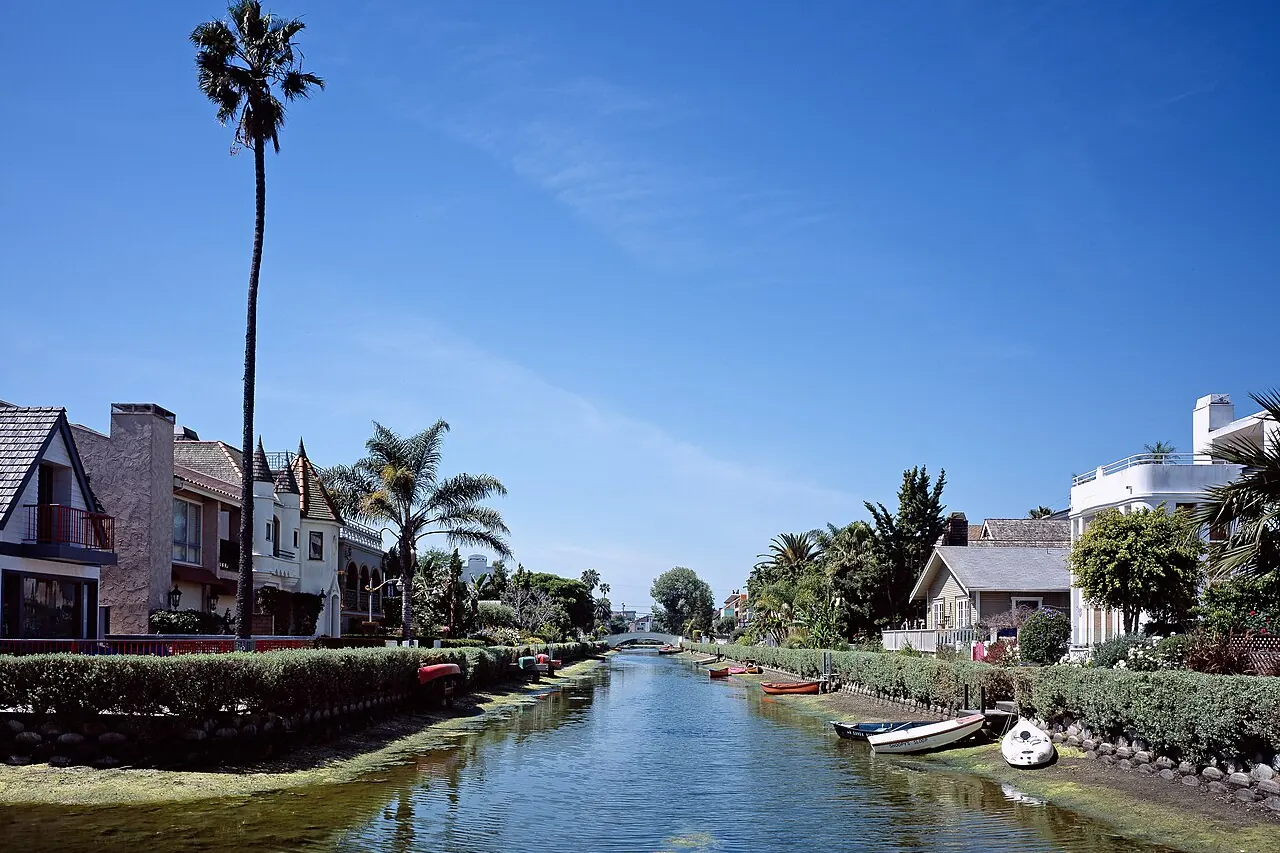
Venice offers several different versions of a coastal stay. The boardwalk and skate park are lively public spaces; the canals create a more residential setting; Abbot Kinney Boulevard adds independent shops, restaurants and cafes away from the water's edge. Choose between those immediate streets before choosing the room. A canal-side photograph is not evidence that the boardwalk outside your hotel will be quiet, and an inland Venice address does not automatically mean breakfast within sight of the sand. This base suits travellers happy to make the neighbourhood itself part of the holiday.
Metro lists bus 33 between Santa Monica and Downtown via Venice Boulevard, while local bus connections can take you towards the E Line in Santa Monica. Venice has no rail station in the canals or boardwalk district, so airport and inland sightseeing need a bus connection or road transfer. For LAX, compare your precise address with the airport's current ground-transport choices rather than assuming a direct train. The downside is more coordination for citywide outings and a lively boardwalk environment where applicable. Choose Santa Monica for simpler rail access, or an inland base if the coast is only a single afternoon.
Plan it well: The image and pin show the Venice Canal Historic District. They do not depict Abbot Kinney or the beach boardwalk.
LA tourism: Venice and the beach citiesUniversal City: put the theme park first
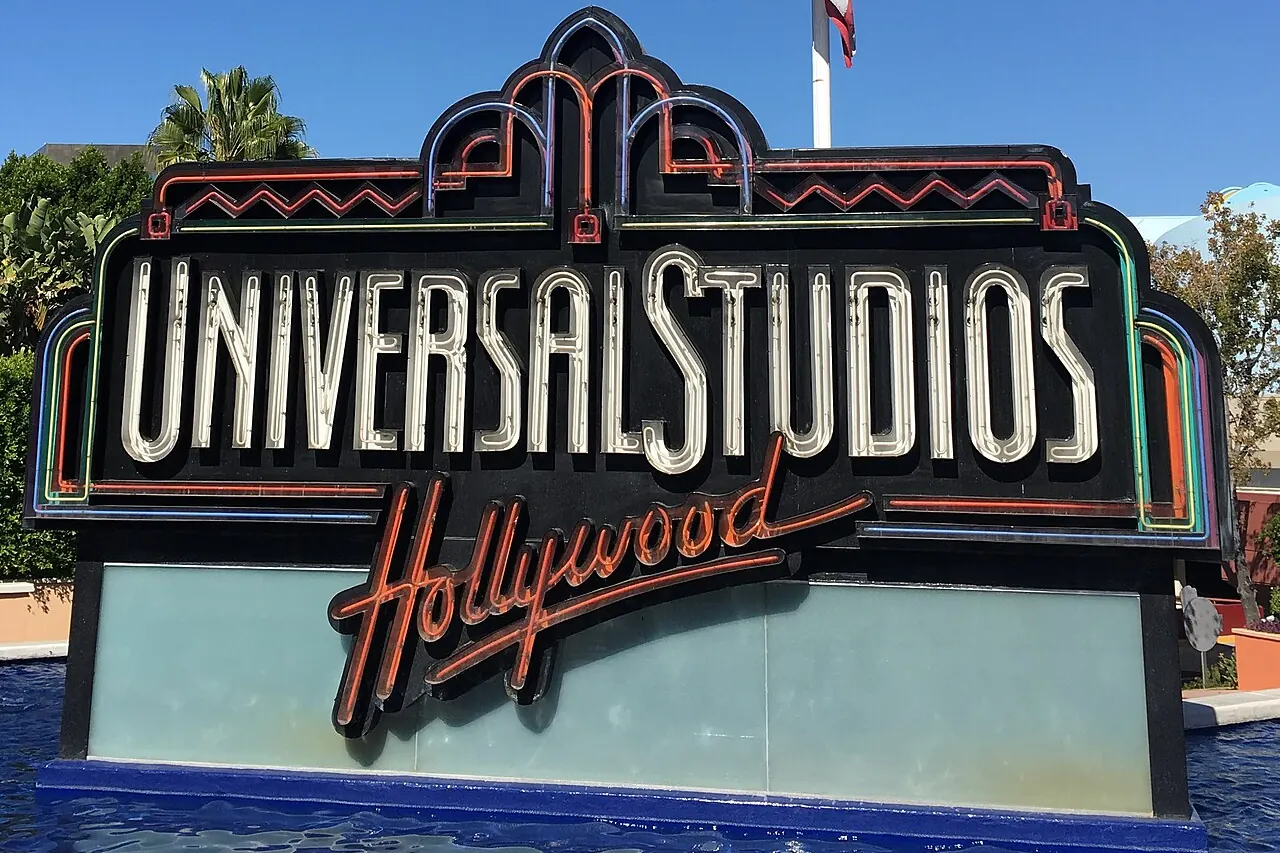
Universal City is the purposeful choice when Universal Studios Hollywood occupies a substantial part of the trip. The park and CityWalk concentrate attractions, restaurants, shops and entertainment on a hilltop campus, so a nearby hotel can reduce the complications of returning after a full park day. The setting is a resort-and-entertainment cluster, not a substitute for Hollywood Boulevard's film history or Venice's beach streets. Compare whether the hotel has a genuinely useful walking approach or shuttle rather than interpreting the Universal City name as a guarantee that the entrance is outside the door.
Metro's B Line serves Universal City/Studio City at the bottom of the approach, and Universal publishes directions and its shuttle connection to the hilltop destination. For LAX, FlyAway to Union Station and the B Line is one possible public route, with that final uphill connection still to plan. The main compromise is a stay oriented around one attraction, with coastal days requiring a substantial change of setting and route. Hollywood is the better base for a single park visit combined with shows and boulevard sights; Downtown suits travellers whose itinerary is primarily museums and concerts.
Plan it well: The photograph and map pin show Universal Studios Hollywood, not the Metro station. Verify your hotel's own park connection.
Universal Studios Hollywood: directions and approachArrival and cross-city journeys
LAX is not a rail platform inside the terminal
LAX lists terminal shuttles to the LAX/Metro Transit Center, where C and K rail lines and bus services connect. Include the terminal-to-centre leg when comparing a rail journey with an authorised road transfer.
LAX ground transportationFlyAway serves Union Station, not Hollywood
LAX lists FlyAway services to Union Station and Van Nuys. Downtown, Hollywood and Universal City stays may need a final Metro or road connection. Check the published route and departure information for your flight.
LAX FlyAway informationUse the current Metro map
The current D Line map includes Wilshire/La Brea and Wilshire/Fairfax; B serves Hollywood and Universal City, and E reaches Santa Monica. Match your hotel to a station and check the timetable for the return after a show.
LA Metro line schedules and mapsCoastal buses have distinct routes
Big Blue Bus publishes routes within Santa Monica and towards the LAX/Metro Transit Center. A bus to that centre is not a terminal shuttle, and a Venice stay may add another local connection.
Big Blue Bus routes and schedulesChoose the right side of Los Angeles
Compare Los Angeles hotels around the side of the metropolis you expect to use most. Check the exact address separately for Santa Monica and Universal City, which are distinct metropolitan bases. A Downtown room is useful for the concert-and-museum cluster; a coast-first itinerary justifies the longer inland journeys from a beach base.
Explore Los Angeles hotels