
Hotels in Rome, IT
Sant'Eligio Loft Campo de Fiori
Smoke-free
About this property
If you want to feel like you’re at home no matter where you are, choose this — apartment "Sant'Eligio Loft Campo de Fiori" is located in Rome. This apartment is located nearby from the city center. You can take a walk and explore the neighbourhood area of the apartment — Palazzo Spada, Piazza Navona and Ponte Sant'Angelo.
Location
Free Wi-Fi on the territory will help you to stay on-line.
At the apartment
Popular facilities
See all facilitiesGood to know
- Check-in
- From 14:00
- Check-out
- Until 11:00
- Pets
- Not allowed
- Languages
- Multi-language staff
- Smoking
- Smoke-free
- Room types
- 4
Room Information
Rooms
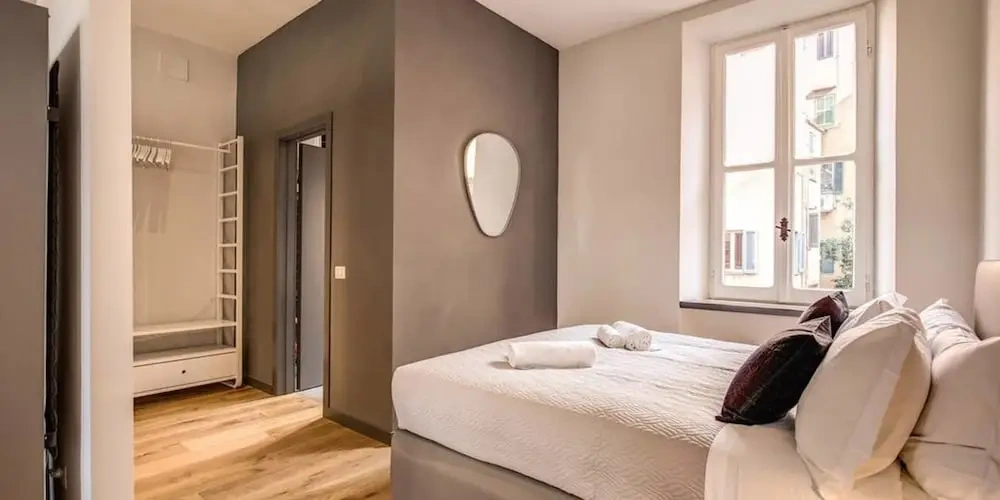 1 / 6
1 / 6 Studio
- Private bathroom
- air-conditioning
- dining-area
- fridge
- hairdryer
- heating
- kitchen
- private-bathroom
- shower
- toiletries
- towels
- tv
- wi-fi
What's the price for your stay?
Add your dates to see current rates.
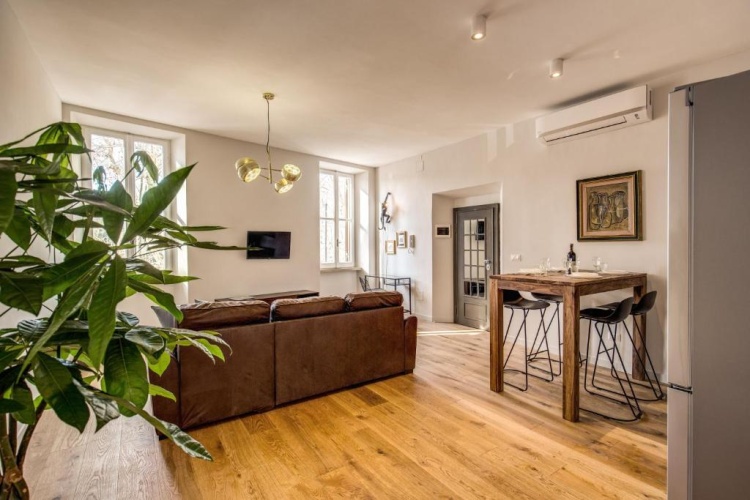 1 / 6
1 / 6 Superior Apartment
- Private bathroom
- air-conditioning
- hairdryer
- private-bathroom
- tv
What's the price for your stay?
Add your dates to see current rates.
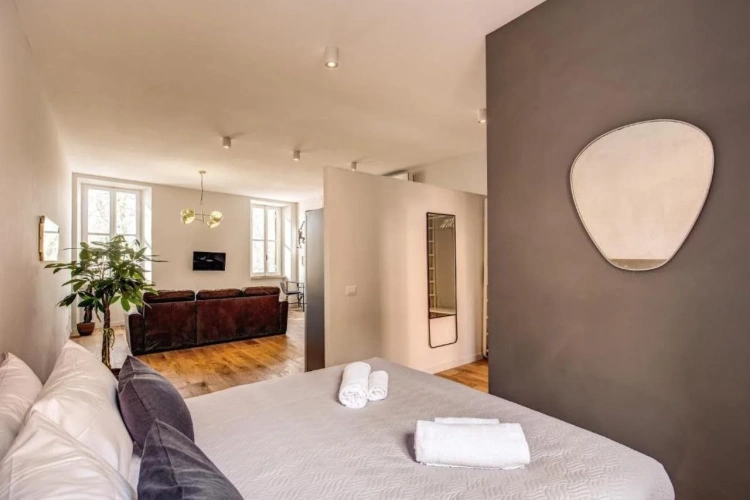
1 / 6 Double Studio
- 2 guests
- full double bed
- Private bathroom
- private-bathroom
What's the price for your stay?
Add your dates to see current rates.
1 / 6 Twin Studio
- 2 guests
- twin beds
- Private bathroom
- private-bathroom
What's the price for your stay?
Add your dates to see current rates.
Guest reviews
Recent reviews shared by hotel guests
Guest Rating
10/10
Excellent Featured review
daniele F.
10/10
The Renaissance design of the Church of Sant'Eligio degli Orefici includes a Greek cross plan and a hemispherical dome attributed to Baldassarre Peruzzi. Raphael designed it in 1509 for the University of Goldsmiths and Silversmiths, on Via di Sant'Eligio in the Regola district. The original façade collapsed in 1601 and Giovanni Maria Bonazzini rebuilt it in 1620. Inside are the Madonna with Saints Stephen, Lawrence, and Eligius by Matteo da Lecce, Prophets and Apostles by Taddeo Zuccari, the Nativity by Giovanni de Vecchi, and the Adoration of the Magi by Giovanni Francesco Romanelli. You can find it at Via di Sant'Eligio, 8/A, Rome. Visiting hours are Monday and Tuesday from 10:30 am to 12:30 pm, and Thursday and Friday from 3:00 pm to 5:00 pm.
Andrea C.
10/10
You can visit this little-known Rome church by calling the Secretariat, though it's rarely open. Inside are 16th- and 17th-century frescoes, a relic of Saint Eligius, and part of Raphael's coffin. Raphael designed the church's first project.
Stefano R.
10/10
The Church of Sant'Eligio degli Orefici is tucked into Rome's historic center on Via di Sant'Eligio, one of the streets leading to elegant Via Giulia, in Rione VII (Regula). I had listed and reviewed it in 2018, but G.MAPS later removed it. I'm posting it again because it deserves to be rediscovered and visited by new people. The 16th-century University of Goldsmiths and Silversmiths, based in the small building still standing to the church's right, decided to build a church for its patron, Saint Eligius, a French goldsmith and bishop. Like other religious buildings in the city, it was commissioned by a Guild of Arts and Crafts. They hired Raphael (1483-1520), the celebrated painter and architect, for the design, and spared no expense. He died before it was finished, but other masters, including Baldassarre Peruzzi and Aristotle da Sangallo, carried out his design over several decades. After frequent Tiber floods damaged the church and part of it collapsed in 1601, it was rebuilt while preserving Raphael's plan. The facade is restrained and elegant, with two levels. A Latin inscription about the guild's founding appears on the 16th-century travertine portal. Inside, the Greek cross plan has a hemispherical dome on a round tambour, attributed to Peruzzi. The church keeps 16th-century frescoes of the Madonna, Prophets, and Apostles. On the adjoining building, an 18th-century fresco of Saint Eligius the Bishop is now in poor condition. A bit of context: in the Middle Ages and Renaissance, the Universitas were powerful economic groups. They ran churches, organized events, and competed to decorate their chapels. At nearby Santa Maria dell'Orto, which I recommend visiting, 13 confraternities competed for sacred space, filling it with symbols and artworks. Saint Eligius is patron of goldsmiths and blacksmiths, a figure connecting faith and craftsmanship. Rome is full of stories and hidden places. If the way this church brings art, faith, and work together has caught your interest, it's worth exploring more of the city's less familiar wonders.
Roberto B.
10/10
Tucked below the Lungotevere, this church feels like a pearl hidden under sand, so I'm reposting the place with its first review. Raphael apparently designed it early in his career, and it's said to be his only work of this kind. The bastions along the river protected it, as they did many works, though they also destroyed others. After a collapse in the early 1600s had left it practically ruined, Flaminio Ponzio restored it. He's better known for Villa Borghese, though Peruzzi and Da Sangallo also contributed to the original layout. The church belongs to the confraternity of goldsmiths and silversmiths, now a university and college for the craft. Saint Eligius, their patron and protector, was himself a skilled goldsmith. His relics are kept in a beautiful bust on the high altar, according to the editor's note. It's rarely open, but guided visits sometimes happen with cultural associations. In the chapels of its Greek cross layout are real 1500s masterpieces: the Holy Trinity and the Madonna and Child with Saints by Matteo da Lecce, plus Prophets and Apostles by Taddeo Zuccari. You can see the church from the corner of the Lungotevere while walking along Lungotevere Superiore, where we're walking now. If you find it open, it's worth a peek. For useful info, leave a like and check out my other reviews of Rome and beyond.
Romualdo L.
10/10
This Renaissance gem can only be visited by reservation. It sits on a side street of the same name, about halfway along Via Giulia, and is little known. The University of Goldsmiths received papal permission to build a church near Via Giulia in 1509, though completing it took a long time. Its design is thought to be by Raphael Sanzio, with Bramante involved later. Part of Raphael's coffin is preserved in a room next to the church. Beside it is a small 16th-century house used by the goldsmiths' brotherhood.
Amenities
Everything available at this property
4 Facilities
General Services
1 available- Smoke Free Property
Internet
1 available- Free Wi Fi
Pets
1 available- Pets Not Allowed
Languages
1 available- Multi Language Staff
What's nearby
Explore attractions, restaurants and transport around the hotel
60 places nearby
Closest Bus Lgt Tebaldi/Armata
87 m 1 min walk
Closest Airport Aeroporto di Roma-Ciampino
14.9 km
Top attraction nearbyCampo de' Fiori
346 m 4 min walk
Dining nearby 20 Restaurants
59 m 1 min walk
Attractions
20- Campo de' Fiori346 m 4 min walk
- Piazza Navona574 m 7 min walk
- Janiculum Hill717 m 9 min walk
- Pantheon805 m 10 min walk
- Castel Sant'Angelo837 m 10 min walk
Restaurants
20- Assunta Madre59 m 1 min walk
- Giovani di Confagricoltura - ANGA Roma109 m 1 min walk
- Giulietta Vino e Cucina, Ristorante bistrot a Via Giulia Roma126 m 2 min walk
- Pierluigi137 m 2 min walk
- È Passata la Moretta176 m 2 min walk
Transit
20- Aeroporto di Roma-CiampinoAirport14.9 km
- Aeroporto di Roma-FiumicinoAirport20.3 km
- Lgt Tebaldi/ArmataBus87 m 1 min walk
- Lgt Tebaldi/PerosiBus106 m 1 min walk
- Lgt FarnesinaBus159 m 2 min walk
Stay rules
Important conditions for your stay
Check-in14:00 – 20:00Front desk timing
Check-out11:00Departure timing
Fees and optional services
Deposit
Deposit required